When Your Phone Becomes Your Boss (And How One Attorney Finally Fired It)
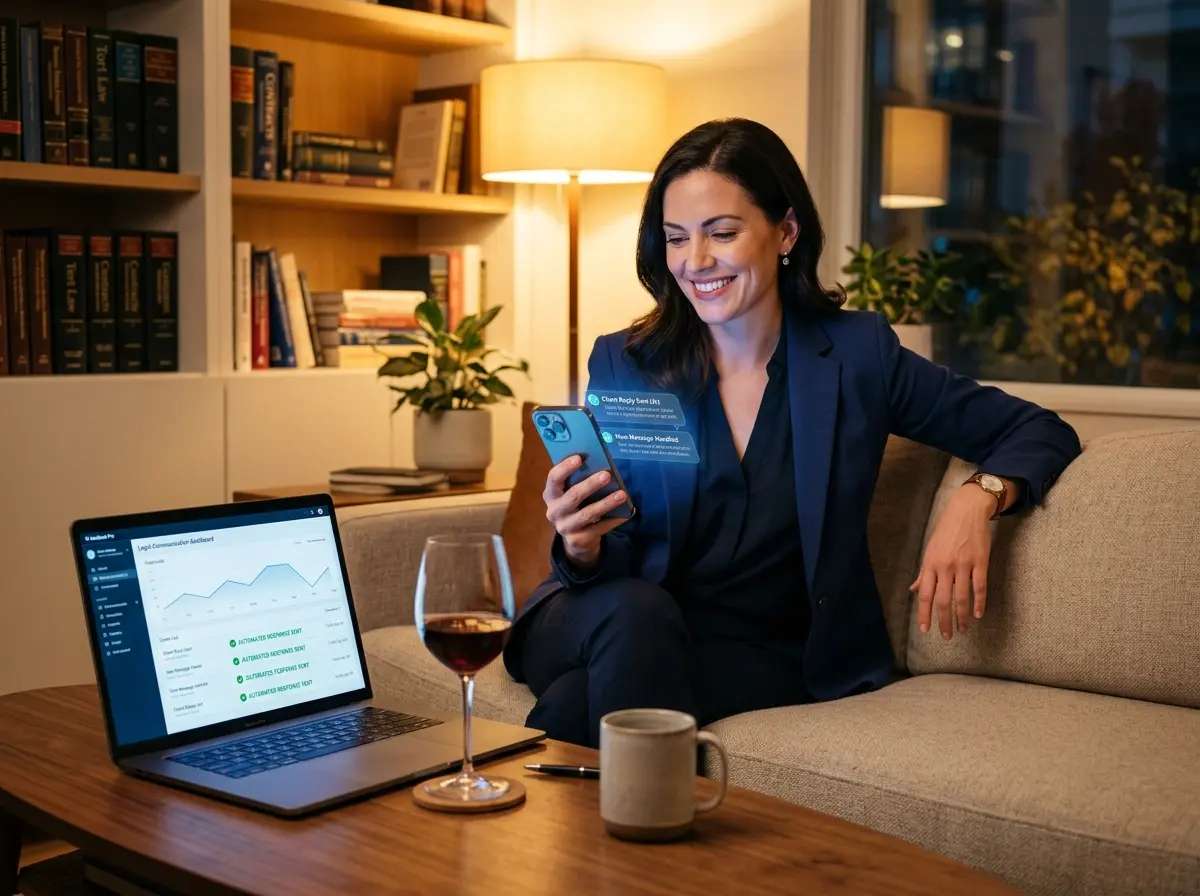
Picture this: It's 9:47 PM on a Thursday. You've just finished dinner, you're finally unwinding, and your phone buzzes. A potential client with an "urgent" legal question. You answer, because that's what dedicated professionals do. Then it happens again at 10:15. And somehow again at 11:02. Sound familiar? For solo attorney Marcus Webb, this wasn't a bad week — it was every week.
The modern professional's relationship with after-hours communication has become something of a hostage situation. Clients expect immediate responses. Competitors answer faster. And somewhere along the way, "always available" stopped being a competitive advantage and started being a personal crisis. The good news? AI-powered client communication platforms are quietly rewriting this story for solo practitioners and small firm attorneys — and the results are genuinely worth talking about.
This post breaks down exactly how attorneys (and really, any solo professional drowning in communication overhead) can use intelligent automation to reclaim their evenings, their weekends, and frankly, their sanity — without sacrificing client experience one bit.
The Real Cost of After-Hours Communication for Solo Attorneys
Before we talk solutions, let's be honest about the problem. Most solo attorneys don't just answer after-hours calls because they want to — they do it because they're terrified of what happens if they don't. A missed call from a prospective client is a missed retainer. A delayed response to an existing client is a complaint, a bad review, or worse. The anxiety alone is exhausting, and the actual time cost is staggering.
The Hidden Time Drain Nobody Talks About
According to the American Bar Association, solo attorneys spend a significant portion of their week on non-billable administrative tasks — and client communication overhead is one of the biggest culprits. We're not just talking about the calls themselves. We're talking about the mental load of anticipating calls, the context-switching that destroys deep work, and the time spent playing phone tag the next morning with people who called at 8 PM and forgot what they wanted by 8 AM.
Marcus estimated he was losing 8–10 hours per week to unstructured client communication — calls, follow-up emails, intake questions that could have been answered by a competent receptionist. For a solo attorney billing at even a modest hourly rate, that's thousands of dollars in lost productivity every single month. And that's before accounting for the burnout tax.
Why Hiring a Human Receptionist Isn't Always the Answer
The obvious solution sounds simple: hire a receptionist. And for some practices, that's exactly right. But for a true solo operation, the economics often don't pencil out. A qualified legal receptionist in most markets runs $35,000–$55,000 annually, plus benefits, training time, and the inevitable two-week notice you'll receive right before your busiest month. Answering services are cheaper but notoriously inconsistent — callers can tell when they're speaking to someone reading from a script with zero knowledge of your practice.
What Marcus needed wasn't just someone to answer the phone. He needed something that could represent his practice intelligently, handle intake questions, communicate his availability, and do it all without requiring him to write a 40-page training manual.
The Expectation Gap That's Costing You Clients
Here's the uncomfortable truth: prospective legal clients often contact multiple attorneys simultaneously. Research from legal marketing firm Clio consistently shows that the first attorney to respond meaningfully to an inquiry wins the client at a disproportionate rate — regardless of credentials, experience, or pricing. Speed isn't a nice-to-have. It's the ballgame. And if your communication infrastructure relies entirely on you being awake, available, and emotionally ready to take calls at all hours, you are structurally disadvantaged against competitors who've solved this problem.
How AI Communication Tools Change the Equation
This is where things get interesting — and where Marcus's story takes a turn for the better.
Intelligent Intake, Even When You're Off the Clock
Stella, the AI robot employee and phone receptionist, gave Marcus something he didn't know was possible: a professional, knowledgeable voice representing his practice 24 hours a day. When a prospective client calls after hours, Stella answers — not with a generic "leave a message" prompt, but with a real conversation. She can explain practice areas, describe the consultation process, answer questions about fees and availability, and collect intake information through a conversational flow that feels natural rather than robotic.
The intake forms alone were transformative. Instead of Marcus arriving at the office to a voicemail saying "Hi, I have a legal question, call me back," he'd find an AI-generated summary of the caller's situation, their contact information, their preferred callback time, and a sense of urgency level — all captured automatically during the call. His mornings went from reactive to strategic almost overnight. Stella's built-in CRM also kept every contact organized with custom fields, tags, and AI-generated profiles, so Marcus always had context before picking up the phone.
Building a Communication System That Works While You Sleep
Marcus's transformation didn't happen by accident. He approached the problem systematically, and the framework he used is applicable to any solo professional — attorney or otherwise.
Step One: Audit Where Your Communication Time Actually Goes
Before implementing any tool, spend one week logging every communication touchpoint. How many calls did you receive after 6 PM? How many were genuinely urgent? How many were intake questions that a well-informed receptionist could have handled? Most attorneys who do this exercise are shocked to discover that fewer than 15% of after-hours contacts require their immediate personal attention. The rest? Perfectly manageable by an intelligent system with the right information.
Marcus found that nearly 70% of his after-hours calls fell into three categories: prospective clients asking basic intake questions, existing clients wanting status updates he couldn't provide on the spot anyway, and scheduling requests. None of these required him personally. All of them were making him miserable.
Step Two: Define What "Handled" Actually Means for Your Practice
One of the biggest mistakes professionals make when automating communication is failing to define success criteria up front. "Handled" means something different for a family law attorney than it does for a criminal defense lawyer where genuine emergencies do occur. The goal isn't to eliminate human involvement — it's to reserve human involvement for situations that actually require it.
For Marcus, "handled" meant: caller received a professional, informed response; intake information was captured; urgency was assessed; and he received a push notification summary so he could make an informed decision about whether to call back immediately or in the morning. That framework, consistently applied, eliminated the anxiety of not knowing what he was missing — because he always knew, and he could choose how to respond on his own terms.
Step Three: Train Your Clients to Use the System
This step is underrated and slightly uncomfortable, but critically important: your clients will adapt to your communication systems if you set expectations clearly. Marcus added a brief explanation of his after-hours process to his client onboarding materials. Existing clients were notified by email. The response was almost universally positive — clients appreciated knowing that their call would be answered professionally and that their information would be captured accurately, rather than disappearing into a voicemail void.
The attorneys who struggle with this transition are usually the ones who never communicate the change. The ones who thrive are the ones who frame it correctly: "You'll always reach a knowledgeable, professional representative of my practice, and I'll follow up based on the urgency of your matter." That's not a downgrade in service. That's a promise most solo attorneys couldn't make before.
Quick Reminder About Stella
Stella is an AI robot employee and phone receptionist designed for businesses of all types — including solo law practices and service professionals who need reliable, intelligent client communication without the overhead of additional staff. She answers calls 24/7, captures intake information conversationally, manages contacts through a built-in CRM, and delivers AI-generated summaries so you always know what's waiting for you. At $99/month with no upfront hardware costs, she's the receptionist most solo practitioners wish they could afford — and actually can.
Time to Stop Being On-Call for Your Own Business
Marcus Webb now ends his workday at 6 PM. His phone still buzzes occasionally in the evening — but it's a push notification from his AI communication system, not a call demanding his immediate attention. He reviews the summary, decides whether it warrants an after-hours response (rarely), and goes back to his dinner. His prospective client conversion rate is up. His existing client satisfaction scores are up. His stress levels are, mercifully, down.
If you're a solo attorney — or any solo professional — still managing client communication entirely through your personal availability, here are your actionable next steps:
- Audit your communication load for one week, categorizing every after-hours contact by type and urgency level.
- Define your "handled" criteria — what does a successfully managed call look like when you're not the one taking it?
- Explore AI receptionist platforms built with real business knowledge capabilities, not just generic voicemail upgrades.
- Update your client communication policies and communicate the change proactively — don't let clients discover the new system by accident.
- Start small — even routing after-hours calls to an intelligent system while keeping daytime calls personal is a meaningful first step.
The goal isn't to remove yourself from your practice. The goal is to stop being the single point of failure in your own client communication infrastructure. You built a business to create freedom, not to be perpetually on call. It's time your communication systems started reflecting that.
Your clients deserve a professional, responsive experience. You deserve a Thursday evening. As it turns out, those two things are no longer mutually exclusive.