When the Storm Hits, Your Phone Shouldn't
There's nothing quite like a good old-fashioned hailstorm to simultaneously destroy hundreds of roofs and your staff's sanity. One day you're a normal roofing company with a manageable call volume, and the next day your phone is ringing off the hook with panicked homeowners who have buckets collecting water in their living rooms and absolutely no patience for hold music.
Storm season is the roofing industry's version of tax season for accountants or flu season for pharmacies — everyone needs you, they need you now, and somehow you're supposed to be everywhere at once. The cruel irony? The same weather event that floods you with new business opportunities also floods your team with logistical chaos, leaving little time to actually answer the phone and capture those leads before they call your competitor instead.
So how does a roofing company handle a surge of storm-season inquiries without hiring a temporary army of receptionists or letting half their leads go to voicemail purgatory? Let's talk about what smart roofing companies are doing — and how a little artificial intelligence is making storm season a whole lot less catastrophic (at least on the business side).
The Storm Season Problem Most Roofing Companies Don't Want to Admit
The Lead Window Is Shorter Than You Think
After a major storm rolls through a neighborhood, homeowners don't wait around. Research consistently shows that the first contractor to respond to an inquiry is significantly more likely to win the job — with some studies suggesting response time is more important than price in competitive service markets. When a homeowner calls five roofing companies in a row and yours is the third one that actually picks up, you've already lost ground.
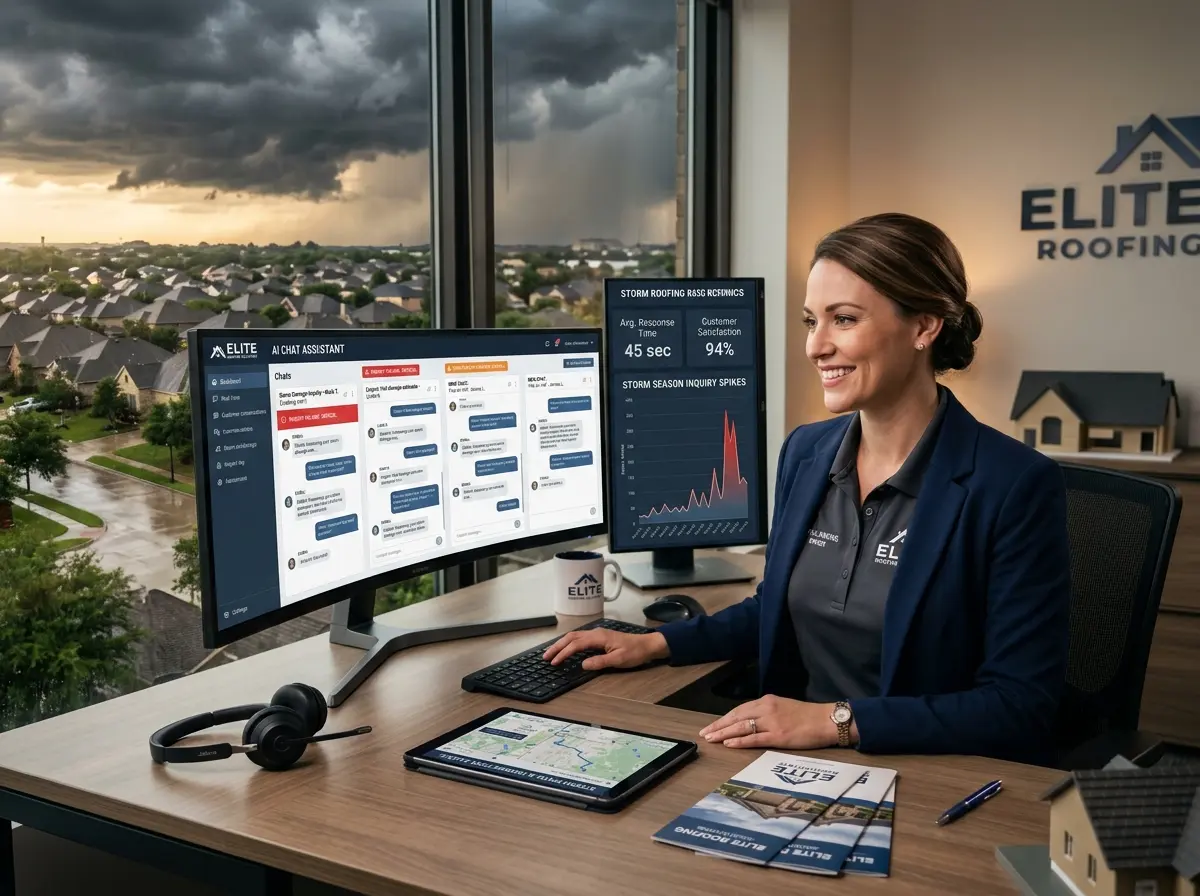
The problem isn't that roofing companies don't want to answer calls — it's that they physically can't. Your crews are out in the field doing assessments, your office staff is managing scheduling and insurance documentation, and your business phone is ringing with a mix of new leads, existing customers checking on timelines, and the occasional person who thinks you can also fix their gutters (you can, but still). The volume is simply unmanageable by human hands alone, especially between the hours of 7 PM and 8 AM when your office is closed and homeowners have just noticed the damage from their back porch.
Missed Calls Are Missed Revenue — Do the Math
Let's get briefly uncomfortable with some numbers. If your average roofing job is worth $8,000 to $15,000, and you're missing just five inbound calls per day during a two-week storm surge, and even a fraction of those callers eventually become jobs — you're potentially leaving tens of thousands of dollars on the table. Every single week. Not because your work is bad. Not because your prices are too high. Simply because nobody picked up the phone.
And the calls that do get answered? Your already-stretched team is spending valuable time explaining the same basic information over and over: service areas, what the inspection process looks like, whether you work with insurance companies, how long the wait list is. These are important questions, but answering them manually for the 40th time in a day is nobody's highest and best use of time.
Scaling People Is Slow and Expensive
The traditional solution is to hire additional office staff for storm season — a perfectly reasonable idea that comes with its own delightful set of challenges. Finding qualified people quickly is difficult. Training them takes time you don't have. And once storm season ends, you either lay them off or absorb the labor cost during slower months. It's a blunt instrument for a problem that actually calls for something more precise.
How AI Phone Answering Changes the Storm Season Game
Around-the-Clock Availability Without the Overtime Pay
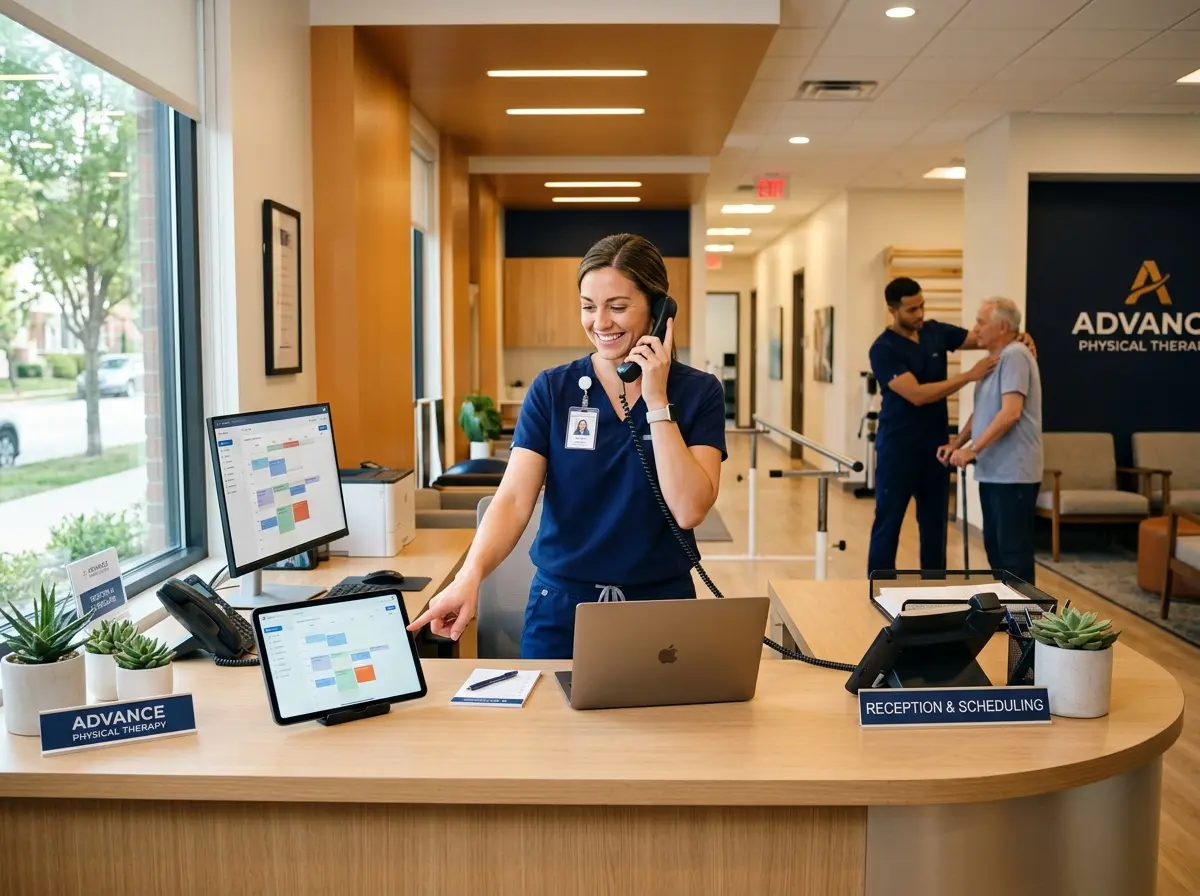
This is where AI-powered phone receptionists have quietly become one of the more practical tools in a service business's arsenal. Stella, an AI robot employee and phone receptionist, answers inbound calls 24 hours a day, 7 days a week, with full knowledge of the business's services, service area, pricing structure, current promotions, and intake process. When a homeowner calls at 11 PM after discovering a leak, they get a real, conversational response — not a voicemail box, not a confusing phone tree, and not a robotic "press 1 for English" experience.
Stella can collect key customer information through conversational intake — name, address, type of damage, preferred contact method, insurance carrier — all during the initial call, so that by the time a human team member follows up in the morning, they already have a qualified lead with context rather than a vague name and number on a sticky note. Her built-in CRM stores these contacts automatically, complete with AI-generated profiles, custom tags, and notes, so your team can prioritize follow-ups intelligently when the morning rush begins.
Consistent, Accurate Information Every Single Time
One underrated benefit of AI phone handling during high-volume periods is consistency. When you're busy and slightly frantic, even good employees sometimes give inconsistent information — different quotes on timelines, varying explanations of the inspection process, or an offhand remark about pricing that creates confusion later. An AI receptionist delivers the same accurate, approved information every time, which protects your reputation and reduces the downstream confusion that comes from mixed messaging.
What a Real Storm Season Response Strategy Looks Like
Triage Calls by Priority Without Losing Anyone
Not every inbound call during storm season deserves the same level of urgency, and a smart AI phone system helps you sort them without dropping anyone. A homeowner with active interior water intrusion is a different priority than someone inquiring about a free inspection. Configurable call routing means that true emergencies or high-value leads can be flagged for immediate callback or forwarded to an on-call team member, while general inquiries are handled completely by the AI — answered, logged, and summarized without any human intervention required.
This kind of intelligent triage means your human staff spends their limited time on the conversations that actually require human judgment, empathy, or expertise. Everything else gets handled professionally and promptly, without creating a bottleneck.
Use the Surge to Build Your Customer Base, Not Just Your Schedule
Storm season isn't just an opportunity for immediate revenue — it's an opportunity to build lasting customer relationships if you handle the experience well. Homeowners who had a positive, professional first interaction with your company (even if that first interaction was with an AI) are more likely to call you again for future needs, refer neighbors, and leave positive reviews. The calls you answer during a storm surge are seeds for long-term business, which means every missed call isn't just lost revenue today — it's a lost relationship for years to come.
Smart roofing companies also use the data collected during storm season to understand which neighborhoods were affected, which services were most requested, and what the most common customer questions were. That intelligence is genuinely useful for planning future marketing, staffing, and service offerings — and it's all sitting there waiting to be used if your intake process actually captures it.
Prepare Before the Storm, Not During It
The worst time to set up a new system is in the middle of your busiest season. The roofing companies that handle storm surges most effectively are the ones that had their processes in place before the clouds rolled in. That means having an AI phone system already trained on your services, policies, and service area. It means having your intake questions configured so leads are captured cleanly. It means your team knows exactly which calls get escalated and which ones get handled automatically.
Setup doesn't have to be complicated or expensive to be effective. The goal is simply to ensure that when volume spikes overnight, your business responds as though it was fully staffed and completely prepared — because operationally, it is.
A Quick Reminder About Stella
Stella is an AI robot employee and phone receptionist designed to handle exactly these kinds of high-volume, high-stakes situations. She answers calls 24/7, collects customer information through conversational intake, manages contacts through a built-in CRM, and gives your business a professional, always-available presence for just $99 per month — no upfront hardware costs, no training headaches, no sick days. For roofing companies and other service businesses that live and die by their responsiveness, she's the kind of employee who genuinely earns her keep when the weather turns ugly.
Stop Letting Storm Season Win
Storm season will always be chaotic. That's just the nature of the business. But chaos doesn't have to mean missed leads, overwhelmed staff, and inconsistent customer experiences. The roofing companies that consistently outperform their competitors during surge periods aren't necessarily the ones with the biggest crews or the largest marketing budgets — they're the ones who figured out how to be reliably available and professionally responsive when everyone else is scrambling.
Here's what you can do right now to prepare:
- Audit your current call handling. How many calls are you missing after hours? How long does it take to follow up on a lead? What information are you failing to capture during the first contact?
- Define your intake questions. What does your team need to know to qualify a lead and schedule a follow-up? Make sure that information is being collected consistently on every call.
- Get your AI phone system in place before storm season. Explore options, get set up, and run a few test scenarios so you're confident the system works the way you need it to.
- Train your human team on escalation protocols. Decide which call types require a human touch and make sure everyone knows the handoff process.
The storm is coming. Whether your phone is ready for it is entirely up to you.