When "Come Back Soon" Actually Works
Every restaurant owner has said it. The food was great, the service was warm, and as the customer walked out the door, someone called out, "Come back soon!" And then... silence. Crickets. The customer goes home, forgets you exist by Tuesday, and ends up at a competitor the following Friday because they got a text with a coupon. Ouch.
Here's the uncomfortable truth: customers don't forget you because they didn't like you — they forget you because you didn't remind them you exist. In a world of constant digital noise, "out of sight, out of mind" isn't a cliché, it's a revenue problem.
That's exactly what one local restaurant discovered when they decided to stop hoping customers would return on their own and started doing something about it. By launching a simple SMS text club, they increased visit frequency by a staggering 50% — not by overhauling their menu, not by going viral on TikTok, but by sending the right message to the right people at the right time. Let's break down how they did it, and how you can too.
The Text Club Strategy That Changed Everything
What Is a Text Club, and Why Should You Care?
A text club — sometimes called an SMS loyalty program or text marketing list — is exactly what it sounds like: customers opt in to receive text messages from your business, and you use that channel to send promotions, updates, and exclusive offers. Simple concept. Wildly effective execution.
Why texting over email? Because people actually read texts. SMS open rates hover around 98%, compared to email's industry average of roughly 20-25%. Your beautifully designed email newsletter with the mouth-watering food photography? It's sitting in a promotions folder next to sixteen other unread newsletters. Your text message? It's been read within three minutes of landing. That's the difference between shouting into the void and having an actual conversation.
For this particular restaurant — a mid-sized casual dining spot with a loyal but inconsistent customer base — the text club became the connective tissue between great dining experiences and repeat visits. The goal wasn't to spam customers into submission; it was to stay top of mind with genuine value.
How They Built the List (Without Being Annoying About It)
The biggest hurdle for most business owners is list building. You can't send texts to people who haven't given you permission, and you certainly can't buy a list of phone numbers and call it a day — that's a one-way ticket to legal trouble and an unsubscribe avalanche. The restaurant used a multi-touch opt-in approach that felt natural rather than pushy.
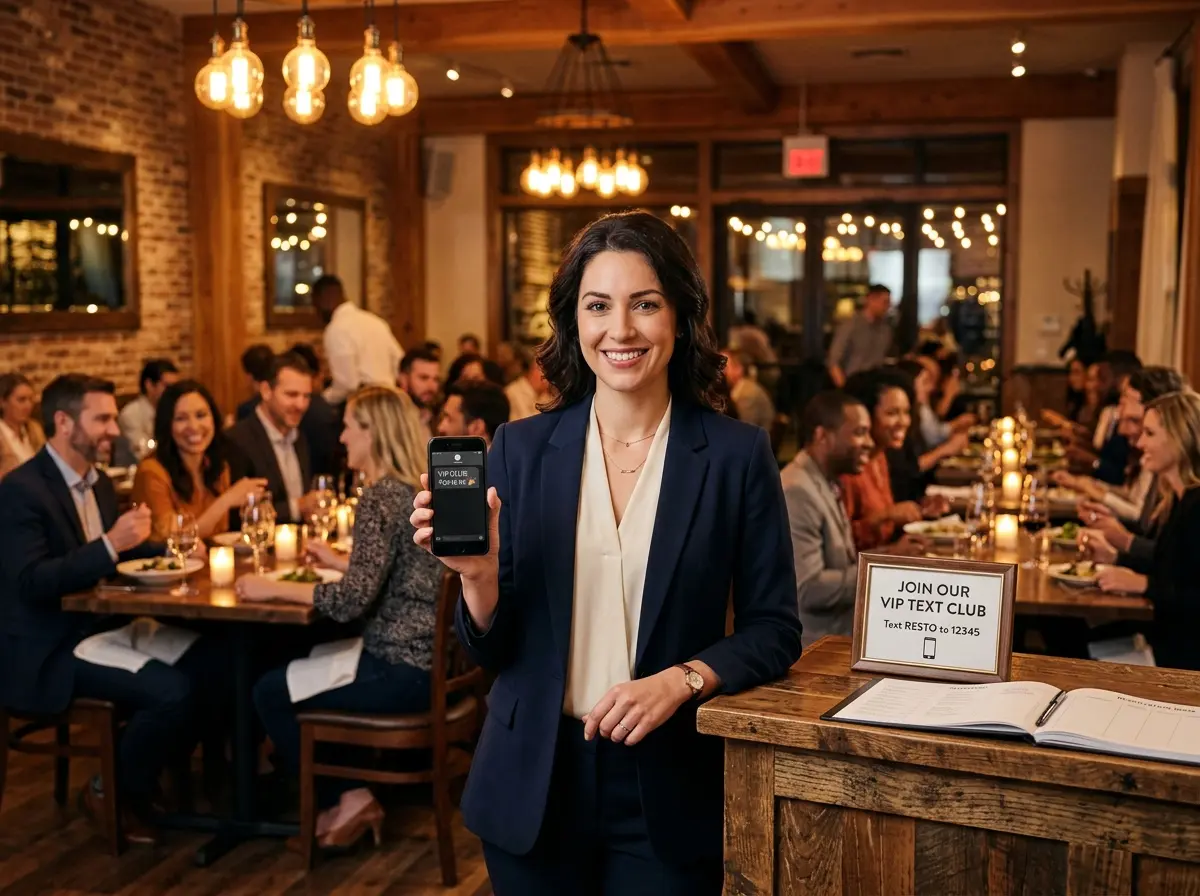
First, they added a simple sign at the host stand and on every table: "Text DINNER to 55555 for exclusive deals and a free appetizer on your next visit." The free appetizer offer was the key — it gave customers an immediate, tangible reason to join rather than a vague promise of "exclusive deals" someday. Second, their staff verbally mentioned the club when presenting checks. Third, they added a brief opt-in prompt to their Wi-Fi login page. Within three months, they had over 800 active subscribers from their regular customer base.
The Messaging Cadence That Drove Repeat Visits
Collecting numbers is step one. What you do with them is where most businesses either win big or embarrass themselves. This restaurant kept their messaging disciplined and intentional — typically two to four texts per month — and every single message had a clear reason to visit now.
Their most effective messages fell into three categories:
- Time-sensitive offers: "This weekend only — buy one entrée, get one 50% off. Show this text to your server." Urgency drives action.
- Exclusive subscriber perks: "You're on the list, so you get first access to our new seasonal menu tonight before anyone else." People love feeling like insiders.
- Personal milestone messages: Birthday texts with a free dessert offer. Low effort, high emotional return.
The result? Subscribers were visiting an average of 1.5x more frequently than non-subscribers within the first six months. Some regulars who had been coming in monthly started showing up every two weeks. That's not luck — that's strategy.
How Technology Can Do the Heavy Lifting for You
Automating the Customer Relationship Without Losing the Human Touch
One thing the restaurant quickly realized was that managing a growing text club subscriber list, tracking customer visits, and personalizing outreach was a lot to layer on top of, you know, actually running a restaurant. This is where smart tools become less of a luxury and more of a necessity.
Stella — the AI robot employee and phone receptionist — is one of those tools worth knowing about. For a restaurant or any customer-facing business, Stella stands inside the location as a friendly, conversational kiosk, proactively greeting customers, answering questions, promoting current deals, and collecting customer contact information through conversational intake forms. That last piece is particularly powerful: instead of relying on staff to remember to mention the text club or manually log contact info, Stella can handle that opt-in conversation naturally and feed the data directly into her built-in CRM. She also answers phone calls around the clock with the same business knowledge she uses in person, so no lead or curious customer ever goes unanswered. For a business building a text club list, having a consistent, tireless point of contact — both in person and on the phone — is a genuine competitive advantage.
Turning One-Time Diners Into Regulars: The Retention Playbook
Segment Your List for Better Results
Not all subscribers are the same, and treating them that way is a missed opportunity. Once your list starts growing, segmentation becomes your secret weapon. Even basic segmentation — separating first-time visitors from regulars, or lunch customers from dinner customers — allows you to send messages that actually resonate rather than generic blasts that everyone ignores at roughly the same rate.
The restaurant in our case study eventually split their list into three segments: new subscribers (who received a welcome series focused on menu highlights and their first return-visit offer), occasional visitors (who received stronger incentive offers to increase frequency), and loyal regulars (who received VIP perks and early access to events). Each group felt like the messages were written for them — because they were.
Pair Your Text Club with a Loyalty Framework
A text club works even better when it's connected to a broader loyalty framework. That doesn't have to mean a complicated points system with a custom app — it can be as simple as a punch card digitized through text. The key principle is giving customers a reason to keep coming back that compounds over time. The restaurant introduced a "Frequent Bites" tier within their text club: after five verified visits (tracked through a show-this-text redemption system), subscribers unlocked a premium discount and a personalized message acknowledging their loyalty. It was low-tech, low-cost, and customers loved it.
The psychological principle here is commitment and consistency — once someone identifies as a "member" of something, they're more likely to continue participating in it. Your text club isn't just a marketing channel; it's a community with a velvet rope, and people want to be on the right side of it.
Measure What Matters and Adjust Accordingly
If you're not tracking the performance of your messages, you're essentially flying blind with other people's money. Monitor redemption rates on each offer, track which message types generate the most visits, and pay attention to your unsubscribe rate — a spike there is your audience telling you something important. The restaurant found that messages sent on Wednesday afternoons for Thursday-Friday promotions consistently outperformed weekend-day sends. That kind of insight is only available if you're actually looking at the data.
Most SMS marketing platforms provide basic analytics dashboards. Use them. Test different offer types, experiment with timing, and don't be afraid to retire what isn't working. The goal is a feedback loop that continuously improves your messaging — not a "set it and forget it" broadcast that grows stale and gets ignored.
A Quick Reminder About Stella
Stella is an AI robot employee and phone receptionist designed to work for businesses like yours — available in person as a conversational kiosk and 24/7 on the phone. She greets customers, promotes your offers, collects contact information, manages your CRM, and never calls in sick. At $99/month with no upfront hardware costs, she's built for business owners who want professional, consistent customer engagement without adding to their payroll headaches.
Your Next Step Starts With One Text
The restaurant in this story didn't have a massive budget or a marketing team. They had a smart, simple idea executed consistently: stay in touch with your customers, give them real reasons to return, and make them feel like insiders rather than transactions. A 50% increase in visit frequency isn't magic — it's the entirely predictable result of being intentional about customer communication.
Here's what you should do this week. First, choose an SMS marketing platform — options like Klaviyo, SimpleTexting, or EZTexting are all solid starting points for small businesses. Second, craft your opt-in offer — make it specific, valuable, and immediate. Third, write your first three messages before you launch, so you're not scrambling for content the moment your list starts growing. Fourth, put opt-in prompts everywhere your customers already are: tables, receipts, your website, your Wi-Fi login, and yes — have your staff mention it.
The customers who love your restaurant are already walking through your door. The only question is whether you have a system to bring them back — or whether you're still relying on "come back soon" and hoping for the best.
You've got the food. Now build the relationship.