When Your Law Firm Goes Dark at 5 PM, Your Competitors Don't Have To
Here's a scenario that should sound familiar to every small law firm owner: It's Saturday afternoon. Someone just got into a car accident, received a troubling letter from their landlord, or found out their business partner has been quietly draining the company account. They're stressed, they're motivated, and they are ready to hire a lawyer. So they call the first few firms that show up in their search results.
Your phone rings. Nobody answers. Your voicemail picks up — you know, the one that says "leave a message and we'll get back to you Monday." They hang up before the beep. They call the next firm on the list.
This isn't a hypothetical. According to research from the Legal Marketing Association, nearly 42% of legal inquiries go unanswered during evenings and weekends, and the vast majority of those potential clients simply move on to a competitor within minutes. Not days — minutes. The good news? One small personal injury firm figured out how to stop the bleeding, and the results were, frankly, embarrassing for every other law firm in their market.
The Weekend Inquiry Problem: Why Small Firms Bleed Leads After Hours
The Nature of Legal Emergencies (Hint: They Don't Follow Business Hours)
Legal problems are inconvenient by definition. People don't receive a DUI citation at 2 PM on a Tuesday when your receptionist is cheerfully available to schedule a consultation. They get into accidents on Sunday morning. They get served papers on Friday afternoon — conveniently after your office has already locked its doors and turned off the lights for the weekend. The timing of a legal crisis is almost never aligned with a law firm's standard operating hours, yet the vast majority of small firms still operate as if their clients have the decency to need help only between 9 and 5.
The problem compounds itself. When a potential client calls and reaches voicemail, their urgency doesn't evaporate — it transfers. It transfers directly to your competitor who did pick up the phone.
The Hidden Cost of the Monday Morning Pile-Up
Even for firms that do capture weekend voicemails, Monday morning becomes a chaotic triage exercise. Your receptionist arrives to find a backlog of messages, each one a lead that has had 48 to 72 hours to cool off, reconsider, or simply hire someone else. The ones who are still available get called back in the order the messages were left, with zero prioritization, zero context, and zero information gathered in advance. It's inefficient, it's stressful, and it turns what should be a warm conversion into a cold callback.
One small personal injury firm in the Midwest documented this exact problem before making a change. On a typical weekend, they'd receive between 15 and 25 missed calls. By Monday, roughly a third of those callers had already retained another attorney. Another third either didn't answer callbacks or had significantly cooled in their interest. Only about a third were truly still available — and even those conversations started at square one because no intake information had been collected.
Why Hiring More Staff Isn't the Answer
The obvious solution — hire weekend staff or an answering service — sounds reasonable until you price it out. A part-time weekend receptionist runs anywhere from $15 to $25 per hour, and that's before you factor in training, turnover, inconsistency, and the fact that a human receptionist still can't answer every call simultaneously during a busy Saturday afternoon. Traditional answering services offer another option, but they're often scripted, impersonal, and notoriously bad at capturing nuanced legal intake information. Clients calling about a sensitive family law matter don't particularly want to feel like they've reached a call center.
What firms actually need isn't more labor. They need a reliable, intelligent, always-available system that can conduct a real conversation, gather meaningful intake information, and set the stage for a productive Monday morning consultation — without requiring a paycheck, benefits, or the ability to call in sick.
How AI Changed the Weekend Game for This Firm
What Actually Happened When They Deployed an AI Receptionist
The personal injury firm in question deployed Stella, an AI phone receptionist, to handle all incoming calls during evenings and weekends. The setup was straightforward: Stella answered every call, introduced herself as the firm's virtual receptionist, and guided callers through a conversational intake process — collecting their name, contact information, the nature of their matter, preferred callback time, and a brief description of what happened. No hold music. No voicemail. No "press 1 for this, press 2 for that" menu that makes people feel like they've accidentally called their insurance company.
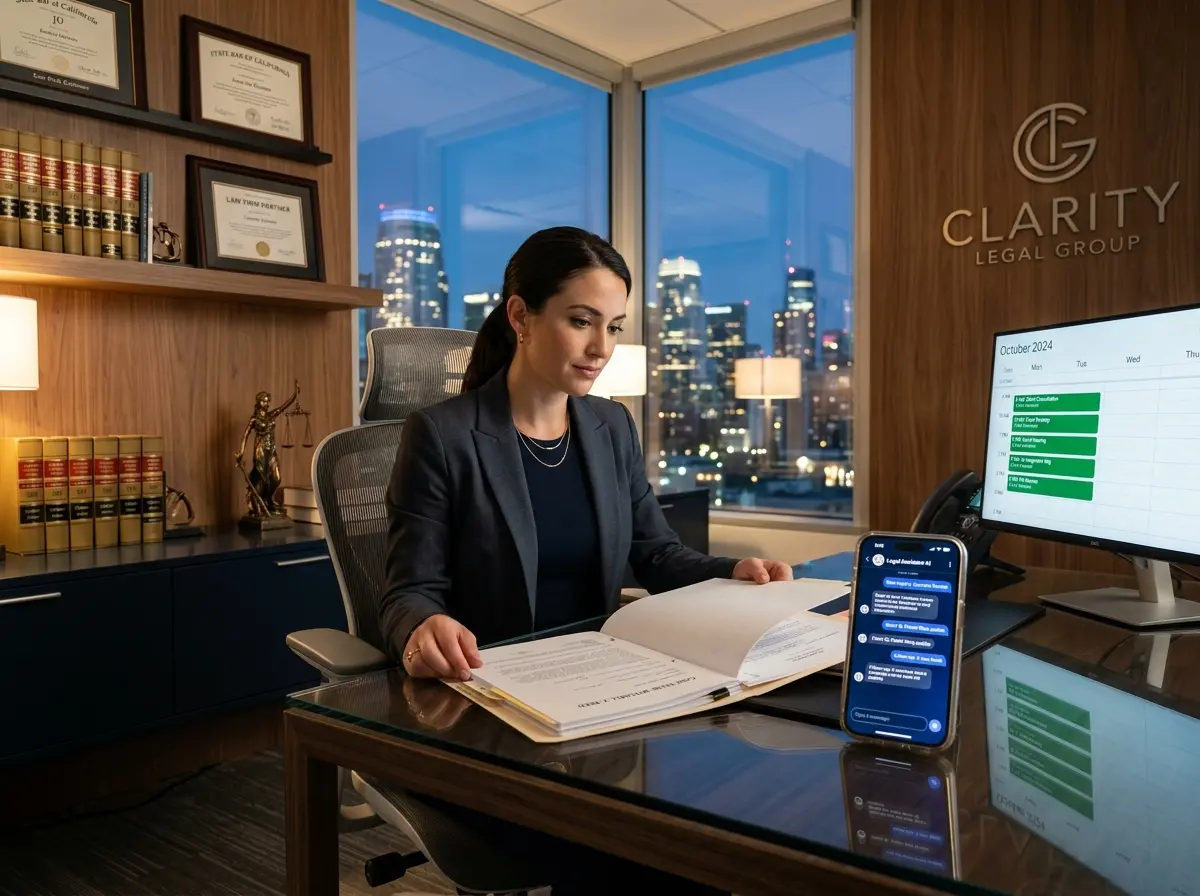
Stella's built-in CRM automatically created a contact profile for each caller, tagged the lead appropriately, and sent an immediate push notification to the managing attorney with an AI-generated summary of the inquiry. By the time Monday morning arrived, the team didn't face a voicemail pile-up — they had an organized list of pre-qualified leads with detailed notes, ready for prioritized follow-up.
The firm also uses Stella's intake form capabilities to ensure that every inquiry, whether it comes in via phone call or through their website, flows into the same CRM system with consistent data fields. No more sticky notes. No more "I think I wrote it down somewhere."
The Numbers That Made the Partners Pay Attention
Within the first two months, the firm's Monday consultation bookings tripled. Not because they were suddenly getting more calls — they were getting roughly the same volume. The difference was that all of those calls were now being captured, qualified, and converted instead of disappearing into the void of an unanswered Saturday afternoon. Their lead-to-booking conversion rate on weekend inquiries jumped from approximately 30% to over 80%. The managing partner described it, with characteristic attorney understatement, as "a significant operational improvement." Translation: they were leaving a lot of money on the table before, and now they weren't.
Building Your After-Hours Intake System the Right Way
Design Your Intake Questions With Intention
An AI receptionist is only as useful as the information it's configured to collect. Before deploying any automated intake system, spend time mapping out exactly what your team needs to know before a Monday morning callback. For a personal injury firm, that might include the date and nature of the incident, whether the caller was at fault, whether they've already spoken to insurance, and whether they've retained other counsel. For a family law firm, the intake questions look entirely different. The point is to configure your system to gather actionable information, not just a name and phone number. A well-designed intake conversation should allow your attorney or paralegal to walk into a Monday callback already knowing whether this is a strong case, what the client's situation is, and how to open the conversation.
Prioritize Warm Lead Follow-Up Over First-Come-First-Served
When your AI system is collecting intake information and generating lead summaries, use that data. Not every weekend inquiry is equally urgent or equally valuable, and your Monday morning callbacks should reflect that. A caller who described a recent high-value personal injury case with clear liability and no existing representation is a different priority than a caller who left a vague message about wanting to "ask a quick question." Organize your Monday follow-up list by lead quality, not by the timestamp of the original call. Your conversion rates will thank you.
Set Expectations During the Call — Then Exceed Them
One underrated aspect of an effective after-hours intake experience is expectation management. When a caller reaches your AI receptionist at 9 PM on a Friday and is told that an attorney will personally call them back between 9 and 10 AM Monday, that specific, credible commitment does real work. It gives the caller a reason to stop shopping. It signals professionalism. And when your team actually does call back during that window — armed with intake notes and ready to have a real conversation — the client experience is genuinely impressive. The bar for weekend legal responsiveness is so low that simply being organized and prompt puts you miles ahead of the competition.
Quick Reminder About Stella
Stella is an AI robot employee and phone receptionist that answers calls 24/7, conducts conversational intake, manages a built-in CRM, and keeps your business running professionally whether your doors are open or not. For law firms with a physical office, she also operates as a human-sized in-store kiosk that greets visitors and answers questions in person. She's available for $99 per month with no upfront hardware costs — which, for context, is less than four hours of weekend receptionist time.
Start Capturing What You've Been Giving Away
If you're running a small law firm and you've been accepting weekend call loss as an unavoidable cost of doing business, it's worth reconsidering that assumption. The math on missed calls is genuinely painful once you do it: multiply your average case value by the number of weekend leads you lose each month, and the number gets uncomfortable fast. The solution isn't to work every weekend yourself or to build an expensive staffing infrastructure around a problem that technology has already solved.
Here's what actionable looks like in practice:
- Audit your missed calls. Pull your call logs for the last 30 days and count how many came in after hours or on weekends. If you don't have that data, that's its own problem worth solving.
- Map your ideal intake conversation. Write down the five to eight things your team needs to know before a meaningful callback. That's your AI receptionist's script.
- Deploy and test before you forget about it. Set a reminder to review the first two weeks of captured leads and refine your intake questions based on what's actually coming in.
- Build a Monday morning ritual around lead review. Your AI system will only triple your bookings if someone actually acts on the organized lead list it produces.
The small firm in this story didn't do anything revolutionary. They didn't hire a team of marketers or redesign their website or launch an aggressive ad campaign. They simply stopped hanging up on people who wanted to hire them. That's the whole story. And it's one you can replicate starting this week.