When "Just Forward Everything to the Front Desk" Stops Working
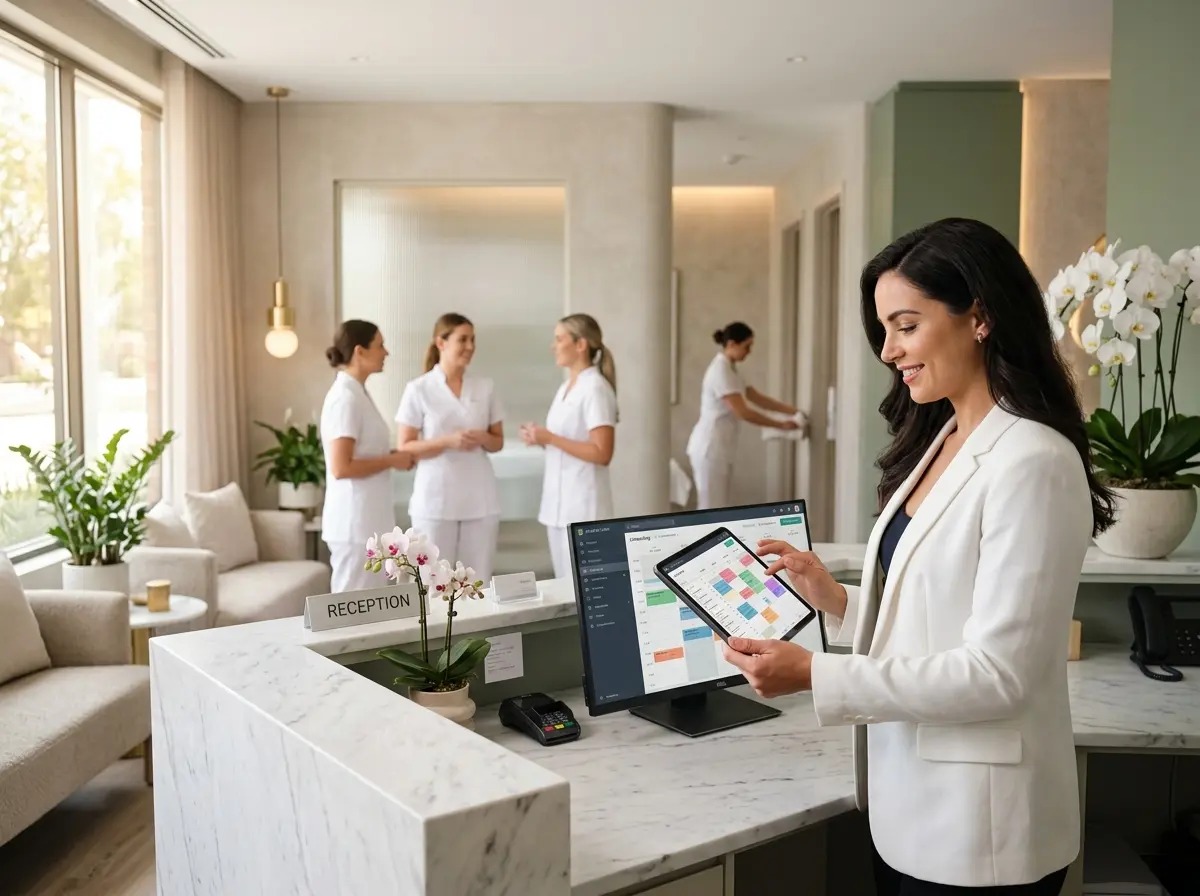
If you run a multi-provider clinic — whether that's a med spa, physical therapy practice, chiropractic office, or any other health and wellness operation — you already know the front desk is simultaneously the most important and most overwhelmed part of your business. Every ringing phone is a potential appointment. Every missed call is a potential patient walking straight to your competitor. And every time a receptionist has to stop mid-intake to answer a call about your weekend hours, a little piece of your efficiency dies quietly on the inside.
The uncomfortable truth? Most clinics treat call routing like an afterthought — and they pay for it in missed bookings, frustrated staff, and a front desk that's permanently one bad Monday away from a full mutiny. The good news is that a thoughtful call routing strategy can genuinely transform your booking numbers, reduce staff burnout, and make your clinic feel like the well-oiled machine you absolutely told investors it already was.
This post breaks down the call routing strategy that helped one multi-provider clinic increase their booked appointments — not by hiring more people, but by being smarter about how calls were handled in the first place.
Understanding Why Your Current Call System Is Quietly Losing You Money
The Hidden Cost of Unstructured Call Handling
Most clinics default to a simple system: the phone rings, whoever is available answers it, and chaos ensues. On a slow Tuesday, this works fine. On a busy Thursday when three providers are running behind, two patients are checking in, and someone just called to dispute a bill — it's a disaster. Calls get answered late, callers get put on hold for uncomfortable stretches, and a meaningful percentage of prospective patients simply hang up and move on.
Research consistently shows that around 67% of customers hang up in frustration when they can't reach a person, and in healthcare-adjacent industries, first impressions over the phone have an outsized impact on whether someone books at all. A caller who waits too long, gets transferred to the wrong person, or has to repeat their information three times is not a caller who becomes a loyal patient.
The "One Queue Fits All" Problem
One of the most common mistakes clinics make is treating every incoming call as though it requires the same response. In reality, your inbound calls probably fall into a handful of distinct categories: new patient inquiries, existing patient scheduling, billing questions, general information requests, and provider-specific calls. When all of these hit the same queue and the same receptionist, you end up with two problems simultaneously — your staff is overwhelmed, and callers with simple questions are waiting behind callers with complex ones.
Segmenting calls by intent isn't complicated, but it does require some intentional design. The clinics that get this right see faster resolution times, higher booking conversion rates, and front desk staff who actually enjoy coming to work — which, in this economy, is practically a luxury benefit.
After-Hours Calls Are Appointment Opportunities in Disguise
Here's the one that stings a little: a significant chunk of prospective patients call outside of business hours. They're calling during their lunch break, after the kids go to bed, or on a Saturday morning when your clinic is closed and your voicemail greeting is doing absolutely nothing to convert them. If your after-hours strategy is "leave a message and we'll call you back Monday," you're leaving appointments on the table every single week.
Smarter Call Routing With a Little Help From AI
How Stella Fits Into a Multi-Provider Clinic's Workflow
Stella — the AI robot employee and phone receptionist — is particularly well-suited to the call routing challenges that multi-provider clinics face. On the phone side, she answers every call 24/7 with full knowledge of your clinic's services, providers, hours, and policies. She can handle general inquiries, collect new patient intake information through conversational forms, and forward calls to specific staff members based on conditions you configure — so billing questions go to billing, and scheduling calls go to scheduling, without anyone having to play traffic cop.
For clinics with a physical location, Stella also operates as an in-store kiosk, greeting patients when they walk in, answering questions, and reducing the volume of basic requests that would otherwise land on front desk staff. Her built-in CRM automatically captures caller and patient information, generates AI-powered contact profiles, and keeps everything organized with custom fields and tags — so when a staff member does take over a call, they're not starting from scratch. It's the kind of seamless handoff that makes your clinic look significantly more put-together than the average operation.
Building a Call Routing Strategy That Actually Books Appointments
Step 1: Map Your Call Types and Define Routing Rules
Start by pulling a week's worth of call logs and categorizing every call by intent. You'll likely find that the majority of your volume falls into three or four buckets. Once you know what's coming in, you can define routing rules that match call intent to the right resource — whether that's a specific staff member, a voicemail with an AI summary, or an automated system that can handle the call without any human involvement at all.
For new patient inquiries specifically, speed matters enormously. Studies suggest that responding to a new lead within five minutes makes you up to 21 times more likely to convert them compared to a 30-minute response. A routing system that gets new patient calls answered immediately — even by an AI that collects intake information and confirms interest — dramatically improves your odds of converting that caller into a booked appointment.
Step 2: Create a Tiered Escalation Structure
Not every call needs a human, but some absolutely do — and your system should know the difference. A tiered escalation structure works by attempting to resolve calls at the lowest-effort level first, then escalating based on complexity or caller preference. At tier one, an AI or automated system handles basic information requests and scheduling for simple appointment types. At tier two, calls escalate to a front desk receptionist for anything requiring judgment or nuance. At tier three, specific calls — complex medical questions, complaints, or provider-requested callbacks — route directly to the appropriate person.
The key is making the escalation feel seamless rather than bureaucratic. Callers shouldn't feel like they're being shuffled around. They should feel like they've been connected efficiently to exactly the right resource for their needs.
Step 3: Optimize After-Hours Handling and Follow-Up
Your after-hours strategy deserves as much thought as your peak-hours strategy. At minimum, after-hours callers should be able to leave information that gets immediately summarized and pushed to a manager — not buried in a voicemail inbox until Tuesday morning. Better still, an AI system that can answer basic questions, collect intake information, and confirm that a team member will follow up converts far better than a static voicemail greeting that asks callers to try again during business hours.
Once you have a system capturing after-hours leads, build a follow-up protocol that gets those callers contacted within the first hour of the next business day. Assign a specific staff member to morning callbacks, track conversion rates from after-hours inquiries, and treat those calls with the same urgency as a walk-in patient standing at the front desk — because that's essentially what they are.
A Quick Reminder About Stella
Stella is an AI robot employee that serves as both an in-store kiosk and a 24/7 phone receptionist for businesses across industries — including multi-provider clinics that need reliable, intelligent call handling without adding headcount. She answers calls, collects patient information, routes inquiries based on configurable rules, and keeps your CRM updated automatically, all for $99 per month with no upfront hardware costs. She doesn't call in sick, she doesn't put people on hold while she chats with a coworker, and she genuinely does not mind working Saturday nights.
Putting It All Together: Your Next Steps
A smart call routing strategy isn't a technology problem — it's a design problem. The technology to handle it well is widely available and increasingly affordable. What separates clinics that see real booking gains from those that don't is the willingness to actually map out the call journey, define clear routing rules, and commit to an after-hours strategy that doesn't rely entirely on the goodwill of callers willing to try again later.
Here's where to start this week:
- Audit your last 50 inbound calls and categorize them by intent. Identify which call types are consuming the most front desk time and which ones could be handled without human involvement.
- Define your routing tiers — what gets handled automatically, what escalates to a receptionist, and what goes directly to a specific provider or department.
- Build an after-hours protocol that captures caller information immediately and guarantees a follow-up within the first hour of the next business day.
- Measure and iterate. Track call-to-booking conversion rates by call type and time of day. Routing strategies that work are the ones you actually monitor.
Your front desk staff will thank you. Your booking numbers will reflect the effort. And your callers — who just want to schedule an appointment without feeling like they've taken on a part-time job — will become loyal patients who send you referrals. That's the whole game, and it starts with answering the phone the right way.