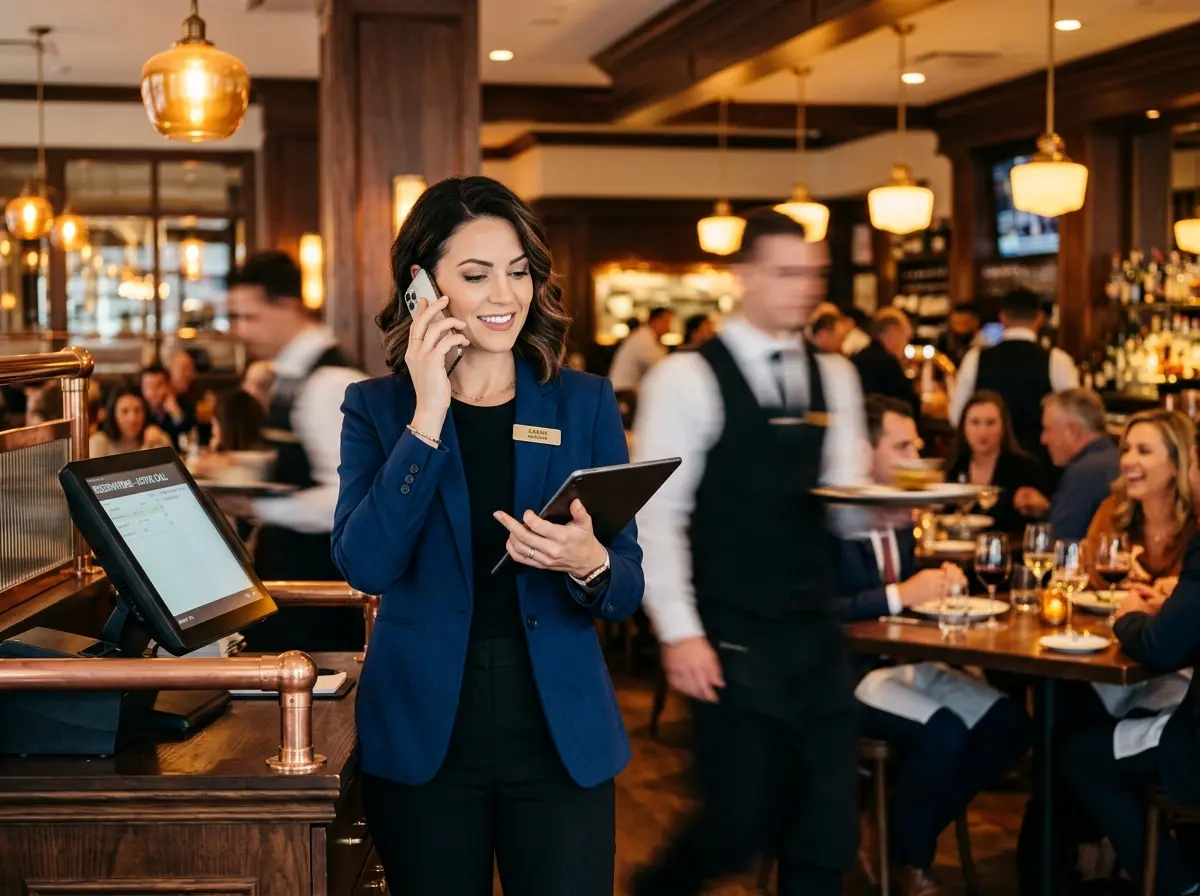
When the Phone Won't Stop Ringing and the Kitchen Is on Fire (Metaphorically)
It's 6:47 PM on a Friday night. Your dining room is packed, your servers are sprinting, and your kitchen is performing what can only be described as a high-stakes culinary ballet. And then — ring ring — the phone. Someone wants to know if you have gluten-free pasta. Then another call. Can you do a reservation for fourteen at 7:30? Then another. What time do you close?
Sound familiar? For restaurant owners, the dinner rush is already a logistical miracle. Adding a constantly ringing phone to that equation is like handing someone a Rubik's Cube while they're juggling. Studies show that missed calls can cost restaurants thousands of dollars per month in lost reservations and takeout orders — and yet, managing call volume during peak hours remains one of the most overlooked operational challenges in the industry.
The good news: there are real, practical strategies to get your phone situation under control — and a few smart tools that can make the whole thing feel a lot less chaotic. Let's dig in.
Understanding the Rush Hour Phone Problem
Why Calls Spike Exactly When You Can Least Afford Them
Here's the cruel irony of restaurant call volume: phones ring the most precisely when your staff is the least available to answer them. The dinner rush typically runs from 5:00 to 8:00 PM, and unsurprisingly, that's also when customers are calling to make last-minute reservations, place to-go orders, or ask questions they probably could have Googled. Your host is seating a party of six, your manager is handling a complaint at table nine, and nobody — absolutely nobody — has a free hand to answer the phone.
The result? Calls go unanswered. Customers hang up, call a competitor, and never come back. It's not a people problem; it's a systems problem.
The Real Cost of a Missed Call
Let's put some numbers on this. The average restaurant takeout order in the U.S. hovers around $30–$50. If your restaurant misses even five calls per rush hour on a busy Friday and Saturday night, that's potentially $300–$500 in lost revenue every weekend — before factoring in the lifetime value of a customer who simply never calls back. Multiply that across a year, and the ringing phone you've been ignoring starts to look a lot more expensive than you thought.
Beyond the revenue loss, there's also the staff morale factor. Asking an already-overwhelmed team member to stop what they're doing mid-rush to answer phones creates friction, errors, and the kind of frazzled energy that customers can absolutely sense when they walk through your door.
Common (But Incomplete) Solutions Restaurants Try
Most restaurant owners eventually cobble together some version of a solution. They add a dedicated phone line, tape a "please leave a voicemail" note near the register, or assign the least-busy staff member (there is no least-busy staff member during rush hour) to handle calls. Some invest in online ordering platforms to reduce call volume for orders — which helps, but doesn't eliminate the reservation calls, question calls, and the eternally classic "do you have parking?" calls. These are band-aids, not systems.
Building a Smarter Call Management System
How AI Phone Receptionists Can Take the Pressure Off
This is where modern technology stops being a buzzword and starts being genuinely useful. Stella, an AI robot employee and phone receptionist, is built exactly for this kind of scenario. During rush hour, when every human on your payroll is heads-down and hustling, Stella answers incoming calls immediately — no hold music, no "please call back during business hours," no missed opportunities. She knows your menu, your hours, your policies, and your current specials, and she can communicate all of that naturally in a real conversation.
What makes Stella particularly well-suited for restaurants is the flexibility. You can configure her to handle everything herself, or to forward calls to a human staff member when specific conditions are met — say, for large party reservations or complaints that require a manager's touch. She also takes voicemails with AI-generated summaries and sends push notifications directly to managers, so nothing slips through the cracks even when the dining room is at full chaos capacity. And for restaurants with a physical location, Stella doesn't just answer phones — she also stands inside your space as a friendly kiosk presence, greeting walk-in customers and answering their questions so your staff can stay focused on delivering great service.
Operational Strategies to Reduce Rush Hour Call Volume
Make Your Information Impossible to Miss Online
A significant portion of rush hour calls are entirely preventable. Hours, location, parking, menu, reservation policies — if this information is hard to find online, customers will call to ask. Audit your Google Business Profile, your website, and your social media pages as if you were a confused first-time visitor. Is your current menu posted and up to date? Are your holiday hours reflected? Is there a clear, prominent way to make reservations without picking up the phone?
Investing an hour each month in keeping your online presence accurate can meaningfully reduce the volume of "quick question" calls that pile up during service. It's not glamorous work, but it pays dividends in the form of a phone that rings a little less at 7:15 PM on a Saturday.
Train Your Team on Phone Triage Protocols
Not all calls are created equal. A customer asking about your hours can wait — or better yet, be handled by an automated system. A customer calling to report that their delivery order arrived wrong cannot. Teaching your staff to quickly assess and triage calls rather than spending three minutes on every inquiry makes a real difference in how manageable rush hour feels.
Create a simple script or flowchart for whoever does answer the phone during busy periods. Something like: Can this be resolved in under 30 seconds? Handle it. Is this a complaint or urgent issue? Get a manager. Is this a question that our voicemail or AI system can handle? Route it appropriately. Simple, repeatable, and — crucially — something your team can actually execute when the kitchen is loud and the dining room is full.
Use Off-Peak Hours to Capture More Business
Here's an underrated opportunity: your phone rings during rush hour because that's when customers think about dining out. But customers also call at 2:00 PM, at 9:30 AM, and at 10:45 PM after they've just seen your restaurant on a food blog. If nobody is answering those calls either, you're leaving money on the table around the clock — not just during dinner service.
A robust call management system doesn't just solve the rush hour problem; it ensures that every call, at every hour, gets a professional, knowledgeable response. That's a competitive advantage most independent restaurants aren't taking full advantage of yet.
Quick Reminder About Stella
Stella is an AI robot employee and phone receptionist designed to help businesses like yours handle customer interactions without adding to your payroll. She answers calls 24/7, greets in-store customers as a physical kiosk presence, promotes your specials, and keeps your team focused on the work that actually requires a human touch — all for $99/month with no upfront hardware costs and no complicated setup.
Taking Control of Your Restaurant's Phone — Starting Today
Managing call volume during rush hour isn't about finding a perfect solution; it's about building a layered system that handles the predictable so your team can focus on the unpredictable. Here's a practical roadmap to get started:
- Audit your online presence this week. Update your hours, menu, and reservation info everywhere it appears. Reduce the preventable calls before you do anything else.
- Create a phone triage protocol for your staff. Even a simple laminated card near the host stand can help your team handle calls faster and more consistently during service.
- Evaluate your after-hours call handling. If calls outside business hours are going to voicemail and being ignored until the next morning, you're losing business every single day.
- Consider an AI phone receptionist for peak and off-peak coverage. Tools like Stella are specifically designed to fill the gaps that human staffing can't cover affordably or reliably.
The ringing phone doesn't have to run your restaurant. With the right systems in place, it becomes just another manageable part of your operation — instead of the thing that sends your host spiraling at 7 PM on a Friday. You've already figured out how to make great food and keep customers coming back. Figuring out the phone? That one's actually easier than it sounds.