Introduction: Your Skin Doesn't Care What's on Your Instagram Feed
Here's a scenario that might feel familiar: It's the middle of July, your estheticians are booked solid with summer glow treatments, and your social media is proudly promoting… a cozy winter hydration facial special you forgot to swap out in February. Somewhere, a potential client is scrolling past it, confused, and booking with your competitor instead.
Running a spa is a beautifully complex business. You're managing staff schedules, product inventory, client relationships, and the delicate art of making people feel like human beings again after a rough week. Content marketing probably feels like the last thing on your to-do list — and yet, it's one of the most powerful tools you have for keeping your appointment book full year-round.
The secret that many spa owners overlook is that your content calendar and your treatment menu are deeply, biologically connected. Skin behaves differently in January than it does in June. Clients' concerns shift with the seasons. Their spending habits peak around predictable holidays and life events. When your marketing actually reflects what your clients are experiencing in their own skin, it stops feeling like advertising and starts feeling like advice — and people trust advice.
This post is your practical guide to building a content calendar that doesn't just fill space on your social media grid, but actually drives bookings by meeting clients where their skin — and their wallets — already are.
Understanding the Skin Cycle and Seasonal Treatment Rhythm
Before you can build a smart content calendar, you need to understand the natural rhythms your clients are already living. Skin isn't static. It's a living organ that responds to temperature, humidity, UV exposure, hormones, and stress — all of which fluctuate throughout the year in deeply predictable patterns. If your marketing ignores this, you're essentially trying to sell umbrellas on a sunny day.
The Four Seasons of Skin (and What Clients Actually Need)
Think of the year in skin terms, not calendar terms. Winter brings transepidermal water loss, sensitivity, and the dreaded "tight, flaky" complaints that send clients rushing in for barrier repair treatments, rich hydrating facials, and body wraps. Spring is about renewal — chemical peels, brightening treatments, and undoing the damage of months spent indoors with dry heat blasting. Summer shifts the focus to oil control, sun damage prevention, cooling treatments, and the perennial SPF education conversation. Fall is arguably your most lucrative season: clients are emerging from summer with hyperpigmentation, sun spots, and dehydrated skin, and they're psychologically primed to invest in a full skin reset before the holidays.
When your content calendar maps directly onto these phases, every email, post, and promotion feels timely and relevant rather than generic. A well-timed "Fall Skin Reset" campaign launched in early September will consistently outperform a vague "Treat Yourself" promotion that could have been sent any month of the year.
The Hormonal and Lifestyle Cycles Worth Tracking
Seasons aren't the only cycles that matter. Your clients are also navigating hormonal fluctuations, major life events, and cultural calendar moments that create predictable demand spikes. Wedding season drives bridal skincare packages. Back-to-school in September means working moms suddenly have a sliver of time back in their schedules — and they want to use it on themselves. January brings a fresh wave of clients who've resolved to "take better care of their skin." Valentine's Day, Mother's Day, and the holiday gifting season are not surprises; they happen every single year, and yet somehow, many spas scramble to create promotions at the last minute.
The goal is to build a 12-month content framework that anticipates these moments at least 6 to 8 weeks in advance, giving you time to create thoughtful campaigns rather than throwing something together the week before.
Building Your Seasonal Content Calendar — Practically and Without Losing Your Mind
Mapping Your Promotional Anchors First
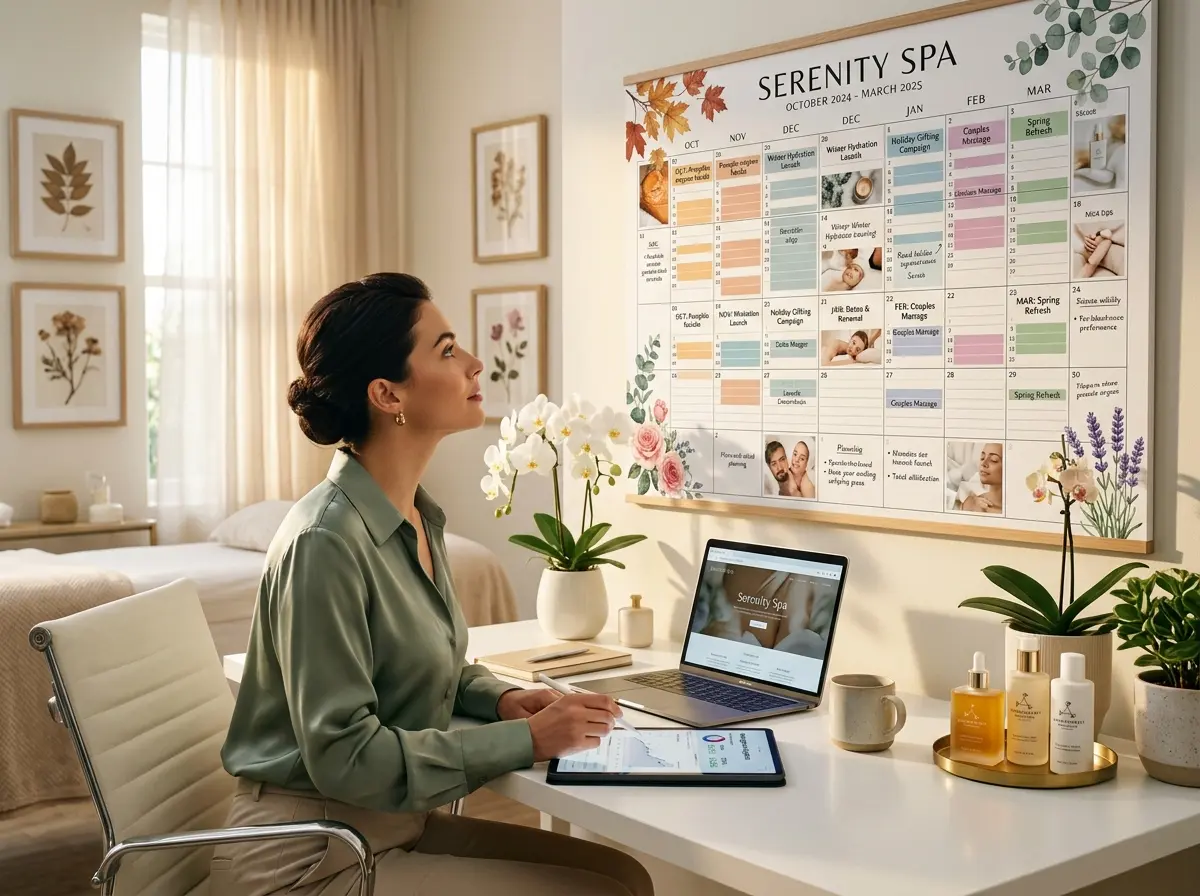
Start with the big rocks before you fill in the sand. Identify your 8 to 10 non-negotiable promotional moments for the year — the seasonal transitions, major holidays, and local events that consistently drive traffic for your spa. For most spas, this list includes New Year's (January), Valentine's Day (February), Spring kickoff (March/April), Summer prep (May/June), Back-to-school (September), Fall skin reset (September/October), and the holiday gift card rush (November/December). Plot these on a calendar and work backward at least six weeks for each one. That's when your content creation, email scheduling, and social planning should begin — not the week of.
Creating Content That Educates, Not Just Promotes
Here's where most spa marketing falls flat: it's all promotion, no education. Clients don't wake up thinking about your chemical peel special. They wake up thinking, "Why is my skin so dry lately?" or "I have an event in three weeks and I need to look amazing." Your content needs to answer those questions first, and then — naturally, helpfully — introduce your treatment as the solution.
A well-structured seasonal content piece might look like this: an educational blog post in early September titled "Why Fall Is the Best Time to Treat Summer Sun Damage," followed by a social series breaking down the science of hyperpigmentation, followed by a targeted email to clients who had summer facials offering them a discounted brightening treatment follow-up. That's a content ecosystem — and it works dramatically better than a standalone "20% off facials this month" graphic.
How Tools Like Stella Can Keep Your Client Communication Running Smoothly
Here's the honest reality of running a busy spa: even with the most beautifully planned content calendar in the world, you still need someone — or something — to handle the flood of inquiries, bookings, and questions that your marketing actually generates. What's the point of a brilliant fall campaign if interested clients call during peak hours and get sent to voicemail?
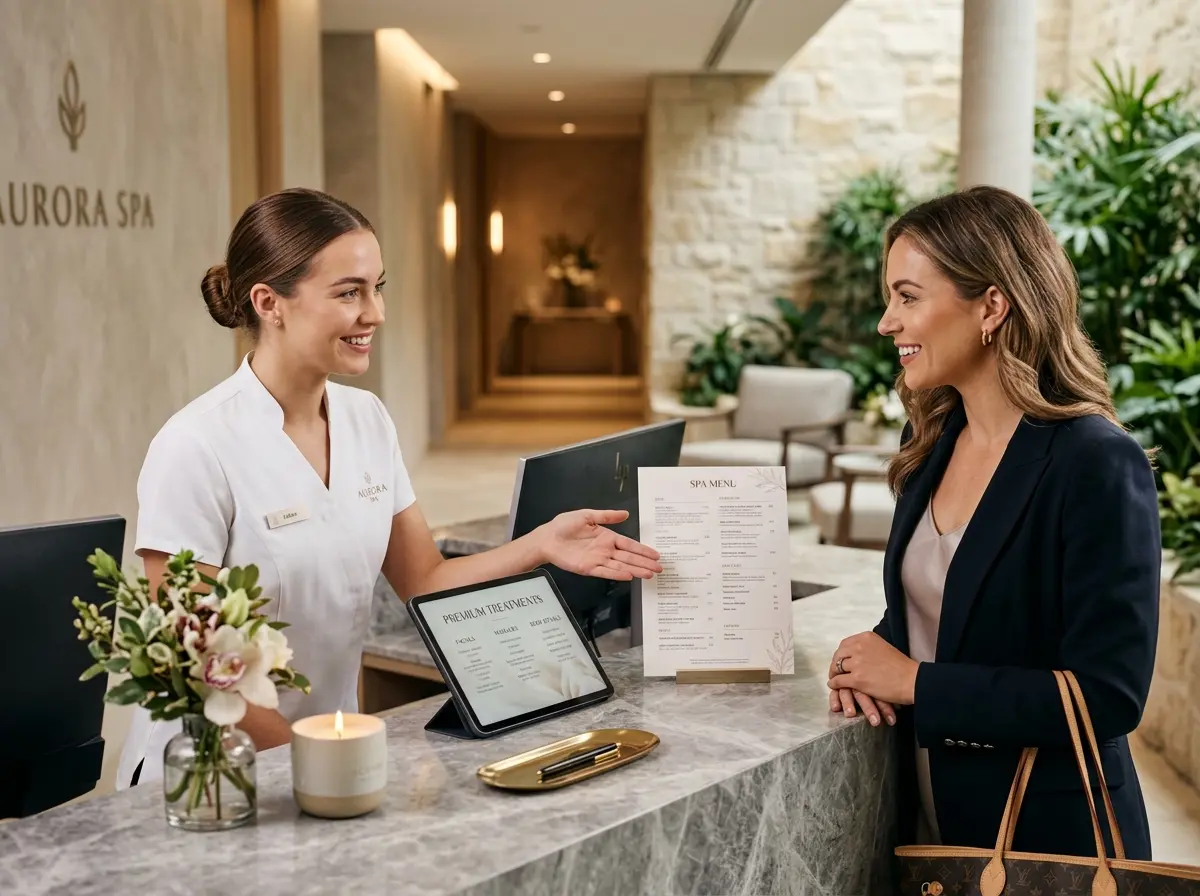
This is where Stella, the AI robot employee and phone receptionist, becomes genuinely useful for spa owners. Stella can handle incoming calls 24/7, answer questions about your current seasonal promotions, explain treatment options, and collect client intake information — all without pulling your estheticians away from the treatment room. Her built-in CRM also lets you tag and track clients based on the services they've inquired about, which feeds beautifully back into your seasonal marketing efforts. If you have a physical location, she can also greet walk-in clients, proactively mention your current specials, and upsell complementary treatments. Think of her as the front desk team member who never gets overwhelmed during your October rush.
Executing Your Content Calendar Without Burning Out Your Team
A content calendar that lives only in your head — or in a spreadsheet no one updates — isn't a content calendar. It's a wish. Execution is where most spa owners struggle, not because they lack ideas, but because they lack systems.
Batching, Templates, and Repurposing Like a Pro
The single most effective way to stay consistent with content is to batch your creation. Set aside one focused half-day per month to create the bulk of your content for the following month. Write captions in sets, photograph treatment results during slow mornings, and record short educational videos while the space is quiet. Use templates for recurring content types — a "Skin Tip Tuesday" graphic template means you never start from a blank canvas. And repurpose ruthlessly: a well-written blog post about winter skin hydration becomes an email newsletter, three Instagram captions, a quick Reel script, and a FAQ card for your front desk. One idea, many vehicles.
Measuring What's Working — And Adjusting Without Drama
A content calendar is a living document, not a sacred scroll. Track which promotions actually drove bookings, which email subject lines got opened, and which social posts generated real inquiry messages versus passive likes. Most booking software and email platforms make this easy to pull monthly. Quarterly, sit down and review what worked — then simply do more of that. If your "Fall Skin Reset" campaign drove 34 new bookings last October and your Valentine's Day campaign fell flat, that's data, not failure. Adjust your effort allocation accordingly and move forward with intention.
Quick Reminder About Stella
Stella is an AI robot employee and phone receptionist designed for businesses exactly like yours. For just $99/month with no upfront hardware costs, she greets clients at your kiosk, answers calls around the clock, promotes your current seasonal specials, and keeps your CRM organized — so your team can stay focused on delivering exceptional treatments. She's the reliable front-of-house presence that never calls in sick during your holiday rush.
Conclusion: Start Simple, Stay Consistent, and Let the Seasons Do the Selling
You don't need a marketing degree or a full-time content team to run a seasonal content calendar that actually works. You need a clear understanding of your clients' skin cycles, a 12-month map of your promotional anchors, a batching system that keeps creation manageable, and the discipline to start six weeks early instead of six days late.
Here are your immediate next steps:
- Pull out a calendar and mark your top 8 promotional moments for the next 12 months. Work backward six weeks from each and note your content creation start dates.
- Write one piece of educational content tied to the current or upcoming season. Not a promotion — an article, a post, or an email that genuinely helps your clients understand their skin right now.
- Audit your current social media and email content to see whether it reflects what your clients are actually experiencing seasonally. If it doesn't, fix the most glaring mismatch first.
- Build a simple batching day into your monthly schedule — even two hours will change how consistent your content becomes.
Your clients' skin is already following a seasonal rhythm. Your marketing should too. When those two things align, your promotions stop feeling like noise and start feeling like exactly the right message at exactly the right moment — which is, ultimately, the only marketing that actually works.