The OTA Commission Trap — And How Smart Hotels Are Escaping It
Let's set the scene: a traveler finds your beautiful independent hotel on Booking.com, falls in love with your charming rooms and rooftop pool, and books immediately. Wonderful! Except that 15–25% commission you just handed to a third-party platform wasn't exactly in your business plan. Congratulations — you did all the work, and an algorithm got a cut of the profits.
Independent hotels have been fighting the OTA (Online Travel Agency) commission war for years, and for a long time, the big platforms had all the weapons: massive marketing budgets, global reach, and the kind of brand recognition that makes travelers default to them out of habit. But the tides are turning. AI chatbots are giving independent hoteliers a way to engage potential guests directly, answer questions instantly, and guide travelers toward booking on the hotel's own website — before they wander off to Expedia and take your margin with them.
This isn't about replacing the human warmth that makes independent hotels special. It's about making sure that warmth is available around the clock, even when your front desk team is handling check-ins at 2 AM and nobody's available to answer the phone or respond to a website inquiry.
Why Independent Hotels Struggle to Convert Direct Bookings
The Availability Problem
Here's an uncomfortable truth: travelers don't shop for hotels between 9 AM and 5 PM. They browse late at night, during lunch breaks, on weekends, and during moments of spontaneous wanderlust that strike at thoroughly inconvenient times. When a potential guest lands on your website at 11 PM with a question about pet policies, parking, or whether the room really does have a view of the ocean and not the parking garage — and nobody answers — they leave. They go back to a platform that has instant answers, reviews, and a "book now" button that never sleeps.
For independent hotels without the staffing budget of a major chain, 24/7 human coverage simply isn't realistic. That gap in availability is costing you direct bookings every single day.
The Information Gap That Kills Conversions
OTAs win on information density. They show reviews, photos, room comparisons, local attractions, and cancellation policies all in one place. Your hotel website, however lovingly designed, often can't compete in real-time responsiveness. A traveler who has to hunt through multiple pages to find your breakfast hours, your check-in policy, or your group booking process is a traveler who is about 30 seconds away from opening a new tab and letting Booking.com handle it.
The solution isn't just better website design — it's interactive, conversational engagement that meets guests where they are and answers their specific questions in real time. That's exactly what AI chatbots are built to do.
The Follow-Up Failure
Most independent hotels are excellent at hospitality once a guest is through the door. The breakdown happens earlier in the funnel. A potential guest submits an inquiry form, and it sits in an inbox for hours. A phone call goes to voicemail, and nobody follows up until the next morning — by which time the guest has already booked elsewhere. Lead capture without prompt follow-up is essentially just collecting names for someone else's benefit.
AI chatbots can engage inquiries the moment they arrive, collect guest information, answer qualifying questions, and either complete the booking conversation or hand off a warm, well-documented lead to a human team member — without making anyone wait.
How AI Tools Like Stella Are Changing the Game for Hotels
Independent hoteliers looking for a practical edge should take a serious look at what AI reception tools can do. Stella, the AI robot employee and phone receptionist, is one example worth knowing about. For hotels with a physical lobby presence, Stella operates as a human-sized kiosk that greets guests, answers questions about the property, and promotes current specials and packages — all without requiring a staff member to break away from other tasks. For phone inquiries, she answers calls 24/7 with the same depth of knowledge she uses in person, so a late-night caller asking about room availability or amenities gets an intelligent, on-brand response rather than a voicemail.
What makes this particularly useful for hotels is Stella's built-in CRM and conversational intake forms. When a potential guest calls to ask about a weekend getaway package, Stella can collect their contact information, preferences, and travel dates during that natural conversation — automatically building a guest profile that your team can use for follow-up, personalization, and marketing. For independent hotels trying to build direct relationships with guests (rather than relying on OTA data they can't access), this kind of contact capture is genuinely valuable. At $99/month with no upfront hardware costs, it's also the kind of tool that fits an independent hotel budget rather than a Marriott one.
Practical Strategies to Drive Direct Bookings With AI Chatbots
Turn Your Website Into a Conversation, Not a Brochure
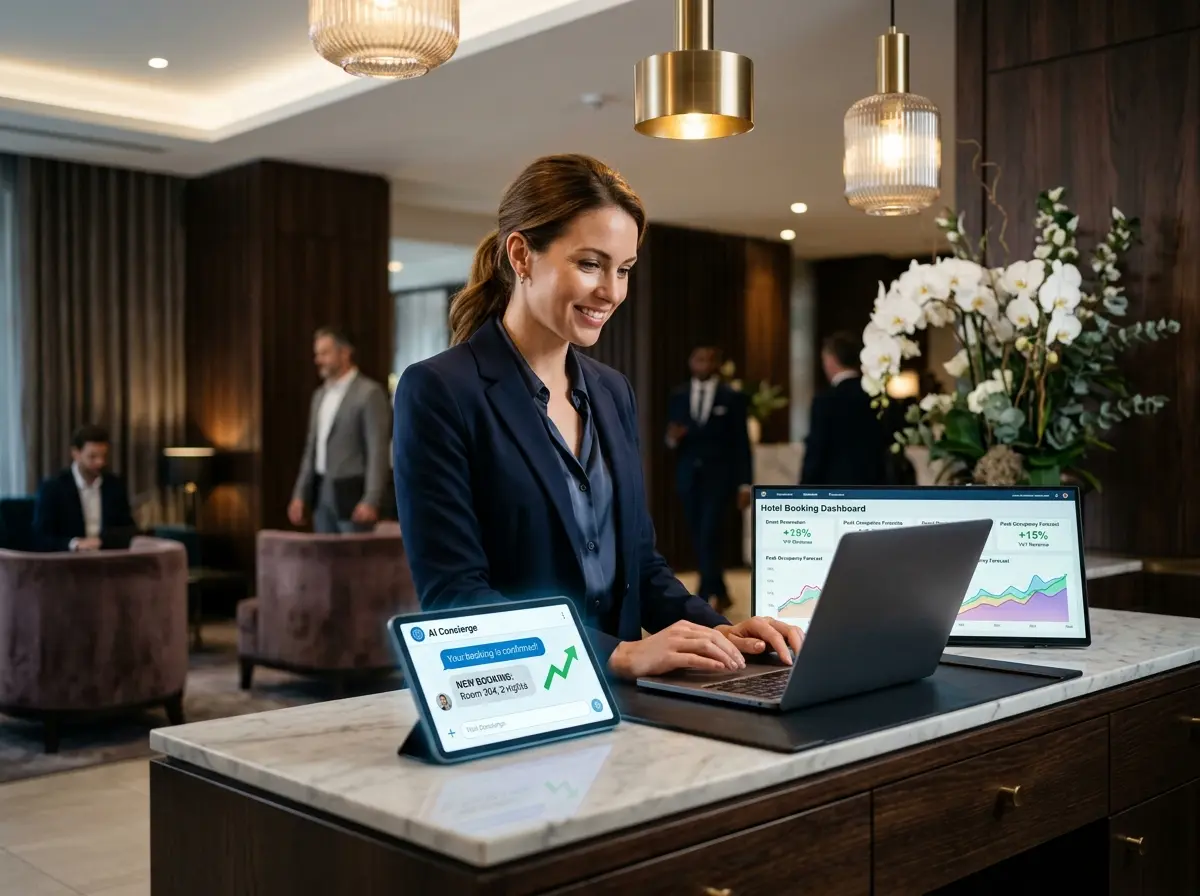
The most immediate application for AI chatbots is on your hotel's own website. A well-configured chatbot can greet visitors, ask what brought them to the site, and guide them through the booking process conversationally. This is particularly powerful for overcoming last-minute hesitations — things like cancellation policy questions, accessibility inquiries, or requests for room-specific details that FAQs never quite seem to cover.
Studies suggest that hotels using live chat or AI chat tools on their direct booking pages see conversion rate improvements of 20–30% compared to static pages alone. The logic is straightforward: a question answered is an objection removed. A chatbot that can confirm, yes, there is indeed a real ocean view and yes, early check-in is available upon request, has just removed the two reasons a guest was about to abandon the booking.
Use AI to Promote Packages and Upsell Thoughtfully
One of the most underused revenue opportunities in independent hotels is the upsell — and most human staff are too busy at check-in to do it consistently. AI chatbots can be configured to surface relevant offers naturally during conversations. A guest inquiring about a standard room can be shown a weekend package that includes breakfast and a late checkout. A caller asking about availability over Valentine's Day weekend can be told about the romance package before they've even thought to ask.
This isn't aggressive sales — it's informed service. When a chatbot knows your current promotions and can weave them into a relevant conversation at the right moment, it's doing exactly what a great front desk agent does, just consistently and at scale.
Reclaim the Phone Channel
Despite the rise of digital bookings, phone calls remain a high-intent channel for independent hotels. A traveler who calls your property is already interested — they want reassurance, personalization, or answers that a website couldn't give them. Letting that call go to voicemail is not a neutral outcome. Research from the hospitality industry consistently shows that unanswered calls convert to bookings at a fraction of the rate of answered ones.
AI phone receptionists ensure that every call is answered, every question is addressed, and every piece of guest information is captured — whether your team is at capacity during peak hours or the phone rings at midnight. The guest feels attended to. You get the booking data. Nobody ends up on Expedia because they couldn't get a human on the line.
Quick Reminder About Stella
Stella is an AI robot employee and phone receptionist designed for businesses of all sizes, including independent hotels. She greets guests in person as a friendly lobby kiosk, answers phone calls 24/7, collects guest information through conversational intake forms, and manages contacts through a built-in CRM — all for $99/month with no upfront costs. She's the team member who never calls in sick, never goes on break, and never lets a booking inquiry slip through the cracks.
Your Next Move: Stop Donating Margin to OTAs
Independent hotels have something the big chains and OTAs genuinely cannot replicate: personality, character, and the kind of guest experience that earns real loyalty. The problem has never been the product — it's been the infrastructure gap that makes it easier for guests to book through a third party than to book direct.
AI chatbots close that gap. Here's where to start:
- Audit your current response times. How long does it take to answer a website inquiry, a phone call, or a direct message? If the answer is "hours" or "it depends," you're losing bookings.
- Add a chatbot to your direct booking page. Even a basic AI chat tool configured with your property's key details, policies, and current promotions will meaningfully improve conversion.
- Make sure your phone is never effectively unattended. Whether through an AI phone receptionist or a properly configured forwarding and voicemail system, every call should receive an immediate, intelligent response.
- Start capturing guest data directly. Every conversation is an opportunity to build a guest profile you own — not one that lives in an OTA's database.
The OTAs aren't going anywhere, and they're not entirely the enemy — they're a distribution channel, and a useful one. But they should be a supplement to your direct booking strategy, not the primary driver of your revenue. With the right AI tools in place, independent hotels can compete on responsiveness, personalization, and availability in ways that were simply out of reach five years ago.
Your guests want to book direct. Make it easy for them — and make sure someone (or something) is always there to help them do it.