Your Appointment Book Shouldn't Have Trust Issues
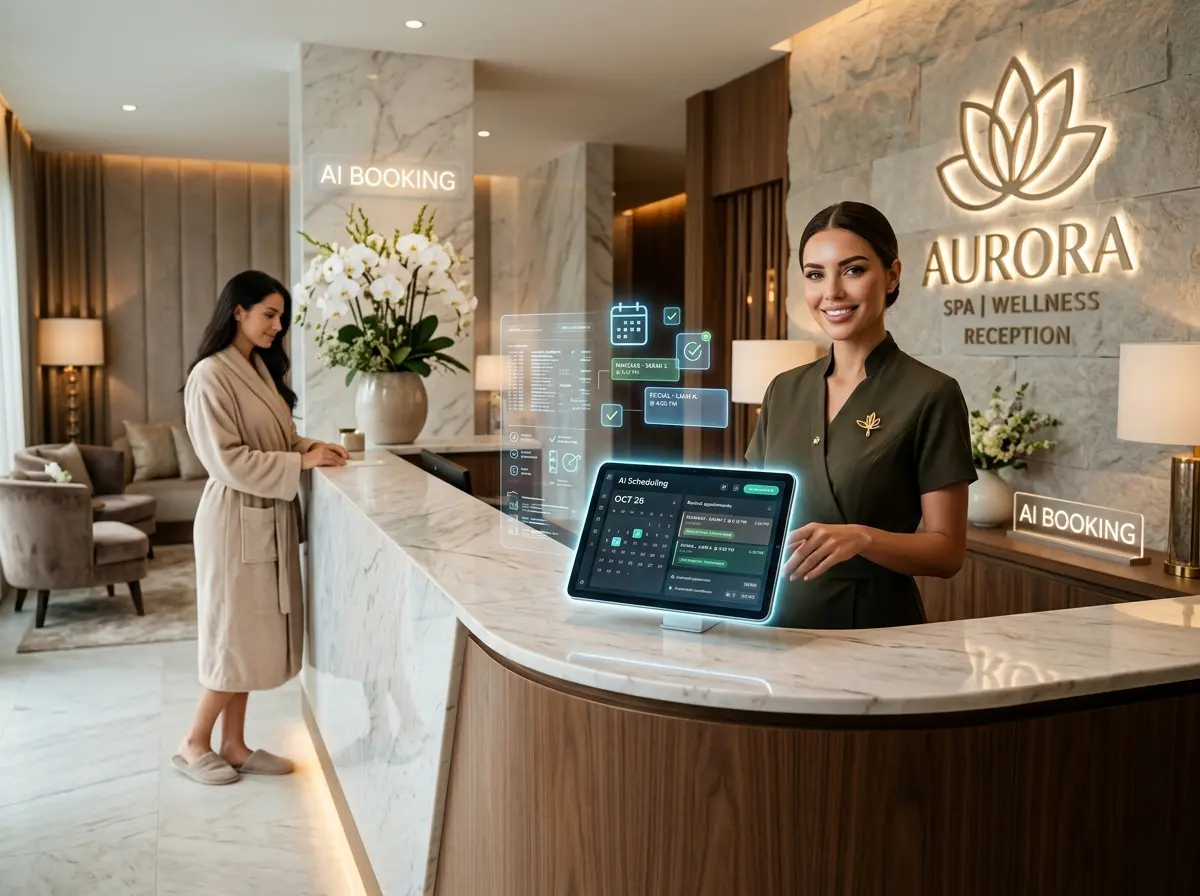
Let's paint a familiar picture: it's a busy Tuesday afternoon at your spa. Your estheticians are elbow-deep in facials, your massage therapists are working their magic, and your front desk staff is somehow simultaneously answering the phone, checking in a walk-in, and trying to remember if 3:00 PM is still open for a deep tissue. It's controlled chaos — and somewhere in that chaos, a potential client calling to book a hot stone massage just gave up and hung up. Congratulations, you just lost $120 and a potential repeat customer. No hard feelings.
The wellness industry is booming. According to the Global Wellness Institute, the global wellness economy is valued at over $5.6 trillion — and spas are a massive piece of that pie. But here's the uncomfortable truth: most spas are still running their booking operations like it's 2005. Phone tag, missed calls, and overworked receptionists are leaving serious money on the table. Enter AI receptionists — and more specifically, the kind that actually know what they're talking about, work around the clock, and never call in sick on a Saturday.
Why Spa Appointment Booking Is Broken (And Has Been for a While)
The Missed Call Problem Is Bigger Than You Think
Studies suggest that 85% of people whose calls go unanswered will not call back. They'll just move on — probably to the spa down the street with a slightly worse ambiance but a receptionist who picked up. For spas, where every appointment slot represents direct, predictable revenue, a missed call isn't just a minor inconvenience. It's a hole in your revenue bucket.
Most spas operate during daytime hours. But curious potential clients don't restrict their research and booking impulses to business hours. They browse, they wonder, they decide they desperately need a lymphatic drainage massage — and they do it at 9 PM on a Wednesday. If your phone just rings into the void, that spontaneous booking decision evaporates just as quickly as it appeared.
Staff Burnout at the Front Desk Is Real
Your receptionist is a human being, not a multi-threaded server. Asking one person to greet walk-ins, manage a ringing phone, process payments, handle rebooking, upsell membership packages, and remember which clients have nut allergies in their facial products is — to put it diplomatically — a lot. Turnover in spa front desk roles is notoriously high, and every time you onboard someone new, you're investing time, money, and energy that could go elsewhere.
The result? Inconsistent customer experiences. Some days your front desk is a warm, knowledgeable ambassador for your brand. Other days, they're frantically putting callers on hold and forgetting to mention the new body wrap promotion entirely. AI doesn't have bad days. It's annoyingly consistent.
Manual Booking Processes Create Gaps in Your Calendar
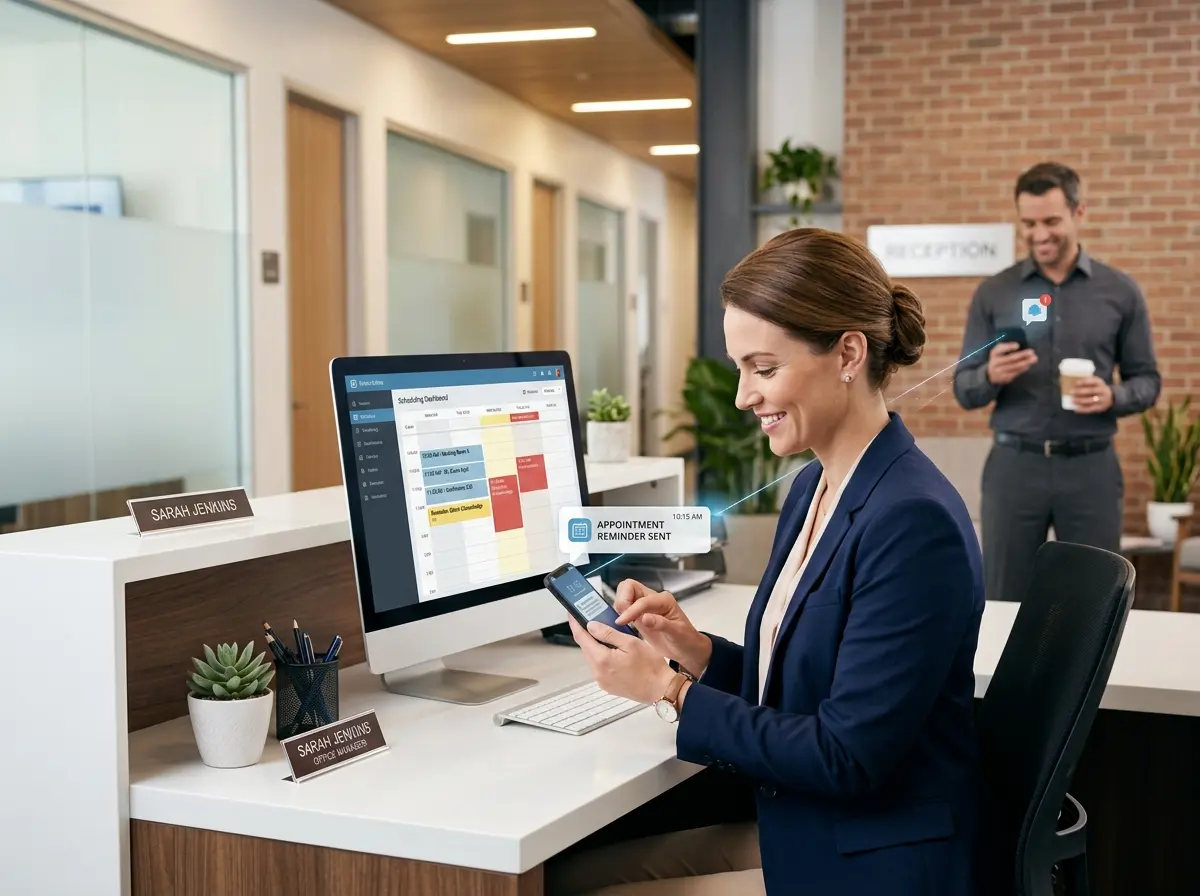
When booking relies heavily on phone calls and manual scheduling, gaps happen. Clients cancel, staff forget to open up the slot, and suddenly you have a therapist sitting idle during what should have been a prime afternoon window. Automating the intake and booking conversation — capturing client preferences, service interests, and contact details before they even speak to a human — dramatically reduces the friction that leads to these gaps and no-shows.
How AI Receptionists Are Changing the Spa Game
Tools Like Stella Are Doing the Heavy Lifting
This is where things get genuinely interesting for spa owners who are tired of the chaos. Stella is an AI robot employee and phone receptionist built for exactly this kind of business. For spas with a physical location, she shows up as a friendly, human-sized kiosk right inside your space — greeting walk-ins, answering questions about services and pricing, and proactively promoting your current specials (because yes, someone needs to remember to mention the holiday facial package). For phone inquiries, she answers 24/7 with the same depth of knowledge she uses in person, so your 9 PM impulse-booker actually gets a helpful, informative conversation instead of a voicemail abyss.
Stella can collect client information through conversational intake forms during a phone call — capturing names, contact details, service preferences, and more — and store everything in a built-in CRM with custom fields, tags, and AI-generated client profiles. That means by the time your human staff follows up, they already know they're calling Sarah, who's interested in a monthly membership and prefers evening appointments. That's not just efficient. That's impressive. And at $99/month with no upfront hardware costs, it's the kind of impressive that actually fits a spa's budget.
Strategies Spas Are Using to Fill Calendars on Autopilot
Capturing After-Hours Inquiries and Converting Them
The most immediate win for spas adopting AI receptionists is simply being available when competitors aren't. By ensuring that every after-hours call results in a real conversation — one where the AI can answer service questions, collect contact information, and even outline next steps for booking — spas are turning previously lost leads into confirmed appointments. The key is making sure your AI receptionist is trained on your actual services, pricing, and policies, not just generic pleasantries. A client who calls at 10 PM asking about the difference between a Swedish and deep tissue massage should get a real answer, not a "please call back during business hours." That's a conversion waiting to happen.
Using Conversational Intake to Reduce No-Shows
No-shows are the villain of every spa owner's story. One underutilized strategy is using the booking conversation itself — whether via phone or in-person kiosk interaction — to gather more information and create a higher sense of commitment. When a client has answered a few intake questions, provided their contact details, and received a confirmation, they're psychologically more invested in actually showing up. AI receptionists that handle this intake conversationally, without making it feel like a form-filling exercise, see notably better engagement. Pair that with automated reminders and you've got a no-show problem that's actually manageable.
Proactive Upselling Without the Awkwardness
There's an art to upselling in wellness — done wrong, it feels pushy and ruins the zen. Done right, it feels like a helpful recommendation from someone who knows their stuff. AI receptionists can be configured to naturally weave in relevant upsells during conversations: mentioning that the hot stone upgrade is only $30 more, or that clients who book a facial and massage together save 15%. Unlike a tired human receptionist at the end of a long shift, an AI won't forget to mention the promotion, won't feel awkward about bringing it up, and won't undercut your margins by skipping the upsell entirely. Consistency is the secret weapon here.
Quick Reminder About Stella
Stella is an AI robot employee and phone receptionist designed for businesses like yours — spas, salons, gyms, and beyond. She greets customers in person as a friendly kiosk, answers phone calls around the clock, collects client information, manages your contacts through a built-in CRM, and promotes your services without ever needing a coffee break. At $99/month with no upfront hardware costs, she's one of the more sensible hires you'll make this year.
Your Next Steps Toward a Fuller Appointment Book
If you've made it this far, you already know that the status quo isn't working as well as it could. The good news is that fixing it doesn't require a full operational overhaul or a tech team on retainer. Here's a practical path forward:
- Audit your missed calls. Look at how many calls went unanswered last month and estimate the revenue impact. Even a conservative estimate tends to be eye-opening.
- Identify your peak inquiry times. Are most of your calls coming in during hours you're already covered, or are they clustering around evenings and weekends? The answer tells you how urgently you need after-hours coverage.
- Map out your intake process. What information do you currently collect before a client's first visit? If the answer is "not much until they show up," you have a real opportunity to reduce no-shows and personalize service.
- Explore AI receptionist options seriously. Look for solutions that can be trained on your specific services, pricing, and policies — not just generic phone answering scripts. The more your AI knows about your spa, the more useful it is to potential clients.
The spas that are winning right now aren't necessarily the ones with the best eucalyptus towels or the most Instagram-worthy treatment rooms. They're the ones that are available, consistent, and smart about how they capture and convert interest into bookings. Automation isn't replacing the human touch that makes a great spa experience — it's protecting it, by making sure the humans on your team can focus on what they actually do best.
Your appointment book deserves better than crossed fingers and a phone that sometimes goes unanswered. Give it the infrastructure to fill itself.