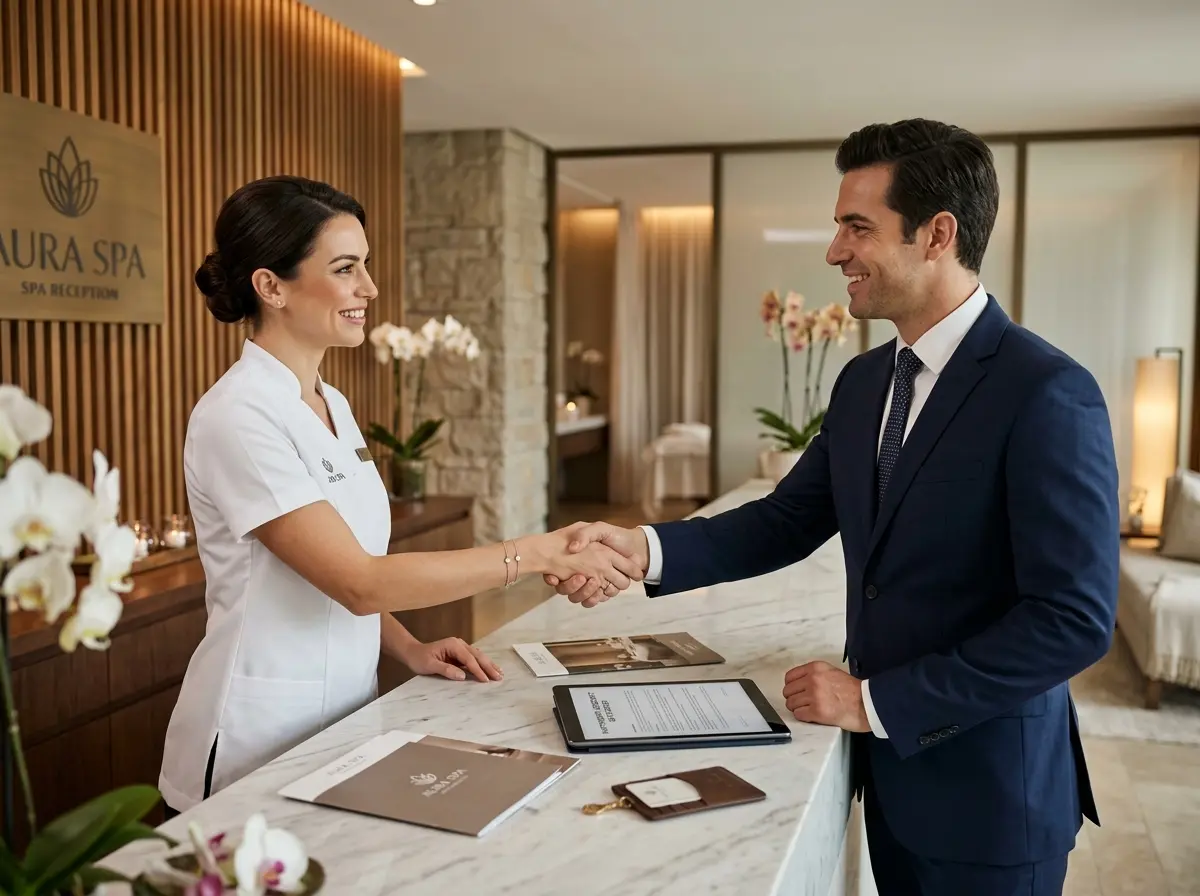
So You Want Hotels to Send You Guests — Great Idea
Here's the thing about hotel guests: they're already in vacation mode. They've left their responsibilities at home, they're sleeping in a bed someone else makes for them, and they're looking for ways to spend their time and money. A spa partnership with a local hotel is one of the smartest moves a spa owner can make — and yet, most spa owners either never pursue it or go about it in a way that makes hotel concierges want to quietly back away.
A well-built hotel partnership program can become one of your most reliable revenue streams. We're talking about a steady pipeline of warm leads — guests who are already primed to relax, already looking for recommendations, and already willing to spend. According to the Global Wellness Institute, the wellness economy is valued at over $5.6 trillion globally, and hotels are increasingly eager to plug their guests into local wellness experiences rather than build expensive in-house facilities. That's your opening.
But a partnership program isn't just about handing some brochures to a front desk clerk and hoping for the best. It takes structure, relationship-building, and a little professionalism. Let's walk through how to do this right.
Building the Foundation of a Winning Hotel Partnership
Start With the Right Hotels — Not Just the Closest Ones
Not every hotel in your area is a natural fit for your spa. A budget motel catering to traveling sales reps probably isn't sending clients your way for a hot stone massage. You want to identify hotels whose guest profiles align with your typical clientele. Boutique hotels, four-star properties, wedding destination venues, resorts, and extended-stay hotels that cater to corporate travelers with expense accounts — these are your targets.
Do a little homework before you reach out. Look at the hotel's reviews, their website, and their social media. Are they marketing themselves as a luxury or lifestyle experience? Do they already promote local activities and wellness to their guests? The more a hotel leans into the "curated local experience" angle, the more receptive they'll be to a partnership with your spa.
Make a list of your top five to ten candidates. Prioritize quality over quantity — a strong relationship with two hotels is worth far more than a loose, forgotten arrangement with a dozen.
Craft a Partnership Proposal That Makes Hotels Say Yes
This is where a lot of spa owners stumble. They walk into a hotel with a handful of gift cards and a friendly smile and call it a pitch. Hotel managers, especially at higher-end properties, want to see something more structured. They're thinking about their guests' experience, their liability, their brand reputation, and — let's be honest — what's in it for them.
Your proposal should clearly outline the following:
- What you offer their guests: Services, pricing, any exclusive hotel-guest discounts or packages.
- What you offer the hotel: Commission on referrals (typically 10–20%), co-branded marketing materials, or a flat monthly arrangement.
- How it works logistically: Booking process, confirmation, guest communication, and how the hotel staff stays informed.
- How you'll track referrals: A referral code, a dedicated booking link, or a simple sign-in process at your spa.
Present this in a clean one or two-page document. You don't need a 40-slide deck — you need clarity. Hotels want to feel confident that partnering with you is easy and professional, not a headache they're volunteering for.
Make Life Easy for Concierge Staff
The concierge team is your secret weapon in this entire equation. They are the humans standing between your spa and a hotel guest who just asked, "Is there anywhere nice nearby to get a massage?" If the concierge doesn't know you, doesn't like you, or finds it complicated to book with you — that guest is going somewhere else.
Visit the hotel in person. Bring something — a small treat, branded items, or even a complimentary spa experience for the concierge team so they can speak about your services from personal experience. Make sure they have physical materials that are easy to hand out: a clean rack card, a QR code that goes directly to your booking page, and a simple way to reach you if a guest has questions. Check in with them regularly. Build an actual relationship. These people are your best unpaid salespeople, so treat them accordingly.
How Technology Keeps the Partnership Running Smoothly
Don't Let Missed Calls Sink Your Hotel Referrals
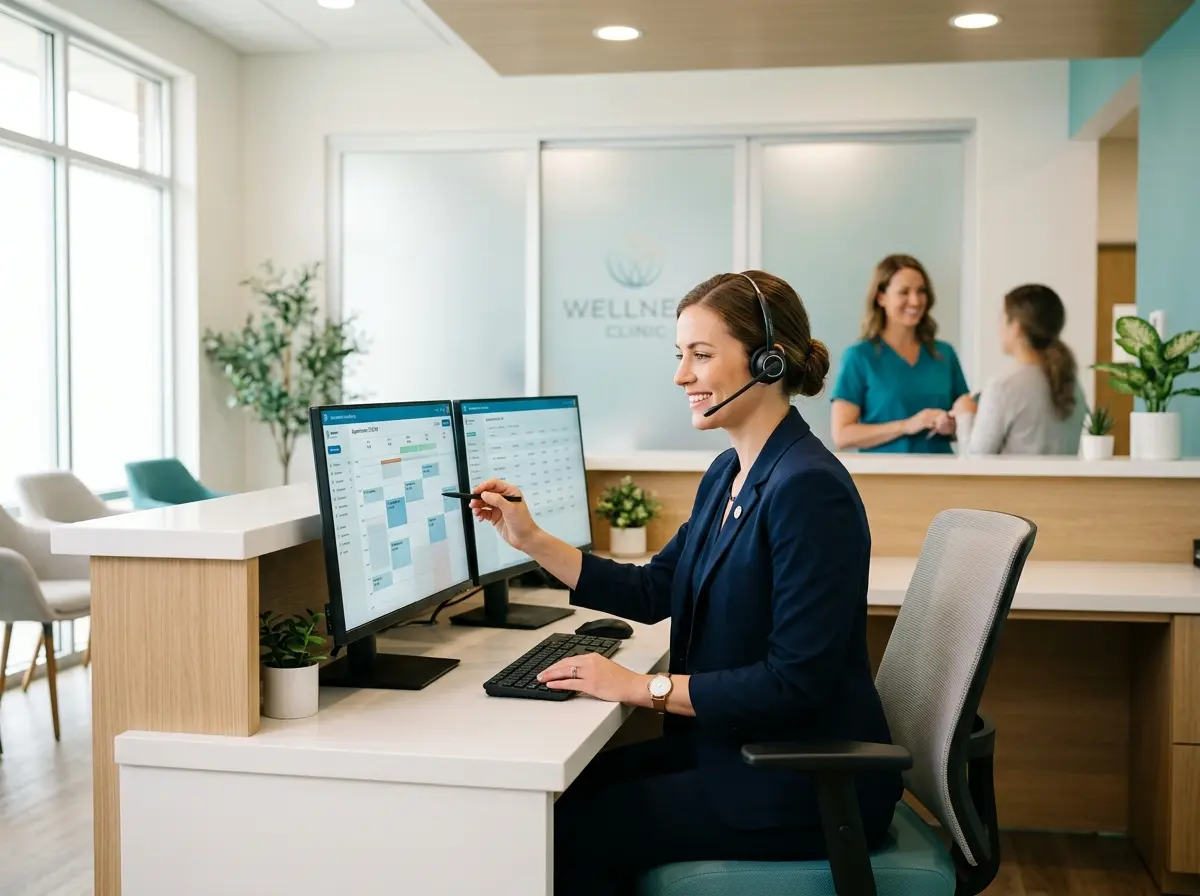
Here's an uncomfortable truth: if a hotel guest calls your spa to book an appointment and no one picks up, they're not leaving a voicemail and waiting patiently. They're googling the next spa. Hotel partnerships only work if your business is reliably reachable, and that's exactly where Stella — the AI robot employee and phone receptionist — earns her keep.
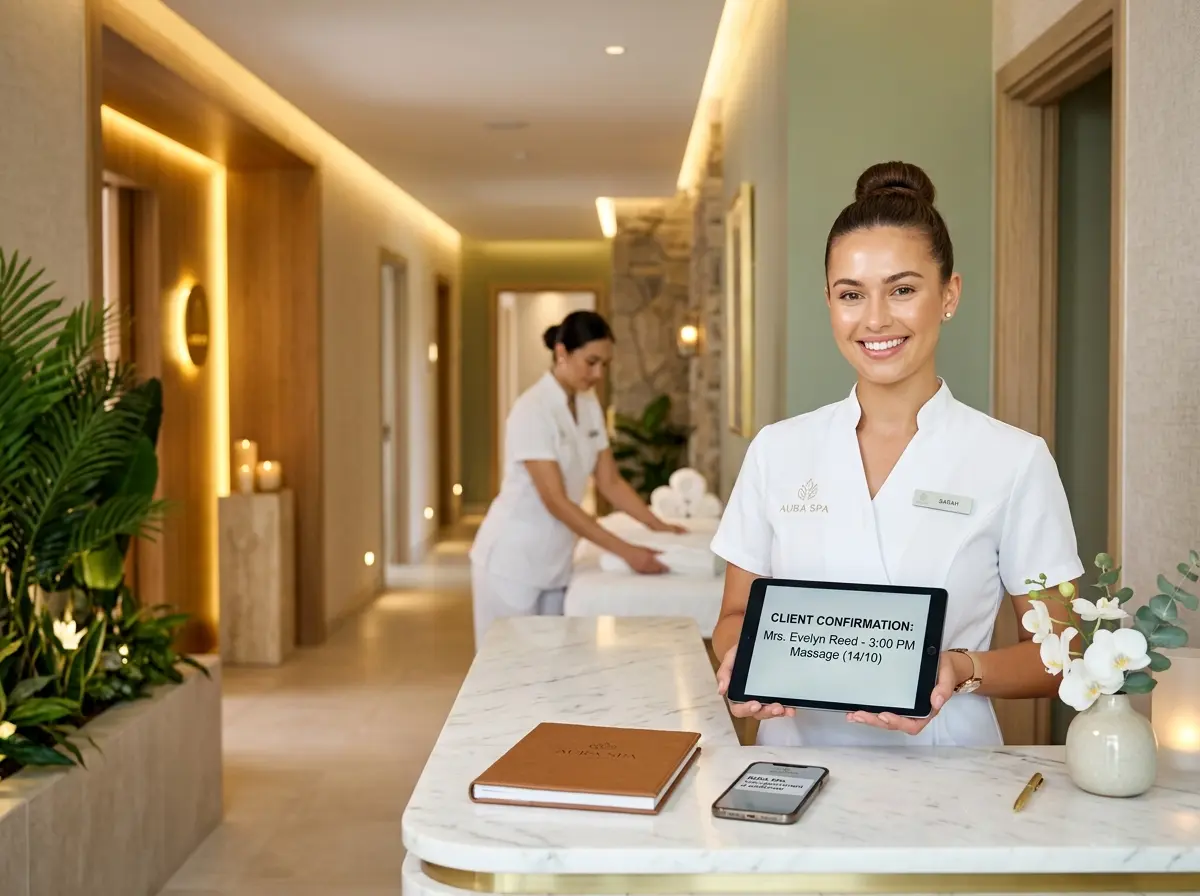
Stella answers every phone call, 24/7, with the same professional knowledge your best staff member would have. She can tell callers about your services, current promotions, and availability — and she can collect their information through conversational intake forms so nothing slips through the cracks. For a spa running a hotel partnership program, that kind of reliability is not a luxury. It's the difference between a referral that converts and one that quietly walks into a competitor's door. Stella also greets walk-in guests at your kiosk, so whether a hotel guest calls ahead or just shows up, they're met with a warm, informed welcome every single time.
Structuring the Program for Long-Term Success
Build In a Referral Tracking System From Day One
This is the part most spa owners skip, and then six months later they're wondering whether the partnership is actually doing anything. Without tracking, you can't measure success, you can't optimize, and you can't have an honest conversation with your hotel partner about performance.
The simplest approach is a unique discount code or booking link for each hotel. When a guest books using that code, you know exactly where they came from. You can also add a field to your intake process that asks, "How did you hear about us?" — but codes are more reliable because they don't depend on a guest remembering to mention the hotel. Review your referral data monthly. Track not just how many guests came from each hotel, but how much they spent, whether they rebooked, and which services were most popular among hotel guests. This data is gold — both for running your business and for impressing hotel managers when you check in with them.
Create Exclusive Packages That Make the Partnership Tangible
One of the most effective ways to deepen a hotel partnership is to create a package that feels exclusive to hotel guests. It doesn't have to be radically different from your standard offerings, but it should feel curated. Think: a "Weekend Retreat Package" available only to guests of a specific hotel, a co-branded gift voucher, or a "Welcome to the City" relaxation bundle with a modest hotel-guest discount.
These packages give concierge staff something exciting and specific to recommend rather than a vague "you should check out this spa." They also create a sense of exclusivity that guests love — nobody wants the standard option when they're on vacation. Work with your hotel partner to co-promote these packages. Ask if they'll mention it in their guest welcome emails, on their in-room materials, or on their website's local recommendations page. The more integrated the partnership feels, the more guests will actually act on it.
Revisit, Renegotiate, and Renew Regularly
A partnership that was designed six months ago may not fit your business — or the hotel's priorities — today. Schedule a quarterly check-in with your hotel contacts. Bring your referral data, talk about what's working, and be open to adjusting commission rates, packages, or processes. Hotels change their staff, their branding, and their guest demographics more often than you'd expect. Staying close to those shifts ensures you stay relevant.
Also, don't be afraid to let a partnership go if it isn't working. If a hotel has sent you three guests in six months despite your best efforts, that energy is better invested elsewhere. The goal is a small number of highly productive partnerships, not a sprawling network of arrangements that generate nothing but paperwork.
A Quick Reminder About Stella
Stella is an AI robot employee and phone receptionist built to help businesses like spas stay professional, responsive, and fully staffed without the overhead. She answers calls around the clock, greets in-store guests at her kiosk, promotes your services and packages, and keeps your customer information organized — all for just $99 a month. When your hotel partnership starts sending guests your way, Stella makes sure none of them slip through the cracks.
Start Small, Build Strong, and Don't Drop the Ball
A hotel partnership program is not something you build in a week, but it's also not as complicated as some people make it. Start by identifying two or three hotel targets that genuinely fit your clientele. Craft a clean, professional proposal. Visit the concierge team in person and make them love you. Set up a simple referral tracking system. Create at least one exclusive package that gives the partnership a real identity. And then — crucially — make sure your business is always ready to receive the guests those hotels send you.
The spas that win at this aren't necessarily the fanciest or the most expensive. They're the ones that are easy to work with, reliable, and consistent. Build a reputation among local hotels as the spa that always delivers, and those referrals will keep coming without you having to chase them.
Now go introduce yourself to a concierge. They're waiting for someone exactly like you to make their job easier.