Introduction: Because "We'll Be Back in 12 Months" Shouldn't Be a Surprise
Let's be honest — pest control isn't exactly the industry where customers are lining up to chat about their experience at dinner parties. But here's the thing: recurring service is the backbone of a thriving pest control business, and managing it poorly is the fastest way to lose clients who would have happily paid you year after year. We're talking quarterly treatments, annual termite inspections, monthly mosquito programs — the kind of reliable, predictable revenue that makes your accountant smile and your stress levels drop.
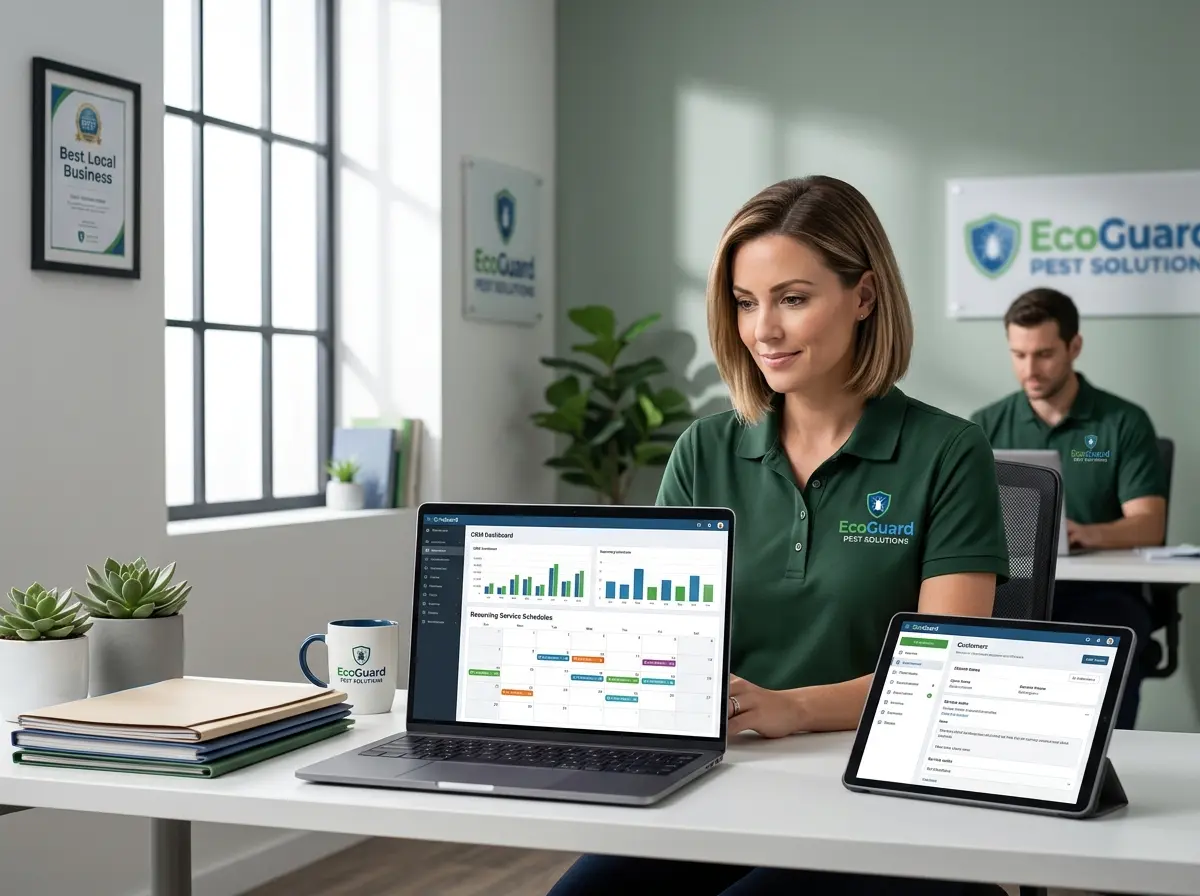
The problem? Too many pest control operators are still managing recurring clients with a cobbled-together mess of spreadsheets, sticky notes, and the occasional "oh shoot, we forgot to call them" moment. Sound familiar? That's where a Customer Relationship Management (CRM) system stops being a luxury and starts being a lifeline. A good CRM doesn't just store contact info — it becomes the engine that keeps your recurring service machine humming smoothly, your technicians booked efficiently, and your clients feeling like you actually remember they exist.
This guide is here to help you use your CRM strategically — not just as a glorified address book, but as a genuine business tool that drives retention, automation, and growth.
Building a CRM That Actually Works for Pest Control
Custom Fields Are Your Best Friends (Use Them Wisely)
Out-of-the-box CRM setups are designed for everyone, which means they're perfectly optimized for no one in particular. Pest control has very specific data needs, and if your CRM doesn't reflect that, you're leaving value on the table. Start by configuring custom fields that are actually relevant to your operations. Think: service type (quarterly, bi-monthly, monthly), pest category (general pests, termites, mosquitoes, rodents, bed bugs), property type (residential, commercial, multi-unit), last service date, next scheduled date, and contract renewal date.
These fields aren't just nice to have — they're what make automated follow-ups, segmented marketing, and intelligent scheduling actually possible. When your CRM knows that a customer is on a quarterly outdoor pest program with a renewal coming up in 45 days, it can trigger a reminder, prompt a call, or fire off a renewal offer automatically. Without that data structure in place, you're just guessing.
Tags and Segmentation: Stop Treating Every Customer the Same
Not all pest control clients are created equal, and your CRM communication strategy shouldn't pretend otherwise. Tagging customers based on their service history, property profile, and behavior lets you send the right message to the right person at the right time — rather than blasting everyone with the same generic newsletter that half your list ignores.
For example, tag clients who've had termite treatments separately from those on general pest plans. Tag commercial accounts differently from residential ones. Flag customers who've canceled in the past but re-enrolled — these folks may need a little extra TLC to stay loyal. When mosquito season rolls around, you can instantly pull a list of residential clients who aren't on a mosquito program and send them a targeted promotion. That's not spam — that's smart business. According to HubSpot, segmented email campaigns can drive up to 30% higher open rates than non-segmented ones. In pest control terms, that's a lot of re-booked services.
Notes and Service History: The Memory Your Team Desperately Needs
Here's a scenario: a technician shows up to a recurring appointment, and the customer mentions they had a bad experience with the last visit. The tech has no idea what happened because it was never logged. Awkward doesn't begin to cover it. Your CRM's notes and service history features exist precisely to prevent these moments. Make it a non-negotiable standard that every technician logs a brief service note after each visit — what was treated, any issues observed, any customer concerns raised, and what products were used.
Over time, these notes transform into an invaluable record that helps your team provide genuinely personalized service. The customer who always asks about their dog's safety around treatments? That's in the notes. The commercial account that needs early morning appointments only? Also in the notes. This level of detail builds trust and retention in ways that no discount ever could.
Let Technology Handle the Follow-Up (Before Your Clients Call a Competitor)
Automating Recurring Service Reminders and Renewals
The number one reason recurring service clients churn isn't price — it's being forgotten. If you're not proactively reaching out before their next service is due, you're creating a window for your competitor to slide in with a postcard offer. Your CRM should be doing the heavy lifting here with automated workflows: a reminder email or text sent 2 weeks before a scheduled service, a renewal prompt 60 days before a contract expires, and a re-engagement sequence for clients who've gone quiet. Set it up once, and let it run while you focus on actually running the business.
This is also where Stella, the AI robot employee and phone receptionist, can complement your CRM strategy beautifully. While your CRM is firing off automated reminders, Stella is answering every incoming call 24/7 — so when a client calls to reschedule, ask about their upcoming service, or inquire about adding a new treatment plan, no call goes unanswered. She can collect customer information through conversational intake forms during calls and sync it back into your CRM pipeline, ensuring your records stay accurate without your front desk having to manually update anything. Whether you're a one-truck operation or managing a team of ten technicians, having Stella handle inbound calls means your CRM data stays current and your clients always feel attended to.
Turning Recurring Clients Into Revenue Growth Engines
Upselling Within Your Existing Customer Base
Your recurring clients are already the easiest sell you have — they know you, they trust you, and they've already decided your service is worth paying for. The question is whether you're taking full advantage of that relationship. Your CRM gives you visibility into exactly what each client is and isn't purchasing. A customer on a basic quarterly pest plan who lives in a wooded area? They're probably a strong candidate for a mosquito program. A commercial restaurant client on general pest control? They should absolutely be hearing about a more comprehensive rodent prevention add-on.
Use your CRM to build simple upsell triggers — for instance, flag any residential client who has been on a general plan for 12 or more months but hasn't purchased a termite inspection. Create a campaign specifically for them. This kind of targeted upselling doesn't feel pushy because it's relevant, and relevant recommendations convert. Industry data consistently shows that selling to an existing customer is five to seven times cheaper than acquiring a new one. Your CRM is the tool that makes those conversations happen at scale.
Using CRM Data to Forecast and Plan for Seasonal Demand
Pest control is seasonal whether you like it or not. Mosquitoes surge in spring and summer. Rodents seek warmth in the fall. Termite swarms have their own calendar. A well-maintained CRM lets you look back at historical service data and anticipate demand before it hits — so you can staff up, stock up, and market proactively rather than scrambling reactively. Pull a report every quarter showing which service types are due for renewal in the coming 90 days. That report is your revenue forecast and your marketing calendar rolled into one.
Reducing Churn Through Proactive Client Management
Churn is a slow leak that most pest control businesses underestimate until it's a flood. Your CRM can serve as an early warning system if you know what to look for. Flag clients who haven't responded to the last two service reminders. Identify accounts where the service interval has been stretched beyond its normal schedule without explanation. Build a short re-engagement workflow that acknowledges the gap and offers something of value — even a simple check-in call can recover a relationship that was quietly drifting toward cancellation. Proactive beats reactive every single time.
Quick Reminder About Stella
Stella is an AI robot employee and phone receptionist that answers calls 24/7, greets customers, collects intake information, and manages contacts through a built-in CRM — all for just $99/month with no upfront hardware costs. For pest control companies managing recurring clients, she's a practical way to ensure no inbound call or new lead ever slips through the cracks. She's always on, never burns out, and never puts a customer on hold indefinitely while someone scrambles to find the schedule.
Conclusion: Your CRM Is Only as Good as How You Use It
A CRM won't save your recurring service business on its own — but using it strategically absolutely can. The pest control companies that build long-term, profitable recurring revenue aren't necessarily the ones with the best technicians or the lowest prices. They're the ones who stay organized, stay proactive, and make clients feel remembered. Your CRM is the infrastructure that makes all of that possible at scale.
Here's where to start: audit your current CRM setup this week. Are your custom fields actually capturing the service-specific data you need? Are your tags consistent and meaningful? Is there any automation running for renewals and reminders, or is everything still manual? Pick one gap and fix it. Then pick another. Incremental improvements compound quickly, and within a few months, you'll have a system that works for you rather than the other way around.
Pair a well-configured CRM with reliable tools like an always-on phone receptionist, and you've built something genuinely difficult for competitors to replicate: a client experience that feels personal even as your business scales. That's not just good operations — that's a real competitive advantage.