Summer Is Coming — And So Is Your Chance to Dominate Local Foot Traffic
Let's be honest: running an independent bookstore in the age of one-click online shopping takes creativity, community, and a healthy dose of stubbornness. You've already got the stubbornness down. Now let's talk creativity. Specifically, let's talk about one of the most underutilized seasonal opportunities sitting right in front of you: the summer reading program partnership.
Every summer, schools send kids home with reading lists. Libraries launch their annual summer reading challenges. Parents desperately Google "how do I get my child to read something other than a phone screen." And most independent bookstores? They put up a small sign and hope for the best. Don't be most independent bookstores.
A well-executed summer reading partnership — with local schools, libraries, camps, or community organizations — can meaningfully drive foot traffic, build lasting relationships with families, and position your store as the cultural hub of your neighborhood. Here's how to actually make it happen.
Building the Right Partnerships From the Ground Up
The foundation of a successful summer reading program is finding the right partners. This isn't about cold-calling the nearest elementary school and hoping someone picks up. It's about building genuine, mutually beneficial relationships that make your store indispensable to the community's summer plans.
Who to Partner With (And How to Approach Them)
Your best partnership candidates are local public libraries, elementary and middle schools, summer camps, after-school programs, and youth sports leagues (yes, really — even baseball teams need something to do on rainy days). Each of these organizations is already thinking about summer engagement for kids. You just need to show them that your bookstore is the missing piece of their puzzle.
When reaching out, lead with value. A cold email that says "we'd love to partner with you" gets deleted. An email that says "we'd like to offer your program participants a 15% discount on their summer reading list books, plus a free in-store reading event hosted by a local author" gets a meeting. Make it easy for them to say yes by doing most of the thinking for them upfront.
Structuring a Partnership That Benefits Everyone
The best partnerships aren't one-sided. Consider what you can realistically offer — bulk discounts on reading list titles, in-store reading milestones where kids get a stamp or sticker for every book completed, author meet-and-greets, or curated summer book boxes for camp programs. In exchange, ask partners to include your store's name and logo in their communications, distribute your bookmarks or flyers, and refer families to you directly for purchases.
According to the American Booksellers Association, community engagement events are among the top drivers of customer loyalty for independent bookstores. Families who visit your store for a summer program event are significantly more likely to return throughout the year — and more likely to choose you over Amazon the next time they need a birthday gift book. That's not just foot traffic. That's relationship building with a long-term return.
Keeping Kids (and Parents) Engaged All Summer Long
Signing the partnership agreement is the easy part. Keeping momentum through July and August — when kids are distracted by pools, video games, and the general chaos of unstructured time — is where most programs fizzle out. A little structural creativity goes a long way here.
Creating In-Store Experiences Worth Showing Up For
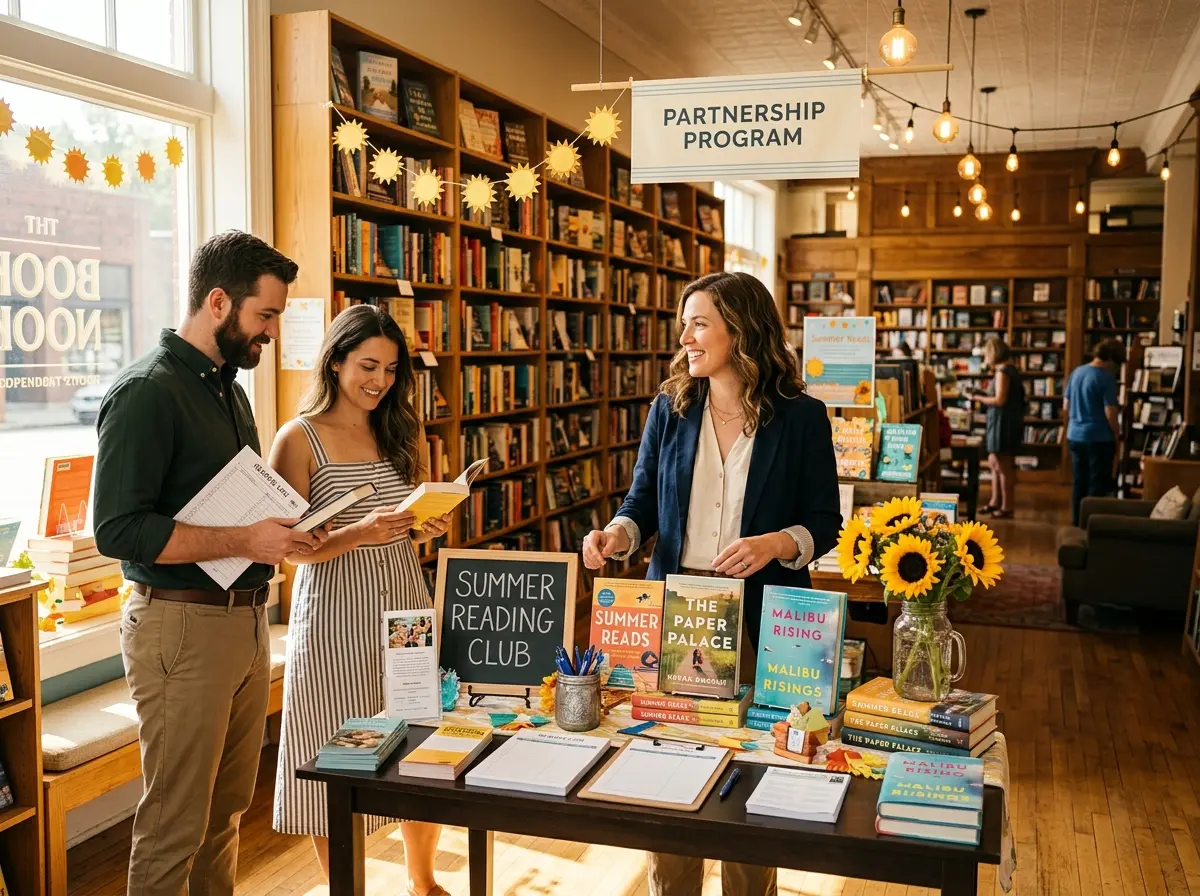
Design your store as a destination, not just a transaction point. Set up a summer reading tracker wall where kids can add their name and book completions. Host weekly "book drop" afternoons where young readers can come in, share what they're reading, and get a small reward — a bookmark, a sticker, or entry into a monthly prize drawing. Partner with a local ice cream shop to offer a coupon for every five books read. Suddenly, your bookstore isn't just a place to buy books. It's part of the summer adventure.
Consider hosting themed reading events tied to popular series — a Harry Potter afternoon, a Percy Jackson mythology quiz, a Dog Man drawing contest. These events generate social media content, attract local press coverage, and give parents a reason to bring the kids in on a Tuesday when they'd otherwise be watching YouTube.
How Stella Can Help You Manage the Summer Rush
Here's where things get practical for you as a business owner. A successful summer reading program means more foot traffic, more phone calls, more questions, and more opportunities to upsell — all at the same time. If you're running a small staff (or, let's be honest, mostly running things yourself), that's a lot to juggle while also trying to actually help customers find books.
Stella, the AI robot employee and phone receptionist, is genuinely built for exactly this kind of seasonal surge. As an in-store kiosk, she can greet every family that walks through your door, tell them about your summer reading program, answer questions about participating partner organizations, and even promote special discounts — all without pulling your staff away from the floor. As a phone receptionist, Stella answers calls 24/7 with the same knowledge your human team uses in person, so parents calling after hours to ask about your reading tracker program or upcoming author event get a real, helpful answer instead of voicemail. During a busy summer, that kind of reliable presence isn't a luxury. It's a lifeline.
Marketing Your Program Without a Massive Budget
You don't need a marketing agency or a five-figure ad budget to spread the word about your summer reading program. What you need is a clear message, the right channels, and the willingness to actually show up in your community — both digitally and in person.
Leverage Social Media and Email Like a Local Champion
Your social media presence should tell the story of your summer program, not just announce it. Post photos of kids adding their names to your reading tracker wall. Share short videos of author events. Celebrate individual reading milestones (with parental permission, of course). This kind of content is inherently shareable, and local parent groups on Facebook and Nextdoor are remarkably powerful amplifiers for exactly this type of community-driven content.
Don't underestimate email marketing. A monthly summer newsletter — featuring new arrivals, upcoming events, reading recommendations by age group, and partner program updates — keeps your store top of mind for families throughout the season. Tools like Mailchimp make this manageable even for a one-person operation, and the ROI on a well-maintained email list consistently outperforms most paid advertising for small businesses.
Get Into the Community, Literally
Show up where families already are. Set up a table at your town's summer farmers market. Donate a book bundle as a raffle prize at a local 5K. Attend back-to-school nights in late August with information about your fall programming. The more visible you are outside your four walls, the more new customers find their way inside them. Many of the most successful independent bookstores in the country — think Books Are Magic in Brooklyn or Parnassus Books in Nashville — built their loyal customer bases through relentless community presence, not advertising spend.
Use Signage and In-Store Displays Strategically
Once customers are in your store, your displays do the selling. Create a dedicated summer reading section that's easy to find and fun to browse. Use signage that ties directly into your partner programs — "Official Summer Reading Headquarters for Riverside Elementary" gives parents an immediate sense that they're in the right place. End caps featuring curated age-group reading lists from your partner schools remove the guesswork for overwhelmed parents and make it easy to grab three books in five minutes, which is often exactly what they need.
A Quick Reminder About Stella
Stella is an AI robot employee and phone receptionist designed to help small business owners manage customer interactions without adding headcount. She greets in-store visitors, promotes current programs, and answers phone calls around the clock — all for just $99/month with no upfront hardware costs. For a bookstore running a high-engagement summer program, she's the extra set of hands (well, the extra robot presence) you didn't know you needed.
Your Summer Reading Program Starts With One Email
Here's the thing about summer reading partnerships: the stores that benefit most from them aren't the ones with the biggest budgets or the most staff. They're the ones that started planning in March instead of June, reached out to one school librarian before the semester ended, and built something genuine rather than transactional.
If you take nothing else from this post, take this: send one email this week. Reach out to your nearest school librarian, your local library's youth services coordinator, or the director of a summer camp in your area. Introduce yourself, offer something specific and valuable, and ask if they'd like to talk. That's it. That's how it starts.
Then spend the next few weeks building your in-store experience, preparing your staff (and your AI robot receptionist) to handle the influx, and mapping out a social media calendar that tells the story of your program all summer long. By August, you won't just have driven foot traffic. You'll have built the kind of community relationships that keep families coming back in September, December, and every season after that.
Independent bookstores have something Amazon will never have: a real place in their community. A summer reading program is one of the best ways to remind everyone — including yourself — just how valuable that is.