So You Want Your Restaurant to Run Without You?
Let's be honest: right now, your restaurant probably runs because of you. You're the one who knows that the walk-in compressor makes a weird noise on Tuesdays, that Table 7 wobbles, and that your best line cook takes exactly 11 minutes to prep a station. You are, effectively, a walking operations manual — and that's a problem.
According to the National Restaurant Association, nearly 60% of restaurants fail within their first year, and a significant contributor is owner dependency. When everything lives in your head, every vacation becomes a liability, every sick day becomes a crisis, and selling or scaling your business becomes nearly impossible. The fix? A real, written, usable operations manual — the kind that lets your restaurant run like a well-oiled deep fryer even when you're not standing next to it.
Building the Foundation of Your Operations Manual
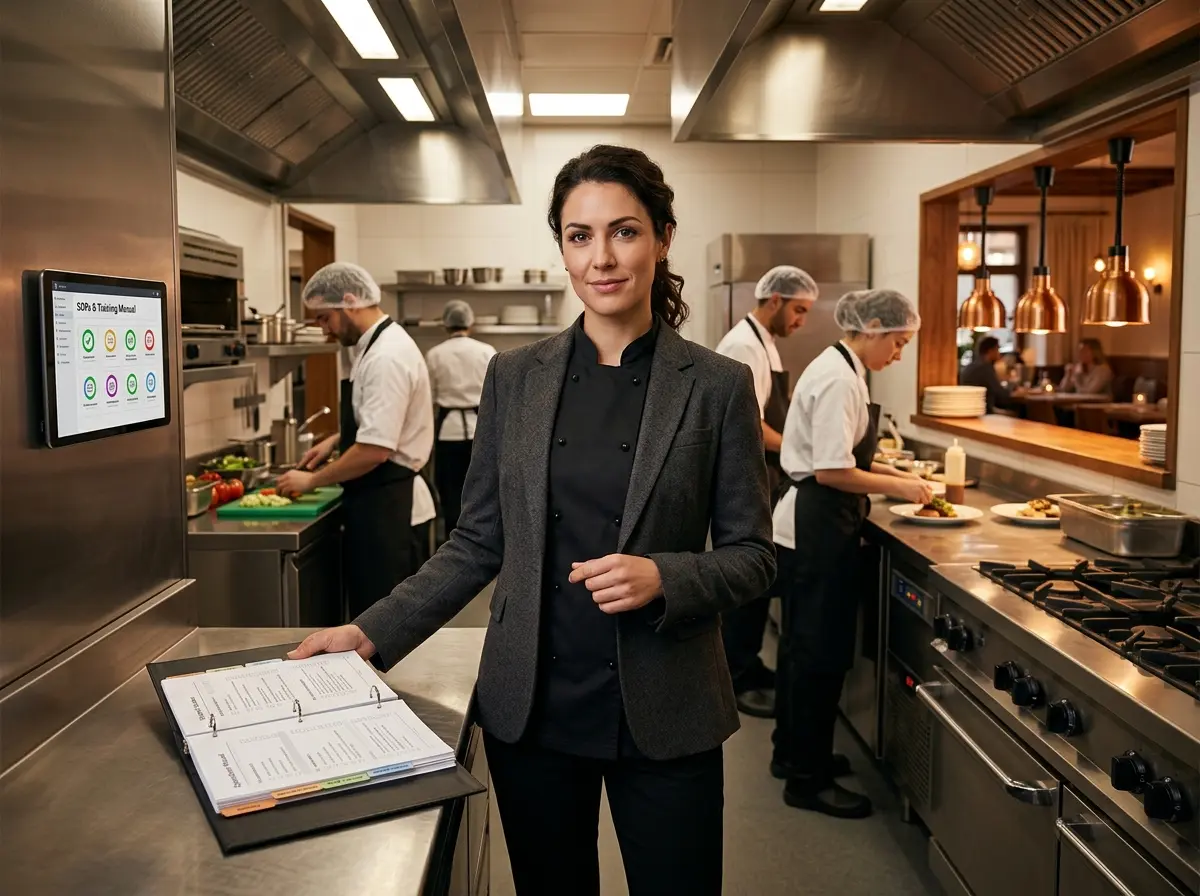
Before you write a single word, you need to understand what an operations manual actually is — and more importantly, what it isn't. It's not a dusty binder on a shelf that nobody reads. It's a living document that covers every repeatable process in your restaurant so that any reasonably competent person can step in, read it, and do the job correctly. Think of it as the franchise model, minus the franchise fees.
Start With a Brain Dump (Yes, All of It)
Organize Into Core Categories
- Front of House (FOH): Greeting standards, seating procedures, order taking, upselling guidelines, complaint handling, and closing duties.
- Back of House (BOH): Prep schedules, cooking standards, plating specs, food safety procedures, and equipment maintenance.
- HR & Staffing: Onboarding checklists, dress code, scheduling policies, and disciplinary procedures.
- Financial Procedures: Cash handling, POS reconciliation, tip reporting, and daily sales reporting.
- Vendor & Inventory Management: Ordering schedules, par levels, receiving procedures, and approved supplier lists.
- Marketing & Promotions: How specials are communicated, how social media is managed, and how customer feedback is handled.
Write for Your Least Experienced Employee
How Technology Can Carry Some of the Load
Let Stella Handle the Front Line While You Focus on Operations
Stella is an AI robot employee and phone receptionist that greets customers, answers questions about your menu, hours, and specials, and handles incoming calls 24/7 — all for $99/month with no upfront hardware costs. For a restaurant, that means your host stand is always covered, your phone always gets answered, and your staff can focus on the actual work rather than fielding the same "what are your hours?" question for the forty-seventh time that week.
Stella can also upsell and cross-sell, promote current deals, and collect customer information — all of which feeds into her built-in CRM, so you're actually building a customer database while you sleep. That's the kind of automation that belongs in your operations manual as a standard system, not an afterthought.
Making Your Manual Actually Get Used
Build It Into Onboarding From Day One
Keep It Updated — Or It Becomes a Liability
Use Multiple Formats for Different Contexts
A Quick Reminder About Stella
If your operations manual is the brain of your restaurant, Stella is the always-on front-of-house employee who never calls in sick. She greets customers, answers your phones around the clock, promotes your specials, and captures customer data — all without adding to your labor costs. At $99/month with no hardware fees, she's the kind of team member that belongs in every restaurant owner's operational toolkit.
Your Restaurant Doesn't Have to Depend on You
- Schedule your brain dump session. Block two to three hours this week. No interruptions. Write down every process you can think of.
- Organize into the six core categories outlined above and create your document structure.
- Start with your highest-risk procedures — the ones that go wrong most often when you're not there. Write those first.
- Add photos and videos for any process that involves physical setup, equipment, or plating standards.
- Build it into onboarding immediately, and schedule your first quarterly review for 90 days from today.