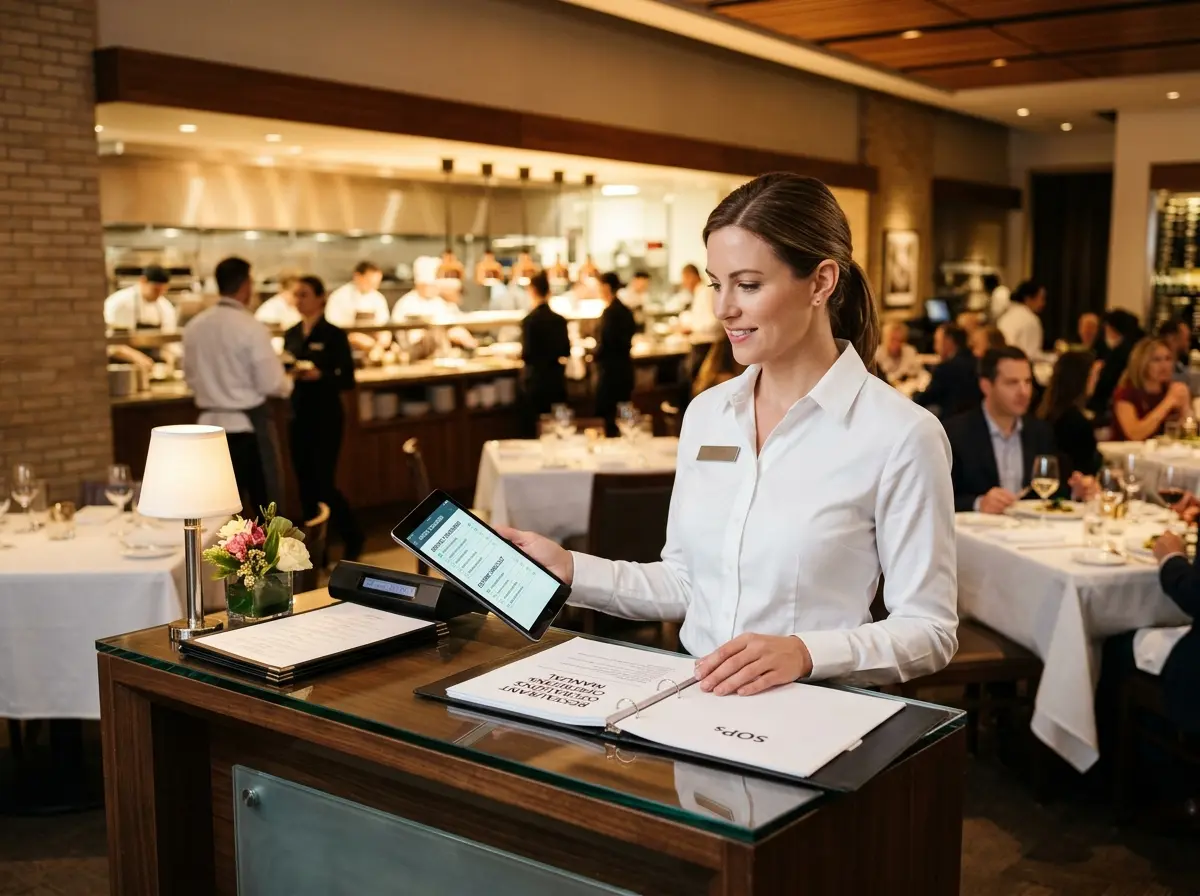
Introduction: The Restaurant That Only Works When You're There
Picture this: You finally take a long-overdue vacation. You're on the beach, drink in hand, when your phone starts buzzing. It's your sous chef — he can't find the supplier contact. Then your manager calls — she's not sure what to do when a table of twelve shows up without a reservation. Then your line cook texts — apparently nobody told him what to do when the walk-in freezer alarm goes off. By the time you've answered your fourteenth message, your drink is warm and your vacation is effectively over.
Sound familiar? If your restaurant can't function without you physically present, you don't own a restaurant — you own a job. A very stressful, very loud, slightly greasy job with no paid time off.
The solution isn't hiring better people (though that never hurts). The solution is giving your people a system they can follow — a living, breathing operations manual that tells every employee exactly what to do, when to do it, and how to do it to your standards. When done right, an operations manual is the closest thing to cloning yourself without getting into uncomfortable ethical territory. Let's build one.
The Foundation: What Goes Into a Restaurant Operations Manual
Start With the Basics: Your Brand, Culture, and Non-Negotiables
Before you document a single recipe or cleaning checklist, you need to capture the why behind your restaurant. What do you stand for? What does a guest experience at your establishment that they can't get anywhere else? What would make you march out of retirement to fix something that's gone wrong?
This section — often called a brand standards guide — should include your mission statement, your core values, and your non-negotiables. For example: "We greet every guest within 30 seconds of them being seated, no exceptions." Or: "We never tell a customer we're out of something without offering an alternative." These aren't fluffy corporate buzzwords. They're behavioral expectations that every team member, from the dishwasher to the general manager, should understand and uphold.
According to the National Restaurant Association, employee turnover in the restaurant industry hovers around 75% annually. That means you're constantly onboarding new people — and without a written culture guide, every new hire is reinventing the wheel and guessing at your standards. Write it down once, and your culture lives beyond any one employee.
Operational Procedures: The Stuff That Actually Runs the Restaurant
This is where the manual gets meaty (pun absolutely intended). Operational procedures cover everything from opening and closing duties to table turn protocols, food prep standards, shift handoffs, and supplier management. The goal is simple: if you handed this section to a competent new manager who had never stepped foot in your restaurant, they should be able to run a shift without calling you.
Break procedures down by role and by time of day. A solid structure might look like this:
- Opening duties by position (manager, front-of-house, kitchen)
- Mid-shift responsibilities and what to monitor
- Closing duties and end-of-day reconciliation
- Shift handoff protocols so nothing falls through the cracks
- Emergency procedures — equipment failures, no-shows, health incidents
Use numbered steps for processes that must happen in a specific order, and don't assume anything. "Clean the line" means something very different to a 20-year veteran than it does to someone on their second week. Specify the tools, the frequency, and the standard that tells them when the job is done correctly.
Recipes, Portions, and Food Standards
Your menu is your product, and consistency is your brand promise. The operations manual should include standardized recipes with exact measurements, plating photographs, portion weights, allergen information, and acceptable substitutions. This isn't about micromanaging your kitchen staff — it's about protecting your guests and your reputation.
Link each recipe to your food cost targets and train your team to understand why portions matter financially. A line cook who understands that over-portioning by two ounces on every dish costs the restaurant thousands of dollars a year is a line cook who pays attention. Educate, don't just dictate.
Automating the Front Lines: Let Technology Do the Repetitive Work
Free Your Staff From Answering the Same Questions All Day
Here's a dirty little secret of restaurant operations: a significant portion of your staff's time is eaten up answering the same handful of questions over and over again. "What are your hours?" "Do you take reservations?" "Is the pasta gluten-free?" "Do you have parking?" These are not bad questions — they're just questions that don't require a human being to answer.
This is exactly where Stella comes in. Stella is an AI robot employee and phone receptionist that can handle both your in-store customer interactions and your incoming phone calls — 24 hours a day, 7 days a week, without a coffee break or a bad attitude. For restaurants, she can greet guests as they walk in, answer questions about your menu, highlight specials, and promote current offers — all while your staff focuses on actually cooking and serving. On the phone side, she answers calls after hours, collects reservation information, and forwards calls to the right person when a human touch is genuinely needed. At $99/month with no upfront hardware costs, she's considerably less expensive than a part-time host.
Making It Usable: Structure, Format, and Keeping It Current
Format for Real Humans, Not Corporate Lawyers
The most beautifully comprehensive operations manual in the world is useless if nobody reads it. And nobody reads a 200-page dense wall of text formatted in 10-point font with no visual hierarchy. Write your manual as if the reader is a smart, motivated person who is slightly overwhelmed on their first week — because that's exactly who will be reading it.
Use clear headings, short paragraphs, and visuals wherever possible. Photographs of correctly plated dishes, diagrams of your floor plan, screenshots of your POS system — these aren't extras, they're essential. Consider building a digital version that employees can access on their phones, with a search function so they can look up exactly what they need in the moment rather than flipping through 80 pages in a panic during a dinner rush.
Assign Ownership and Schedule Regular Reviews
An operations manual that hasn't been updated in three years isn't a manual — it's a historical artifact. Your restaurant changes constantly: new menu items, new suppliers, new equipment, updated health codes. The manual needs to keep pace.
The fix is simple: assign a specific owner to each section of the manual and schedule quarterly reviews. Your head chef owns the recipe section. Your floor manager owns the service protocols. You — or your general manager — own the culture and brand standards. When something changes operationally, the update to the manual is part of the implementation, not an afterthought. Build the review into your calendar now, before you conveniently forget it exists.
Train to the Manual, Then Test Against It
Writing the manual is only half the job. The other half is making sure your team actually uses it. Incorporate the manual into your onboarding process as a formal training tool, not a binder that gets handed to a new hire and never mentioned again. Build quizzes, role-playing scenarios, and shadow shifts around the documented procedures.
For existing staff, use the manual as the basis for performance conversations. When a standard isn't being met, you can now point to a specific, written expectation rather than relying on memory or vibes. This is better for your team and significantly better for your legal department. Documented standards protect you, your employees, and your guests. Train to the manual, evaluate against the manual, and update the manual when the manual is wrong. It's a living document — treat it like one.
Quick Reminder About Stella
Stella is an AI robot employee and phone receptionist designed for businesses exactly like yours — restaurants, retail stores, service providers, and more. She greets customers in person, answers phones around the clock, promotes your specials, and handles the repetitive questions that eat into your staff's time. For just $99/month, she shows up every single day without calling in sick, and she never forgets what's on the menu.
Conclusion: Your Restaurant, Running Without You
Building an operations manual is not glamorous work. It requires sitting down and documenting things you've been doing on autopilot for years, which is tedious in a very specific, brain-draining way. But here's the payoff: once it's done, your restaurant has a nervous system that functions independently of your physical presence. Your staff makes better decisions faster. Your guests get a consistent experience every time. And you — finally — get to take that vacation without fielding fourteen phone calls before noon.
Here's your action plan to get started:
- Outline your manual sections this week — brand standards, operations by role, recipes, emergency procedures, and technology tools.
- Start with your highest-pain-point area — whatever question your staff asks you most often should become the first documented procedure.
- Assign section ownership to your key managers so the documentation burden doesn't all fall on you.
- Set a 90-day goal to have a complete first draft reviewed and distributed to your team.
- Schedule quarterly reviews on your calendar right now, before this article gets buried in your inbox.
The restaurant that runs without you isn't a fantasy — it's a system. Start building yours today, and future-you will be extremely grateful while lounging on that beach with a cold drink.