Open Houses Are Great — If Anyone Actually Shows Up
You've staged the living room. You've brewed the coffee. You've even put out those little mini quiches that nobody asked for but everyone appreciates. And then… crickets. A handful of neighbors who are just nosy, and one guy who clearly wandered in from a walk. Sound familiar?
Here's the thing: a beautiful open house means nothing without the right people walking through the door. And in today's market, waiting for a yard sign and a Zillow listing to do all the heavy lifting is like waiting for a fax machine to close a deal. It's not going to happen.
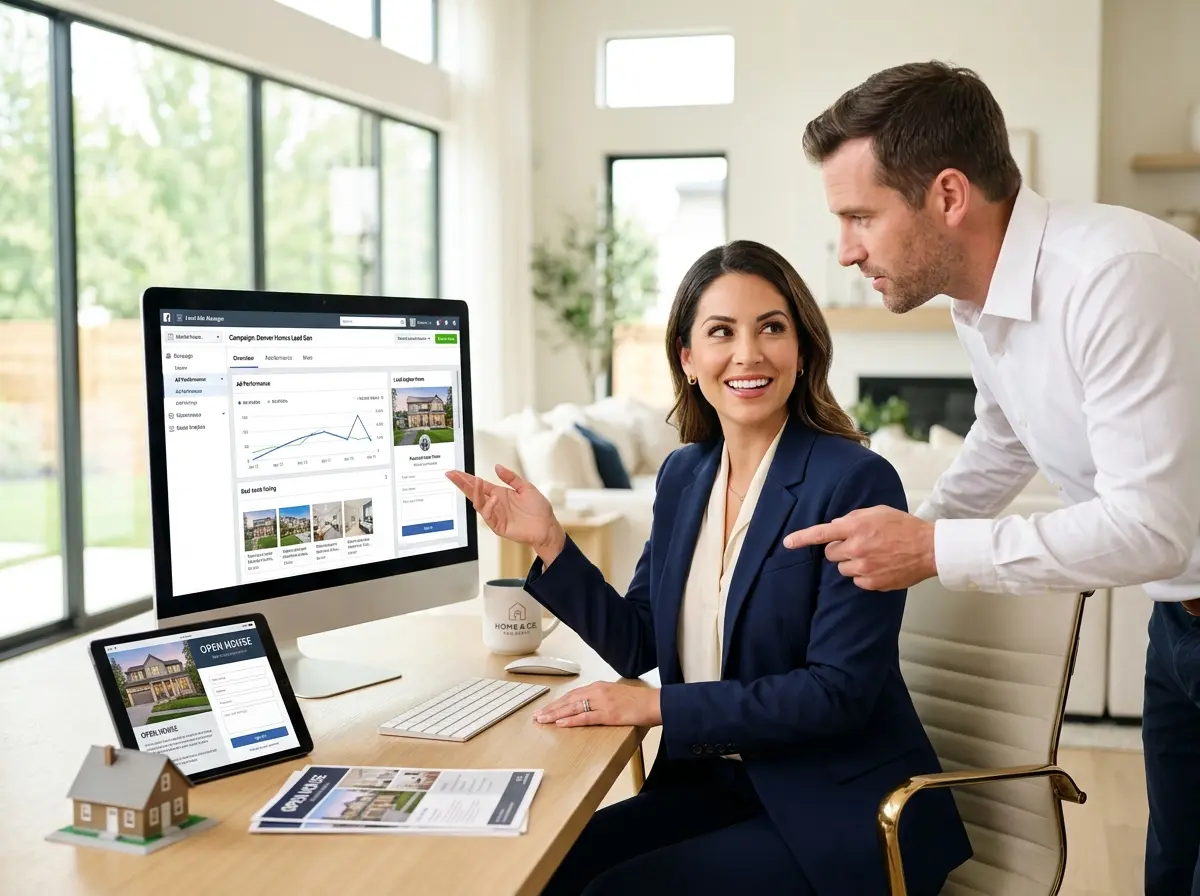
Facebook Lead Ads are one of the most cost-effective and targeted tools available to real estate agents and brokers who want to fill their open houses with actual qualified buyers — not just curious foot traffic. When used correctly, they allow you to capture interested leads directly on Facebook or Instagram, without requiring users to leave the app, which dramatically increases conversion rates. This guide will walk you through how to set them up, optimize them, and follow up fast enough to actually turn those leads into attendees.
Setting Up Facebook Lead Ads That Actually Work
Understanding How Facebook Lead Ads Differ from Regular Ads
Before you throw money at the platform, it's worth understanding what makes Lead Ads different. Unlike a standard Facebook ad that sends users to an external landing page, Lead Ads feature a native form that opens directly within Facebook or Instagram. Facebook even pre-populates fields like name, email, and phone number using the user's profile information. This frictionless experience is why Lead Ads typically convert at significantly higher rates — some studies show conversion rates 2–3x higher than traffic-based campaigns driving to external pages.
For a real estate open house, this matters enormously. Your goal isn't just brand awareness — it's getting a commitment. Someone who fills out a form saying "Yes, I want to attend this open house" is a warm lead. Treat them accordingly.
Creating a Compelling Ad for Your Open House
Your ad creative needs to do two things: stop the scroll and make a promise. Use high-quality photos of the property — and we mean actually high quality, not a slightly blurry shot from your phone at dusk. Highlight the most attractive features in the headline: the neighborhood, the price point, unique selling points like a renovated kitchen or a rare double garage.
Your copy should be concise and conversational. Something like: "Thinking about making a move? Join us this Saturday for an exclusive open house at [Address]. 3 beds, 2 baths, and a backyard that'll make your neighbors jealous. Reserve your spot below." The call-to-action should be specific — "Reserve My Spot" performs better than the generic "Learn More" button because it implies scarcity and commitment.
Targeting the Right Audience
This is where Facebook's platform genuinely earns its keep. You can target by location (within a specific radius of the property), life events (people who recently listed "newly married" or are in the market for a home), income brackets, interests related to home buying, and more. For higher-end listings, consider layering in household income filters. For starter homes, target first-time buyer profiles and younger demographics.
You can also create a Lookalike Audience based on your existing buyer contacts — Facebook will find users who share characteristics with people who've already engaged with you. If you have a CRM full of past clients, upload that list. It's one of the smartest moves you can make on the platform and costs nothing extra to set up.
How to Keep the Momentum Going After the Click
Speed-to-Lead Is Everything
Here's an uncomfortable truth: 78% of buyers work with the first agent who responds to them. If someone fills out your Lead Ad form on a Sunday evening and you respond Monday afternoon, that lead has already moved on — probably to the agent who had a system in place to respond within minutes. Speed-to-lead isn't just a best practice; in real estate, it's the difference between a commission and a near miss.
This is where Stella, the AI robot employee and phone receptionist, becomes genuinely useful for real estate professionals. When leads come in through your Facebook ads, Stella can be configured to handle inbound calls from interested prospects 24/7 — answering questions about the property, collecting additional intake information, and ensuring no lead goes cold just because it came in at 10pm on a Friday. She also works as an in-person kiosk presence, which means if your brokerage or office has a physical location, she can engage walk-in prospects and capture their information just as effectively as she does over the phone.
Connecting Your Lead Ads to a Follow-Up System
Facebook Lead Ads integrate natively with most major CRMs through tools like Zapier or direct API connections. The moment someone submits your form, their information should automatically flow into your contact management system, trigger a confirmation email or text, and flag them for immediate follow-up. If you're manually downloading lead CSVs from Facebook's Ads Manager every few days, you're leaving money on the table — and probably a few listings too.
Set up an automated confirmation message the instant someone registers. Keep it warm and personal: confirm the date, time, and address of the open house, and include a calendar invite. Then send a reminder 24 hours before the event. Simple, effective, and it makes you look like you have your act together — even when you're simultaneously juggling six other listings.
Optimizing Your Campaign for Better Results Over Time
Testing Your Creative and Copy
Never run just one version of your ad. Facebook's A/B testing tools make it straightforward to test different headlines, images, and calls-to-action against each other. Run two or three variations simultaneously for the first few days of your campaign, then shift budget toward whatever is performing best. Small changes — swapping one headline word, testing a video walkthrough versus a photo carousel — can produce dramatic differences in cost per lead.
A reasonable benchmark for real estate Lead Ads is a cost per lead between $5 and $20, depending on your market and targeting. If you're paying significantly more than that, something in your creative, targeting, or offer needs adjustment. If you're paying less, scale your budget aggressively before the open house date arrives.
Retargeting People Who Engaged But Didn't Convert
Not everyone who clicks your ad will fill out the form on their first visit. Facebook allows you to build a custom audience of people who opened your Lead Ad form but didn't submit it — and you can serve them a second, slightly different ad to bring them back. This retargeting pool is warm by definition. They were interested enough to click; they just needed a nudge. A retargeting ad with a slightly different angle — maybe focused on urgency ("Only a few spots left!") or a different property highlight — can recover a meaningful percentage of those near-misses.
Reviewing Performance and Building Your Playbook
After each open house campaign, take 20 minutes to review your results: cost per lead, show-up rate from leads, and ultimate conversion to serious buyers. Over time, you'll develop a repeatable playbook tailored to your specific market — which audiences respond best, what creative format works, what budget level is optimal. This institutional knowledge is what separates agents who run occasional Facebook ads from those who use them as a reliable, scalable pipeline for every listing.
A Quick Reminder About Stella
Stella is an AI robot employee and phone receptionist built for businesses that want professional, always-on customer engagement without the staffing headaches. For real estate professionals, she answers inbound calls around the clock, collects lead information through conversational intake forms, and manages contacts through a built-in CRM — so your Facebook leads get a real response, even when you're at another showing. At just $99/month with no upfront hardware costs, she's the kind of team member who never calls in sick right before an open house.
Your Next Open House Shouldn't Rely on Luck
Filling an open house with qualified, motivated buyers is absolutely achievable — but it requires a deliberate strategy, not just a Zillow listing and a prayer. Facebook Lead Ads give you the targeting precision to reach the right people, the frictionless form experience to capture their information, and the data to improve every campaign you run.
Here's your action plan to get started:
- Create your Facebook Lead Ad campaign at least 7–10 days before the open house to give the algorithm time to optimize.
- Use high-quality property photos and a specific, benefit-driven headline that makes the property irresistible.
- Set up audience targeting based on location, demographics, and a Lookalike Audience from your existing contact list.
- Connect your lead form to your CRM via Zapier or a native integration, and automate your confirmation and reminder messages.
- Respond to every lead as fast as humanly possible — or set up a system like Stella to handle after-hours inquiries automatically.
- Review your campaign results after the open house and document what worked for next time.
Real estate is a relationship business, but relationships have to start somewhere. Facebook Lead Ads are one of the best tools available to make sure that starting point isn't an empty living room full of untouched mini quiches. Go run your campaign — and this time, actually fill the house.