Introduction: The Client Who Ghosted You (And How to See It Coming)
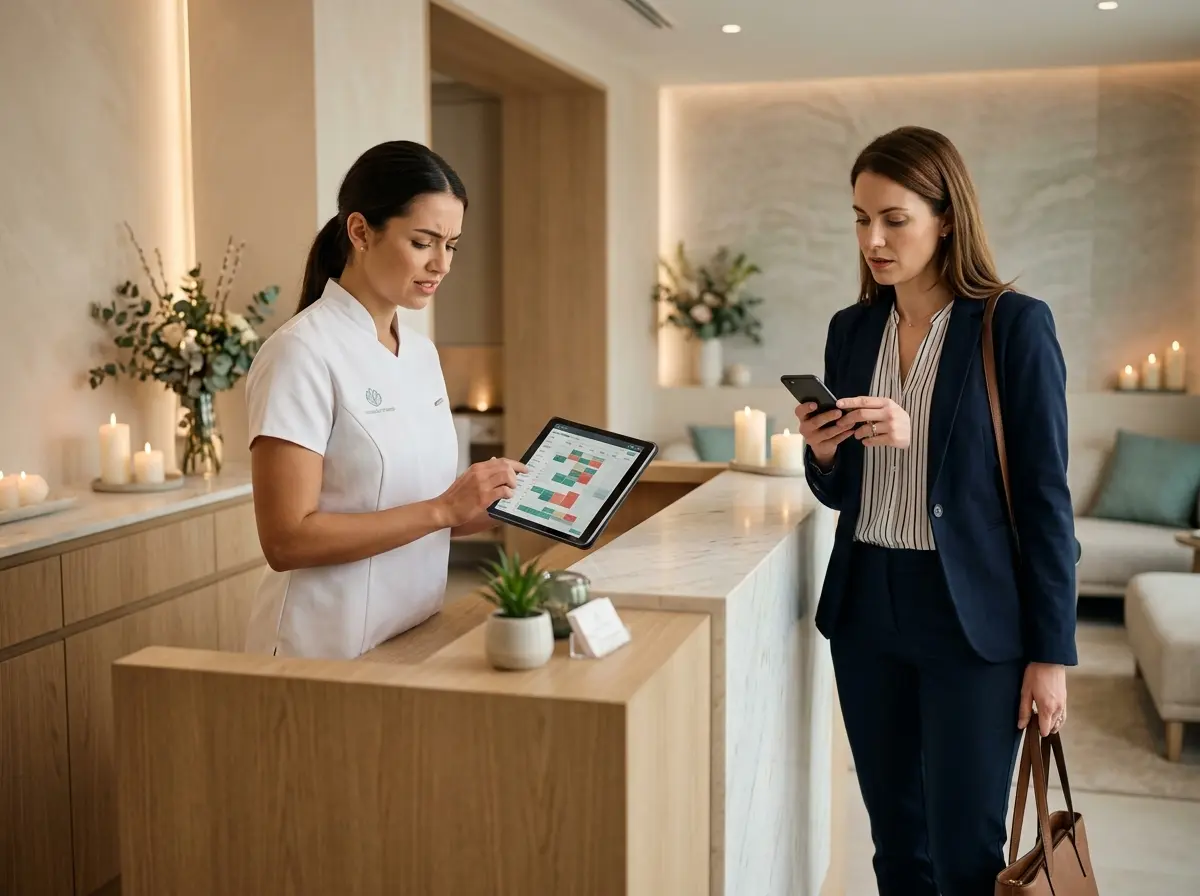
You know the one. They were a regular. They smiled at your staff, nodded politely at your upsells, and then one day — poof — gone. No breakup text. No explanation. Just a hollow space in your appointment book where their name used to be. And the worst part? You had absolutely no idea it was coming.
Client churn is one of the most quietly devastating problems in service-based businesses. According to research from Bain & Company, increasing customer retention rates by just 5% can increase profits by anywhere from 25% to 95%. Yet most business owners spend far more energy chasing new clients than holding onto the ones they already have. That's a bit like filling a bathtub with the drain wide open and wondering why you're always out of water.
The good news? Most clients don't leave without warning. They leave warning signs — you just need a system in place to catch them. Post-service surveys are one of the most underused, highest-leverage tools a practice or service business can deploy. Done right, they don't just measure satisfaction — they give you a real-time radar for clients who are quietly drifting toward the exit door. This article will show you exactly how to set that system up and actually use it.
Building a Post-Service Survey That Actually Tells You Something
Stop Asking the Wrong Questions
The classic post-service survey looks something like this: "How was your experience today? Rate us from 1 to 5 stars." Congratulations — you've just collected data that tells you almost nothing actionable. The problem isn't surveys themselves; it's that most surveys are designed to make the business feel good rather than to surface useful intelligence.
Instead, design your survey around one central goal: identifying friction. What made the client's experience feel less than seamless? What expectation did you set that you didn't meet? A few high-signal questions are worth far more than a long list of fluffy ones. Keep your survey to five questions or fewer, and make at least one of them open-ended so clients can tell you something you didn't think to ask about.
The Questions Worth Asking
If you want a post-service survey that actually predicts churn, include questions that measure these three things: perceived value, likelihood to return, and ease of experience. Here's what that might look like in practice:
- "Did today's service feel worth the investment?" — This surfaces value perception issues before they become pricing objections.
- "How likely are you to book with us again in the next 30 days?" — A low score here is a five-alarm fire.
- "Was there anything about your experience today that we could have made easier or better?" — Open-ended gold. Let them talk.
- "Did you feel heard and well taken care of by our team?" — Staff-related dissatisfaction is one of the top reasons clients quietly disappear.
You might also consider including a simple Net Promoter Score (NPS) question: "On a scale of 0 to 10, how likely are you to recommend us to a friend or colleague?" NPS is far from perfect, but as a benchmark it's hard to beat for spotting at-risk clients quickly. Anyone scoring below a 7 deserves a follow-up conversation, not a form letter.
Timing and Delivery Matter More Than You Think
The best survey in the world is useless if it arrives three weeks after the appointment, when your client has already forgotten how they felt and booked with your competitor. Aim to send your post-service survey within 24 hours of the appointment — ideally within a few hours, while the experience is still fresh. Text-based surveys consistently outperform email in response rates for service businesses, so if you're still relying solely on email, it might be time to reconsider your delivery strategy.
How to Put Your Survey Data to Work (Before It Just Sits in a Spreadsheet)
Set Up Simple Alert Triggers for At-Risk Responses
Collecting survey responses without a system to act on them is the business equivalent of reading your smoke detector manual after the kitchen is already on fire. You need clear rules in place before the data comes in. Define what an "at-risk" response looks like for your business — for example, any NPS below 7, a "no" answer to the likelihood-to-return question, or any open-ended response that mentions wait times, staff issues, or pricing concerns. When those triggers are hit, someone on your team should be notified within the same business day.
Many CRM and survey platforms allow you to set up automated alerts based on response conditions. If yours doesn't, a simple shared inbox rule or a weekly review process can work as a stopgap. The key is that at-risk responses should never just quietly accumulate in a dashboard nobody checks.
How Stella Can Support Your Client Retention System
Stella, the AI robot employee and phone receptionist, fits naturally into this kind of retention workflow. Her built-in CRM lets you tag contacts, add custom fields, and maintain detailed client profiles — which means at-risk survey responses can be logged directly against a client record and flagged for follow-up. If your team uses intake forms during calls or at the kiosk, Stella can capture relevant client context that makes your follow-up conversations more informed and less awkward. She also handles inbound phone calls 24/7, so if a dissatisfied client does reach out after hours, their message gets transcribed, summarized, and pushed to your manager immediately — not buried in a voicemail box until Tuesday morning.
The Follow-Up: Where Most Businesses Drop the Ball
Don't Automate Your Apology
When a client flags a bad experience, the instinct for many businesses is to fire off a pre-written email with a discount code and call it retention. Here's the uncomfortable truth: clients can smell a templated response from a mile away, and it often makes things worse. A discount says "we want your money back." A genuine phone call says "we value your experience." These are not the same message.
For clients who score low or leave a concerning open-ended response, a personal outreach call from a manager or the business owner within 48 hours is worth more than any coupon you could offer. You don't need a script — you need to listen. Ask them to tell you more about their experience. Resist the urge to explain or defend. The goal of the call is to make the client feel genuinely heard, and then to find out whether there's a reason worth offering them to come back.
Use Patterns, Not Just Individual Responses
Individual survey responses are useful for saving individual client relationships. But survey trends, reviewed monthly, are where the real operational intelligence lives. If you notice that your Thursday afternoon clients consistently rate their experience lower than your morning appointments, that's a staffing or scheduling issue worth investigating. If three clients in one week mentioned they felt rushed, that's a workflow problem — not three isolated incidents.
Set aside time once a month to look at your survey data in aggregate. Which questions are scoring lowest? Which staff members correlate with higher or lower satisfaction? Are there services that consistently generate more mixed feedback than others? This kind of pattern analysis turns your survey from a feel-good checkbox into a genuine business improvement engine.
Close the Loop With Your Clients
One of the most underrated moves in client retention is simply letting clients know that their feedback changed something. If a client mentioned in their survey that the check-in process felt chaotic and you've since streamlined it, tell them — when they come back for their next appointment or in a follow-up message. This signals that you take feedback seriously, that their opinion has real weight, and that coming back will be a better experience than the last time. Most clients who leave do so quietly because they don't believe anything will change. Prove them wrong.
Quick Reminder About Stella
Stella is an AI robot employee and phone receptionist available to businesses of all types — whether you have a physical location or operate entirely over the phone. For just $99 per month with no upfront hardware costs, she greets walk-in customers at your kiosk, answers calls around the clock, promotes your services, and keeps your client data organized in a built-in CRM. She's the front-of-house team member who never has a bad day, never calls in sick, and never forgets to log a follow-up.
Conclusion: The Clients Worth Keeping Are Worth Watching
Client retention doesn't require a miracle — it requires a system. Post-service surveys, when designed thoughtfully and acted on consistently, give you something most businesses don't have: advance notice. The clients who are drifting away are usually telling you so, in their own subtle ways, long before they stop booking. Your job is to build the infrastructure to hear them.
Here's where to start this week:
- Audit your current survey (or create one from scratch) using the question framework outlined above.
- Define your at-risk triggers — decide right now what score or response type warrants a personal follow-up call.
- Assign ownership — someone specific should be responsible for reviewing at-risk responses and making those follow-up calls. "Everyone's responsibility" means no one's responsibility.
- Schedule a monthly data review to look at trends, not just individual scores.
- Close the loop — start telling clients when their feedback led to a real change.
Your most profitable new client is the one you already have. Build the systems to keep them, and you'll spend a lot less time wondering where they went.