The Empty Tuesday Night Problem (And How to Fix It)
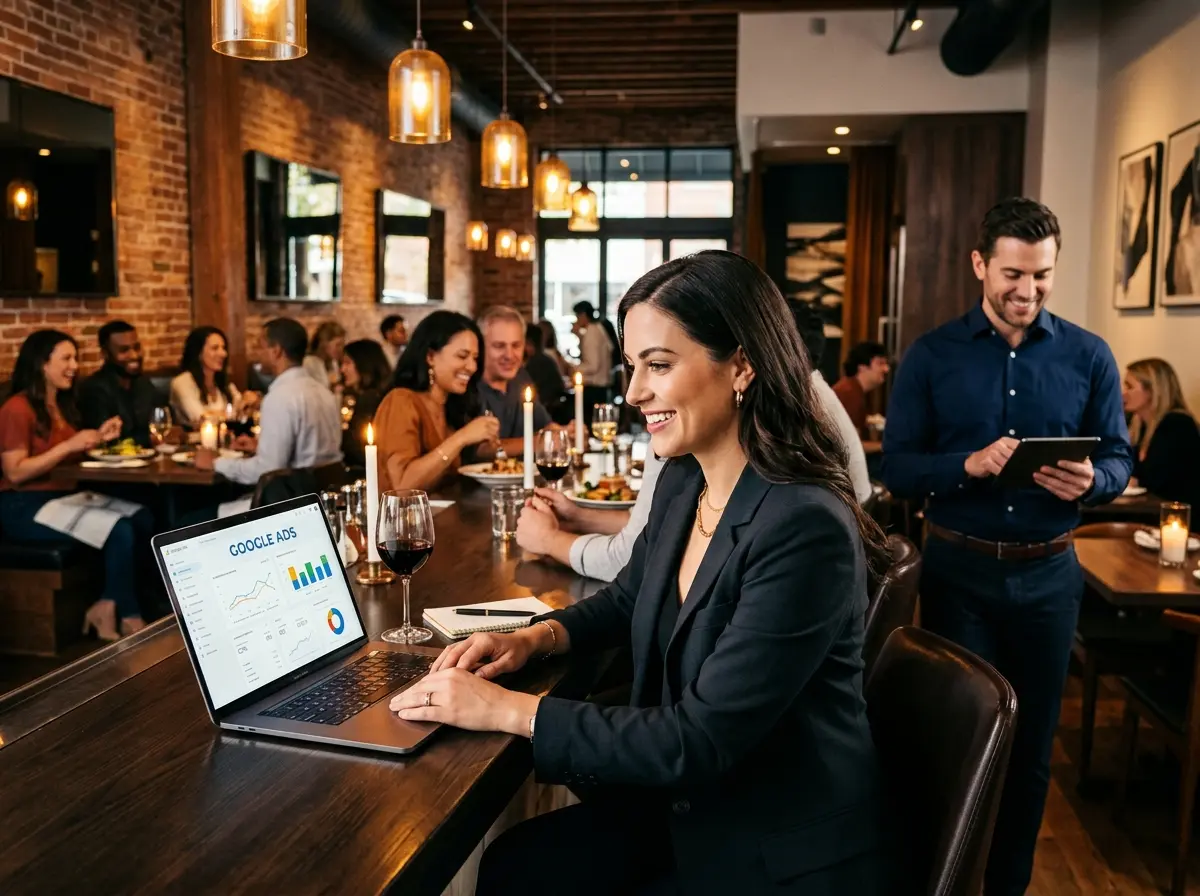
You know the scene. It's 7 PM on a Wednesday. Your dining room looks like a ghost town, your servers are leaning against the bar scrolling their phones, and your kitchen staff is having a surprisingly pleasant evening because there's nothing to cook. Meanwhile, your Friday and Saturday nights are so slammed you're turning people away at the door.
Welcome to the great restaurant paradox: too busy when you can't handle it, not busy enough when you desperately need the revenue.
The good news? This is a solvable problem — and Google Ads is one of the sharpest tools in your toolbox for doing exactly that. Unlike social media posts that vanish into the void or flyers that get used to wrap someone's leftovers, Google Ads lets you put your restaurant directly in front of hungry people at the exact moment they're searching for somewhere to eat. With a little strategy, you can turn those ghost-town weeknights into a reliable revenue stream. Let's get into it.
Understanding How Google Ads Works for Restaurants
Before you start throwing money at Google and hoping for the best, it helps to understand what you're actually paying for. Google Ads operates on a pay-per-click (PPC) model, meaning you only pay when someone actually clicks on your ad. You're not paying for impressions from people who scrolled past — you're paying for intent-driven traffic from people who are actively looking for what you offer.
Search Ads vs. Performance Max Campaigns
For restaurants, the two most relevant Google Ads formats are Search Ads and Performance Max campaigns. Search Ads are the text-based results that appear at the top of Google when someone types something like "Italian restaurant open tonight near me." You bid on relevant keywords, write compelling ad copy, and show up when it counts.
Performance Max campaigns are Google's newer, AI-driven format that distributes your ads across Search, Maps, YouTube, Gmail, and Display networks simultaneously. For local restaurants, this can be powerful because it includes Google Maps placements — and according to Google, 76% of people who search for something nearby on their phone visit a related business within a day. That's not a statistic to ignore.
Why Weeknight Targeting Is Your Secret Weapon
Here's where smart restaurant owners get a real edge: ad scheduling. Google Ads lets you control exactly when your ads run, which means you can concentrate your budget specifically on weekday evenings — say, Monday through Thursday between 4 PM and 9 PM — and go dark the rest of the time. No wasted spend on Saturday morning when people are already planning their weekends. No paying for clicks at 2 AM when your restaurant is closed.
Pair this with geo-targeting to reach only people within a reasonable radius of your location, and you're running a remarkably focused campaign. You're not advertising to the entire internet; you're advertising to hungry people near you, right now, on the nights you need them most. That's the difference between a marketing budget and a marketing investment.
Building Campaigns That Actually Convert
Writing Ad Copy That Makes People Hungry
Your ad copy has one job: make someone click instead of scrolling to your competitor. For weeknight promotions, lead with the offer and the urgency. "Half-Price Appetizers Every Tuesday — Reserve Your Table Tonight" is infinitely more compelling than "Great Food and Friendly Service." (Everyone says that. No one believes it anymore.)
Use your headlines to highlight the specific weeknight deal, your description lines to add context like cuisine type and location, and always include a clear call-to-action. Google allows up to 15 headlines and 4 descriptions in Responsive Search Ads, so give the algorithm options to test. Include terms like "tonight," "this week," "weeknight special," and "open now" — these signal relevance to someone making a same-day dining decision.
Landing Pages, Reservations, and the Importance of Not Dropping the Ball
Here's where many restaurant owners invest in great ads and then fumble the handoff. Someone clicks your ad at 6:30 PM on a Tuesday, they're interested — and they land on your homepage with a menu PDF from 2022 and no clear way to make a reservation. Sale lost. Ad spend wasted.
Your ads should link to a dedicated landing page or, at minimum, a well-optimized reservation page. If you use OpenTable, Resy, or a similar platform, link directly to your booking widget. Make it dead simple for someone to go from "I saw your ad" to "I have a table booked" in under 60 seconds. Every additional step in that process costs you conversions. Google also rewards landing page relevance with better Quality Scores, which lowers your cost-per-click — so a good landing page doesn't just convert better, it literally saves you money.
How Stella Can Support Your Front-of-House — Before Guests Even Arrive
Running Google Ads means you'll likely see an uptick in phone calls, especially from first-time customers who want to ask about the weeknight special, confirm hours, or make a reservation by phone. If your staff is busy during the dinner rush and calls go unanswered, that's ad spend converting to voicemail purgatory.
This is where Stella earns her keep. She answers every incoming call 24/7, can speak knowledgeably about your current promotions and specials, handle basic reservation inquiries, and forward calls to human staff when needed — all without missing a beat. For your physical location, Stella also stands inside your restaurant as a friendly kiosk presence, greeting walk-in customers and proactively telling them about tonight's deals. When your Google Ads bring curious new customers through the door or to the phone line, Stella makes sure they're met with a consistent, engaging, informed response every single time.
Measuring What Matters and Improving Over Time
The Metrics You Should Actually Track
Google Ads will show you a flood of data, but for a restaurant focused on filling weeknight seats, a handful of metrics actually matter. Click-through rate (CTR) tells you whether your ad copy is compelling. Conversion rate tells you whether your landing page is doing its job. Cost per conversion tells you what you're actually paying per reservation or phone call. And impression share tells you how often you're showing up versus how often you could be.
Set up conversion tracking in Google Ads — this means tracking specific actions like reservation form submissions, phone call clicks, or direction requests. Without this, you're flying blind and essentially just donating money to Google's retirement fund.
Testing, Tweaking, and Not Giving Up Too Soon
New campaigns need time to gather data before you can make meaningful optimizations. Resist the urge to overhaul everything after three days. Give your campaigns at least two to four weeks of consistent running before drawing conclusions, especially if your daily budget is modest. Once you have data, look for patterns: Which headlines drive the most clicks? Which days within your weeknight window perform best? Are people converting on mobile or desktop?
From there, double down on what works. Pause underperforming ad variations. Adjust bids by day of week if certain evenings outperform others. Test a promotion-based approach one month and a cuisine-focused approach the next. The restaurants that win with Google Ads aren't the ones who set it and forget it — they're the ones who treat it like a living, breathing system that rewards attention and iteration.
Budgeting Realistically for a Local Restaurant
You don't need a corporate marketing budget to make Google Ads work. Many local restaurants see meaningful results starting at $15–$30 per day with smart targeting. The key is focus: a tight geographic radius, specific day and time targeting, and a small set of high-intent keywords will outperform a sprawling, unfocused campaign with a larger budget almost every time. Start lean, prove the model, then scale when you see it working.
Quick Reminder About Stella
Stella is an AI robot employee and phone receptionist built for businesses like yours — available as an in-store kiosk that greets and engages customers in person, and as a 24/7 phone answering solution that handles calls with the same warmth and business knowledge she uses on the floor. At just $99/month with no upfront hardware costs, she's the kind of team member who never calls in sick, never forgets the specials, and never puts a potential customer on hold indefinitely. If your weeknight Google Ads start working, you'll want her ready when the phones start ringing.
Turn Slow Nights Into a Revenue Strategy
Weekday evenings don't have to be the part of the week you just survive. With a focused Google Ads strategy — built around ad scheduling, geo-targeting, compelling offers, and a frictionless path to reservation — you can predictably drive traffic on the nights you need it most.
Here's your action plan to get started:
- Define your weeknight offer. Give people a reason to choose Tuesday over waiting for Friday — a special menu, a discount, a featured experience.
- Set up a Google Ads account and create a Search campaign targeting high-intent local keywords related to your cuisine and "open tonight" style queries.
- Configure ad scheduling to run your ads Monday through Thursday during evening hours only.
- Build or optimize your landing page with a clear offer and a direct path to booking.
- Set up conversion tracking so you know exactly what's working and what isn't.
- Review performance every two weeks and make small, data-driven adjustments consistently.
Weeknight revenue isn't a myth — it's a marketing problem waiting to be solved. Google Ads, used strategically, is one of the most direct and measurable ways to solve it. Now go fill those tables.