Introduction: Your Store Has a Personality — Whether You Like It or Not
Walk into a dimly lit store with stale air, blasting music that belongs at a college party, and a fluorescent light flickering in the corner. How long do you stay? Probably just long enough to question your life choices and leave. Now walk into a store that smells faintly of cedar, has warm lighting, plays soft background music, and feels intentional. You're there for twenty minutes before you even realize it — and you've spent money.
That's the power of retail ambiance. And yet, it remains one of the most overlooked aspects of running a physical store. Business owners pour energy into inventory, staffing, and marketing, while their store quietly repels customers with the sensory equivalent of a DMV waiting room.
According to research published in the Journal of Business Research, store atmosphere directly influences both the time customers spend in a store and the amount they spend while there. This isn't soft science — it's your bottom line. The good news? You don't need a massive renovation budget to get this right. You need a checklist, some intentionality, and a willingness to actually smell your own store for once.
Below is your complete guide to optimizing all five senses for a retail environment that doesn't just look good — it feels good, and more importantly, sells.
The First Three Senses: What Customers See, Hear, and Smell
Sight: Lighting, Layout, and Visual Flow
Lighting is the single most impactful visual element in your store, and most retailers get it catastrophically wrong. Harsh overhead fluorescents are fine for a warehouse. They are not fine for a boutique, a spa, or a gift shop. Warm lighting (in the 2700–3000K range) makes products look more appealing and keeps customers comfortable longer. Accent lighting on key product displays draws the eye and drives sales of featured items — studies suggest that properly lit merchandise can see a 30% increase in sales compared to poorly lit equivalents.
Beyond lighting, consider your visual flow. When a customer walks through your door, their eyes (and feet) need somewhere to go. Guide them with clear sightlines, intentional product groupings, and a layout that encourages exploration rather than confusion. Avoid cluttered shelving — the "more products = more sales" logic is a myth. Visual breathing room signals quality and invites lingering. Use signage sparingly but strategically: clear, readable, and on-brand.
Sound: Music, Volume, and the Art of Not Annoying People
Background music in retail is a deeply studied topic, and the findings are surprisingly specific. Slow-tempo music encourages customers to browse longer. Music that matches your brand personality increases purchase intent. Music that's too loud makes people leave faster — full stop. A good rule of thumb: if your staff has to raise their voice to talk to a customer, your music is too loud.
Genre matters too. A high-end home goods store playing hip-hop at full volume creates cognitive dissonance. A youth-oriented apparel brand playing smooth jazz feels like a dental office. Match your sonic environment to your customer's expectations and your brand's identity. And please — no autoplay ads on a Spotify free tier. That's a sensory crime.
Smell: The Most Underestimated Sales Tool in Your Arsenal
Scent is processed directly by the limbic system — the part of the brain associated with emotion and memory. This means that smell bypasses rational thought entirely and hits customers right in the feelings. Retailers who deploy signature scents see measurable increases in dwell time and purchase amounts. Nike, for example, has famously used scent marketing in stores to increase purchase intent by up to 80% in some studies.
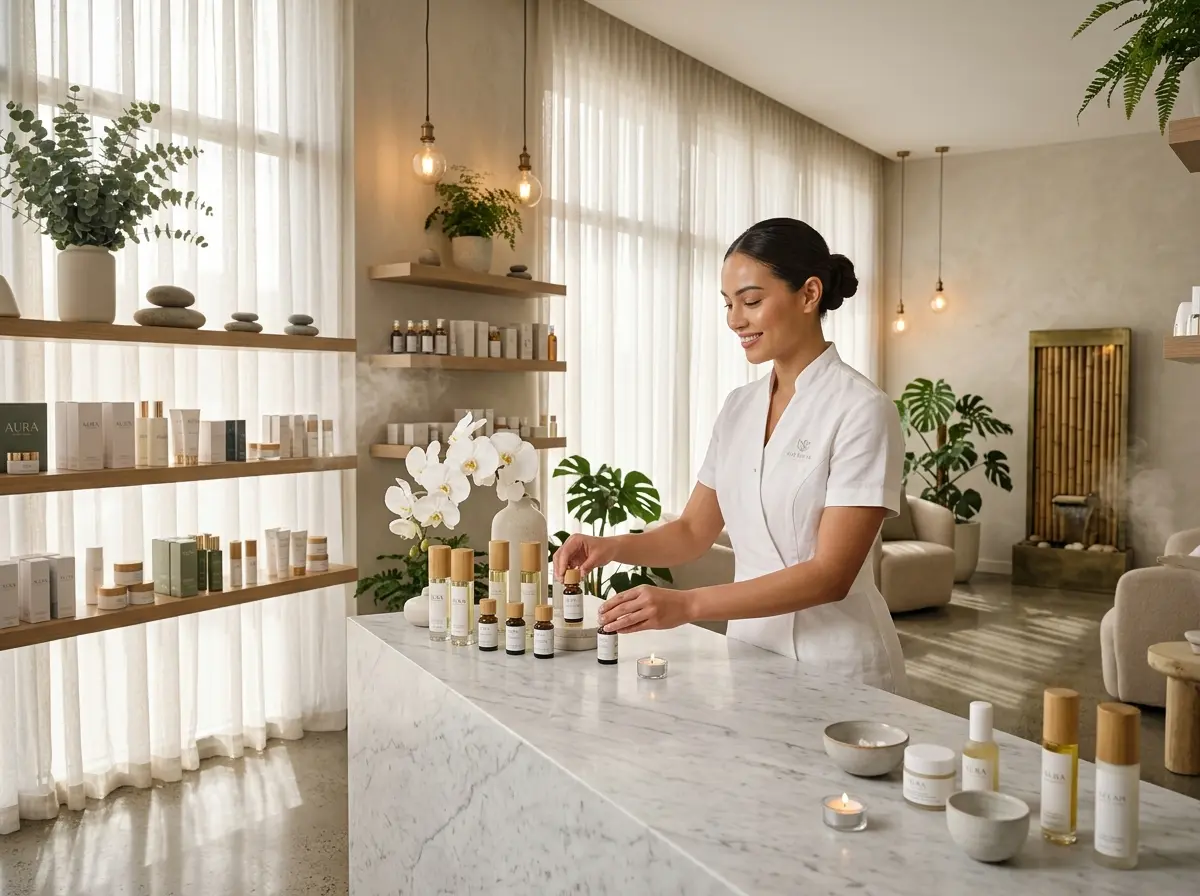
You don't need to hire a scent branding agency. Start simple: a light, pleasant diffuser with a scent that matches your brand (floral for a boutique, clean linen for a spa, fresh coffee for a café). The key word is light. Overpowering scent is worse than no scent. And for the love of retail, please take out the trash regularly. The nose knows — and so do your customers.
The Human Element: How Your Team (and Technology) Set the Tone
The Greeting Problem Nobody Talks About
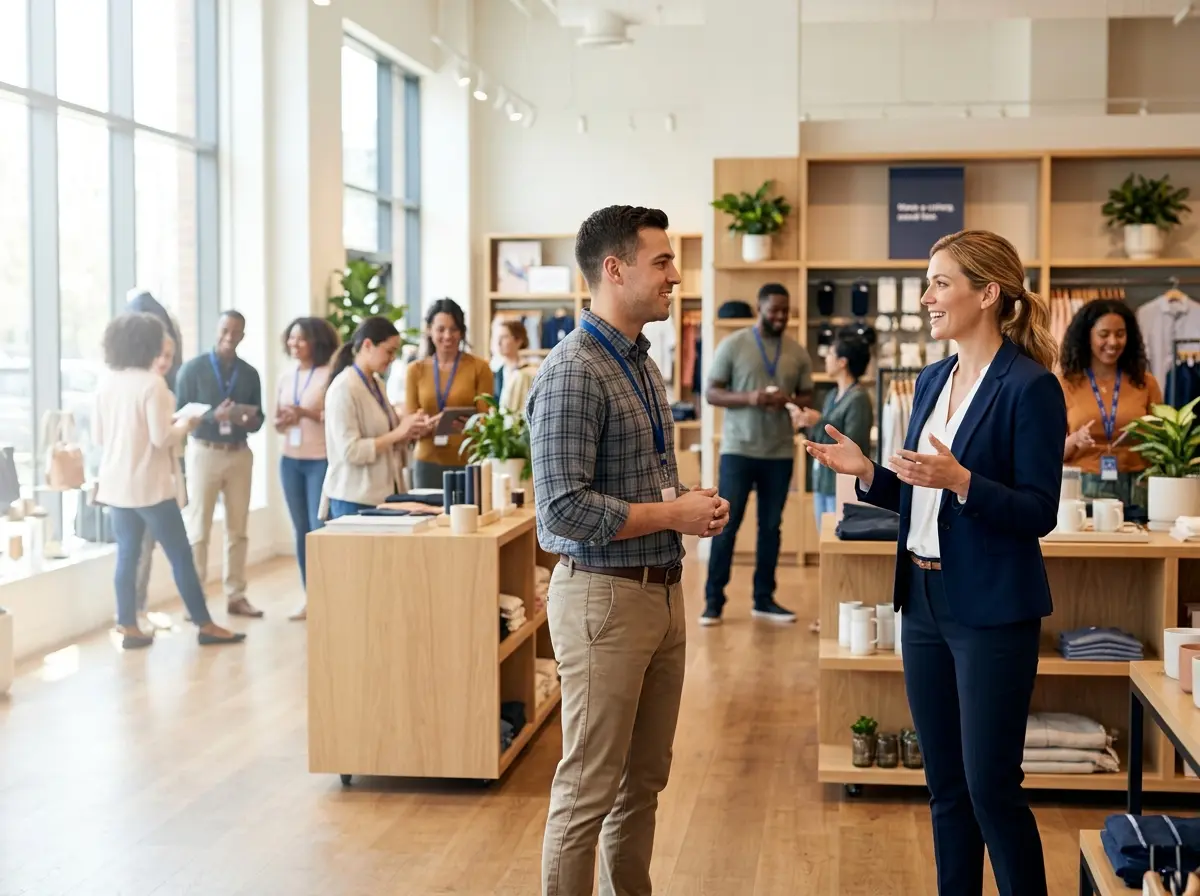
You can nail every sensory detail and still lose the customer the moment they walk in to complete silence, an ignored entrance, or — the classic — a distracted employee who barely glances up. The human element is a sense of its own: the feeling of being welcomed. Customers decide within seconds whether they feel comfortable in your space. A warm, genuine greeting changes the entire trajectory of that visit.
This is where Stella, the AI robot employee and phone receptionist, becomes genuinely useful for retail environments. Stella stands inside your store and proactively greets every customer who walks in — no distraction, no bad days, no forgetting. She can highlight current promotions, answer product questions, and free up your human staff to focus on higher-touch interactions. And when the phone rings? Stella answers that too, 24/7, with the same knowledge she uses on the floor. It's consistent, professional, and frankly — it means your human team can stop sprinting between the counter and the sales floor every time the phone rings mid-transaction.
The Final Two Senses: Touch and Taste
Touch: The Tactile Experience of Your Products and Space
Touch is where retail has a permanent, irreplaceable advantage over e-commerce. Let customers touch things. Seriously — if your products are locked behind glass or wrapped in excessive packaging, you're eliminating one of the most powerful purchase triggers available to you. Research consistently shows that physical contact with a product increases the customer's sense of psychological ownership, which dramatically increases the likelihood of purchase.
Beyond the products themselves, consider the tactile experience of your space. Are your shopping baskets comfortable to carry? Is your checkout counter at an ergonomic height? Are your fitting rooms (if applicable) well-lit, clean, and equipped with hooks? These micro-details add up to a macro impression. The texture of your store — floors, surfaces, packaging materials, even the weight of your shopping bags — communicates brand quality without a single word being spoken.
Taste: Optional, But Powerful When Done Right
Not every retailer can or should offer samples or tastings — but those who can, absolutely should. The psychology of reciprocity is well-established: when you give someone something, they feel a subtle social obligation to give something back. In retail, that "something back" is often a purchase. Wineries have built entire business models around this. Specialty food shops, bakeries, cosmetics stores, and even some apparel retailers have used this tactic with great success.
If your business doesn't lend itself to literal taste, think about the metaphorical equivalent: a free sample of a service, a trial product, a demo experience. The goal is to remove friction from the first interaction and give customers something to respond to emotionally. Even offering a small bowl of mints or candy at your checkout counter is a low-cost, high-goodwill gesture that customers consistently remember and appreciate. It sounds almost embarrassingly simple — because it is. Do it anyway.
Putting It All Together: The Sensory Checklist
Here's a practical walkthrough you can do in your own store this week. Pretend you're a customer arriving for the first time and evaluate each of the following:
- Sight: Is the lighting warm and intentional? Is signage clear and on-brand? Are product displays uncluttered and visually appealing?
- Sound: Is the music volume appropriate? Does the genre match your brand? Is there any jarring audio (TV static, printer noise, loud staff conversations)?
- Smell: Does your store have a pleasant, subtle scent? Is it consistent throughout the space? Are there any unpleasant odors hiding in corners?
- Touch: Can customers easily interact with your products? Are your surfaces and fixtures clean and in good condition? Is the tactile experience of your space consistent with your brand tier?
- Taste: Is there an opportunity to offer a sample, demo, or small complimentary item? Have you evaluated what your checkout experience feels like from end to end?
Run this checklist quarterly. Your senses adapt quickly to familiar environments — what smells normal to you after eight hours in your store may smell very different to a first-time visitor. Bring in a trusted friend or colleague with fresh sensory perception. Be ruthlessly honest. Then fix what needs fixing.
Quick Reminder About Stella
Stella is an AI robot employee and phone receptionist that works inside your store as a kiosk and answers your business calls 24/7 — no breaks, no turnover, no drama. She greets customers, promotes your specials, answers product questions, and handles incoming calls with full knowledge of your business, all for just $99/month. If you're building a better in-store experience, having a consistently warm, knowledgeable presence at the door is a smart piece of that puzzle.
Conclusion: Your Checklist, Your Competitive Edge
Retail ambiance isn't a luxury — it's a strategy. In a world where customers can buy almost anything online in thirty seconds, the reason they still walk into physical stores is experience. They want to feel something. Your job is to make sure what they feel is intentional, pleasant, and aligned with your brand.
Start with a sensory audit this week. Walk your space with fresh eyes, ears, and a nose that hasn't gone nose-blind from daily exposure. Identify the one or two senses that are most neglected in your current environment and make targeted improvements there first. You don't need to do everything at once — small, deliberate changes in lighting, scent, or sound can produce noticeable results in customer behavior within days.
The stores that win aren't always the ones with the best products or the lowest prices. They're the ones that made customers feel something worth coming back for. Build that store. Your five senses — and your revenue — will thank you.