Introduction: The Checkout Experience Is Making or Breaking Your Business
Picture this: a customer has spent twenty minutes browsing your store, found exactly what they wanted, and is genuinely excited to buy it. They approach the checkout. And then... they wait. And wait. And slowly, that excitement curdles into mild irritation, then quiet resentment, and finally a firm mental note that reads: "Maybe I'll just order this online next time."
Sound familiar? It should, because checkout friction is one of the most quietly devastating problems in retail and service businesses today. According to a study by Waitwhile, 75% of customers say long wait times negatively affect their experience, and nearly 60% have abandoned a purchase entirely because of a slow or confusing checkout process. That's not just a bad day — that's lost revenue walking out your door with a polite wave goodbye.
The good news is that fixing your checkout process doesn't require a complete overhaul of your business model or a team of engineers. It requires a smarter look at where friction lives, a commitment to removing it, and a willingness to let technology do some of the heavy lifting. This guide walks you through exactly how to do that — practically, affordably, and without turning your staff into checkout robots (ironic as that phrase may soon become).
Understanding Where the Friction Actually Lives
Before you can fix a problem, you have to find it. And "checkout is slow" is not a diagnosis — it's a symptom. The real culprits tend to hide in plain sight, masquerading as "just how things work around here."
The Pre-Checkout Bottleneck
Believe it or not, checkout friction often begins well before the customer reaches the register. Unanswered questions, difficulty finding products, unclear pricing, and staff who are too busy to help all contribute to a customer arriving at checkout flustered or unsure. When customers aren't confident in their purchase, they slow down — asking last-minute questions, second-guessing items, or requesting a price check on something that should have been clearly labeled fifteen minutes ago.
Walk your floor or observe your service area through fresh eyes. Are prices clearly displayed? Are promotions easy to understand? Can a customer find what they need without flagging down a team member? Fixing these upstream issues pays dividends at the register, and it costs very little to address.
The Payment Process Problem
Payment technology has evolved dramatically, yet plenty of businesses are still operating like it's 2012. Terminals that take thirty seconds to process, systems that don't accept tap-to-pay, or checkout flows that require a customer to repeat their information three times aren't just annoying — they're a competitive liability. Contactless payment adoption has surged, with over 60% of consumers now preferring tap-to-pay or mobile wallet options when available. If your system doesn't support these, you're creating unnecessary delays and subtly signaling that your business hasn't quite kept up with the times.
Audit your payment hardware and software. If your terminal is older than your nephew who just started high school, it might be time for an upgrade.
Staff Knowledge Gaps and Interruptions
Even the most well-trained team will occasionally get tripped up by a question they can't immediately answer. The problem is what happens next: the cashier pauses, calls across the store for help, gets no response, calls again, and meanwhile the line grows longer and everyone's patience grows shorter. Staff interruptions during checkout — whether it's a manager approval, a product question, or a policy clarification — can add minutes to what should be a thirty-second transaction. Cross-training your team on common questions and empowering frontline staff to make small decisions without escalating is one of the highest-return investments you can make in checkout speed.
How Smart Tools Can Quietly Carry Some of the Load
Here's where technology earns its keep — not by replacing the human warmth your business is built on, but by absorbing the routine, repetitive, and interruptive tasks that slow everything down.
Let AI Handle the Questions Before They Become Delays
Stella, the AI robot employee and phone receptionist, is a natural fit here. As a friendly, human-sized kiosk stationed inside your store, she proactively engages customers before they ever reach checkout — answering questions about products, services, pricing, and current promotions. That means fewer customers arriving at your register with unresolved questions, and fewer interruptions for your staff during peak hours. For businesses that also field a high volume of phone calls, Stella answers every call 24/7 with the same business knowledge she uses in person, keeping your staff focused on the customers standing right in front of them rather than bouncing between a phone and a line. At $99/month with no upfront hardware costs, she's a practical tool for businesses that want to improve flow without expanding headcount.
Designing a Checkout Experience That Customers Actually Enjoy
Speed is important, but it's only half the equation. A checkout that's fast but cold, impersonal, or confusing doesn't create loyalty — it just reduces complaints. The goal is to design a checkout experience that's both efficient and genuinely pleasant. Yes, that's achievable. No, it doesn't require a complete personality transplant for your staff.
The Power of a Warm, Consistent Greeting
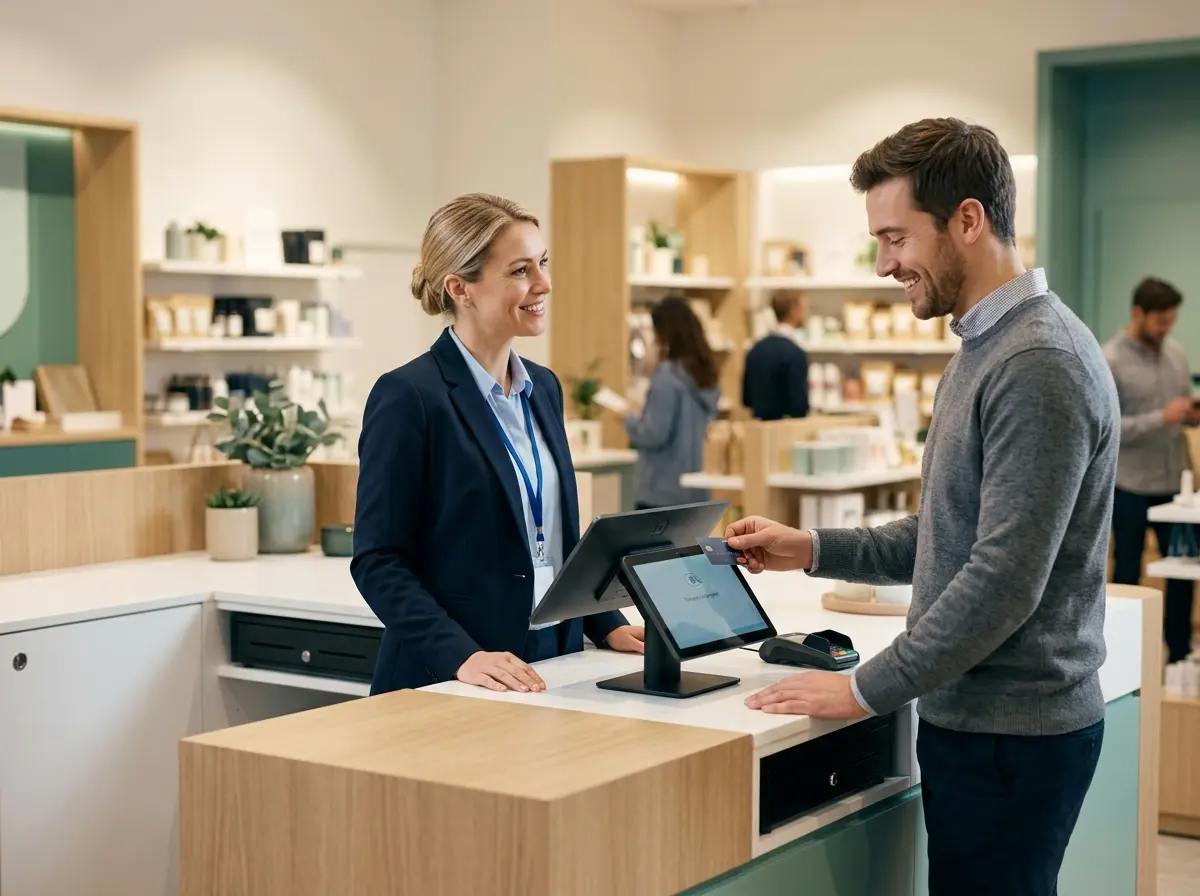
Customers form lasting impressions in the first and last moments of their visit. A warm greeting at the register — even something as simple as sincere eye contact and a genuine "Did you find everything okay?" — makes customers feel seen rather than processed. The challenge is consistency. On a slow Tuesday morning, your team is cheerful and attentive. On a slammed Saturday afternoon when two people called out sick? Not so much, and frankly, you can't blame them.
Build a short, repeatable checkout script into your training so that even on the hard days, the baseline experience remains solid. It doesn't need to be scripted to the word — just a framework that ensures every customer gets acknowledged, helped, and thanked.
Upselling Without the Awkwardness
Checkout is actually a prime moment for a gentle, well-placed upsell — but it has to feel natural rather than transactional. The key is relevance. A customer buying a gym membership doesn't need a hard sell on personal training the moment they hand over their card; they need a casual, confident mention that you have intro sessions available if they ever want to try it. Train your team to offer one relevant suggestion per transaction, framed as genuinely helpful rather than commission-driven. When done right, upselling at checkout doesn't slow things down — it adds value to the interaction while modestly improving your average order value.
Handling Complaints and Issues at the Register
Every business, no matter how well-run, will occasionally have a customer arrive at checkout with a grievance. How your team handles that moment — under pressure, with a line forming behind the unhappy customer — says everything about your culture. Empower your frontline staff with clear, simple authority to resolve common issues on the spot: a small discount, a free add-on, a sincere apology paired with a concrete fix. When employees feel confident to act without a manager's approval for routine situations, resolutions happen faster, customers feel genuinely heard, and the line keeps moving. The businesses that handle complaints gracefully at checkout often turn frustrated customers into loyal ones — which is, when you think about it, a much better return than avoiding the complaint altogether.
Quick Reminder About Stella
Stella is an AI robot employee and phone receptionist designed to work seamlessly alongside your team — greeting walk-in customers, answering questions, promoting deals, and handling phone calls around the clock. She's built for businesses of all types and sizes, runs on a simple $99/month subscription, and is ready to work from day one without a single sick day or awkward onboarding conversation.
Conclusion: Small Changes, Big Smiles
Improving your checkout process isn't about grand gestures or massive investments. It's about honestly examining where friction lives, making targeted improvements, and giving your team the tools and training they need to deliver a consistent experience — even when things get busy and chaotic and someone's standing at the register holding a coupon that expired in 2019.
Here's a practical action plan to get started this week:
- Walk your floor as a customer would. Note every moment that slows you down or creates confusion before you even reach checkout.
- Audit your payment technology. If you're not accepting contactless payments, fix that immediately.
- Create a simple checkout script for your team — not robotic, just consistent. A greeting, a helpful moment, a genuine thanks.
- Empower your staff to resolve small complaints without escalation. Define the boundaries clearly and trust them to operate within them.
- Reduce upstream interruptions by ensuring product information, pricing, and promotions are clearly visible — or better yet, handled proactively before the customer reaches the register.
Your checkout process is the last impression you make before a customer decides whether to come back. Make it fast, make it friendly, and make it worth remembering — for all the right reasons.