Introduction: Because Shrinkage Doesn't Just Mean Your Wool Sweater in the Dryer
If you own or manage a retail store, you already know that inventory doesn't always disappear because you sold it. Shoplifting, internal theft, administrative errors, and vendor fraud collectively cost U.S. retailers an estimated $112 billion per year in losses — and that number keeps climbing. Yet somehow, loss prevention training is often the section of the employee handbook that gets the least attention, sandwiched awkwardly between the dress code policy and the paragraph about not microwaving fish in the break room.
Here's the reality: your team is your first and most important line of defense. A well-trained retail staff can deter theft, catch discrepancies early, and create a store environment where bad actors simply don't feel comfortable operating. The good news is that building a solid loss prevention culture doesn't require hiring an army of security consultants or installing a surveillance system worthy of a Vegas casino. It requires intentional, consistent training — and a commitment to making security protocols part of everyday operations rather than a once-a-year PowerPoint nobody remembers.
This guide will walk you through the foundations of effective loss prevention training for your retail team, so you can protect your bottom line without turning your store into a paranoid fortress.
Building the Foundation: What Your Team Needs to Know
Understanding the Types of Loss
Before your team can prevent loss, they need to understand where it actually comes from. Most retail owners assume shoplifting is the biggest culprit, but the truth is more nuanced. According to the National Retail Federation, external theft accounts for roughly 37% of inventory shrinkage, while employee theft accounts for about 29%, administrative errors account for 21%, and vendor fraud makes up the rest. Training that only focuses on catching shoplifters is leaving a significant portion of your losses completely unaddressed.
Make sure your team understands all four categories. Administrative errors — things like miscounted inventory, incorrect pricing entries, or processing mistakes — are often completely preventable with better procedures and awareness. Vendor fraud, where suppliers short-ship product or manipulate invoices, is another area where an attentive receiving process makes all the difference. When your employees understand the full landscape of where losses occur, they become more alert and more accountable across the board.
Establishing Clear Security Protocols
Clear, written protocols are non-negotiable. Verbal instructions passed down like a game of telephone do not count as training. Your security protocols should cover at minimum: how to handle cash transactions, proper procedures for opening and closing the store, how to conduct inventory counts, who has access to the back office or stockroom, and how to report suspicious activity without confrontation.
The confrontation piece is particularly important. Under no circumstances should an untrained employee physically stop or accuse a suspected shoplifter. Beyond the safety risks, it exposes your business to serious legal liability. Instead, train your staff on passive deterrence strategies — greeting every customer who enters, maintaining a presence on the floor, offering help proactively. Most shoplifters are opportunists; attentive customer service is one of the most effective deterrents you have.
Making Training an Ongoing Practice, Not a One-Time Event
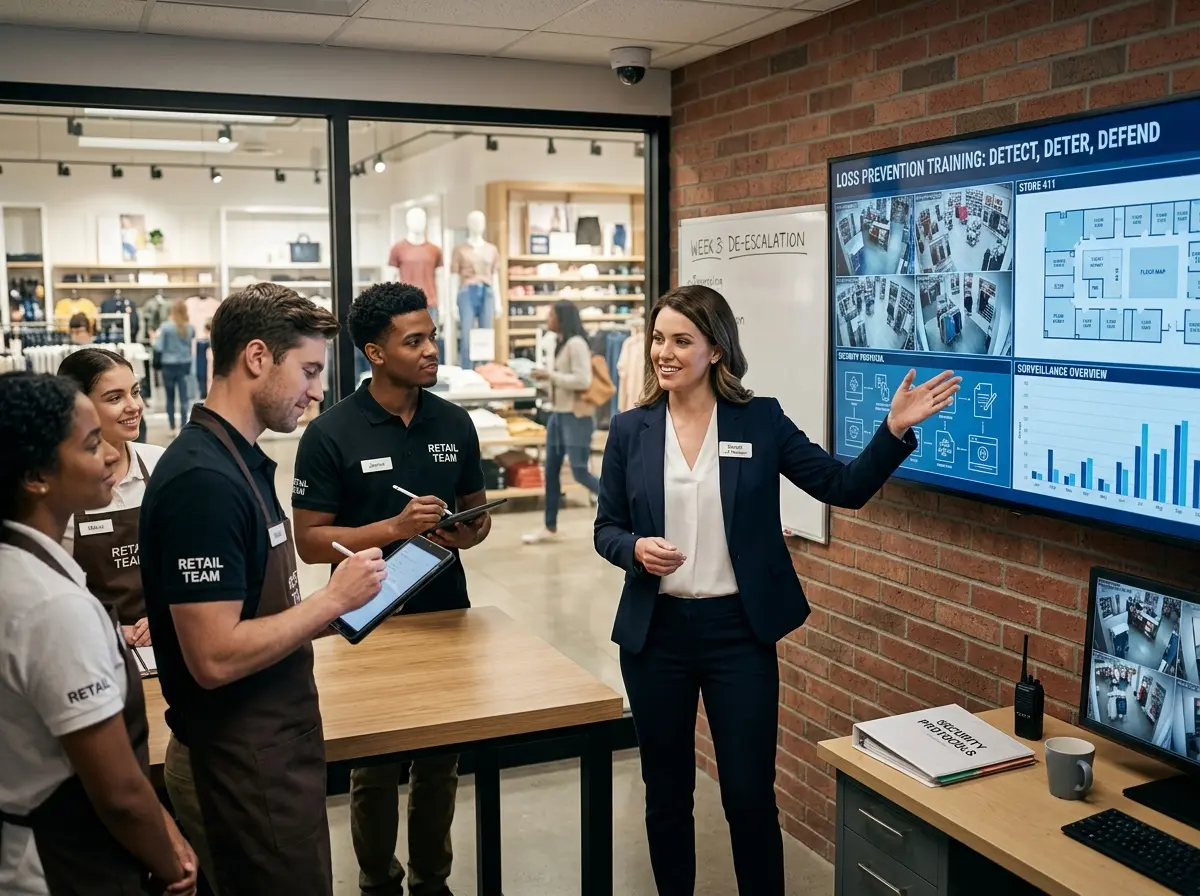
New employee orientation is where training begins, not where it ends. Loss prevention should be revisited regularly through brief team meetings, scenario-based exercises, and updated protocols whenever something changes — a new POS system, a store layout change, or a spike in a particular type of incident. Consider monthly "security minutes" at the start of a team huddle where you highlight one relevant topic, a recent incident (anonymized), or a reminder about a specific procedure. Consistency is what transforms a policy document into an actual culture.
How Technology and Smart Store Presence Can Support Your Efforts
Freeing Up Your Staff to Stay Alert
One of the most overlooked contributors to theft opportunities is a distracted staff. When your employees are constantly pulled away to answer the same questions repeatedly — "Where's the fitting room?" "Do you carry this in blue?" "What time do you close?" — they're not watching the floor. That's where Stella, the AI robot employee and phone receptionist, quietly earns her keep.
Stella stands inside your store and proactively greets customers, answers product and service questions, promotes your current deals, and handles the routine inquiries that eat up your team's time and attention. Meanwhile, your human staff can stay focused on being present on the floor — which, as any loss prevention professional will tell you, is one of the most powerful deterrents to theft available. She also answers phone calls 24/7, so your team isn't rushing to grab the phone mid-shift and losing situational awareness in the process. A well-covered store is a harder store to steal from.
Spotting Red Flags and Responding the Right Way
Behavioral Cues Your Team Should Recognize
Experienced retail professionals develop an instinct for behavior that doesn't quite fit — but that instinct can be taught, at least in part. Train your team to notice things like customers who avoid eye contact with staff, individuals who spend a long time in one area without purchasing, people carrying large bags or wearing bulky clothing in warm weather, or groups that seem to be working in a coordinated way to distract staff. It's worth emphasizing that none of these behaviors are proof of anything on their own — they're simply cues to pay closer attention and increase floor presence.
The appropriate response is always the same: approach the customer with genuine, friendly customer service. "Can I help you find something today?" is simultaneously professional and a signal to anyone with bad intentions that they've been noticed. This is not about profiling — it's about consistent, attentive service for everyone in the store, which protects both your inventory and your reputation.
Internal Theft: The Uncomfortable Conversation
No business owner wants to believe that their employees would steal from them. Unfortunately, the data says otherwise, and ignoring the possibility doesn't make it less likely — it just makes it easier. Internal theft is most likely to occur when employees feel they won't be caught, when there are no checks and balances in place, or when morale is genuinely poor.
Preventive measures matter more than reactive ones. Implement point-of-sale audit trails so every transaction is logged and traceable. Require dual authorization for voids, refunds, and discounts above a certain threshold. Conduct random inventory spot checks rather than announcing when full counts will happen. Separate responsibilities so that the same employee isn't both receiving shipments and reconciling inventory. And invest in your team's morale — employees who feel valued and fairly compensated are significantly less likely to rationalize taking from the business.
Creating a Reporting Culture Without Fear
Your team will notice things you don't. But they'll only tell you about those things if they trust the reporting process. Create a clear, confidential channel for employees to report suspicious behavior — whether from customers or coworkers — without fear of retaliation or social fallout. Some businesses use an anonymous tip line or a simple form submitted to management directly. Whatever the mechanism, make it clear that reports are taken seriously, investigated fairly, and never used to punish the reporter.
Reinforce this culture by following up appropriately when reports come in. If employees see that nothing ever happens when they raise a concern, they'll stop raising concerns. And if they see that raising concerns leads to unfair outcomes for themselves, they'll actively avoid reporting. Psychological safety in your store isn't just a nice-to-have — it's a loss prevention strategy.
Quick Reminder About Stella
Stella is an AI robot employee and phone receptionist that works inside your retail store and answers your business calls 24/7 — all for just $99 a month with no upfront hardware costs. She greets customers, answers questions, promotes your offerings, and keeps your human team free to focus on what matters — including keeping an eye on the floor. If you haven't already explored what she can do for your store, it's worth two minutes of your time.
Conclusion: Protect What You've Built
Building a genuine loss prevention culture takes intention, consistency, and a willingness to have the occasional uncomfortable conversation. But the payoff is significant — both in recovered margin and in a store environment where your team feels accountable, informed, and genuinely part of protecting the business.
Start by auditing your current training materials and protocols. If they haven't been updated in the past year, they probably need attention. Then work through these priorities:
- Educate your team on all four types of retail loss — not just shoplifting.
- Document and distribute clear, written security protocols for daily operations.
- Integrate loss prevention topics into regular team meetings so they stay top of mind.
- Train staff on behavioral awareness and appropriate customer engagement responses.
- Implement internal controls — audit trails, dual authorizations, random spot checks.
- Create a safe, confidential reporting channel and reinforce it consistently.
Your store represents a significant investment of time, money, and energy. The systems and habits you build now are what protect that investment when you're not watching — which, let's be honest, is most of the time. Train your team well, build strong protocols, and create an environment where doing the right thing is simply the norm. Your future bottom line will thank you.