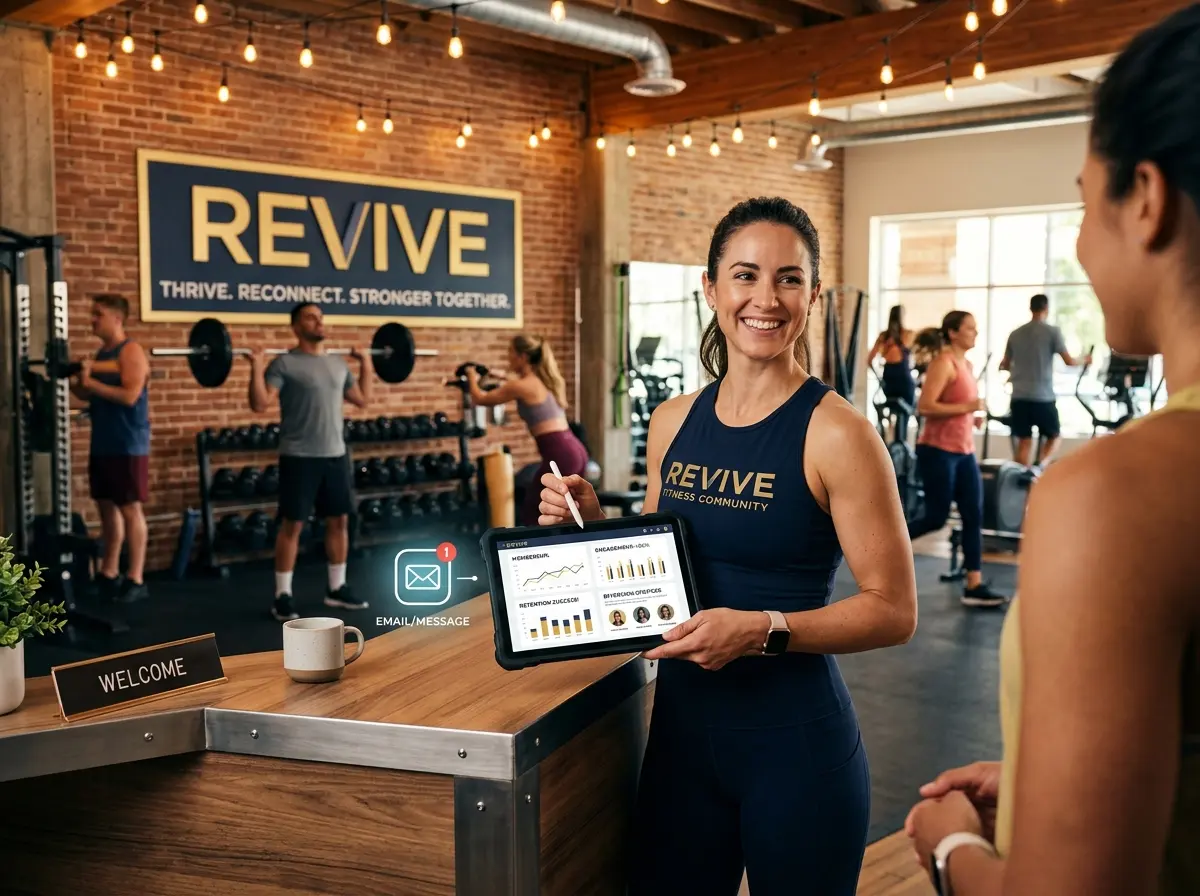
The Honeymoon Phase Is Real — And It's Killing Your Retention
Every gym owner knows the feeling. January hits, and suddenly your facility is buzzing. New faces everywhere. Equipment that sat idle in December is now fought over. You're thinking, "This is it. This is the year we really grow." Then February rolls around. Then March. And quietly — almost politely — about 80% of those shiny new members simply... stop coming. According to industry research, most gyms lose the majority of their January sign-ups within the first 90 days. Some studies put gym member attrition rates as high as 50% annually, with the steepest drop happening in that brutal first quarter.
Here's the uncomfortable truth: it's probably not your equipment. It's not your hours. It's not even the price. The real reason your new members vanish is a failure in engagement, onboarding, and follow-through — and most gym owners don't even realize it's happening until the treadmills are lonely again. The good news? Every single one of these problems is fixable, and none of the solutions require a major overhaul of your business model.
Why New Members Leave (And It's Not What You Think)
They Never Felt Welcome in the First Place
New gym members are, almost universally, nervous. They don't know the layout. They don't know the unspoken rules. They don't know which locker room hooks are apparently claimed by regulars through some ancient, unspoken agreement. When a new member walks in and nobody greets them — or worse, they're handed a clipboard and left to fend for themselves — that anxiety doesn't go away. It compounds.
The first visit sets the emotional tone for everything that follows. A warm, informative welcome can be the difference between someone who becomes a 10-year member and someone who quietly cancels after six weeks and pretends the gym never existed. Staff are often too busy managing check-ins, cleaning equipment, or handling phone calls to consistently greet every new face. And that inconsistency is where members start mentally drafting their cancellation email.
Onboarding Is Treated as a One-Time Event
Most gyms think onboarding ends the moment someone signs a membership agreement. Maybe there's a brief tour, maybe a free personal training session that gets awkwardly scheduled and then rescheduled twice. But real onboarding — the kind that actually retains people — is a process, not a single touchpoint. It's checking in after the first week. It's reminding them about the group fitness class they mentioned being interested in. It's making them feel like a person, not a recurring charge on a credit card statement.
Research from the fitness industry consistently shows that members who engage with three or more services or programs in their first 30 days are significantly more likely to retain long-term. Yet most gyms have no structured process to encourage that deeper engagement. The member signs up, gets a fob, and is effectively left to their own devices — which, for someone still building a habit, is a recipe for disappearance.
Nobody Noticed When They Started Drifting
Here's where things get painfully avoidable: most members don't cancel out of frustration. They cancel out of inertia. They miss a week, life gets busy, guilt sets in, they avoid the gym because they feel guilty, and before long the membership feels like a monument to their failed good intentions. A single check-in message at the right moment — "Hey, we haven't seen you in a while, everything okay?" — can break that cycle entirely. But that requires knowing when someone's attendance has dropped off, and then actually doing something about it. Most gyms are flying blind on both counts.
Where Technology Can Step In (Before the Dropout Happens)
Smarter First Impressions and Intake
This is exactly the kind of problem that a tool like Stella is built for. As an AI robot kiosk that stands inside your facility and engages customers proactively, Stella can greet every single person who walks through your door — including that new member who looks slightly terrified on their first visit. She can answer questions about class schedules, amenities, and current promotions without pulling a staff member away from what they're doing. She can also collect new member information through conversational intake forms, feeding that data directly into a built-in CRM so your team has a real profile on each member — their goals, interests, and contact information — from day one.
And because Stella also handles phone calls 24/7, those January inquiries that come in at 9pm on a Tuesday? They get answered. Professionally. With accurate information. Instead of going to voicemail and calling a competitor in the morning.
Building a Retention System That Actually Works
Create a 90-Day New Member Journey
Stop thinking about onboarding as a single conversation and start thinking about it as a structured 90-day experience. Map out the key touchpoints you want every new member to have in their first three months. This doesn't need to be elaborate — it just needs to be intentional. A welcome message after day one. A check-in after week two. An invitation to a specific class or challenge around the 30-day mark. A milestone acknowledgment at 90 days.
The specifics matter less than the consistency. New members who feel like your gym is paying attention to them — genuinely, personally — are far more likely to stay. Build the journey in advance, assign ownership, and automate what you can. Your staff have enough to manage; a retention calendar shouldn't live entirely in someone's head.
Use Your Data Before It's Too Late
Attendance data is gold, and most gyms sit on it doing absolutely nothing. If a member who typically came three times a week suddenly drops to once a week, and then to nothing — that's a signal. Caught early, it's an opportunity. Caught after they've already cancelled, it's a postmortem. Set up alerts or review attendance patterns weekly, especially for members in their first 90 days. A quick personal outreach — a phone call, a text, even a message from a trainer they've worked with — costs almost nothing and can save a membership that was on the verge of walking out the door permanently.
Make Community Feel Inevitable, Not Optional
People don't stay for equipment. They stay for people. Gyms with strong community cultures — where members know each other, where staff remember names, where there are group challenges and social touchpoints — retain members at dramatically higher rates than facilities that function purely as a transactional service. This doesn't mean you need to throw awkward pizza parties every month. It means intentionally creating moments where connection can happen: a new member orientation group, a six-week challenge in February (conveniently right when people start drifting), a leaderboard, a dedicated social media group. Lower the friction for community to form, and it will.
Quick Reminder About Stella
Stella is an AI robot employee and phone receptionist that works 24/7 — greeting customers in person at your location, answering calls with full knowledge of your business, collecting member information, and managing contacts through a built-in CRM. At $99/month with no hardware costs, she's the consistent, professional presence your front desk deserves, whether you're slammed in January or quiet in July.
The Bottom Line: Retention Is a System, Not a Wish
The gyms that dominate long-term aren't necessarily the ones with the fanciest equipment or the lowest prices. They're the ones that treat retention as a deliberate, ongoing operational priority — not something they think about when the attrition numbers get embarrassing in Q2. If you want your January surge to actually mean something by March, here's where to start:
- Audit your first impression. Walk in as if you're a new, slightly nervous member. What do you experience? What's missing?
- Map out a 90-day new member journey with at least five meaningful touchpoints — and assign someone to own it.
- Set up an attendance alert system so drifting members get a human (or at least a very warm automated) outreach before they disappear.
- Build community intentionally. One structured community event or challenge per month goes a long way.
- Use technology to fill the gaps your staff can't cover — particularly at the front door and on the phone lines.
January new members aren't a problem. They're an opportunity. The question is whether your gym has the systems in place to turn a motivated-but-fragile new member into a loyal long-term one. Because if you don't, someone else eventually will — and they'll do it with better follow-up emails and a kiosk that actually says hello.