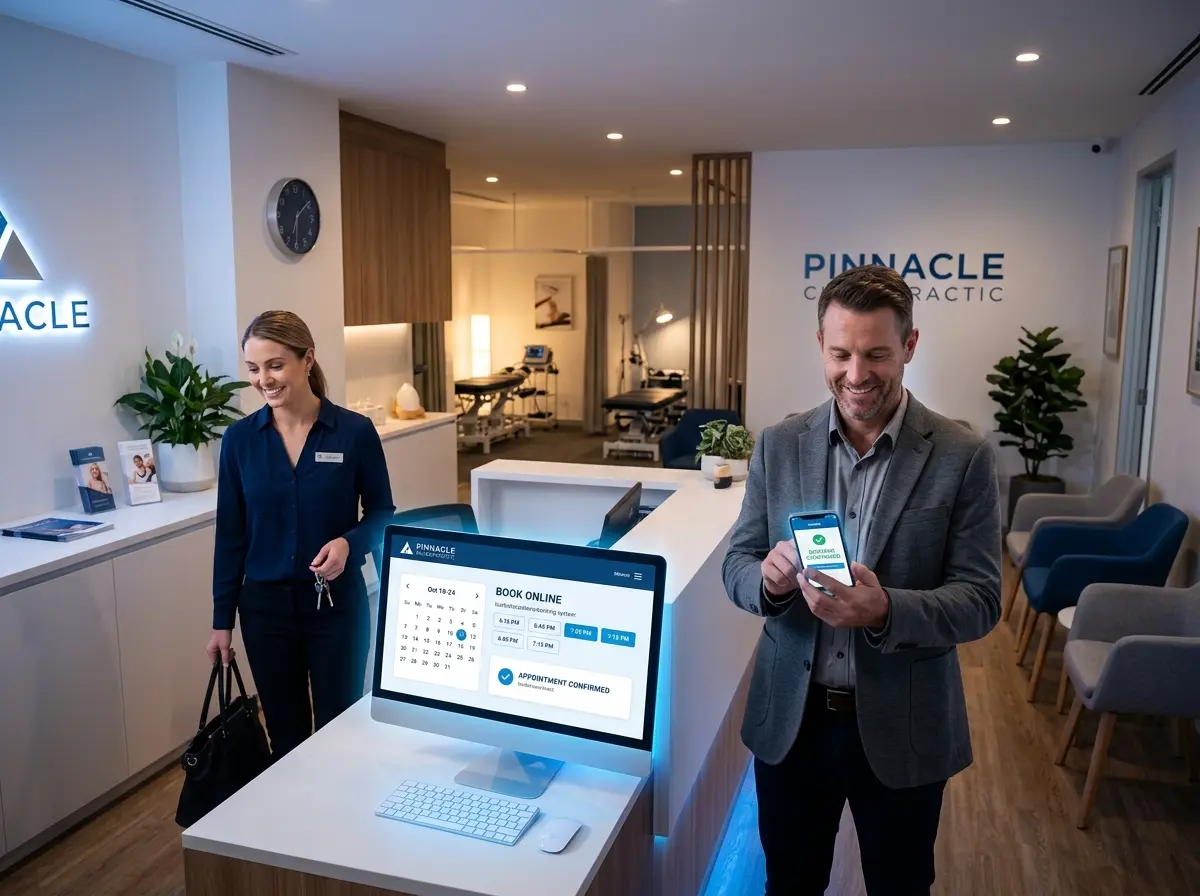
Your Chiropractic Office Closes. Your Patients' Back Pain Doesn't.
Here's a scenario that plays out in chiropractic offices across the country every single day: It's 7:43 PM on a Tuesday. A potential new patient just threw out their back picking up a bag of groceries (classic), and they're desperately searching for a chiropractor who can see them soon. They find your office, they're impressed by your reviews, they click your number — and they get voicemail. So they hang up and call the next chiropractor on the list.
Congratulations. You just lost a patient in your sleep. Literally.
The uncomfortable truth is that a significant portion of appointment booking decisions happen outside of business hours. According to industry research, nearly 40% of online appointments are booked after 5 PM. Chiropractic patients, in particular, tend to reach their breaking point (sometimes literally) in the evenings and on weekends — precisely when your front desk staff is at home, living their best lives. And nobody blames them for that.
The good news? You don't have to choose between giving your staff a life and giving your patients access. The right after-hours booking system changes everything — and this article walks you through exactly what that looks like.
Why After-Hours Availability Is a Competitive Advantage, Not a Luxury
The Modern Patient Expects Instant Access
Patient expectations have shifted dramatically over the past decade. People now book restaurant reservations, schedule car repairs, and order custom furniture — all from their phones at midnight — without speaking to a single human being. Healthcare is no exception. Today's chiropractic patient is comparing your office not just to other chiropractors, but to the frictionless convenience of every other service they use.
When a patient calls after hours and hits a dead end, the emotional experience is frustration compounded by pain. That's not a combination that inspires loyalty. Meanwhile, the practice down the street that answers after hours — even through an automated system — earns the appointment, the relationship, and eventually, the referrals.
After-Hours Calls Are Often Your Most Motivated Patients
Think about who's calling at 8 PM on a Wednesday. It's not someone casually browsing their options. It's someone in discomfort who has finally decided to do something about it. These are high-intent callers — the kind of patients who show up, follow through on treatment plans, and refer their friends. Letting those calls go unanswered isn't just a missed appointment; it's a missed relationship with one of your best potential patients.
Staff Burnout Is Real, and "Just Answer the Phones" Isn't the Solution
Before anyone suggests hiring someone to work evenings, let's be practical. Staffing a front desk for extended hours is expensive, logistically complicated, and increasingly difficult in today's labor market. Turnover in healthcare administrative roles is notoriously high, and training new staff members takes time your office doesn't always have. The answer isn't more human labor — it's smarter systems that don't require a human to be awake at all hours to keep your practice running.
How the Right Tools Can Handle After-Hours Booking Seamlessly
AI Receptionists and Automated Intake: The Front Desk That Never Sleeps
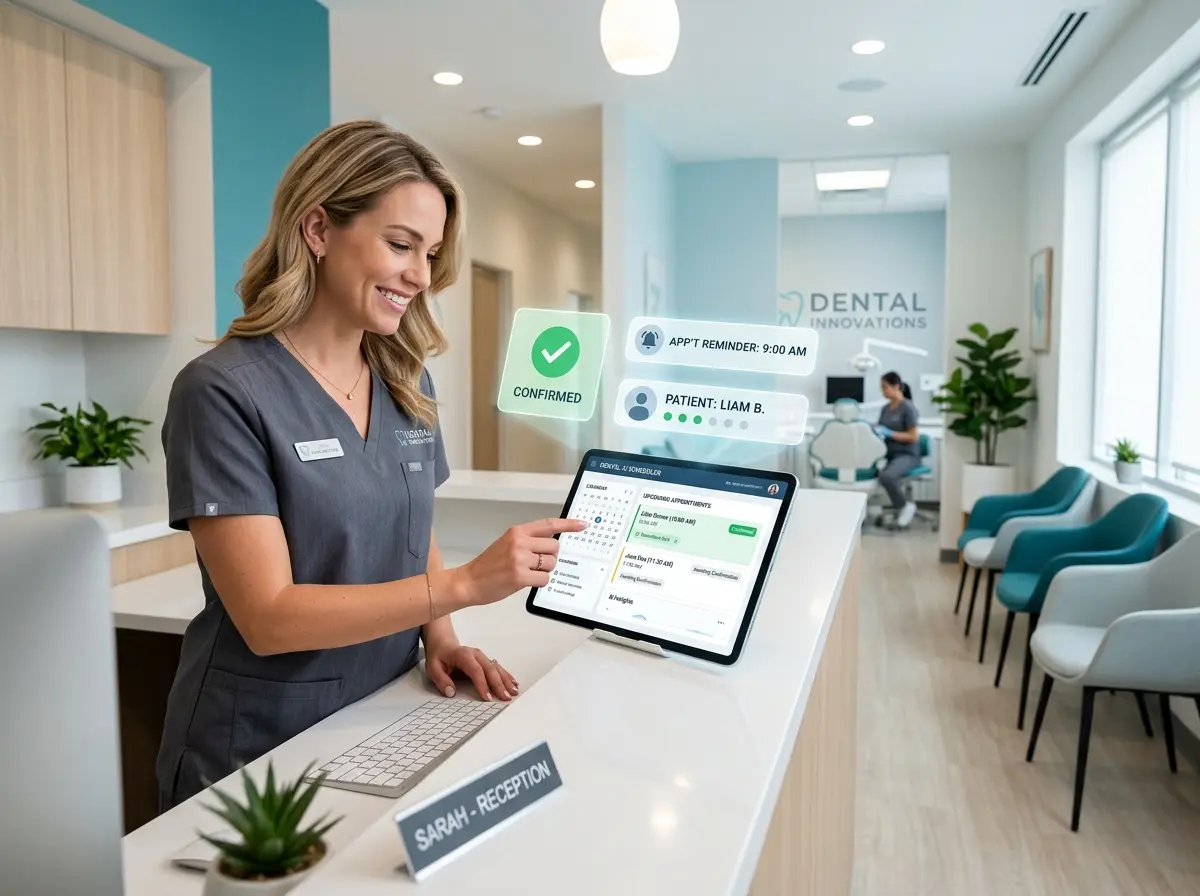
This is where technology has genuinely become a game-changer for small and mid-sized practices. Stella, the AI robot employee and phone receptionist built for businesses exactly like yours, answers every incoming call with the same professionalism and knowledge your best front desk staff would bring — except she's available at 2 AM on a Sunday without overtime pay or complaints about the holiday schedule.
For chiropractic offices, Stella can handle the full intake conversation over the phone: collecting patient information, explaining your services and specialties, answering common questions about insurance or new patient processes, and capturing appointment requests — all through a natural, conversational interaction. If your office uses a physical location, her in-store kiosk presence can even greet walk-in patients and handle inquiries without tying up staff. Her built-in CRM automatically organizes patient contacts with custom fields, AI-generated profiles, and intake notes, so your team walks in Monday morning with everything they need already organized. No sticky notes. No missed callbacks. No chaos.
Building an After-Hours Booking System That Actually Works
Step One: Capture the Call, Every Time
The foundation of any after-hours system is simple: no call goes unanswered and no inquiry falls through the cracks. This means having a solution in place — whether AI-powered, callback-based, or a hybrid approach — that ensures every person who reaches out after hours gets an immediate, helpful response rather than a voicemail abyss. For most chiropractic offices, this means an AI phone receptionist configured with your office's specific information: your hours, your providers, your specialties, your new patient process, and your current promotions.
A well-configured after-hours system should be able to handle the most common caller questions without escalation. In a chiropractic context, that typically includes questions about what conditions you treat, whether you accept specific insurance, how long appointments run, where you're located, and how to prepare for a first visit. If your system can answer those questions confidently and conversationally at any hour, you've already eliminated most of the friction that costs you new patients.
Step Two: Collect the Right Information Upfront
An after-hours system that simply takes a name and phone number is better than nothing — but not by much. The real value comes when your after-hours solution can conduct a meaningful intake conversation: Why is the patient calling? What's their primary complaint? Have they seen a chiropractor before? Are they a new or returning patient? What days and times work best for them?
Collecting this information conversationally — not through a cold online form, but through a natural back-and-forth — dramatically improves the patient experience and gives your front desk staff everything they need to confirm appointments efficiently the next morning. It also signals to the patient that your office is organized, professional, and genuinely interested in their care before they've even walked through the door.
Step Three: Follow Up Fast When Business Hours Resume
Even the best after-hours system hands off to a human team at some point. The key is making sure that handoff is fast and informed. Practices that follow up with after-hours inquiries within the first hour of opening consistently convert at significantly higher rates than those who get to it "when things settle down." Your staff should walk in each morning with a clear list of after-hours contacts, organized by priority, with notes from each interaction already summarized and ready to act on.
The combination of a strong after-hours capture system and a fast morning follow-up process is what separates chiropractic offices that grow steadily from those that wonder why their phones aren't ringing — when really, their phones were ringing all along, just at the wrong hours.
Quick Reminder About Stella
Stella is an AI robot employee and phone receptionist built for businesses that can't afford to miss a call or a customer — which is every business, really. She answers phones 24/7, collects patient information through conversational intake, manages contacts through a built-in CRM, and for offices with a physical location, she's also present as a friendly in-store kiosk that greets and engages visitors. At $99/month with no upfront hardware costs, she's the after-hours front desk your practice has needed without the overhead you've been dreading.
Start Closing the After-Hours Gap This Week
If your chiropractic office doesn't have a reliable after-hours system in place, the actionable path forward is straightforward. Start by auditing how many calls your office misses outside of business hours — most phone systems can pull this data, and the number is usually more sobering than expected. Then identify what information a new patient typically needs to move forward with booking, and make sure your after-hours solution can provide it.
From there, it's about implementation: configure your AI receptionist with your practice's specific information, set up your intake flow, connect it to your CRM so nothing slips through, and brief your morning staff on the follow-up process. Done right, this system pays for itself the first time it captures a new patient that would have otherwise booked with your competitor.
Your patients' schedules don't revolve around your office hours. At this point, neither should your booking system. The practices that recognize this — and act on it — are the ones quietly growing their patient base while everyone else is leaving the phones unattended after 5 PM and calling it a day.
Don't be that practice. Set up your after-hours system, capture every opportunity, and let technology do the work your front desk can't be expected to do around the clock. Your patients — and your staff — will thank you for it.