Your Dental Practice Is Losing Patients While You Sleep
Picture this: It's 9:47 PM on a Tuesday. Someone just cracked a tooth on a piece of candy (classic), they're in mild panic mode, and they want to book an appointment with a dentist they can trust. They find your practice online, they're impressed, and they pick up the phone to call. What happens next? If your answer is "it goes to a generic voicemail that nobody checks until Thursday," congratulations — you just handed that patient directly to your competitor who figured this out before you did.
After-hours revenue leakage is one of the most underestimated problems in dental practice management. Patients don't schedule their dental emergencies, their toothaches, or their sudden desire for teeth whitening around your office hours. They act when the moment strikes — and if your practice isn't ready to receive them, someone else will be. The good news is that this problem is entirely solvable, and you don't need to hire a night-shift receptionist to do it.
Why Dental Practices Lose More After-Hours Than They Realize
The Missed Call Math Nobody Wants to Do
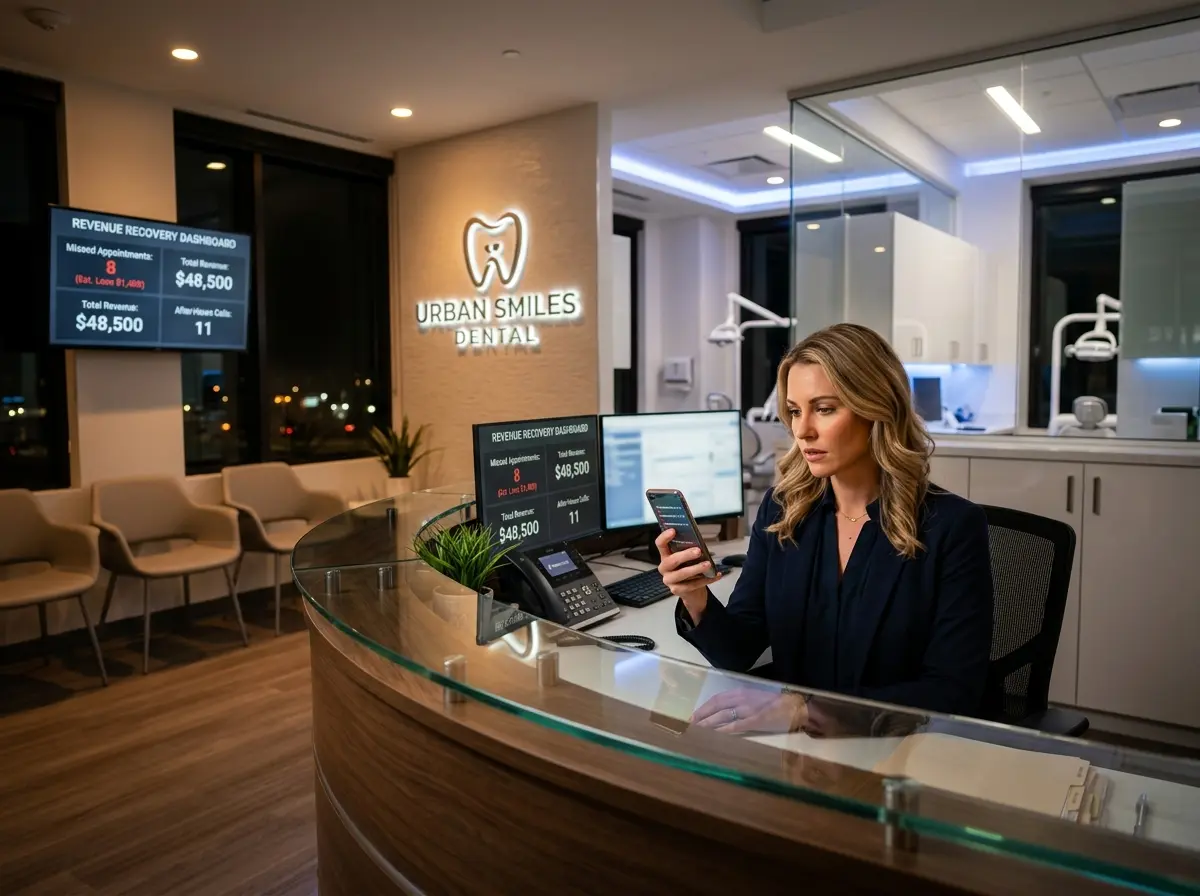
Let's run a quick thought experiment. Your practice misses, say, 10 calls per week outside of business hours. Conservatively, even if half of those callers eventually call back during business hours, you're still losing five potential patient inquiries per week. Now factor in that the average new dental patient is worth anywhere from $800 to $1,500 or more in lifetime value, and those five lost calls per week start looking a lot less like a minor inconvenience and a lot more like a serious revenue problem. Over a year, even modest after-hours call leakage can translate to tens of thousands of dollars in missed revenue — which, frankly, would look much better in your pocket than in your competitor's.
The math gets worse when you consider that today's patients have approximately zero patience for unanswered calls. A significant portion of people who reach voicemail simply hang up and move on, especially if they found you through an online search where your competitors are just one click away. Patient loyalty, it turns out, starts before the first appointment.
The Voicemail Black Hole Problem
Even when callers do leave a voicemail, the follow-up process in most dental offices is chaotic at best. Messages pile up, get listened to in batches, and responses happen anywhere from a few hours to a full business day later. By then, the patient has either booked elsewhere, forgotten they called, or decided their tooth probably "isn't that bad" (it is that bad). The window to capture a motivated patient is narrow, and a voicemail inbox is not a revenue-generating tool — it's a holding pen for missed opportunities.
After-Hours Isn't Just About Emergencies
It's tempting to think of after-hours calls as exclusively emergency-driven, but that's not the full picture. Many patients call after hours simply because that's when they have time — evenings and weekends are prime scheduling windows for working adults. Cosmetic inquiries, cleaning appointments, Invisalign questions, and insurance check-ins all happen outside the 9-to-5 window. A patient researching teeth whitening options at 10 PM is a warm lead. If they can't get answers, they cool off fast.
How Technology Is Filling the After-Hours Gap
The Rise of the Always-On Practice
Forward-thinking dental practices are increasingly turning to AI-powered tools to maintain a professional, responsive presence around the clock without burning out their staff. One option worth knowing about is Stella, an AI robot employee and phone receptionist that answers calls 24/7 with full knowledge of your practice's services, hours, pricing, and policies. She handles patient inquiries conversationally, collects intake information through built-in intake forms, and passes along AI-generated voicemail summaries with push notifications so your team can triage urgent matters efficiently — even if the office is closed.
For practices with a physical location, Stella also operates as a human-sized in-kiosk presence in your waiting room or lobby, greeting patients, answering questions, and even promoting current specials — so your front desk staff can focus on higher-value interactions instead of answering the same questions about parking validation for the fifteenth time that day. Her built-in CRM also keeps patient contact records organized with custom fields, tags, and AI-generated profiles, which means your team arrives Monday morning with context, not chaos.
Practical Strategies to Capture After-Hours Revenue
Optimize Your After-Hours Phone Experience
The single most impactful thing most dental practices can do immediately is stop treating their after-hours phone line like an afterthought. Your outgoing message, your call handling process, and your response time all communicate something to potential patients — and right now, many practices are communicating "we're not really that interested in your business after 5 PM." Fix this by ensuring that every after-hours call is either answered by an AI receptionist, routed intelligently, or at minimum followed up on within the first hour of the next business day. Speed matters enormously. Research consistently shows that the likelihood of converting a lead drops dramatically after the first few hours of contact.
Beyond speed, consider what information callers actually need after hours. Most patients calling outside of business hours want to know whether you're accepting new patients, what your hours are, whether you take their insurance, and how to book an appointment. Make sure your after-hours system — whether human or AI — can answer all of these confidently and conversationally, not just recite a list of options from a phone tree designed in 2009.
Use After-Hours Interactions to Warm Up Leads
An after-hours contact isn't just a call to be answered — it's an opportunity to begin building a patient relationship before they ever sit in your chair. When a prospective patient calls at 8 PM and gets a warm, knowledgeable response that answers their questions and confirms their appointment, they walk into your office already predisposed to trust you. Compare that to the experience of leaving a voicemail in the void and receiving a perfunctory callback two days later. The practices that win long-term patient relationships are the ones that make every touchpoint feel intentional and professional — including the ones that happen after the lights are off.
Consider also using after-hours interactions to promote relevant services. A caller asking about a chipped tooth is a natural candidate for a brief mention of your same-day emergency appointments or your cosmetic dentistry options. A patient confirming a cleaning appointment might appreciate knowing you now offer teeth whitening add-ons. These aren't aggressive sales tactics — they're helpful, contextual conversations that happen to generate additional revenue.
Audit Your Leakage Points and Plug Them
Before you can fix after-hours revenue loss, you need to know exactly where it's happening. Start by pulling your call data for the last 90 days and looking at the volume and timing of missed calls, voicemails, and after-hours contacts. If your phone system doesn't give you this visibility, that's problem number one. From there, map out what happens to each type of contact and where patients fall out of the funnel. Are emergency callers getting no immediate response? Are new patient inquiries waiting 24-plus hours for a callback? Are after-hours callers even being given a way to book online as a fallback? Identifying the specific gaps is the first step to closing them, and the results of that audit may surprise you.
Quick Reminder About Stella
Stella is an AI robot employee and phone receptionist built for businesses that can't afford to miss a customer — which, realistically, is every business. She answers calls 24/7, greets patients in person at your kiosk, handles intake forms, manages your CRM, and keeps your team informed with smart voicemail summaries and push notifications. At $99 per month with no upfront hardware costs, she's the after-hours employee your practice has always needed but never wanted to schedule.
Stop Letting After-Hours Calls Walk Out the Door
The dental practices that will thrive over the next decade aren't necessarily the ones with the fanciest equipment or the most Instagram-worthy waiting rooms (though, sure, those help). They're the ones that make it genuinely easy for patients to connect, get answers, and book appointments — at any hour, on any day. After-hours revenue isn't a bonus category; it's a core part of your growth strategy that most practices are currently leaving on the table.
Here's what you should do this week. First, pull your missed call data and actually look at it — put a number on what after-hours leakage is costing you. Second, evaluate your current after-hours experience by calling your own practice after hours and experiencing it the way a patient does. Third, explore AI-powered solutions that can handle 24/7 call coverage without adding headcount or overhead. The problem is real, the solution is available, and the math is in your favor. Your future patients are calling right now — the only question is whether you're ready to answer.