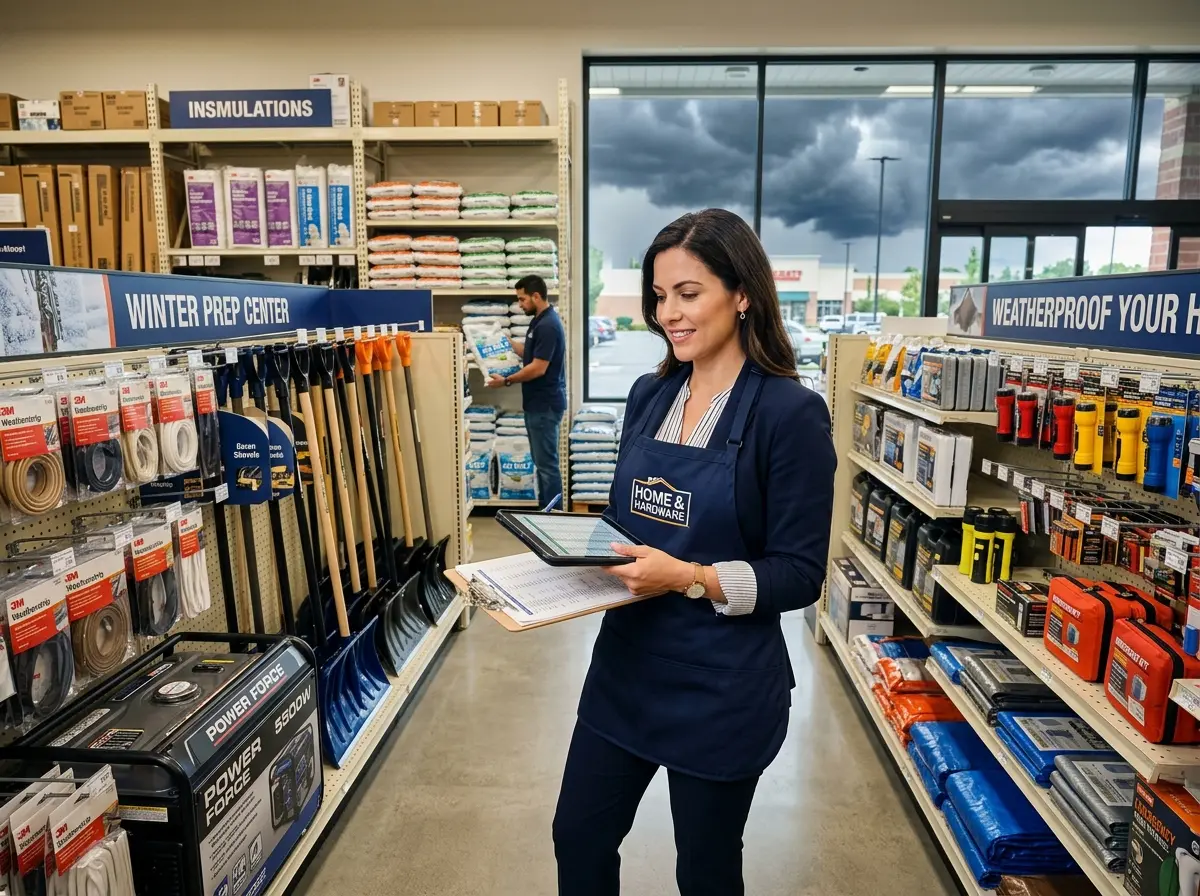
Introduction: Because "Hope for the Best" Is Not a Business Strategy
Every hardware store owner knows the feeling. The calendar flips toward hurricane season, the first cold snap hits, or spring cleaning fever sweeps through the neighborhood — and suddenly your store looks like a Black Friday sale that nobody planned for. Shelves get picked clean, your staff is sprinting, your phone won't stop ringing, and somewhere in the chaos, a customer is loudly asking where the generators are while you're desperately trying to restock the weatherstripping aisle.
Seasonal demand is one of the most predictable unpredictable forces in retail. You know it's coming. You just don't always know how much of it is coming, or whether your inventory, staffing, and customer experience will survive the wave. The good news? A little preparation goes a long way. The bad news? Most hardware store owners wait until the storm is already on the radar to start thinking about it.
This guide is here to change that. Whether you're bracing for hurricane prep season, the spring gardening rush, winter storm panic-buying, or the summertime DIY explosion, here's how to get ahead of seasonal demand — professionally, efficiently, and without losing your mind (or your best employees).
Know Your Seasons Before Your Seasons Know You
The foundation of any smart seasonal strategy is historical awareness. Your store's own sales data is a goldmine that too many owners leave unexamined. Before you can prepare effectively, you need to understand the rhythm of your business — not just the obvious spikes, but the lead-up periods where smart shoppers start stocking up before the rush hits.
Mine Your Sales Data Like It's a Natural Resource
Pull your point-of-sale reports from the last two to three years and look for patterns. When do generator sales start climbing? How early does demand for ice melt creep up before the first freeze? Does mulch move in March or April in your region? This kind of data allows you to stop reacting and start anticipating. Most modern POS systems can produce category-level reports by week or month — if yours can, use it religiously.
Pay special attention to the two-week window before peak demand. That's typically when savvy customers start purchasing, and it's your last real opportunity to receive emergency stock orders before logistics get complicated. If your data shows that flashlight sales jump every September, your order should go in by mid-August — not the week a tropical storm forms in the Gulf.
Build a Seasonal Calendar (and Actually Use It)
Take your findings and build a master seasonal calendar. Map out at least six to eight distinct demand windows across the year — hurricane season, winter weather prep, spring lawn and garden, summer DIY projects, back-to-school renovation season, and holiday lighting, for starters. For each window, document your top-selling SKUs, typical sales volume increases, and vendor lead times.
This document shouldn't live in a drawer. Post it in your stockroom, review it in team meetings, and use it to drive your buying decisions months in advance. A hardware store that buys its tarps in July for August storms is a hardware store that doesn't run out of tarps in August. Revolutionary concept, we know.
Inventory and Vendor Strategy: Stocking Smart, Not Just Deep
Negotiate Seasonal Agreements with Your Suppliers
One of the most underutilized strategies in independent hardware retail is the seasonal supply agreement. Many distributors and manufacturers are willing to hold inventory on your behalf, offer flexible payment terms during peak periods, or provide priority fulfillment if you establish the relationship before demand hits. That conversation is much easier to have in March than in August when every store in your region is calling them simultaneously.
Consider tiered ordering: place a baseline order early, then negotiate a replenishment trigger so that when your on-hand stock hits a certain threshold, a reorder fires automatically. It's not glamorous, but it's the kind of operational discipline that separates stores that thrive during a weather event from those that apologize to customers all week.
Don't Overstock the Wrong Things
Seasonal preparation doesn't mean buying everything in bulk and hoping for the best. Cash flow is still a real constraint, and nothing stings quite like a warehouse full of snow blowers in a winter that never materializes. The goal is precision overstocking — going deep on high-velocity consumables (batteries, tarps, rope, zip ties, caulk) while being more conservative on high-cost, high-risk equipment.
Consumables sell through. Big-ticket equipment requires a weather event to justify the inventory risk. Know the difference, plan accordingly, and leave yourself enough open-to-buy budget to respond when demand surprises you — because it will.
Keeping Customers Informed (and Your Staff Sane)
Inventory is only half the battle. The other half is communication — making sure customers know what you have, when you have it, and how to get it. During peak demand periods, your phone lines become a battlefield. Staff who should be restocking shelves end up answering the same five questions on repeat: "Do you have generators in stock? What are your hours this weekend? Are you getting more plywood?"
Let Technology Handle the Repetitive Stuff
This is exactly where Stella, an AI robot employee and phone receptionist, can take a serious load off your team. During a seasonal rush, Stella answers every incoming call — 24 hours a day, seven days a week — with accurate, up-to-date information about your inventory, hours, and current promotions. She handles the flood of "do you have it in stock?" calls so your staff can focus on actually serving the customers standing in front of them.
For stores with a physical location, Stella also operates as an in-store kiosk, greeting customers as they walk in and proactively directing them to high-demand items or current deals — which, during a storm prep rush, might just save you from explaining where the flashlights are for the fortieth time that morning. At just $99/month with no upfront hardware costs, she's an easy win during your highest-pressure periods.
Staffing, Signage, and the In-Store Experience Under Pressure
Your physical store environment during a seasonal surge needs as much preparation as your inventory. Customers shopping under stress — whether that stress is "a hurricane is three days out" or "I promised my spouse we'd finally redo the deck this weekend" — need clarity, speed, and confidence that your store has what they need.
Staff Up Early and Brief Thoroughly
If you rely on seasonal or part-time help, bring them on and train them before the rush, not during it. A new hire learning your inventory system on the same day a tropical storm watch is issued is a liability, not an asset. Create quick-reference guides for seasonal SKUs, store layout changes, and common customer questions. Even a one-page cheat sheet dramatically reduces the number of times a new employee has to interrupt a full-timer to ask where something is.
Cross-train your core staff on high-demand departments so that no single person becomes a bottleneck. During a hurricane prep event, the last thing you want is one employee who knows the generator aisle and a line of eight customers waiting for them specifically.
Signage and Store Layout as a Competitive Advantage
During seasonal peaks, reconfigure your floor layout to prioritize the products customers need most. Move high-demand seasonal items to high-traffic areas — end caps, entry displays, near the registers. Use clear, bold signage that reduces the need for customers to ask staff for help navigating. The more self-sufficient your customers can be in finding what they need, the faster they move through the store, and the more revenue you generate per hour during your busiest days.
Don't underestimate the power of a well-placed "Storm Prep Station" display that bundles batteries, flashlights, tarps, and rope in one spot. Convenience drives impulse purchases, and impulse purchases during a weather event are often very intentional ones.
Quick Reminder About Stella
Stella is an AI robot employee and phone receptionist that works in your store and answers your phones — 24/7, without breaks, bad moods, or turnover. She greets customers, promotes your seasonal deals, answers product questions, and handles incoming calls so your human staff can focus on what they do best. At $99/month with no upfront hardware costs, she's built for businesses that want a reliable, professional presence without the overhead.
Conclusion: Get Ready Now, Thank Yourself Later
Seasonal demand is coming whether you're ready or not. The difference between a hardware store that cleans up during storm season and one that scrambles through it isn't luck — it's preparation, systems, and the discipline to do the planning work before the pressure hits.
Here's your actionable starting point:
- Pull your last two to three years of sales data and identify your top seasonal demand windows and SKUs.
- Build or update your seasonal calendar with key ordering deadlines, staffing needs, and promotional windows.
- Contact your top vendors before peak season and negotiate terms, priority fulfillment, or automatic replenishment triggers.
- Reconfigure your store layout and signage two to three weeks before anticipated peak demand.
- Review your phone and customer communication strategy — and consider whether your team is spending too much time answering repetitive calls that technology could handle.
The hardware store owners who thrive during seasonal surges aren't the ones who work the hardest during the storm. They're the ones who did the unglamorous planning work in the quiet weeks before it hit. Start that work now — and when your competitors are running out of inventory and burning out their staff, you'll be the store that everyone in town talks about for all the right reasons.