When "It Depends on Which Location You Call" Is Not a Brand Strategy
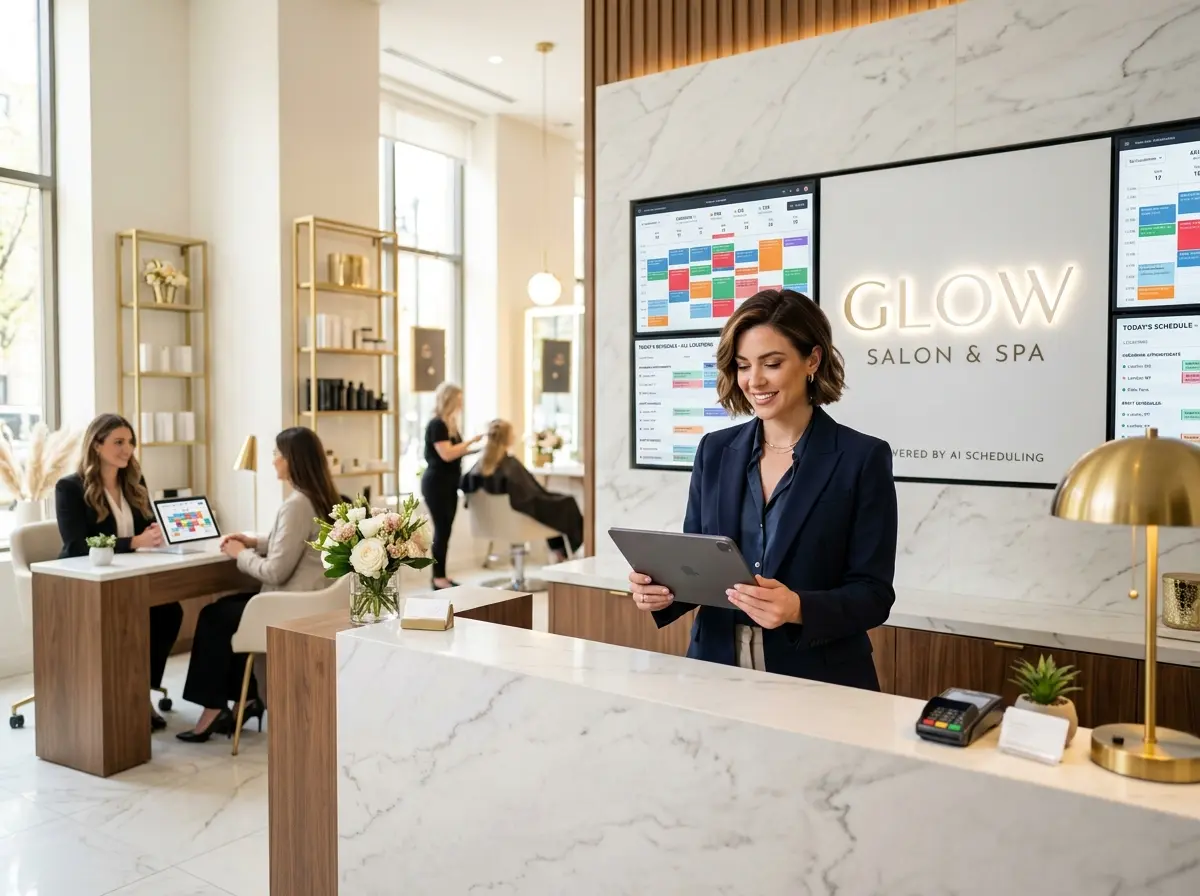
If you own or manage a multi-location salon group, you already know the drill. Location A has Maria, who's been answering phones for six years and knows every client by name. Location B has a rotating door of front desk staff who are friendly but, let's say, inconsistently trained. Location C? The phone rings into the void three afternoons a week because someone forgot to update the schedule. And somehow, all three of these experiences are supposed to represent the same brand.
Consistency is the backbone of any successful multi-location business. Clients who visit your flagship salon expect the same professionalism, the same answers, and the same booking experience when they call your second or third location. When that doesn't happen — and it often doesn't — you lose trust, you lose bookings, and you lose the very brand equity you've worked so hard to build. The good news? AI is making it dramatically easier to standardize the front-of-house experience across every location, without cloning Maria (tempting as that sounds).
The Real Cost of an Inconsistent Booking Experience
It's Not Just Missed Calls — It's Missed Revenue
Here's a stat that should make any salon owner sit up straight: studies suggest that up to 67% of customers hang up the phone when they can't reach a live person, and the vast majority of those callers won't leave a voicemail. They'll just book somewhere else. For a multi-location salon group, multiply that across three, five, or ten locations and you're looking at a significant revenue leak that doesn't show up neatly on any report — because it's revenue you never captured in the first place.
Beyond missed calls, there's the subtler damage of inconsistent information. One location tells a client that a Brazilian blowout takes 90 minutes. Another says two hours. A third quotes a price that's $30 higher because whoever answered the phone wasn't sure and just guessed conservatively. None of this inspires confidence, and none of it encourages repeat bookings or referrals.
Staff Turnover Makes Standardization a Moving Target
The salon industry faces some of the highest employee turnover rates of any sector — estimates frequently place it above 30% annually for front desk and support staff. That means you're constantly onboarding new people, retraining them on your services and pricing, and hoping they absorb enough institutional knowledge before the next client calls in asking about your seasonal color promotions.
Training takes time. Mistakes happen during the learning curve. And in a multi-location environment, the knowledge gap between your most experienced front desk person and your newest hire can feel like a canyon. The result is a booking experience that varies wildly depending on who picks up the phone — or whether anyone picks up at all.
Brand Consistency Is a Competitive Advantage You Can't Afford to Ignore
Clients choose salon groups over independent stylists partly because they expect a reliable, professional experience. When that expectation isn't met, the value proposition of your brand starts to erode. Consistent service quality — including how clients are greeted, how their questions are answered, and how smoothly their appointment is booked — is one of the clearest differentiators between a growing salon group and one that perpetually struggles with retention.
How AI Can Standardize the Experience Across Every Door
One Brain, Every Location
This is where technology genuinely earns its keep. Stella, the AI robot employee and phone receptionist, gives multi-location salon groups a single, consistent source of truth for every client interaction — whether that client is walking through the door or calling in from their car. Every location gets the same service knowledge, the same promotional messaging, the same pricing information, and the same professional tone. There's no "well, it depends on who you talk to" anymore, because the answer is always Stella, and Stella always knows what she's talking about.
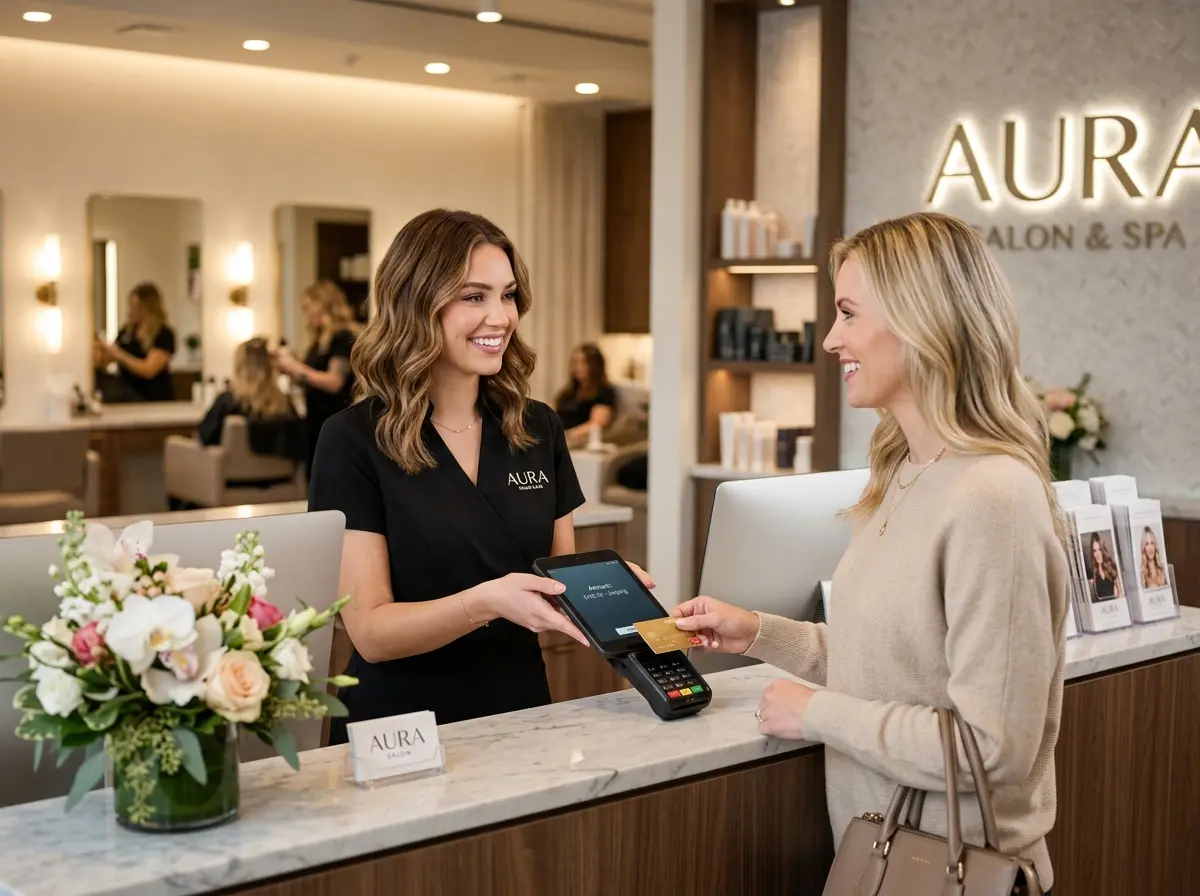
In-store, Stella operates as a human-sized kiosk that greets clients as they walk in, answers questions about services, and promotes current specials — all without pulling your stylists away from the chair. On the phone, she handles incoming calls 24/7, walks clients through your offerings, and can collect booking information through conversational intake forms, storing everything neatly in her built-in CRM. When a client books at Location B on Monday and calls Location C on Friday, their information is already there. That's the kind of seamless experience that actually builds brand loyalty.
Building a Standardization Framework That Actually Holds
Start With a Centralized Service and Pricing Document
Before any technology can help you, you need to get your own house in order. Create a single, authoritative document — or better yet, a digital knowledge base — that captures every service you offer, its duration, its price range, any variations by location, and any current promotions. This becomes the foundation that both your human staff and your AI tools draw from.
Review and update this document on a defined schedule: monthly works well for promotions, quarterly for pricing, and immediately whenever a new service is introduced. Assign ownership of this document to one person or team across the organization. The goal is to eliminate the "I think it's around $85, but you might want to call the other location to confirm" phenomenon entirely.
Standardize the Booking Flow, Not Just the Script
Scripts are useful, but they break down the moment a client goes off-script — which is, of course, every single time. Instead of scripting individual responses, focus on standardizing the flow of a booking interaction. Define what information you need to capture from every new client, what questions should be asked to guide a client toward the right service, and what upsell opportunities should be introduced at which points in the conversation.
For example, every new client booking a cut-and-color appointment should be asked about their hair history, their maintenance preferences, and whether they've heard about your current loyalty program. That flow should happen at every location, every time — whether it's delivered by a human receptionist or an AI. When you design the interaction as a process rather than a performance, it becomes much easier to replicate and measure.
Use Data to Identify and Close the Gaps
One of the underrated benefits of AI-assisted client interactions is the data trail they leave behind. When every call and walk-in interaction is logged, summarized, and tagged, you can start to see patterns that were previously invisible. Which location gets the most questions about a specific service? Which promotion is generating the most interest at Location A but barely registering at Location B? Are clients at one location consistently asking about a service you don't offer there yet?
This kind of insight doesn't just help you close gaps in the booking experience — it helps you make smarter decisions about staffing, marketing, promotions, and even service offerings. Data-driven consistency is far more sustainable than hoping everyone shows up to training and takes good notes.
Quick Reminder About Stella
Stella is an AI robot employee and phone receptionist built for businesses exactly like yours — professional, always available, and consistent across every single interaction. She works in-store as a kiosk and answers phones 24/7, starting at just $99 per month with no upfront hardware costs. For a multi-location salon group trying to deliver a unified brand experience, she's the kind of team member who never has an off day, never forgets the promotion that started this week, and never puts a client on hold to go ask someone else.
The Consistent Salon Group Wins — Here's How to Start
Standardizing the booking experience across multiple salon locations isn't a luxury — it's a growth strategy. Clients who have a consistent, professional experience are more likely to rebook, more likely to refer friends, and more likely to follow your brand when you open a new location. The investment you make in getting this right pays dividends at every level of the business.
Here's where to start:
- Audit your current booking experience by mystery-calling each location and noting where the answers, tone, or process diverge. You may be surprised — or horrified. Either way, it's useful information.
- Build your centralized knowledge base with services, pricing, policies, and promotions. Make it a living document with a clear owner and update schedule.
- Define your standard booking flow — the questions asked, the information captured, and the upsells introduced at each stage of the client interaction.
- Explore AI tools that can deliver that flow consistently at scale, both in-store and over the phone, across every location simultaneously.
- Review your interaction data regularly to identify gaps, spot opportunities, and continuously refine the experience.
Building a salon group is hard. Keeping it consistent as it grows is harder. But with the right systems — and the right AI in your corner — you can stop leaving your brand experience up to chance and start delivering something your clients will recognize and trust, no matter which location they walk into or call. And that's the kind of consistency that actually grows a business.