Introduction: Your Classes Are Full — In Your Dreams
You opened a gym because you love fitness, community, and maybe the idea of never having to wear a suit again. What you probably didn't sign up for was playing phone tag with members trying to book a Tuesday spin class, manually managing waitlists on a whiteboard, or discovering that half your 6 AM slots are empty because nobody could figure out how to register online. Yet, here we are.
The truth is, online class booking can either be your gym's secret weapon or its most frustrating operational headache — and the difference almost always comes down to execution. A seamless booking experience fills spots. A clunky one fills your voicemail with confused members and your schedule with half-empty classes. According to a 2023 report by Mindbody, over 70% of fitness consumers expect to be able to book classes online, and nearly half say they won't return to a gym that makes scheduling difficult. That's not just a preference — that's a revenue leak hiding in plain sight.
The good news? Getting online class booking right isn't rocket science. It just requires the right tools, a little strategy, and an honest look at where your current system is letting both you and your members down. Let's break it down.
Building a Booking System That Actually Works
Choose Software That Meets Members Where They Are
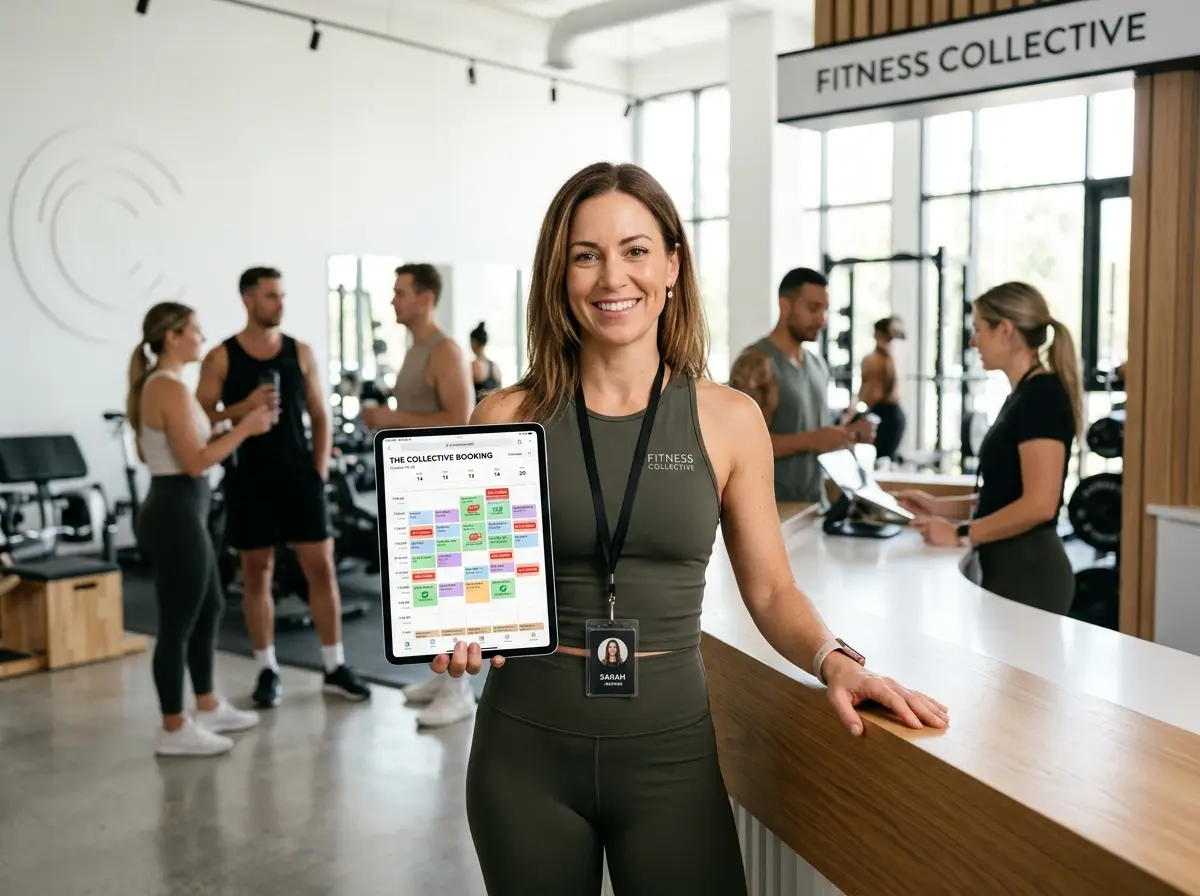
The foundation of a full class schedule starts with choosing a booking platform that's genuinely easy to use — not just easy for you to demo with a sales rep, but easy for your 58-year-old member who still uses Internet Explorer. Platforms like Mindbody, Pike13, Glofox, and Zen Planner are purpose-built for gyms and fitness studios, offering mobile apps, automated reminders, waitlist management, and payment integrations all in one place.
When evaluating your options, prioritize mobile responsiveness above almost everything else. More than 60% of fitness-related searches happen on mobile devices, and if your booking page looks like a spreadsheet on a smartphone, you've already lost half your potential sign-ups. Look for platforms that offer a branded app experience or at minimum a clean, thumb-friendly mobile web interface.
Also consider integrations. Your booking software should talk to your email marketing platform, your payment processor, and ideally your CRM. Data trapped in silos is just data you can't use.
Reduce Friction at Every Step
Every extra click in your booking flow is an opportunity for a member to give up and go watch Netflix instead. Audit your current process start to finish. How many steps does it take to book a class from scratch? If the answer is more than four or five, you have work to do.
Some quick wins to reduce friction include enabling guest checkout for first-timers, saving payment and profile information for returning members, and making class cancellations just as easy as bookings. That last point might feel counterintuitive — why make it easy to cancel? — but a painless cancellation process encourages members to free up spots for others rather than simply ghosting, which keeps your waitlists accurate and your instructors prepared.
Also, don't underestimate the power of automated confirmation and reminder emails. A simple "Your 6 AM Bootcamp is tomorrow — we'll see you there!" email reduces no-shows by as much as 29%, according to industry data from WellnessLiving. That's nearly a third of your empty mats filled with just a scheduled email.
Use Waitlists as a Growth Tool, Not Just a Backup Plan
A waitlist isn't a consolation prize — it's a demand signal and a conversion machine. When a class fills up and members land on a waitlist, that's proof your programming is working. The question is whether your system is smart enough to capitalize on it.
Set up automatic waitlist promotions so that when a spot opens, the next person in line gets an immediate notification with a time-limited window to claim it. Without automation, that window closes before you've even seen the email. With it, spots fill themselves. Track which classes consistently generate waitlists — those are your candidates for adding a second session, upgrading to a larger room, or increasing the instructor's rate because clearly, they're a draw.
Keeping Members Engaged Between Bookings
How Stella Can Support Your Gym's Customer Experience
Online booking handles the transaction, but the relationship between bookings is where member retention is actually won or lost. This is where having a consistent, always-available communication presence makes a real difference — and it's exactly where Stella, the AI robot employee and phone receptionist, fits naturally into a gym's operation.
Stella handles incoming phone calls around the clock, answering member questions about class schedules, membership options, pricing, and gym policies without pulling your front desk staff away from the people standing right in front of them. For gyms with a physical location, she's also available as a human-sized in-store kiosk, greeting members and walk-ins, promoting current class specials, and guiding newcomers through what your gym offers — all without a hiring manager involved. Her built-in CRM and conversational intake forms also mean that when a prospective member calls or walks in, their information is captured and organized automatically, so no lead slips through the cracks between a busy Saturday morning and a Monday follow-up.
Strategies to Fill Every Spot — Not Just the Popular Ones
Leverage Data to Balance Your Schedule
Most gym owners have a gut feeling about which classes are popular and which ones are a ghost town. But gut feelings don't optimize revenue — data does. Dig into your booking platform's analytics to identify patterns: Which time slots fill fastest? Which instructors have the highest return booking rates? Which class formats consistently underperform?
Use that information intentionally. If your 7 PM Wednesday yoga class fills in hours but your 10 AM Thursday slot has been half-empty for six months, consider restructuring your schedule rather than just hoping for a seasonal surge. Sometimes underperforming classes just need better promotion; other times they need to be retired or replaced entirely. The data tells you which is which.
Run Promotions That Drive Urgency Without Cheapening Your Brand
Discounting everything all the time is a race to the bottom. But smart, well-timed promotions can absolutely move the needle on class attendance without training your members to wait for a sale before booking. Consider strategies like early-bird pricing for members who book more than 48 hours in advance, class pack bundles that reward commitment with slight savings, or referral incentives that reward existing members for bringing a friend to an otherwise slow session.
Limited-time challenges and themed class series also work well for filling off-peak slots. A "30-Day Core Challenge" or a "New Year Reset" series gives members a reason to commit to a specific schedule that might not overlap with their usual routine — and it creates natural social sharing moments that bring in new faces.
Build a Cancellation Recovery System
Even with the best booking experience and the most enthusiastic members, cancellations happen. Life happens. What separates a gym with consistently full classes from one that just hopes for the best is having a proactive cancellation recovery system. When a cancellation comes in with less than 12 hours notice, trigger an automatic push notification or text to everyone on the waitlist and to members who previously attended that class type. Personalized outreach — even automated personalization — dramatically outperforms generic broadcast messages.
Some gyms have also seen success with a "last-minute deals" list: a separate opt-in group for members who want to be notified of same-day openings, often with a small discount. This turns a potential empty spot into a filled one while rewarding your most flexible and loyal members in the process.
Quick Reminder About Stella
Stella is an AI robot employee and phone receptionist built for businesses like yours — available as a physical in-store kiosk or as a 24/7 AI phone receptionist starting at just $99/month with no upfront hardware costs. She greets customers, answers questions, promotes your offerings, and captures leads so nothing falls through the cracks. Whether your front desk is slammed during peak hours or closed entirely, Stella keeps your business running like you never left.
Conclusion: Stop Leaving Spots — and Revenue — on the Table
Filling every class spot isn't about luck or having the trendiest formats. It's about removing every obstacle between your member and the "Booking Confirmed" screen, using your data to make smarter scheduling decisions, and building systems that do the follow-up work for you when humans simply can't be everywhere at once.
Here's your action plan to get started:
- Audit your booking flow today. Go through the entire process as a first-time member would and count the friction points. Fix the top three within the week.
- Activate automated reminders and waitlist notifications if your current platform supports them. If it doesn't, consider whether it's time to upgrade.
- Pull three months of booking data and identify your two best-performing and two worst-performing class slots. Make one concrete scheduling decision based on what you find.
- Create a last-minute openings communication strategy — even a simple group text list is better than an empty mat.
- Consider where communication gaps exist in your member experience, especially around phones and walk-ins, and explore tools that can fill those gaps without adding headcount.
Your gym has the programming, the instructors, and the community. The only thing standing between you and a fully booked schedule is the system that connects all of it. Build that system right, and the empty spots start filling themselves.