When "We'll Keep You Updated" Actually Means Something
Long projects are a beautiful thing — for your revenue. For your clients' nerves? Not always. Whether you're a contractor mid-renovation, a marketing agency deep in a campaign, a law firm navigating a case, or a software developer somewhere in the eternal abyss of "almost done," you already know the drill: clients get anxious, they start calling, and suddenly you're spending 40% of your day reassuring people instead of, you know, actually doing the work they hired you to do.
The uncomfortable truth is that most client frustration during long projects isn't caused by the work itself — it's caused by silence. A 2022 study by Salesforce found that 66% of customers say they feel like they're treated as a number, not a person. And nothing screams "you're just a number" quite like going two weeks without a meaningful update. The good news? A solid communication framework doesn't require a dedicated account manager, a fancy project management suite with a learning curve steeper than Everest, or even more hours in your day. It just requires intention, consistency, and a few smart systems.
Let's break down exactly how to build one.
The Foundation: Setting Expectations Before the Project Starts
Here's a wild idea — what if clients weren't anxious during your projects because you told them upfront what to expect? Groundbreaking, we know. The communication framework doesn't start on day one of the project. It starts during the sales or onboarding conversation, long before a single deliverable is touched.
Define the Communication Cadence Early
Every client engagement should include a documented communication plan. This doesn't need to be a 10-page manifesto. It just needs to clearly answer: How often will we talk? Through what channel? Who is the point of contact on both sides? For example, a web design agency might establish weekly Friday email updates, a monthly 30-minute video check-in, and a policy that all questions go through a shared project channel rather than direct texts to the lead designer at 11pm. (Yes, that happens. No, it doesn't have to.)
Spell this out in your contract or onboarding document. Clients who know what to expect are dramatically less likely to panic-email you at 6am asking if the project is "still on track." The communication cadence is your first act of client service — and it costs nothing to define.
Align on Milestones and Decision Points
Long projects feel long partly because clients can't see the finish line. Break the project into visible milestones and share them. Not just for your project management purposes, but as a communication tool. When a client knows that Week 4 brings a design review, Week 8 brings a draft delivery, and Week 12 brings the final handoff, they have a mental map. That map reduces anxiety in direct proportion to how detailed it is.
More importantly, identify the decision points — moments where you'll need client input or approval — and flag them in advance. Nothing derails a project timeline like a client who didn't know they needed to have something ready. Proactive scheduling of these moments isn't just good communication; it's good project management.
Keeping the Momentum: Mid-Project Communication That Actually Works
Setting great expectations at the start earns you goodwill. Maintaining communication throughout the project is what spends that goodwill wisely — or squanders it entirely. Mid-project is where most communication frameworks quietly fall apart, because the novelty has worn off, the team is heads-down, and updates start feeling repetitive. Don't let that become your client's experience.
Structured Updates Over Spontaneous Ones
Spontaneous updates sound friendly, but they're inconsistent by nature. Structured updates — sent on a predictable schedule regardless of whether there's exciting news — build trust. Even a brief "Here's where things stand this week" email reinforces that you're in control and thinking about the client's project. Use a simple template: what was completed, what's in progress, what's coming next, and whether anything is needed from the client. Four bullet points. Five minutes to write. Enormous impact on client confidence.
The Art of Proactive Bad News
This is where most businesses fail spectacularly. When something goes sideways — a delay, a complication, a vendor issue — the instinct is to wait until you have a solution before telling the client. Resist that instinct. Clients who are surprised by bad news feel blindsided and out of control. Clients who are informed early, even without a full solution yet, feel respected. A simple "We've hit a snag with X, here's what we know so far, and we'll have a full update by Thursday" is infinitely better than a Thursday call where you drop a bombshell. Proactive transparency isn't just good communication — it's the difference between a one-time client and a long-term one.
Let Technology Carry Some of the Load
Here's where we gently suggest that not every client touchpoint needs to come from you personally. Smart business owners delegate, and that includes delegating to technology that genuinely handles communication well.
Automate the Routine, Humanize the Important
Use your project management tools, email sequences, and CRM to handle the predictable, routine communication — appointment reminders, milestone notifications, intake confirmations — so your human energy is reserved for the conversations that actually require nuance and judgment. This isn't about being impersonal. It's about being consistent and available without burning yourself or your team out.
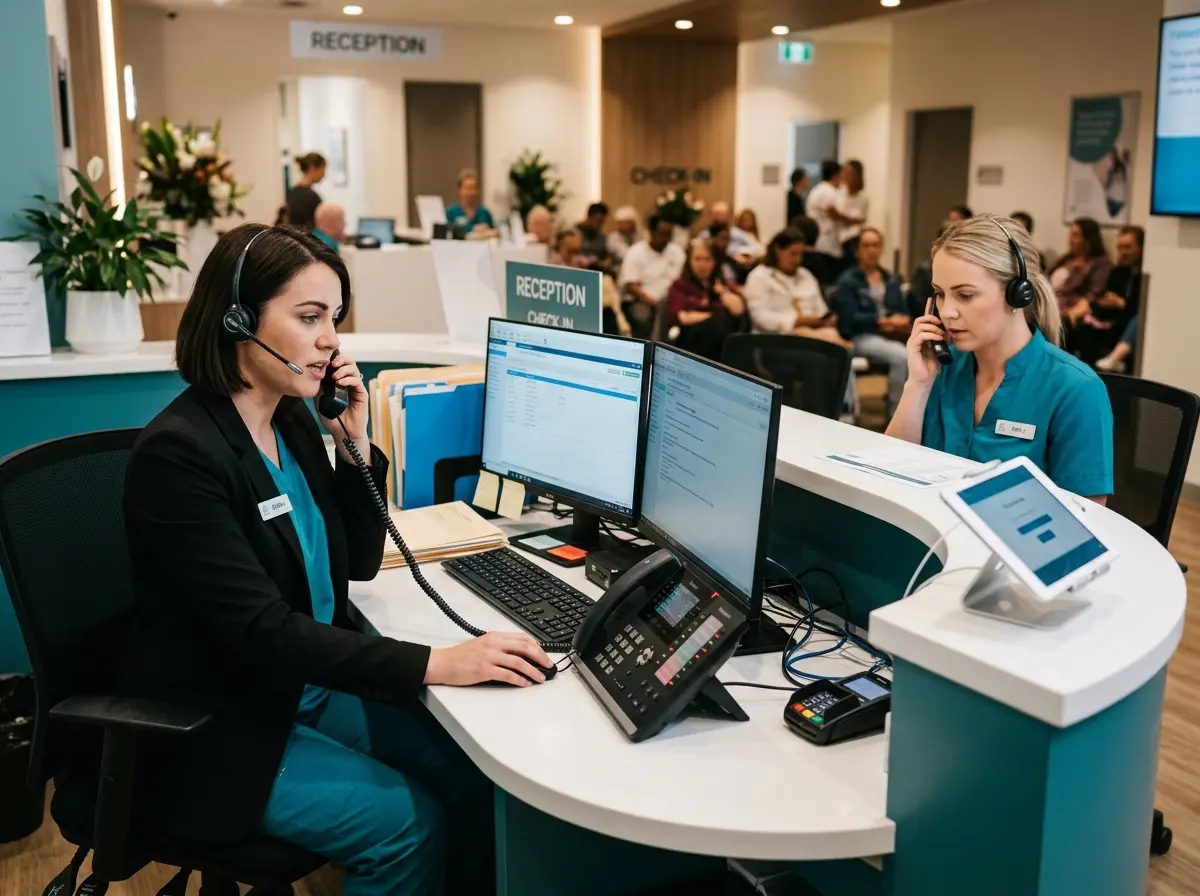
For businesses managing a high volume of client inquiries alongside active projects, Stella is worth knowing about. As an AI robot employee and phone receptionist, she handles inbound calls 24/7, greets walk-in clients at your physical location, and answers common questions about services, timelines, policies, and availability — all without pulling your team away from the actual work. Her built-in CRM and conversational intake forms mean that new client information is captured cleanly from the start, and AI-generated contact profiles keep your team informed without manual data entry. For service businesses juggling long projects and incoming leads at the same time, that kind of coverage isn't a luxury — it's leverage.
Closing Strong: Communication at the End of a Long Project
You made it. The project is done. Don't fumble the last ten yards. The end of a project is one of the highest-leverage communication moments you have, and most businesses treat it like a formality. It isn't.
The Formal Completion Conversation
Every completed project deserves a dedicated closeout conversation — not just a "here's the final file" email. Walk the client through what was delivered, how it maps to what was originally scoped, and what results or outcomes are anticipated. This conversation does two things simultaneously: it reinforces the value of your work, and it gives the client a sense of closure that makes them feel genuinely finished, not just abandoned. It also creates a natural, non-awkward moment to ask for a review or testimonial while the experience is fresh and positive.
The Follow-Up That Actually Gets Remembered
Send a follow-up 30 to 60 days after project completion. Ask how things are going. Check in on whether the results are what they expected. This single touch — which takes about three minutes to execute — does more for client retention and referrals than almost any other communication tactic. It signals that you were invested in the outcome, not just the invoice. Clients who feel genuinely cared for after the transaction ends become the clients who send you referrals without being asked.
Document What Worked for the Next Project
After each long project wraps, take ten minutes to note what communication worked, what gaps emerged, and what clients asked about most frequently. Over time, this builds a feedback loop that makes your communication framework sharper and more client-specific. The businesses that continuously refine their client experience are the ones that grow mostly by word of mouth — which is the best kind of growth, and also the cheapest.
A Quick Reminder About Stella
Stella is an AI robot employee and phone receptionist available for just $99/month with no upfront hardware costs. She works in-store as a kiosk that greets and engages customers, and she answers phone calls around the clock for any type of business. If your team is deep in project work and can't always be available to incoming clients and leads, Stella keeps your front door — physical or virtual — open and professional at all times.
Build the Framework Once, Benefit From It Every Project
The businesses that clients rave about aren't always the ones that did the most technically impressive work. They're often the ones that made clients feel informed, respected, and confident throughout the entire process. The communication framework outlined here isn't complicated, but it does require intentionality — especially under deadline pressure when the temptation is to go quiet and just get the work done.
Start with what's most broken in your current process. If clients are frequently calling to check in, your mid-project updates need work. If they seem surprised at the end, your milestone communication needs clarity. If onboarding feels chaotic, your expectation-setting needs structure. Pick one piece, implement it on your next project, and build from there.
A communication framework isn't a client-service add-on. It's a core business system — one that reduces churn, increases referrals, and frankly makes your work a lot more enjoyable when clients trust you enough to actually let you do it.