The Silent Treatment: Why Therapy Clients Ghost Their Appointments
You've blocked off the time. You've reviewed the notes. You've made the coffee. And then — nothing. The client doesn't show. No call, no text, no smoke signal. Just an empty chair and a hole in your schedule that you could have filled three times over if you'd known it was coming.
Appointment no-shows are one of the most frustrating — and costly — realities of running a therapy practice. Research consistently shows that no-show rates in mental health and behavioral health settings can range anywhere from 20% to 50%, depending on the population served and the systems (or lack thereof) in place. That's not just lost revenue. That's lost opportunity to help people who genuinely need support.
The good news? Most no-shows are preventable. With the right combination of communication strategies, technology, and a little proactive relationship-building, you can dramatically reduce the number of times you're staring at an empty couch wondering what happened. Let's dig into what actually works.
Understanding Why Clients Don't Show Up
Before you can fix the problem, it helps to understand what's actually driving it. Spoiler alert: it's rarely personal. Clients don't skip their appointments because they secretly dislike you or your carefully curated box of tissues. The reasons are usually far more mundane — and far more solvable.
The Most Common Culprits
Life gets in the way. Clients forget. They get overwhelmed at work, their kid gets sick, or they simply lose track of what day it is. Therapy appointments, unlike a dentist visit with a looming follow-up bill, often feel "skippable" in moments of stress — which is ironic, because stress is exactly why they booked in the first place.
Ambivalence is another major factor. Therapy requires emotional effort, and sometimes clients talk themselves out of going right before an appointment. They're feeling "fine today," or they're anxious about what they might have to discuss. This is especially common with newer clients who haven't yet built a strong therapeutic alliance.
And then there's the simple logistical stuff: they forgot the time, they couldn't find parking, they had a conflicting commitment they didn't anticipate. These aren't deep psychological mysteries. They're just friction points that good systems can smooth out.
The Real Cost to Your Practice
Let's talk numbers for a moment. If your standard session rate is $150 and you experience just four no-shows per week, that's $600 in lost revenue per week — or over $30,000 annually. Even if you have a cancellation policy (more on that in a moment), collecting those fees is awkward, inconsistent, and emotionally taxing in a field built on trust and rapport.
Beyond the financial hit, no-shows disrupt your entire day. They can throw off your mental preparation, leave you with dead time that's too short to be productive but too long to ignore, and gradually erode your enthusiasm for the work. No-shows aren't just a scheduling problem — they're a morale problem.
Practical Strategies to Reduce No-Shows
Build a Reminder System That Actually Works
The single most effective thing you can do is implement a multi-touchpoint reminder system. A single reminder the day before is fine. A reminder sequence is better. Consider a reminder sent one week out, 48 hours before, and again the morning of the appointment. Each touchpoint serves a different purpose: the week-out reminder keeps the appointment on the client's radar, the 48-hour reminder gives them time to cancel or reschedule if needed, and the morning-of reminder is a final nudge before they leave the house.
Critically, these reminders should require a response. A simple "Reply YES to confirm or call us to reschedule" creates accountability and gives you early warning of potential no-shows. Clients who engage with reminders — even just to confirm — are significantly more likely to show up. Those who don't respond are your early warning system.
Make It Ridiculously Easy to Reschedule
Here's a counterintuitive truth: a client who reschedules is far better than a client who no-shows. When clients feel like rescheduling is a hassle — calling during business hours, navigating a phone tree, feeling guilty about changing the appointment — they're more likely to just not show up and deal with the awkwardness later. Remove that friction entirely.
Offer multiple rescheduling options: online self-scheduling, a dedicated phone line, even text-based rescheduling if your platform supports it. Make it clear in every reminder that rescheduling is welcomed and easy. The goal is to give clients an easy out that still keeps them in the relationship with your practice.
Have a Clear, Consistently Enforced Cancellation Policy
A cancellation policy only works if you actually use it. Many therapists have a policy written in their intake paperwork that they rarely enforce because it feels uncomfortable. But consistent enforcement isn't punitive — it's professional, and it communicates that your time has value. Clients who know there's a real consequence for no-showing are statistically more likely to give advance notice.
Keep your policy reasonable: a 24- or 48-hour cancellation window with a fee equal to a portion of the session cost is standard and widely accepted. Be transparent about it during onboarding, include it in reminder communications, and apply it consistently. When clients know you mean it, they plan accordingly.
How the Right Tools (Including Stella) Can Help
Automate the Administrative Side of Appointment Management
Let's be honest: manually tracking reminders, following up on non-confirmations, and managing intake information is exactly the kind of administrative weight that makes running a private practice feel unsustainable. The right technology stack takes most of this off your plate — and off your mind.
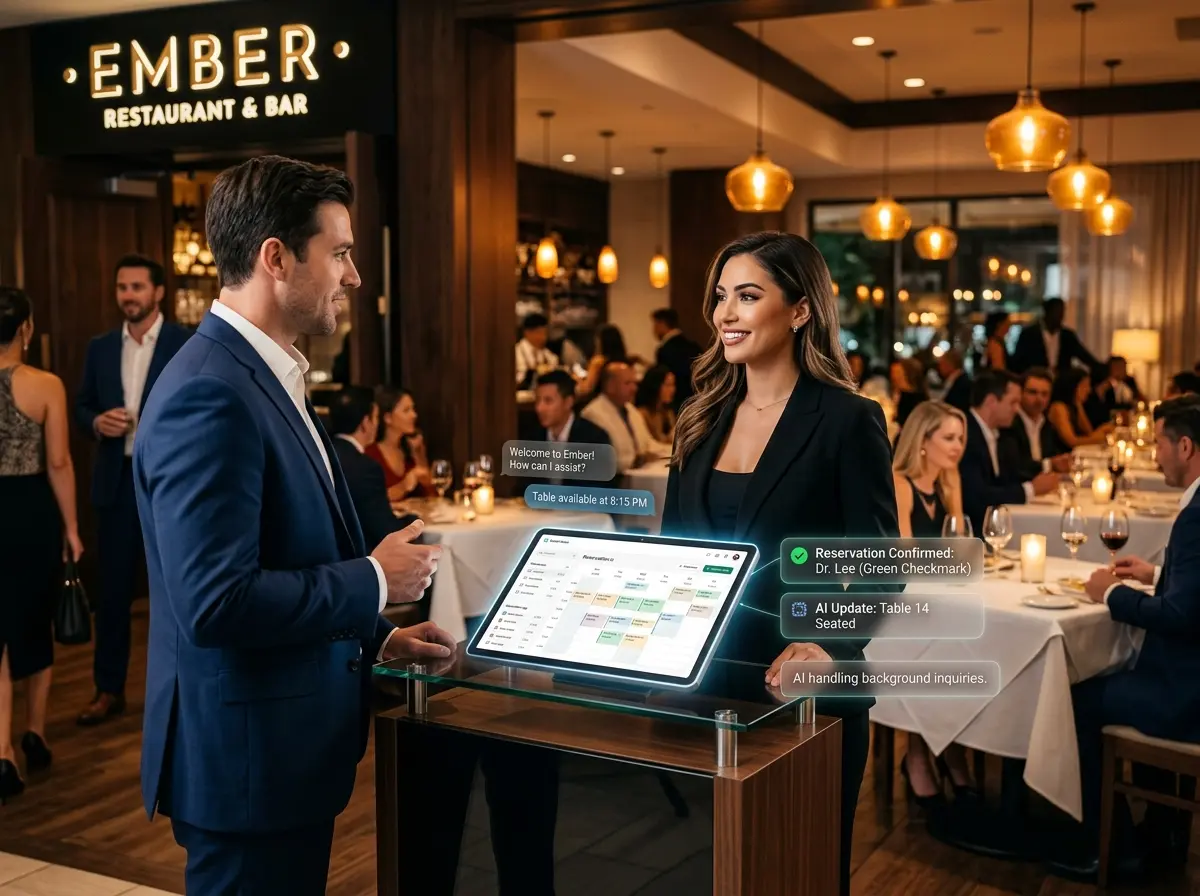
Stella, the AI robot employee and phone receptionist, is one tool worth knowing about in this context. For therapy practices, her phone answering capabilities mean that clients can call to reschedule at any hour — not just during business hours — without the call going to voicemail and quietly dying there. She handles incoming calls 24/7, collects information through conversational intake forms, and keeps client data organized in a built-in CRM with custom fields, tags, and AI-generated profiles. That means fewer missed connections, fewer frustrated clients, and a smoother intake and scheduling experience overall. If you have a physical office, Stella's in-person kiosk presence can also handle check-ins and answer common questions so your front desk staff can stay focused on higher-priority tasks.
Building Client Engagement That Prevents No-Shows Before They Happen
Start Strong With Onboarding
The therapeutic relationship is your most powerful no-show prevention tool, and it starts before the first session even happens. A warm, professional onboarding experience — one that communicates your policies clearly, makes clients feel expected and welcomed, and reduces first-session anxiety — sets the tone for reliable attendance.
Consider sending a brief welcome message after booking that includes what to expect from the first session, how to prepare, and a reminder of your cancellation policy. Clients who feel informed and welcomed are far less likely to ghost. First-session no-shows, in particular, are often driven by anxiety about the unknown. Demystify the process early and you'll see that number drop.
Check In on Clients Who Show Inconsistent Attendance
If a client has missed two appointments in a row, don't just keep sending reminders into the void. A brief, non-judgmental outreach — "We noticed you've missed your last couple of sessions and wanted to check in" — can re-engage clients who have quietly disengaged. Sometimes life has gotten in the way. Sometimes they've had a bad experience they haven't voiced. Sometimes they just need someone to notice they're not showing up.
This kind of proactive follow-up is good clinical practice and good business practice. It reinforces that you're paying attention, that the relationship matters, and that returning is easy and welcome. Many clients who ghost do so partly out of shame about the no-show itself — making re-engagement feel safe is often all it takes to get them back.
Use Waitlists to Fill Gaps When They Do Happen
Even with the best systems in place, some no-shows will still occur. A managed waitlist ensures that when a slot opens up — whether through a last-minute cancellation or an unexpected no-show — you have a list of clients ready to fill it. This won't eliminate the inconvenience, but it can dramatically reduce the financial impact and keep your schedule productive even on imperfect days.
Quick Reminder About Stella
Stella is an AI robot employee and phone receptionist designed to handle the front-line communication work that eats up your time and energy — answering calls around the clock, managing client intake through conversational forms, and keeping your CRM organized without any manual data entry. She works for therapy practices as a phone receptionist and, for practices with a physical office, as an in-person kiosk presence that greets clients and answers common questions. At $99/month with no upfront hardware costs, she's built for practices that want a professional, reliable front office without the overhead.
Conclusion: Stop Accepting No-Shows as the Cost of Doing Business
No-shows aren't inevitable. They're a symptom of gaps in communication, friction in your scheduling process, and missed opportunities to build client accountability and engagement. The practices that take no-shows seriously — and invest in the systems to address them — typically see dramatic improvements within a few months.
Here's your action plan to get started:
- Audit your current reminder system. Are you sending reminders at all? Are they multi-touchpoint? Do they require confirmation? If not, fix this first — it's your highest-leverage move.
- Review and recommit to your cancellation policy. Make sure it's clear, reasonable, and consistently enforced. If it's buried in a 12-page intake document, surface it.
- Reduce rescheduling friction. Give clients easy ways to change their appointment without feeling judged or hassled. Make rescheduling feel better than no-showing.
- Improve your onboarding experience. First-session no-shows are preventable with a warm, informative welcome sequence that reduces anxiety and sets expectations.
- Build a waitlist. Use the gaps that do happen productively rather than sitting with cold coffee and a growing sense of frustration.
Your time is valuable. Your clients' mental health is valuable. A well-run practice that takes attendance seriously serves both — and it turns out the two aren't in conflict at all.