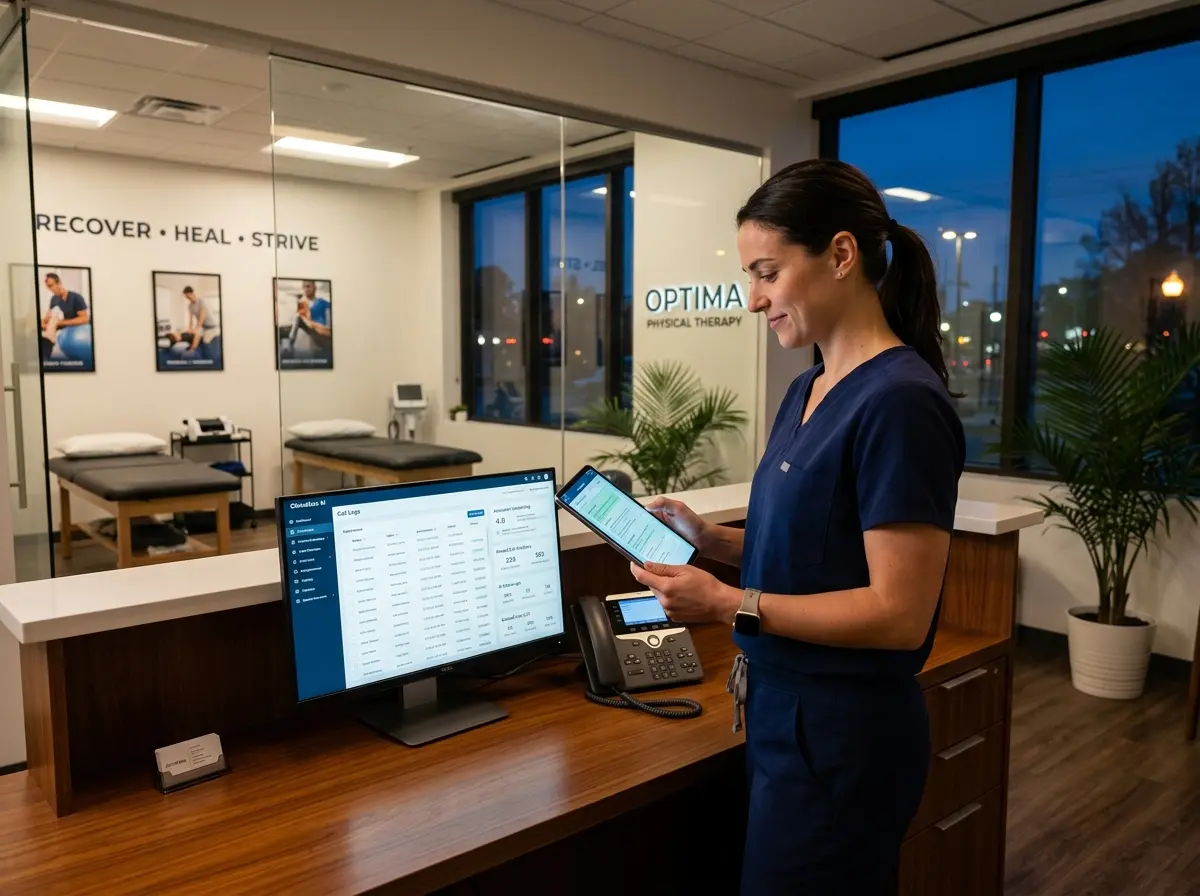
When the Phone Rings at 7 PM and No One's There to Answer It
Picture this: a potential patient has been dealing with lower back pain for three weeks. They finally work up the motivation to call a physical therapy clinic — after dinner, after the kids are in bed, at 7:43 PM on a Tuesday. The phone rings. And rings. And rings. They hang up, scroll past your clinic on Google, and book an appointment with your competitor who happened to have an after-hours answering option. You never even knew they called.
This is not a hypothetical. It happens dozens of times a week for the average physical therapy practice, and the math is quietly brutal. If even five potential patients per week call after hours and don't leave a voicemail — because, let's be honest, nobody leaves voicemails anymore — that's potentially hundreds of thousands of dollars in lost revenue annually, all while your front desk staff is at home watching Netflix, completely unaware.
The good news? One physical therapy practice figured out a smarter way to handle this, and the solution wasn't hiring a part-time receptionist to work evenings. It was something significantly more interesting.
The Reality of After-Hours Calls in a Physical Therapy Practice
Why Patients Call When You're Closed
Physical therapy patients are not calling during convenient business hours because their lives are not convenient. They're calling during their lunch break, after work, on weekends, and during random windows when their pain reminds them loudly that they should probably do something about it. A 2023 survey found that nearly 60% of consumers prefer to research and initiate contact with healthcare providers outside of traditional business hours. That's the majority of your potential patient base reaching out when your phones are essentially a brick wall.
The frustration compounds when you consider what these callers actually want. Most of them have simple questions: Do you accept my insurance? What does an initial evaluation involve? Can I get an appointment this week? These are questions any informed front desk person could answer in about ninety seconds. The problem is, no one is there to answer them in ninety seconds — or at all.
The Hidden Cost of Missed Calls
Most practice owners think about missed calls as a minor inconvenience. A few people don't get through, they call back the next day, no big deal. But that's not actually what happens. Research consistently shows that 85% of people whose calls go unanswered will not call back. They move on. They book elsewhere. They convince themselves they'll "deal with it later" and then don't.
For a physical therapy practice where an average patient may undergo 10 to 20 sessions over the course of their treatment, the lifetime value of a single patient is substantial — often $1,500 to $3,000 or more when considering recurring appointments, potential discharge and return visits, and referrals to friends and family. Missing five calls per week isn't a small operational hiccup. It's a revenue leak that accumulates quietly and consistently until someone finally decides to look at the numbers.
What One Practice Did About It
A physical therapy clinic in the Midwest was facing exactly this problem. Their front desk team was excellent — organized, warm, and great with patients in person — but the phones went to a basic voicemail after 5 PM, and call-back rates the following morning were frustratingly low. The practice manager pulled three months of call data and realized they were missing an average of 30 to 40 calls per week after hours, with fewer than 20% of those callers leaving any message at all.
They needed a solution that could handle incoming calls intelligently, answer common questions about their services and intake process, and make sure no lead disappeared into the void just because it was evening. What they found changed how they thought about their front desk entirely.
How AI Phone Answering Solved the After-Hours Problem
Meet the Receptionist Who Never Clocks Out
The clinic implemented Stella, an AI robot employee and phone receptionist that answers calls 24/7 with full knowledge of the practice's services, hours, insurance information, intake procedures, and frequently asked questions. When a patient calls at 7:43 PM on a Tuesday, Stella answers — naturally, conversationally, and with accurate information — just as a well-trained front desk team member would during business hours.
What made the difference wasn't just the availability. It was the intelligence. Stella doesn't just play a recorded message or present a phone tree that makes callers want to throw their phones out the window. She holds an actual conversation, answers specific questions, and can collect patient intake information directly during the call — meaning when the clinic opens the next morning, they don't just have a voicemail. They have a new patient profile with contact details, insurance information, the reason for the visit, and a preferred appointment time, all organized and ready to act on. Her built-in CRM keeps everything in one place, with AI-generated summaries, custom fields, and tags that give the front desk team a complete picture before they even pick up the phone to confirm.
For calls that genuinely require a human — an urgent concern, a billing dispute, a clinical question — Stella can be configured to forward the call to the appropriate staff member based on whatever conditions the practice sets. Everything else, she handles herself.
Implementation, Results, and What Actually Changed
Getting Set Up Without Disrupting Everything
One of the biggest concerns the practice had before implementing an AI phone receptionist was disruption. Would it confuse patients? Would it feel impersonal in a field where bedside manner and trust matter deeply? Would the setup process require a technology overhaul?
The answers, in order, were: no, less than expected, and definitely not. Setup was straightforward, and the practice was able to customize how Stella communicated to match the warm, professional tone they wanted their brand to represent. Patients calling after hours were greeted naturally and didn't feel like they'd hit a dead end. Several even commented during follow-up calls that they appreciated being able to get their questions answered without waiting until the next morning.
The Numbers Three Months Later
After ninety days, the results were clear and measurable. After-hours calls that previously went entirely unaddressed were now being handled consistently. The practice saw a significant increase in after-hours appointment conversions, with the majority of evening callers either completing intake information through the call or leaving enough detail for a productive follow-up the next day. The front desk team, rather than spending the first hour of every morning returning cold leads, was instead confirming appointments with patients who had already been qualified the night before.
Staff satisfaction improved too — a detail worth noting. When your team isn't constantly fielding repetitive questions about parking, directions, or insurance acceptance, they have more time and energy for the interactions that actually require a human touch. That's not a small thing in a field where burnout is a real and ongoing challenge.
The Bigger Picture for Physical Therapy Practices
Physical therapy is a trust-based business. Patients come to you often in pain, sometimes nervous, and always hoping they've found someone who can actually help them. Every touchpoint before their first appointment shapes their confidence in your practice. An unanswered phone at 7 PM signals, however unfairly, that you might not be the most responsive option available. An engaged, informative, and helpful voice that answers at any hour signals exactly the opposite.
Investing in consistent, professional communication isn't just an operational decision — it's a brand decision. And in a competitive local market where patients have multiple PT clinics within a short drive, the details matter more than most practice owners realize.
A Quick Reminder About Stella
Stella is an AI robot employee and phone receptionist built for businesses of all sizes — including physical therapy practices, medical offices, gyms, spas, and dozens of other industries. She answers calls 24/7, handles common questions, collects patient information, manages contacts through a built-in CRM, and for practices with a physical location, she also stands in-office as a friendly kiosk presence that greets and engages patients as they arrive. All of this runs on a simple $99/month subscription with no upfront hardware costs and no complicated setup.
What You Should Do Before Another Evening Call Goes Unanswered
If you own or manage a physical therapy practice, start by pulling your call data for the last 60 to 90 days. Look specifically at calls received outside of business hours and track what happened afterward. If your CRM or phone system doesn't give you this information easily, that's its own problem worth solving — but even a rough estimate will likely be sobering.
Next, think honestly about your current after-hours experience. What does a patient encounter when they call at 6:30 PM? If the answer is a generic voicemail or silence, you're leaving real revenue on the table and giving prospective patients a reason to look elsewhere. Here's what to consider as immediate next steps:
- Audit your missed calls. Get a clear picture of how many calls you're missing and during what time windows. You can't fix a problem you haven't quantified.
- Evaluate your current voicemail experience. Is it clear, professional, and actually encouraging people to leave a message? If it's a generic automated default, update it immediately — even as a short-term fix.
- Explore AI phone answering. For practices serious about capturing after-hours leads, an AI receptionist isn't a luxury. It's a straightforward operational investment that pays for itself quickly.
- Integrate your intake process. The goal isn't just to answer the phone — it's to convert the call into a new patient. Make sure whatever answering solution you implement can actually collect meaningful information, not just take a message.
The physical therapy practice in this story didn't do anything radical. They identified a problem, quantified it, and implemented a practical solution. The result was fewer missed opportunities, a smoother morning workflow for their front desk team, and patients who felt heard and responded to before they ever walked through the door.
Your competitors are still letting those 7 PM calls go to voicemail. That doesn't have to be you.