First Impressions Happen Over the Phone (Whether You're Ready or Not)
Picture this: a potential patient has been putting off calling your medical office for three weeks. They've finally worked up the nerve, carved out five minutes between meetings, and dialed your number — only to be greeted by four rings, a generic voicemail prompt, and absolutely zero sense that anyone is home. They hang up. They Google your competitor. You never knew they existed.
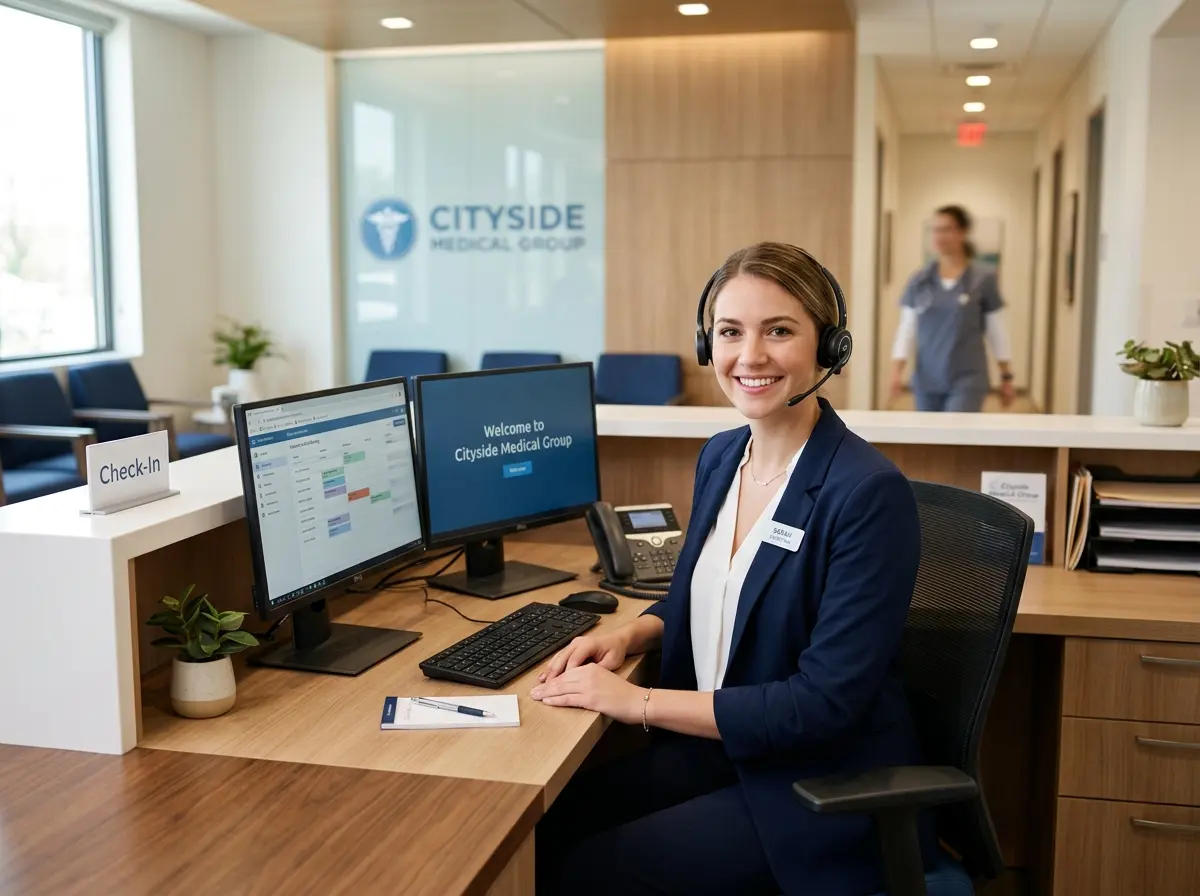
This scenario plays out hundreds of times a day across medical offices everywhere, and the painful part is that it's entirely preventable. The patient experience doesn't begin in your waiting room with a clipboard full of forms — it begins the moment someone decides to call you. How that call is handled sets the tone for everything that follows: whether they book, whether they trust you, and whether they ever come back.
In an era where patients have more healthcare choices than ever and nearly 80% of people say they would switch providers after a poor customer service experience, your phone handling isn't just an administrative detail. It's a clinical-adjacent function with real consequences for patient retention, satisfaction, and revenue. So let's talk about how to get it right.
The Anatomy of a Frustrating Patient Phone Experience
Before fixing anything, it helps to understand exactly where things tend to go wrong. Most medical offices don't have one catastrophic problem — they have a collection of small friction points that add up to a patient experience that feels, at best, like an inconvenience and, at worst, like a reason to go somewhere else.
The Hold Time Black Hole
Few things communicate "we don't value your time" quite as efficiently as putting someone on hold for seven minutes, playing the same 45-second loop of smooth jazz, and then having a staff member answer mid-sentence while clearly doing three other things. Patients calling a medical office are often anxious to begin with — they're dealing with something that matters to their health or their family's health. Every minute on hold amplifies that anxiety and erodes confidence in your practice before they've even met a provider.
According to data from Clutch, over 34% of callers who hang up won't call back. That's not just a missed appointment — that's potentially a missed diagnosis, a delayed treatment, and certainly a lost patient relationship. If your front desk is routinely overwhelmed during peak hours, the solution isn't to tell staff to work faster. It's to rethink how calls are being triaged and handled in the first place.
After-Hours Calls That Fall Into the Void
Medical offices have operating hours. Patient needs, unfortunately, do not. Someone who wakes up at 10 PM wondering whether their symptoms warrant urgent care, or a parent trying to schedule a sick visit for the next morning, is going to call — and what they find on the other end of that line matters enormously. A voicemail box that doesn't get checked until 9 AM is not a patient-friendly system; it's a patient-attrition machine dressed up as one.
After-hours handling is one of the clearest differentiators between medical offices that retain patients long-term and those that see chronic churn. Even if you can't have a human available around the clock, you can ensure that callers receive helpful, professional responses — not silence, not confusion, and definitely not a voicemail that just says "leave a message."
Inconsistent Information and Undertrained Staff
Your front desk team is juggling check-ins, insurance verifications, provider schedules, and about fourteen browser tabs at any given moment. It's not surprising that phone calls sometimes get handled inconsistently — a patient calls twice and gets two different answers about copay policies, appointment availability, or what to bring to their first visit. While individually these might seem like minor slip-ups, they quietly erode patient trust and generate unnecessary confusion that ends up costing your staff more time down the road.
Modernizing Your Call Handling Without Replacing Your Team
Here's where some medical office managers make a philosophical error: they assume that improving call handling means either hiring more people (expensive) or replacing human staff with cold, robotic automation (off-putting for a healthcare setting). The reality is far more nuanced, and far more achievable.
How Stella Fits Into a Medical Office Environment
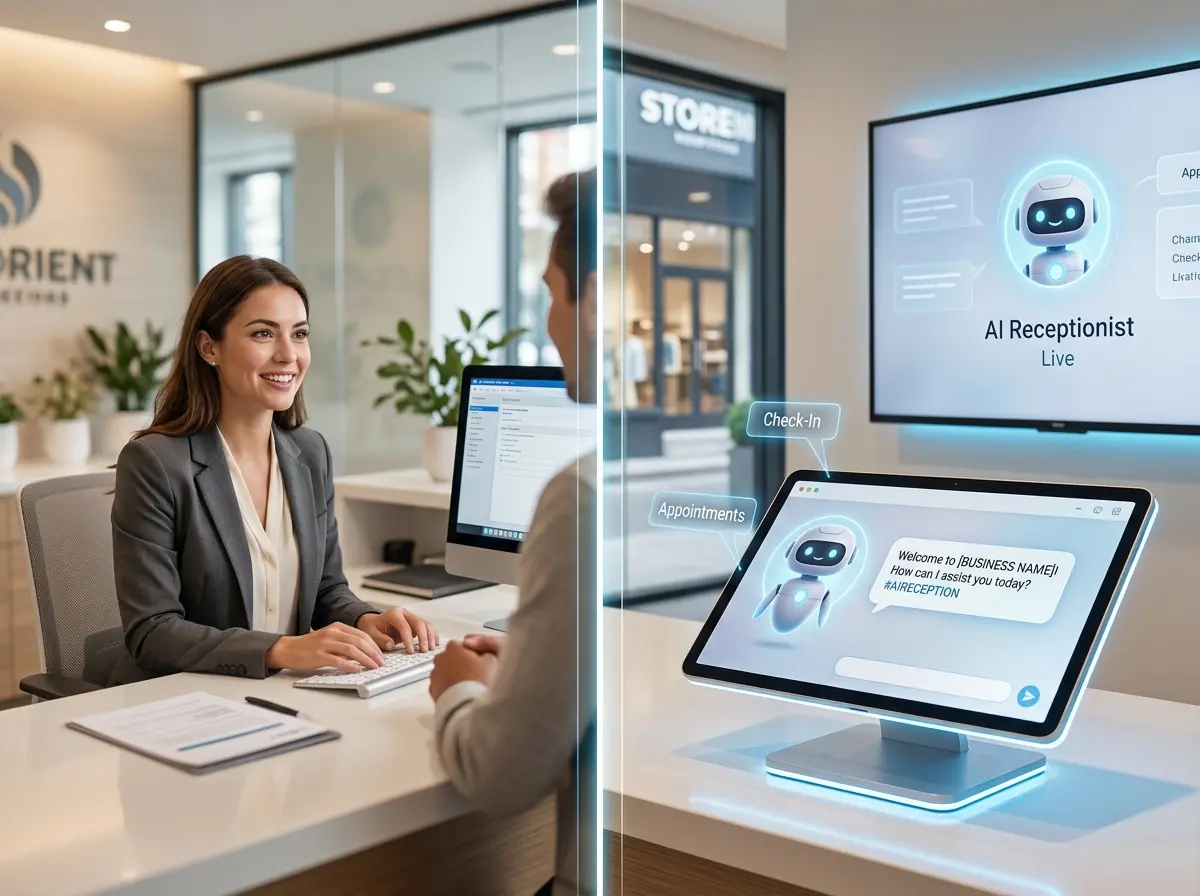
This is where Stella comes in — an AI robot employee and phone receptionist designed to handle the kind of consistent, informational, and intake-related call work that currently eats up your front desk's bandwidth. She answers calls 24/7 with full knowledge of your practice's services, hours, policies, and offerings. She can collect patient intake information conversationally over the phone or through a web-based form, and she logs everything into a built-in CRM that generates AI-powered contact profiles automatically. When a call genuinely needs a human — a billing dispute, a clinical concern, a frustrated patient who needs empathy over efficiency — she can route it accordingly based on the conditions you configure.
For offices with a physical location, Stella also operates as a friendly, human-sized kiosk in your waiting area, answering questions from patients who walk in, greeting them proactively, and promoting services they may not know you offer. No breaks, no sick days, no turnover. At $99/month with no upfront hardware costs, she's not replacing your team — she's giving them their time back.
Building a Call Handling Protocol That Actually Works
Whether you're integrating new tools or optimizing what you already have, every medical office should have a documented, practiced approach to call handling. "Wing it and hope" is not a protocol, no matter how talented your front desk team is.
Define Your Call Categories and Routing Logic
Not all incoming calls are equal, and treating them as though they are is how you end up with appointment scheduling calls stuck in a queue behind someone asking for directions. Start by categorizing the most common call types your office receives — scheduling, prescription refills, billing questions, insurance verification, urgent clinical concerns, general information — and define a clear path for each one. Who handles it? At what point does it escalate? What information needs to be collected before it reaches a provider or clinical staff member?
This kind of routing logic is valuable whether you're implementing it through your human team, through an AI phone system, or through a hybrid of both. It reduces decision fatigue for staff, speeds up resolution for patients, and ensures that truly urgent calls don't get lost in a pile of routine requests.
Script the Opening, Not the Entire Conversation
There's a meaningful difference between giving your phone staff a framework and turning them into robots (the bad kind). You don't need a word-for-word script for every scenario — patients can tell when they're being read to, and it doesn't feel warm or professional. What you do need is a consistent, polished opening that communicates your practice name, sets a welcoming tone, and lets the caller know they've reached the right place.
Beyond the greeting, invest in clear talking points for your most frequently asked questions: what insurance you accept, how to request records, what to expect at a first appointment, and what your cancellation policy is. When staff have reliable, accurate answers at their fingertips, calls get handled faster and patients get the confidence that your office actually has its act together.
Create a Follow-Up System for Every Missed Call
Missed calls without a follow-up system are simply missed opportunities wearing a shrug. Every voicemail that gets left at your office should trigger a documented process: who reviews it, by when, and how it gets resolved. This sounds basic, but a surprising number of practices operate with voicemail boxes that are checked sporadically, summarized verbally in a morning huddle, and then handled inconsistently depending on whoever has a free moment.
Consider building a simple log — even a shared spreadsheet works — that tracks every missed call, the follow-up action taken, and when it was resolved. It forces accountability, identifies patterns (are most missed calls happening during a specific window?), and ensures that no patient falls through the cracks simply because your office was having a busy Tuesday.
A Quick Reminder About Stella
Stella is an AI robot employee and phone receptionist that answers calls around the clock, collects patient intake information, manages contacts through a built-in CRM, and greets patients in person through her kiosk presence — all for $99/month with no upfront hardware costs. She's designed to work alongside your existing team, handling the high-volume, repetitive communication tasks so your staff can focus on the work that genuinely requires a human touch.
Your Phone Is a Front Door — Start Treating It Like One
The medical offices that earn patient loyalty aren't always the ones with the newest equipment or the longest list of specialties. They're often the ones that make patients feel like they matter — and that starts with something as seemingly mundane as how a phone call is answered.
Here's what you can do starting this week. First, listen to a sample of your own incoming calls if your system records them, or have a trusted person call your office anonymously and report back honestly. You may be surprised by what you hear. Second, document your current call routing process — if you can't write it down in under ten minutes, it probably isn't as clear as you think it is. Third, identify your highest-friction points: Is it hold times? After-hours gaps? Inconsistent information? Pick one to address first and build from there.
The patient experience is cumulative. It's built from dozens of small interactions, and the phone call is often the very first one. Get that right, and everything that follows — the appointment, the care, the relationship — starts on much stronger footing. Your waiting room might be immaculate, your providers outstanding, and your outcomes excellent, but if patients can't get through your phone line without losing the will to live, none of that gets the chance to matter.
Treat your phone line like the front door it actually is. Keep it open, keep it welcoming, and make sure someone — or something very capable — is always there to answer it.