You Can't Serve Customers You Never Knew You Had
The Hidden Cost of a Missed Call
The Numbers Are Worse Than You Think
Here's a stat that should make any business owner put down their coffee: according to various industry studies, roughly 62% of calls to small businesses go unanswered. More sobering still, research from BIA/Kelsey suggests that a single inbound phone lead is worth, on average, anywhere from $50 to several hundred dollars depending on your industry. Now multiply that by every missed call in a given month. That's not a rounding error — that's a real revenue problem with a real dollar amount attached to it.
What a Missed Call Actually Costs You
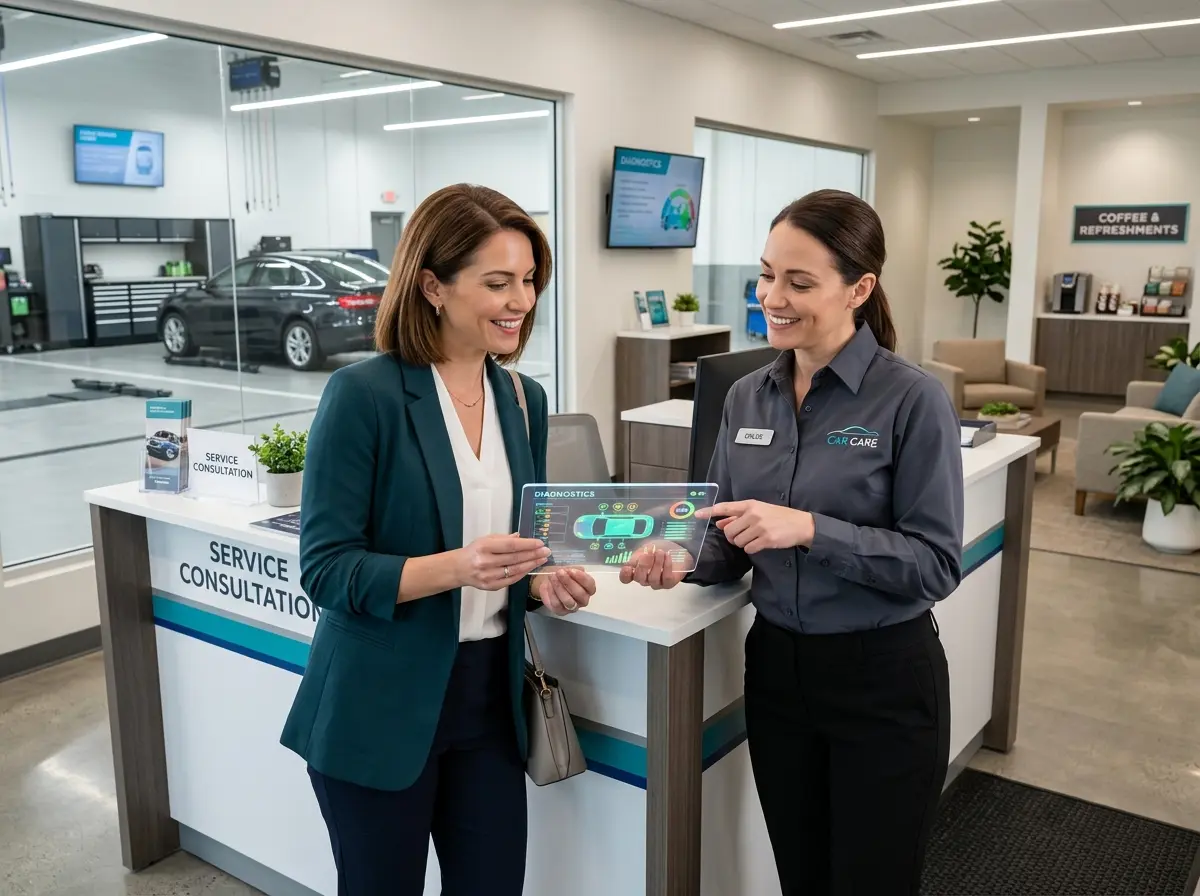
Let's make this concrete. Say you run an auto repair shop and your average ticket is $350. If your phone goes unanswered just five times a week — during lunch, after closing, or when your service advisor is elbow-deep under a hood — that's potentially 20 missed opportunities per month. Even if only half of those callers would have booked an appointment, you're looking at $3,500 in lost monthly revenue. Per month. That's $42,000 a year evaporating because nobody picked up the phone.
The Reputation Damage You're Not Measuring
How Stella Can Close the Gap
This is where technology earns its keep. Stella is an AI robot employee and phone receptionist designed specifically for businesses like yours — whether you have a physical storefront or operate entirely over the phone and online. For businesses with a location, Stella stands inside the store as a human-sized AI kiosk, greeting walk-in customers, answering product questions, and promoting current deals without any help from your staff. At the same time, she's answering your phones 24/7 with the same depth of business knowledge she uses in person.
Stella doesn't take breaks, call in sick, or let a call go to voicemail because she's helping someone else. She handles incoming calls naturally, collects customer information through conversational intake forms, and when a situation requires a human touch, she forwards the call based on rules you configure. Every voicemail that does come in gets an AI-generated summary with an instant push notification to your team, so nothing falls through the cracks. Her built-in CRM automatically logs customer interactions, builds AI-generated contact profiles, and lets you tag, sort, and follow up with leads — all without a dedicated office manager to manage it.
Conducting Your Missed Call Audit
Step One — Pull Your Call Data
Step Two — Attach a Revenue Estimate
Step Three — Identify the Root Cause
Each of these scenarios has a different fix. Overwhelmed staff during business hours may need better call routing or a virtual receptionist. After-hours gaps need an automated or AI-powered solution. Solopreneurs need a system that can represent the business professionally when they're unavailable — which is most of the time, given everything else on their plates. Knowing why calls are being missed is the difference between applying a targeted solution and throwing money at the wrong problem.
Quick Reminder About Stella
Stella is an AI robot employee and phone receptionist available for just $99/month with no upfront hardware costs. She answers calls around the clock, greets in-store customers as a physical kiosk presence, manages leads through a built-in CRM, and promotes your products and services — all without needing a paycheck, a lunch break, or two weeks' notice. Setup is straightforward, and she's ready to represent your business from day one.
Turn the Audit Into Action
- Document your findings. Write down the number of missed calls, the time patterns, and your revenue estimate. Put a number to it. Vague problems get vague solutions.
- Fix your after-hours coverage first. This is the lowest-hanging fruit. Calls outside business hours are almost entirely avoidable losses with the right system in place.
- Address peak-hour overwhelm. If calls are being missed during your busiest times, you need either additional capacity or a system that can handle overflow without routing customers to voicemail oblivion.
- Set a benchmark and revisit monthly. Once you've made changes, pull the same report next month. Improvement should be measurable. If it isn't, adjust.
The businesses that thrive aren't necessarily the ones with the best product or the lowest prices. They're often simply the ones that are easiest to reach. Availability is a competitive advantage that most small business owners underestimate dramatically — right up until they do the math and realize how much it's been costing them.
So do the audit. Run the numbers. And then decide whether the cost of fixing this problem is really as steep as you thought — or whether it's the cost of not fixing it that should concern you more.