Your Menu Is Either Making You Money or Losing You Money — There Is No Middle Ground
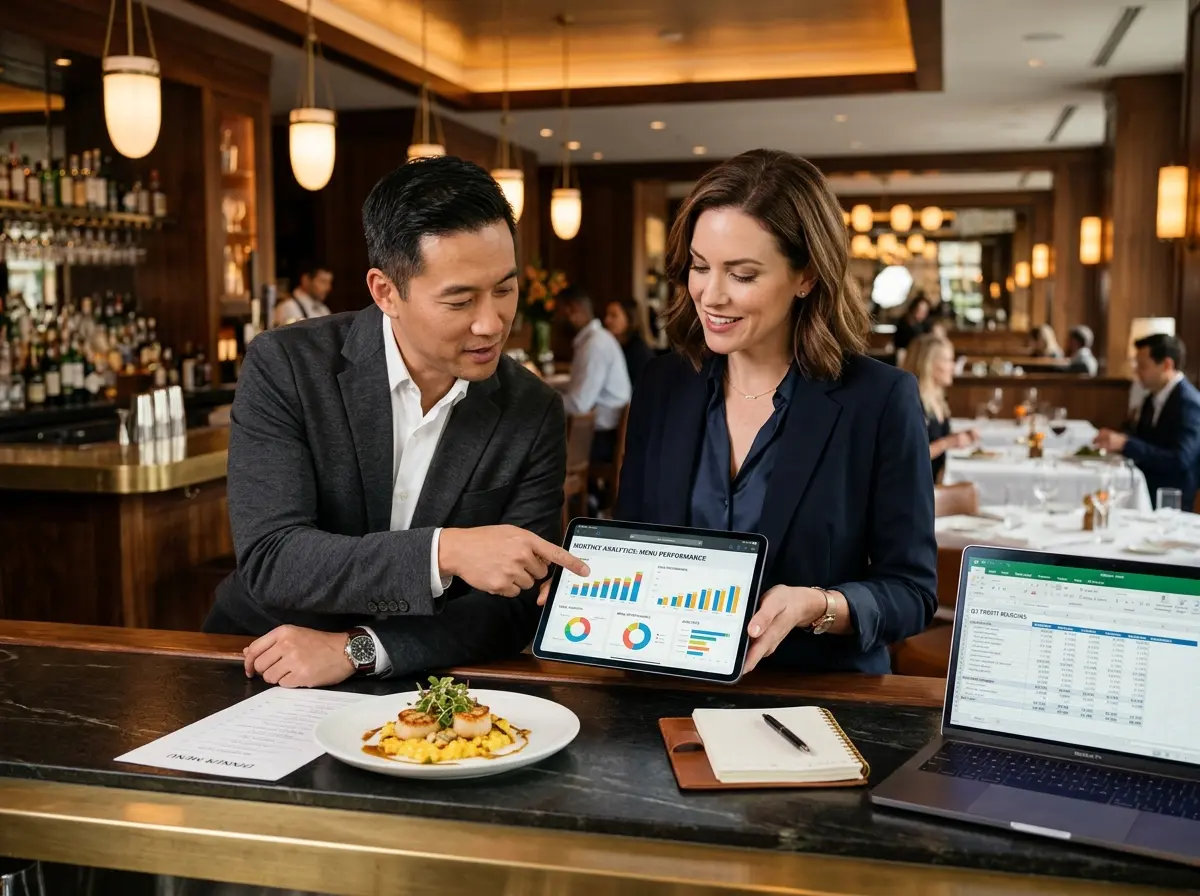
Here's a hard truth that most restaurant owners don't want to hear: your menu is not just a list of food. It's a financial document. Every item on it either earns its place or quietly drains your margin while you're busy putting out kitchen fires. The good news? Data can tell you exactly which is which — and it doesn't require a PhD in analytics or a team of consultants charging you $400 an hour to figure it out.
Menu engineering is the practice of using sales data and food cost analysis to design a menu that nudges customers toward your most profitable items. It's been around since the 1980s, and yet a surprising number of restaurants still design their menus on gut instinct, nostalgia, or because "the regulars would riot if we took off the chicken parm." (The regulars will be fine. They always are.)
In this guide, we'll walk through how to collect the right data, how to read it, and how to make strategic changes that actually move the needle on your bottom line — without sacrificing the customer experience that keeps people coming back.
Understanding Menu Engineering: The Framework That Changes Everything
Menu engineering isn't about removing everything customers love. It's about understanding why they love it, whether it's making you money when they order it, and how to position your menu so the profitable dishes get more of the spotlight.
The Four Menu Item Categories You Need to Know
The classic menu engineering matrix — developed by Michael Kasavana and Donald Smith — categorizes every menu item into one of four buckets based on two variables: popularity (how often it's ordered) and profitability (how much margin it generates). Once you understand where each of your dishes falls, you know what to do with it.
- Stars: High popularity, high profitability. These are your golden geese. Protect them, feature them prominently, and never mess with a recipe that's working.
- Plowhorses: High popularity, low profitability. Customers love them, but they're quietly eating your margin. Consider raising the price slightly, reducing portion size, or pairing them with a high-margin side.
- Puzzles: Low popularity, high profitability. Great dishes that nobody orders — usually a placement or awareness problem, not a quality problem.
- Dogs: Low popularity, low profitability. These are the items taking up menu real estate and inventory space while contributing almost nothing. Cut them loose.
This framework is simple, but it's powerful. A 2019 study from Cornell's Center for Hospitality Research found that strategic menu design can increase restaurant revenue by up to 15% without changing a single recipe. That's not a small number when you're operating on the notoriously thin margins of the restaurant industry.
How to Actually Gather the Data You Need
You can't engineer what you can't measure. Start with your Point of Sale (POS) system — most modern systems (Toast, Square, Clover, Lightspeed) have built-in reporting that shows you item-level sales volume over any time period. Pull at least 90 days of data to smooth out anomalies like a random Tuesday where everyone inexplicably ordered the mahi-mahi.
Pair your sales volume data with your recipe costing data. For every menu item, you need to know your food cost percentage: the cost of ingredients divided by the menu price, expressed as a percentage. The industry benchmark is typically 28–35%, though this varies by cuisine type and service model. Items above 40% deserve a hard look. Once you have both datasets, you can plot every item on the matrix and see your menu clearly — probably for the first time.
Using Technology to Work Smarter (Not Just Harder)
Let Your Tools Do the Heavy Lifting
Gathering and analyzing data doesn't have to be a weekend project you dread every quarter. Modern restaurant technology has made it significantly easier to track what's selling, what's not, and what customers are asking about. This is also where a tool like Stella — the AI robot employee and phone receptionist — can offer a genuinely useful layer of insight for restaurant owners.
Stella doesn't just answer your phones and greet customers at the door (though she does both of those things, cheerfully, 24/7, without asking for a shift covered). She also collects data on customer interactions — what people are asking about, which specials generate the most interest, and which promotions are landing versus falling flat. If customers keep calling to ask whether your weekend brunch is still available, that's signal. If nobody's engaging with the new flatbread special she's been promoting at the kiosk, that's signal too. Over time, these interaction patterns become a real source of intelligence you can fold into your menu decisions.
Making Strategic Menu Changes That Actually Stick
Data without action is just an expensive hobby. Once you've categorized your items and identified where the opportunities are, it's time to make intentional changes — and do it in a way that doesn't send your regulars into a spiral.
Pricing and Placement: The Two Levers That Matter Most
Menu psychology is a well-documented field, and the research consistently shows that where an item appears on the menu influences how often it gets ordered almost as much as what the item actually is. The upper-right corner of a traditional menu and the top of each category section are prime real estate — that's where eyes go first. Move your Stars there. Give your Puzzles better placement before you decide to cut them entirely; sometimes a repositioning is all they need.
On pricing, resist the urge to make dramatic sweeping changes all at once. Raise Plowhorse prices incrementally — a dollar or two at a time — and monitor whether sales volume holds. Often, it does. Customers are less price-sensitive than restaurant owners assume, especially when the experience and quality are consistent. And if you bundle a Plowhorse with a high-margin side or drink pairing, you can boost the overall ticket average without anyone feeling like they're being upsold.
Trimming the Menu Without Losing Customers
This is where most restaurant owners get emotionally attached to items that should have been retired years ago. The data is your cover here — use it. When you remove a Dog from the menu, you're not just cutting a dish; you're freeing up inventory, reducing kitchen complexity, shortening prep time, and improving execution consistency across every other item. Research from researchers at MIT and other culinary consultants consistently suggests that smaller menus lead to faster service, less food waste, and higher overall quality — all of which directly impact customer satisfaction and repeat business.
When you do trim items, communicate the change with confidence. A simple note on your website, a social post, or a brief mention from your staff ("We've streamlined our menu to focus on what we do best") frames it as a quality decision, not a cost-cutting measure. Because honestly? It's both. And there's nothing wrong with that.
Testing Changes Before You Commit
Not every menu decision needs to be permanent from day one. Use limited-time offerings (LTOs) to test new items and price points before adding them to the core menu. Run a dish as a weekend special, track sales and customer feedback, and let the data tell you whether it earns a permanent spot. This approach also creates natural urgency that drives trial — "available this weekend only" is a powerful phrase in the restaurant world. It turns curious customers into paying customers, and paying customers into data points you can actually use.
Quick Reminder About Stella
Stella is an AI robot employee and phone receptionist built for businesses like yours. She greets customers in person at a kiosk inside your location, answers phone calls around the clock, promotes your specials, handles common questions so your staff doesn't have to, and collects insights from every customer interaction — all for $99/month with no upfront hardware costs. If your front-of-house could use a reliable, always-on presence that actually pays attention to what customers are asking, she's worth a look.
Start Small, Stay Consistent, and Let the Numbers Lead
Menu engineering isn't a one-time project. It's an ongoing practice — a discipline of reviewing your data regularly (quarterly at minimum), making targeted adjustments, and measuring the results. The restaurants that do this well don't necessarily have the fanciest kitchens or the biggest marketing budgets. They have owners who pay attention, make decisions based on evidence, and aren't too precious about a dish to cut it when the numbers say it's time.
Here's how to get started this week:
- Pull 90 days of item-level sales data from your POS system.
- Calculate the food cost percentage for your top 20 menu items.
- Plot each item on the Stars/Plowhorses/Puzzles/Dogs matrix.
- Identify your top three Dogs and make a plan to remove or rework them.
- Move your two highest-margin Puzzles to more prominent menu positions.
- Schedule a quarterly menu review on your calendar right now, before you close this tab.
Your menu has been speaking to you in numbers for years. It might be time to start listening.