The Revolving Door Problem: Why Customers Come Once and Disappear
Here's a scenario every auto shop owner knows all too well: a customer comes in for an oil change, you do a great job, they smile, pay, and drive off into the sunset — never to be seen again. Not because they were unhappy. Not because your competitor offered them something better. Simply because life got busy, they forgot about you, and nobody reminded them you exist. Congratulations, you've just become the automotive equivalent of a stranger on the street.
The hard truth is that most auto shops are phenomenal at fixing cars and genuinely terrible at retaining customers. And that's not an insult — it's just reality. Your team's expertise is under the hood, not inside a spreadsheet. But here's the thing: acquiring a new customer costs five times more than keeping an existing one, and repeat customers spend up to 67% more than first-timers. That's not pocket change. That's the difference between a shop that survives and one that thrives.
Enter the CRM — Customer Relationship Management software — the not-so-secret weapon that successful auto shops are using to turn one-time oil change customers into decade-long loyalists who refer their friends, their family, and probably their neighbors' cousin. Let's talk about how to actually do this, without drowning in technology or losing your mind in the process.
Building the Foundation: What a CRM Actually Does for Your Auto Shop
It Remembers Everything So You Don't Have To
Think of a CRM as your shop's long-term memory — one that doesn't call in sick and never forgets that Mrs. Patterson drives a 2018 Honda CR-V with a tendency toward squeaky brakes. A good CRM stores customer contact information, vehicle details, service history, preferred communication methods, and any notes your team has added along the way. When she calls back six months later, you're not fumbling through paper invoices or asking her to repeat herself. You already know her. That kind of personalized service is rare in the auto industry, and customers absolutely notice it.
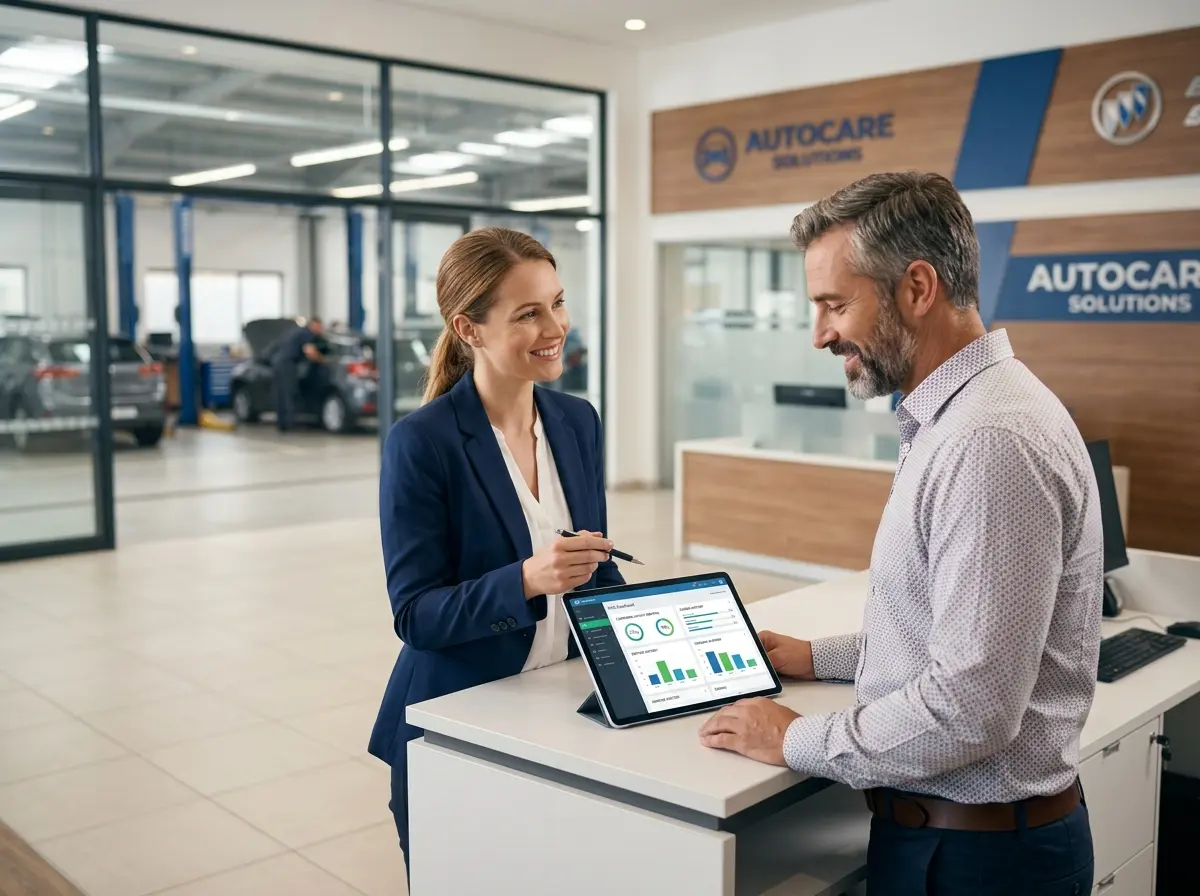
Beyond individual records, a CRM gives you a bird's-eye view of your entire customer base — who's overdue for service, who hasn't visited in over a year, and which customers consistently spend the most. This kind of visibility transforms your business decisions from gut feelings into data-driven strategy. You're no longer guessing. You're knowing.
Automated Follow-Ups: The Magic of Staying Top of Mind
The real power of a CRM for auto shops isn't just storage — it's automation. Most platforms let you set up triggered communications based on customer behavior or time intervals. Here's what that looks like in practice:
- Oil change reminder emails or texts sent automatically 90 days after their last visit
- Seasonal service prompts — think tire rotation reminders before winter hits or AC checks as summer approaches
- Birthday messages with a small discount to make the customer feel valued (and subtly nudge them back through your door)
- Post-visit follow-ups asking for reviews or feedback within 48 hours of their appointment
These touchpoints feel personal even when they're automated. The customer doesn't need to know your CRM did the heavy lifting — they just need to feel like you care. And when your reminder arrives right as they're starting to hear that familiar rattle under the hood, you've just saved yourself a lost customer and gained a scheduled appointment.
Segmentation: Stop Treating Everyone the Same
Not all customers are created equal, and your marketing shouldn't pretend otherwise. CRM segmentation lets you group customers by vehicle type, service history, spending level, location, or any other custom field you define. A customer who drives a luxury vehicle might respond well to premium service packages. A customer who's only ever done basic maintenance might need a gentle educational nudge about preventive care. A customer who referred three friends deserves a loyalty reward, not a generic promotional email.
Segmentation turns your CRM from a digital Rolodex into a precision marketing tool. Instead of blasting every customer with the same message and hoping something sticks, you're delivering the right message to the right person at the right time. That's how you build relationships — not just transactions.
How Stella Helps Auto Shops Capture Better Customer Data From Day One
Turning Every Interaction Into a CRM Entry
Of course, a CRM is only as good as the data inside it — and data only exists if someone collected it in the first place. This is where most shops hit a wall. Your service advisors are busy. Your technicians are elbow-deep in engines. Nobody has time to manually enter customer information, remember to ask for an email address, or log detailed notes after every interaction. And so the CRM sits half-empty, which is almost worse than not having one at all.
Stella, the AI robot employee and phone receptionist, solves this problem elegantly. When customers call to schedule an appointment, Stella handles the intake — collecting names, vehicle information, contact preferences, and service needs through natural conversation, then feeding that data directly into your CRM. No manual entry. No missed fields. No forgotten follow-up. Her built-in CRM features include custom fields, tags, notes, and AI-generated customer profiles, so every record is clean, complete, and immediately useful.
And because Stella answers phones 24/7, she's capturing customer data even when your shop is closed — meaning that Saturday evening caller who wants to book a Monday morning appointment doesn't slip through the cracks and call your competitor instead. She's equally capable at the in-store kiosk, greeting walk-ins and gathering information before they even reach your service desk. It's consistent, professional, and frankly a little magical.
Turning Data Into Dollars: Advanced CRM Strategies for Auto Shops
Loyalty Programs That Actually Work
Generic punch cards are charming, but they're not scalable. A CRM-powered loyalty program tracks customer visits and spending automatically, then triggers rewards based on real thresholds you define. Reach five visits? Unlock a free tire rotation. Spend $500 in a calendar year? Earn priority scheduling. These programs work because the reward feels earned rather than handed out, and the CRM does all the tracking without any manual bookkeeping on your end.
The key is to design loyalty incentives that bring customers back for services they'd eventually need anyway — not just discounts that eat into your margin for no strategic reason. A well-designed loyalty structure increases visit frequency, boosts average ticket size, and makes customers feel like insiders rather than strangers. That emotional connection is what separates a shop people use from a shop people love.
Upselling Without the Cringe Factor
Nobody likes feeling sold to, but everyone appreciates a genuinely helpful recommendation. Your CRM makes upselling feel like customer service rather than a sales pitch. When a customer's record shows their last brake inspection was 18 months ago, your service advisor can mention it naturally: "Hey, I noticed we haven't checked your brakes since last spring — mind if we take a quick look while we're in there?" That's not pushy. That's attentive. And customers who feel genuinely looked after spend more money and come back more often.
Over time, your CRM data will reveal patterns — which services are commonly paired, which vehicle types need specific attention at certain mileage marks, and which customers are most receptive to add-ons. Use those insights to train your team and build smarter service recommendations into your workflow. You'll increase your average repair order value without anyone feeling like they're being squeezed.
Online Reviews: Your CRM's Secret Marketing Channel
Positive Google reviews are the lifeblood of local auto shops, and a CRM is one of the most effective tools for generating them consistently. By automating a post-visit message — sent 24 to 48 hours after service — you catch customers at the peak of their satisfaction before daily life takes over. Keep the message short, warm, and direct: thank them for their visit and include a one-click link to leave a review.
Shops that implement this simple workflow routinely see their review volume triple within a few months. And since Google's local search algorithm heavily weights review quantity and recency, more reviews means better visibility, which means more first-time customers walking through your door — who then get added to your CRM, nurtured, and turned into loyal regulars. It's a flywheel, and your CRM is the engine that keeps it spinning.
Quick Reminder About Stella
Stella is an AI robot employee and phone receptionist designed to help businesses like auto shops deliver a consistent, professional customer experience without adding to the payroll burden. She greets customers at your kiosk, answers phones around the clock, collects intake information, manages CRM records, and promotes your current deals — all for $99/month with no upfront hardware costs. She's essentially the world's most reliable employee, minus the coffee breaks and the occasional bad attitude.
Your Next Steps Start Today
Building a CRM strategy for your auto shop isn't an overnight transformation — but it doesn't have to be overwhelming either. Start simple. Choose a CRM platform that fits your shop's size and budget. Import your existing customer list. Set up two or three automated touchpoints: a service reminder, a post-visit follow-up, and a seasonal promotion. Measure what happens to your rebooking rate over the next 90 days. Then build from there.
The shops winning in today's competitive automotive market aren't necessarily the ones with the fanciest equipment or the lowest prices. They're the ones that make customers feel remembered, valued, and taken care of — long after the car drives off the lot. A CRM gives you the infrastructure to deliver that experience at scale, consistently, without relying on any single employee's memory or initiative.
And if you want to make sure no customer interaction — whether it happens in person, over the phone, or after hours — ever falls through the cracks again, it might be worth taking a closer look at what Stella can add to the equation. Because the best CRM in the world is only as powerful as the data that feeds it, and Stella makes sure that data is always complete, accurate, and ready to work for you.
Your customers came to you once because they needed help. Give them a reason — and a gentle, well-timed reminder — to come back.