Still Taking Appointments With a Paper Calendar? We Need to Talk.
Picture this: It's 9:47 PM on a Tuesday. A homeowner just discovered their water heater is making a sound that can only be described as "a cat arguing with a dishwasher." They need a plumber, they need one fast, and they're not waiting until your office opens at 8 AM to call and sit on hold for twelve minutes. They're going online, finding someone who lets them book instantly, and that someone is not you — because you still rely on a call-in-only scheduling system like it's 1987.
If that scenario made you slightly uncomfortable, good. It was supposed to. The home services industry — plumbers, electricians, HVAC technicians, landscapers, cleaners, roofers, and everyone in between — is sitting on one of the most straightforward competitive advantages available today: real-time online scheduling. And yet, a staggering number of businesses still treat appointment booking like a manual labor project.
According to a study by Accenture, 68% of patients (and by extension, service customers broadly) say the ability to book appointments online is important when choosing a provider. The home services market is no different. Customers want convenience, they want it now, and they will absolutely choose your competitor if you can't deliver. Let's talk about why real-time online scheduling isn't just a nice-to-have — it's the backbone of a modern home services business.
The Real Cost of Manual Scheduling
Before we celebrate the solution, let's sit with the problem for a moment — really let it sink in.
Your Phone Lines Are a Bottleneck, Not a Feature
Every time a customer has to call to book an appointment, you've introduced friction. Someone has to answer that call, check availability, confirm the service type, collect contact information, read back the appointment time, and then manually enter it somewhere. Multiply that by twenty calls a day and you've essentially hired a part-time scheduling coordinator — except that role is probably being handled by whoever happens to be closest to the phone, which is usually your most experienced technician who should be, you know, out doing the job you're actually being paid for.
Missed calls are even worse. Studies suggest that 85% of people whose calls go unanswered will not call back. They just leave. They go to Google, they find a competitor with an online booking button, and they're gone before you even knew they existed. That's not a lead that "got away" — that's revenue you never had a chance to earn.
Double-Bookings, No-Shows, and Scheduling Chaos
Manual scheduling is also a reliability nightmare. When bookings live in a spreadsheet, a paper calendar, or — bless your heart — someone's personal memory, errors happen. Double-bookings frustrate customers and embarrass your team. No-show appointments that could have been filled go unnoticed until it's too late. Last-minute cancellations leave gaps that could have been automatically filled by a waitlisted customer if such a system existed.
Real-time scheduling software solves all of this by maintaining a single source of truth. Your calendar is always current, customers only see genuinely available slots, and automated reminders can cut no-show rates by as much as 29%, according to industry data. That's not a trivial number when each appointment represents real billable hours.
The Hidden Opportunity Cost
There's also the matter of what your team could be doing instead of managing scheduling logistics. Every hour spent shuffling appointments manually is an hour not spent on customer service, training, marketing, or — novel concept — actually completing jobs. Real-time scheduling doesn't just eliminate a pain point; it returns time to the people who are most capable of using it productively.
How Technology (and Stella) Can Fill the Gaps
Here's the good news: you don't have to solve every piece of the customer experience puzzle alone. Tools exist specifically to handle the parts of your business that don't need a human touch — and some of them are surprisingly affordable.
Meeting Customers Where They Are, Around the Clock
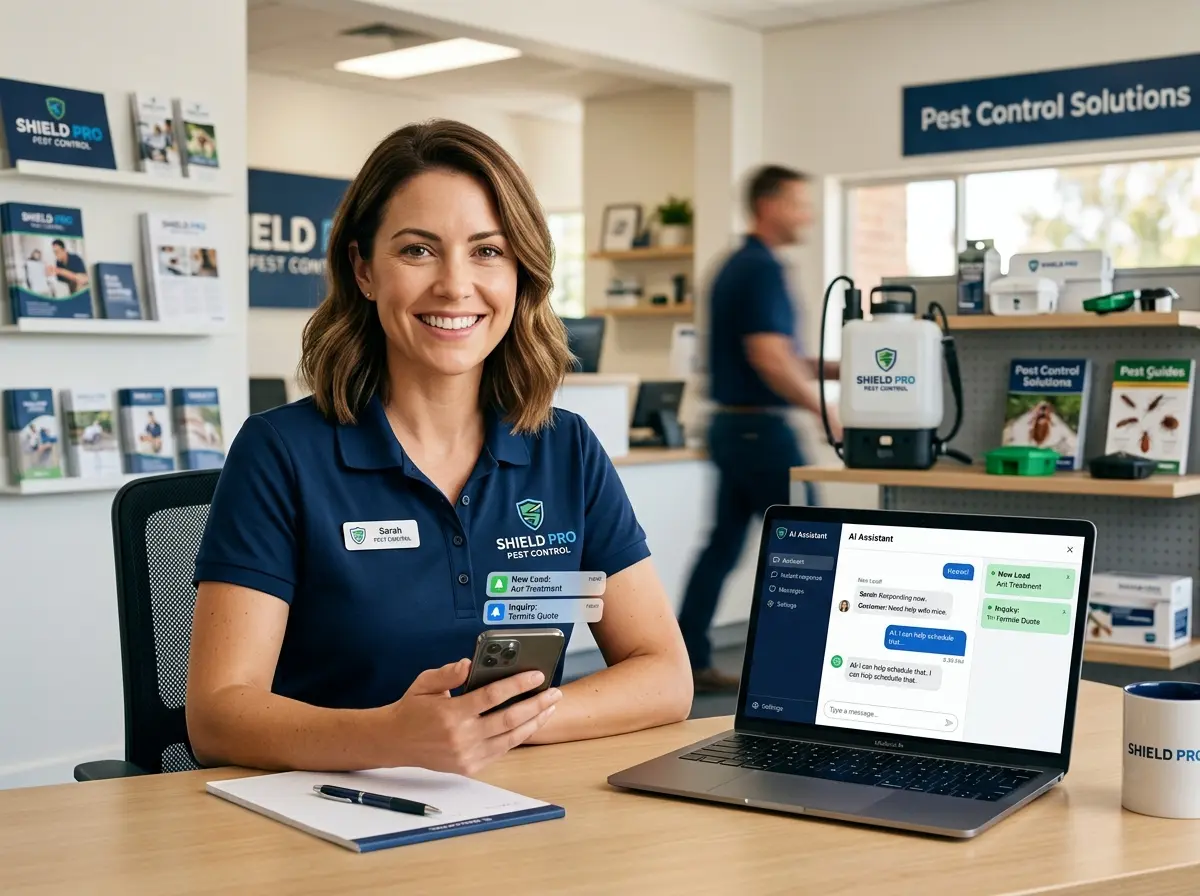
Pairing real-time online scheduling with an AI-powered front-of-house solution creates a remarkably complete customer experience. Stella, the AI robot employee and phone receptionist, is one example worth knowing about. For home services businesses that have a showroom, office, or retail presence, Stella stands in-store as a friendly, human-sized kiosk that greets customers, answers questions about services, and keeps prospects engaged while staff are busy. For businesses of any size — including solo operators running everything from a van and a cell phone — she answers phone calls 24/7 with the same knowledge and professionalism every time.
Stella can also collect customer information through conversational intake forms during calls or at the kiosk, and she feeds that information directly into a built-in CRM with custom fields, tags, notes, and AI-generated contact profiles. When a customer calls at midnight asking about your HVAC tune-up special, Stella doesn't panic, put them on hold, or lose the lead — she handles it, logs it, and makes sure your team knows about it in the morning. At $99/month with no upfront hardware costs, it's the kind of infrastructure that used to require a full-time employee.
Implementing Real-Time Scheduling That Actually Works
Getting online scheduling right isn't just about slapping a booking widget on your website and calling it a day. Done poorly, it creates a different set of headaches. Done well, it becomes one of the best investments your business makes this year.
Choose the Right Platform for Your Business Model
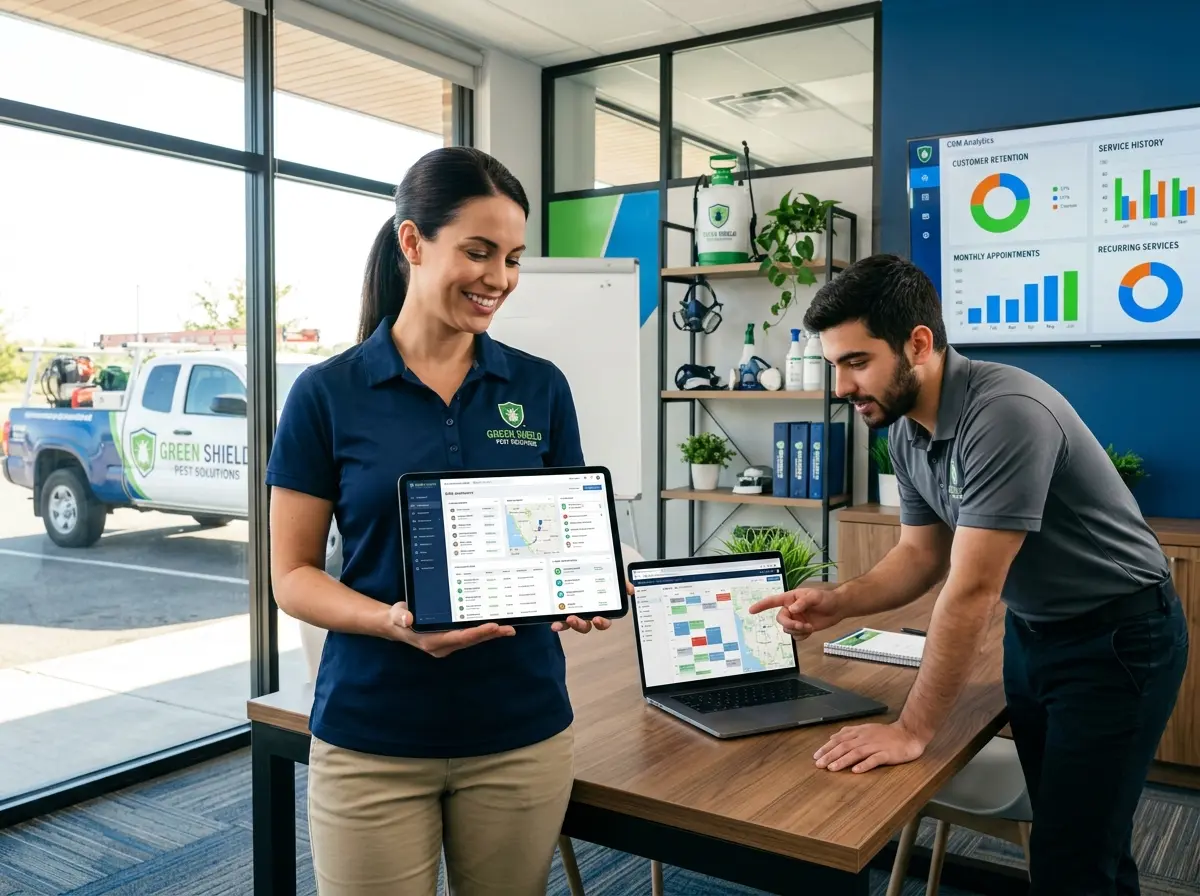
Not all scheduling software is created equal, and what works for a yoga studio does not necessarily work for a roofing company. Home services businesses need platforms that understand job duration variability, travel time between appointments, crew and equipment availability, and service-area constraints. Look for tools like Jobber, ServiceTitan, Housecall Pro, or FieldEdge — all built specifically for field service businesses. These platforms integrate real-time availability, customer history, invoicing, and dispatching in one place, which means less toggling between apps and fewer opportunities for things to fall through the cracks.
When evaluating platforms, prioritize: mobile accessibility for your field team, automated appointment reminders via SMS and email, the ability for customers to self-reschedule without calling, and integration with your existing tools like QuickBooks or Google Calendar.
Make Booking Effortless on Every Surface
Your online booking link should be impossible to miss. Put it in your Google Business Profile, your website header, your email signature, your Instagram bio, and your Facebook page. If a motivated customer has to search for how to book with you, you've already lost some of them. The path from "I need this service" to "I have an appointment confirmed" should take under two minutes and require zero phone calls if the customer prefers it that way.
Consider also embedding your scheduling directly into your Google Business Profile using Google's booking integrations — customers can book without ever visiting your website, which is increasingly how local service searches end.
Use Automation to Keep the Calendar Full
Real-time scheduling becomes genuinely powerful when you layer automation on top of it. Set up automatic confirmation emails the moment a booking is made. Schedule reminder texts 48 hours and 2 hours before each appointment. Create follow-up workflows that trigger after a job is completed — asking for a review, offering a seasonal maintenance package, or simply checking in. These touchpoints don't require staff time, they don't forget, and they don't have bad days. They just run, quietly filling your pipeline while you focus on the work itself.
If a cancellation opens up a slot, some platforms can automatically notify a waitlist or promote the availability through a targeted message to nearby customers. That's a feature that pays for itself the first time it fills what would have been a lost afternoon.
Quick Reminder About Stella
Stella is an AI robot employee and phone receptionist designed to support businesses exactly like yours — answering calls around the clock, engaging walk-in customers, collecting lead information, and keeping things running smoothly without adding to your payroll. She's available for $99/month, requires no upfront hardware investment, and is ready to work from day one. For home services businesses juggling calls, jobs, and everything in between, she's the kind of backup that doesn't call in sick.
It's Time to Stop Losing Jobs to a Busy Signal
The home services industry is competitive, and customer expectations have permanently shifted toward convenience and immediacy. Real-time online scheduling is no longer a differentiator — it's a baseline expectation. Businesses that make it easy to book will continue to win the customers who are ready to spend money right now. Businesses that make customers jump through hoops will keep losing them to competitors who figured this out already.
Here's what to do this week: audit your current booking process from the customer's perspective. Try to book your own service as if you were a new customer. Count the steps. Note the friction. Then start closing those gaps — whether that's implementing a field service scheduling platform, embedding a booking link everywhere your business appears online, setting up automated reminders, or adding an AI phone solution to capture the calls that currently disappear into voicemail.
The technology exists. It's affordable. It's proven. And your competitors are either already using it or about to be. The best time to modernize your scheduling was two years ago. The second best time is before your next missed call becomes someone else's confirmed appointment.