Introduction: The Waiting Room Doesn't Have to Be the Last Place You Communicate
Let's paint a picture. A pet owner brings their dog, Mr. Fluffington, in for his annual checkup. Everything goes great. Your team is wonderful. The vet is thorough. Mr. Fluffington gets a treat. Then the owner walks out the door — and that's it. Silence. Until, of course, something goes wrong at 11 PM on a Tuesday and they're frantically Googling "is my dog supposed to eat a sock?"
The gap between appointments is one of the most underutilized opportunities in veterinary practice management. You spend enormous energy — and money — acquiring clients, building trust, and delivering exceptional care. Then you essentially hand them a business card and wave goodbye, hoping they'll remember to schedule their next visit before the reminder postcard gets buried under a pizza coupon.
AI-powered communication tools are changing that dynamic in a big way. And veterinary practices that embrace them now are building the kind of client relationships that turn one-time visitors into lifelong, loyal pet owners who tell their neighbors, their coworkers, and their entire neighborhood Facebook group about your practice.
The Real Cost of Communication Gaps in Veterinary Care
Missed Follow-Ups Are More Than Just Inconvenient
Here's a sobering number: studies suggest that veterinary practices lose between 20% and 30% of their active clients each year simply due to inactivity. Not because of bad service. Not because the clients found someone better. Just because life got busy, the follow-up reminder never felt urgent enough, and the emotional connection faded. That's a significant chunk of revenue walking out the door — quietly, politely, and completely preventably.
When pet owners don't hear from your practice between appointments, they start to feel like just another file in your system. And when they eventually do need care — or think they might — they may just search "vet near me" instead of calling you directly. The vet who communicates consistently is the vet who stays top of mind.
Your Staff Is Stretched Too Thin to Do It All
Of course, the obvious solution is just to have your front desk team reach out to every client between visits with personalized, timely, helpful communication. Simple, right? Except your front desk team is also answering phones, checking in patients, handling billing questions, managing appointment scheduling, and occasionally mediating disputes between anxious cats and enthusiastic Labrador retrievers in the waiting room.
Expecting your human staff to manage proactive outreach on top of their existing responsibilities isn't just unrealistic — it's a recipe for burnout. The communication gap isn't usually a motivation problem. It's a capacity problem. And that's exactly where smart automation and AI tools come in.
Pet Owners Want Engagement — They Just Don't Want to Feel Sold To
There's a fine line between helpful communication and spam, and veterinary practices have to walk it carefully. Pet owners want to hear from you — when it's relevant, timely, and genuinely useful. A reminder that their cat's dental cleaning is overdue? Welcome. A check-in after a procedure to see how recovery is going? Appreciated. A third email in a week promoting your new flea prevention product? Less so.
The key is contextual, personalized communication that feels like it comes from a practice that actually knows your pet — not a mass-marketing machine. AI tools make this kind of targeted, meaningful outreach scalable in ways that were simply impossible for small and mid-sized practices just a few years ago.
How AI Can Plug the Gap (and Stella Can Help)
From Phone Calls to Follow-Ups, Let Technology Do the Heavy Lifting
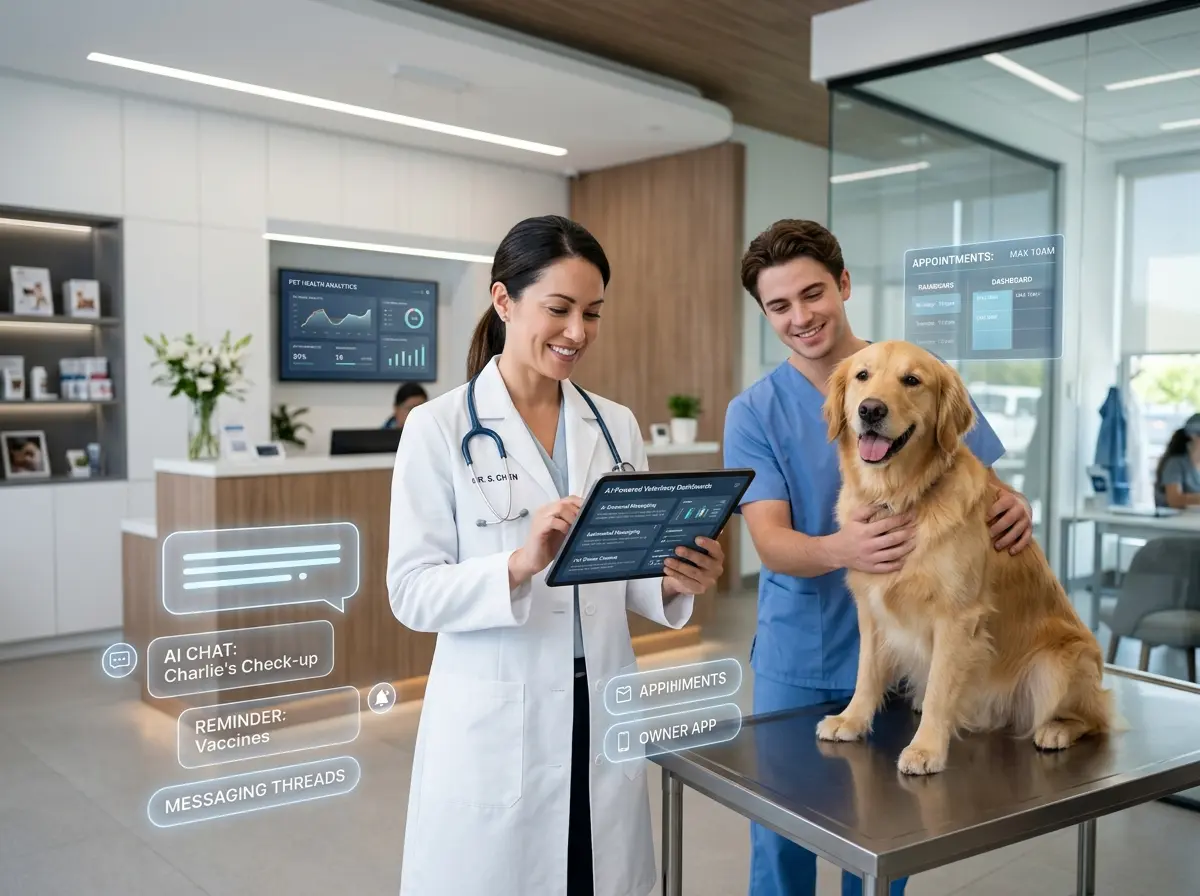
This is where tools like Stella — an AI robot employee and phone receptionist — start to make a lot of sense for veterinary practices. While your team focuses on the animals in front of them, Stella can handle inbound phone calls around the clock, answer questions about services, hours, and post-visit care instructions, and even collect client information through conversational intake forms — right over the phone, on your website, or at an in-office kiosk. That means fewer missed calls, fewer dropped follow-ups, and a front desk that isn't constantly interrupted by routine inquiries.
Stella also includes a built-in CRM with custom fields, tags, notes, and AI-generated client profiles — which means every interaction is captured, organized, and actionable. If a pet owner calls to ask about post-surgery care for their rabbit, that interaction is logged. If another calls three times in a week with questions about their senior dog's medication, your team can see that pattern and reach out proactively. Good communication starts with good data, and Stella helps you collect it without adding work to your staff's plate.
Building a Communication Strategy That Actually Works Between Visits
Automate the Routine, Personalize the Meaningful
A solid between-appointment communication strategy doesn't have to be complicated. In fact, the most effective ones are built on a simple principle: automate the predictable, and save your human touchpoints for the moments that matter most.
Appointment reminders, vaccine due-date notifications, post-visit check-ins, and seasonal wellness reminders are all excellent candidates for automation. These are communications that every pet owner expects and appreciates, and they don't require a personal touch to be effective. What they do require is consistency — and automation delivers that every single time, without relying on someone remembering to send the message.
Where your team should focus their energy is on the calls that require empathy and nuance: following up after a difficult diagnosis, reaching out to a client whose pet recently passed away, or personally inviting a lapsed client back in. Those moments build loyalty in ways that no automated message ever will.
Use Data to Drive Smarter Outreach
One of the most powerful things AI brings to client communication is the ability to surface insights you'd otherwise never see. Which clients haven't been in for more than 18 months? Which pet owners have called multiple times with questions that suggest they might benefit from a wellness plan? Which services are generating the most follow-up inquiries after appointments?
When you have clean, organized client data and AI tools to analyze it, you can move from reactive communication — waiting for clients to reach out — to proactive outreach that feels genuinely personalized. That shift alone can meaningfully reduce client attrition and increase the lifetime value of every pet owner relationship you've worked hard to build.
Don't Underestimate the Power of Post-Visit Check-Ins
A simple follow-up message 24 to 48 hours after an appointment — asking how Mr. Fluffington is settling in after his vaccines, or whether the new prescription seems to be helping — does something remarkable: it makes your clients feel like their pet actually matters to you beyond the transaction. Because of course the pet does matter to you. But if you never say so, clients won't always know that.
Post-visit check-ins also serve a practical purpose. They catch complications early, reduce unnecessary anxiety (and therefore panic calls), and give clients a natural opening to ask questions they forgot to raise during the appointment. Practices that implement consistent post-visit outreach typically see stronger online reviews, higher appointment reactivation rates, and more referrals — because the experience doesn't end when the exam room door closes.
Quick Reminder About Stella
Stella is an AI robot employee and phone receptionist that works 24/7 — greeting clients in person at your practice, answering phone calls, collecting information, and keeping your CRM organized without adding a single task to your team's to-do list. She starts at just $99/month with no upfront hardware costs, and she never calls in sick, asks for a raise, or accidentally puts a client on hold for six minutes. For a veterinary practice looking to improve client communication without hiring another staff member, she's worth a serious look.
Conclusion: Start Small, Stay Consistent, and Watch Retention Climb
You don't need to overhaul your entire communication strategy overnight. The practices that see the biggest gains from AI-assisted client communication are the ones that start with one or two high-impact changes — a post-visit check-in sequence, a vaccine reminder workflow, or a smarter way to handle after-hours inquiries — and build from there.
Here's a practical starting point:
- Audit your current communication touchpoints. Where are the gaps between appointment and next visit? Where do clients typically fall off?
- Identify two or three workflows to automate first. Appointment reminders, post-visit check-ins, and vaccine due-date alerts are the lowest-hanging fruit.
- Make sure your client data is clean and centralized. AI tools are only as good as the data they work with. A CRM with complete, accurate records is your foundation.
- Explore tools that reduce staff burden without reducing client experience. AI receptionist and communication tools can handle the routine so your team can focus on the meaningful.
The veterinary practices that will thrive over the next decade aren't necessarily the ones with the fanciest equipment or the biggest waiting rooms. They're the ones that build genuine, ongoing relationships with pet owners — and use smart technology to make that possible at scale. Mr. Fluffington's family deserves to feel remembered. And your practice deserves the revenue that comes from making sure they do.