When the Pumpkins Are Gone, the Panic Sets In
Every costume shop owner knows the feeling. It's November 1st. Yesterday, your store was a chaotic, glorious whirlwind of last-minute superhero requests, frantic parents, and people who apparently only decided to attend a Halloween party at 6:47 PM. You sold out of vampire capes. You actually sold out of vampire capes. Life was good.
Then the clock struck midnight, and suddenly you're standing in a store full of unsold witch hats and clearance-bin fairy wings, wondering how on earth you're going to keep the lights on until next October rolls around.
Here's the uncomfortable truth: Halloween accounts for the overwhelming majority of costume sales, with the National Retail Federation consistently reporting it as one of the top consumer spending holidays in the U.S. — over $12 billion in 2023 alone. But that money doesn't materialize evenly across twelve months. It explodes in October and then essentially vanishes, leaving specialty retailers in a feast-or-famine cycle that would make even the most seasoned business owner a little queasy.
The good news? Costume shops that survive — and actually thrive — year-round aren't doing it by magic. They're doing it by being strategic about the other eleven months. Let's talk about how.
Finding Your People: Customers Who Need Costumes in February
The first step to year-round survival is accepting that your target customer isn't just "person who celebrates Halloween." Your target customer is anyone who ever needs to dress as something they're not — and that is, it turns out, a surprisingly large group of people.
The Event and Entertainment Circuit
Theater groups, school drama departments, community playhouses, and film students are perpetually in need of costumes, props, and accessories — and they don't care what month it is. A local high school putting on Grease in March needs poodle skirts and leather jackets. A community theater doing A Christmas Carol needs Victorian waistcoats in September. These clients can become some of your most reliable recurring customers if you actively market to them.
Reach out to local schools, colleges, and theater organizations at the start of each academic semester. Offer a standing discount for educational institutions, or create a rental program for productions that need large quantities of pieces. Word of mouth in the theater community travels fast, and one good relationship with a drama director can generate years of business.
Cosplay, Comic Cons, and Fandom Events
If you haven't tapped into the cosplay community yet, you're leaving serious money on the table. Conventions are scheduled year-round, and dedicated cosplayers — the kind who spend months crafting their look — often have more passion (and budget) for costumes than the average Halloween shopper. Unlike the frantic October customer who grabs whatever's left on the rack, a cosplayer is researching, planning, and willing to invest in quality.
Consider hosting cosplay workshops, stocking specialty fabrics and accessories, or partnering with local convention organizers for event sponsorships. Being the go-to shop for the cosplay community in your area can turn a slow January into a surprisingly respectable month of sales.
Corporate Events, Themed Parties, and Holiday Rentals
Corporate clients are underrated heroes of the off-season costume market. Companies throw themed holiday parties, team-building events, product launches with dress codes, and decade-themed office gatherings far more often than you might think. A "Great Gatsby" holiday party in December needs flapper dresses and suspenders. A "Decades" company retreat in June needs something from every era. Introduce yourself to local event planners and HR managers who organize company events — and make sure they know you exist before they start Googling "costume rental near me" at 10 PM in a panic.
Letting Technology Help You Stay Busy Year-Round
Running a costume shop during the slow months isn't just about finding new customers — it's about making sure those customers can actually reach you, feel welcomed when they do, and come back again. This is where smart tools make a real difference.
Never Miss a Customer, Even in February
Stella, an AI robot employee and phone receptionist, is built exactly for this kind of challenge. During the off-season, when you might have reduced staff hours or be wearing approximately seventeen hats yourself, Stella handles incoming calls 24/7, answers questions about your inventory, rental policies, and hours, and even upsells customers on related items or services — all without you having to be physically present. Her in-store kiosk presence means walk-in customers still get a warm, informative greeting even when your team is stretched thin. Whether someone's calling at noon about a Mardi Gras costume or wandering in on a Tuesday afternoon looking for Renaissance faire accessories, Stella is there to help convert that curiosity into a sale.
Diversifying Your Revenue Without Losing Your Identity
A costume shop that only sells Halloween costumes is a business with a one-month business model. But diversifying doesn't mean you have to pivot into selling car parts. It means expanding thoughtfully within the world you already know.
Build a Rental Program
Rentals are one of the most natural extensions for a costume shop, and they solve a real problem for customers: many people need a great costume once and have zero interest in owning it permanently. A well-managed rental program generates recurring revenue from the same inventory, builds customer relationships, and creates a reason for people to come back. Start with your highest-quality, most versatile pieces — formal historical costumes, elaborate character suits, or professional-grade theatrical wear — and build from there. Set clear rental agreements, collect deposits, and invest in a simple tracking system so you always know what's where.
Workshops, Alterations, and Custom Work
If you or your team have sewing and crafting skills — and in this industry, the odds are good — consider offering costume alterations, custom builds, and themed workshops. A "Build Your Own Cosplay" class on a Saturday in March can bring in revenue, build community, and position your shop as a creative hub rather than just a retail store. Custom costume commissions for theater productions, school events, or individual clients can command premium prices and keep your team engaged and earning during the slow stretch. These offerings also generate excellent social media content, which brings us neatly to the next point.
Lean Into Seasonal Moments Beyond October
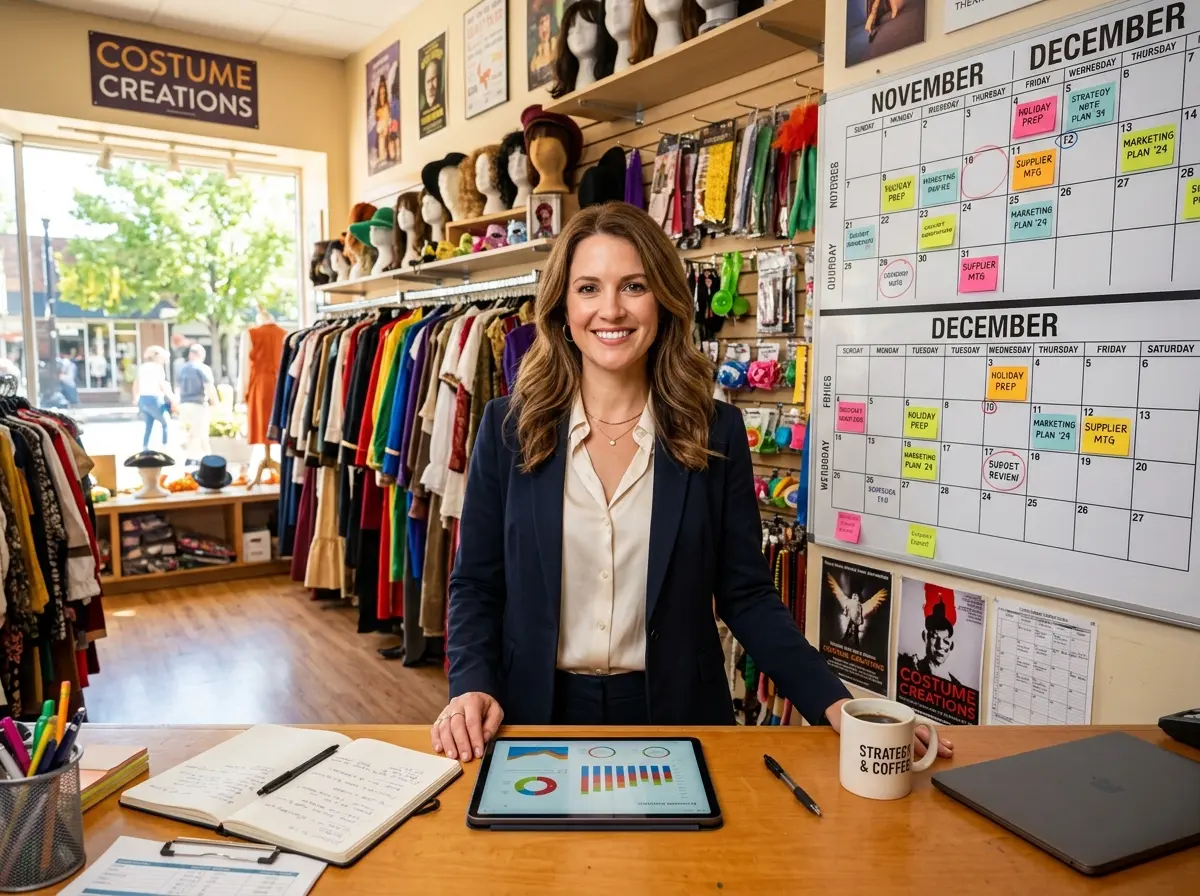
Halloween may be the Super Bowl of your industry, but it's not the only game in town. Mardi Gras, St. Patrick's Day, New Year's Eve parties, Día de los Muertos, Renaissance faires, holiday pageants, masquerade balls, and end-of-school-year theatrical productions all represent legitimate sales opportunities. Map out the full calendar year and identify every moment — however small — where costumes, accessories, or themed apparel could be relevant. Then plan your promotions, inventory, and marketing around those windows intentionally, rather than treating them as afterthoughts.
Quick Reminder About Stella
Stella is an AI robot employee and phone receptionist designed to help businesses like yours stay responsive and professional without adding to your payroll stress. She greets in-store customers proactively, answers calls around the clock, promotes your current deals, and collects customer information through conversational intake — all on a straightforward $99/month subscription with no upfront hardware costs. If you're navigating the slow season with a lean team, she's the kind of backup that doesn't call in sick.
Making It to Next October in One Piece
Surviving — and genuinely building a business around — eleven months of non-Halloween time comes down to a few core principles: diversify your offerings, find your year-round customers, stay visible, and don't try to do everything manually when good tools exist to help you.
Here's a practical action plan to get started:
- Audit your calendar. Identify every event, holiday, or community occasion in your area that involves costumes, themed dress, or entertainment — then build a simple promotional plan around each one.
- Reach out to local theaters, schools, and event planners this week. Introduce yourself, offer a first-time discount, and ask what they typically need. These relationships compound over time.
- Explore launching a rental program with a small, curated selection of premium inventory. Track what gets requested most and expand accordingly.
- Add at least one workshop or creative offering to your schedule in the next 90 days. It doesn't have to be elaborate — even a two-hour costume makeup class can draw a crowd and build loyalty.
- Make sure customers can always reach you and always feel welcomed when they do — whether that means better phone coverage, a stronger social media presence, or a smarter in-store experience.
Your store exists because people love dressing up, and people love dressing up far more than once a year. Your job for the next eleven months is simply to remind them of that — and to be there, ready and stocked, when they do. The customers are out there. Go find them before they settle for a mediocre Amazon order.