Your Salon Is Booming — So Why Does It Feel Like Chaos?
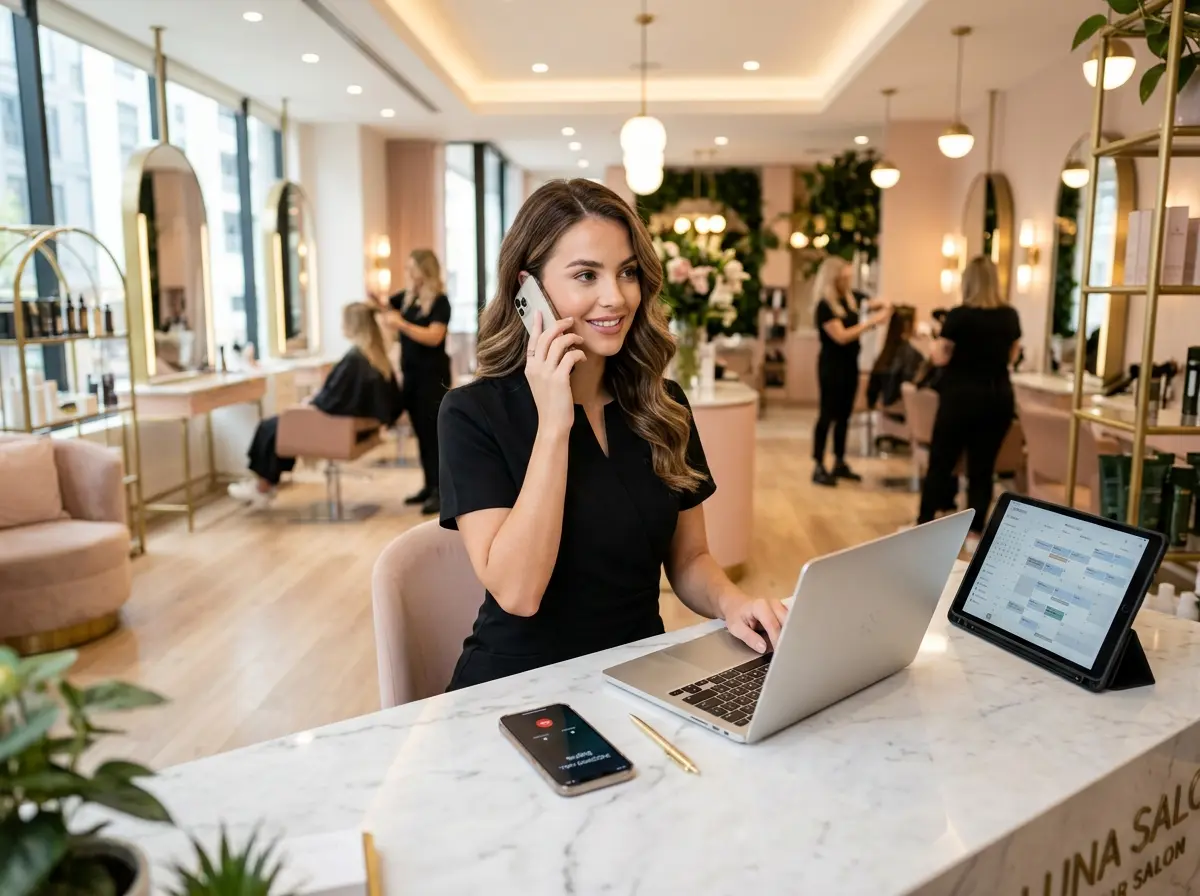
Congratulations. Your salon is busy. Clients love you, referrals are rolling in, and your appointment book is looking healthy. There's just one small problem: your phone won't stop ringing, your front desk person is somehow simultaneously checking in a client, answering a question about balayage pricing, and trying to schedule three callbacks — and nobody's having a great time.
Here's the uncomfortable truth most salon owners arrive at eventually: a full appointment book doesn't automatically mean a smooth operation. Growth creates its own unique brand of mayhem, and the phone is usually ground zero. According to a study by Invoca, 65% of people still prefer to call a business when they have a question or want to book an appointment. That's not going away anytime soon. And if you're not answering those calls — or answering them well — you're losing clients to the salon down the street who figured this out before you did.
The knee-jerk solution is to hire another receptionist. But that comes with costs, training time, sick days, turnover, and the ever-popular scenario where your new hire quits two weeks after you finally got them up to speed. There's a smarter path forward, and it doesn't require expanding your payroll. Let's talk about how to handle the phone chaos without losing your mind — or your margins.
Why Your Salon's Phone Problem Is Bigger Than You Think
Missed Calls Are Missed Revenue
It's easy to dismiss a missed call as a minor inconvenience. But run the math. If your average client spends $150 per visit and comes in six times a year, that's $900 in annual revenue per client. Miss five calls a week from potential new clients, and you're not just losing appointments — you're potentially leaving tens of thousands of dollars on the table every year. Clients who can't reach you don't leave a polite message and patiently wait. They call someone else, book online with a competitor, and never think about you again. Ouch.
And it's not just new clients. Existing ones get frustrated too. If someone calls to reschedule and gets sent to voicemail during a busy Saturday, there's a real chance they just cancel entirely. The phone experience is part of the client experience, whether we like it or not.
Your Front Desk Staff Is Wearing Too Many Hats
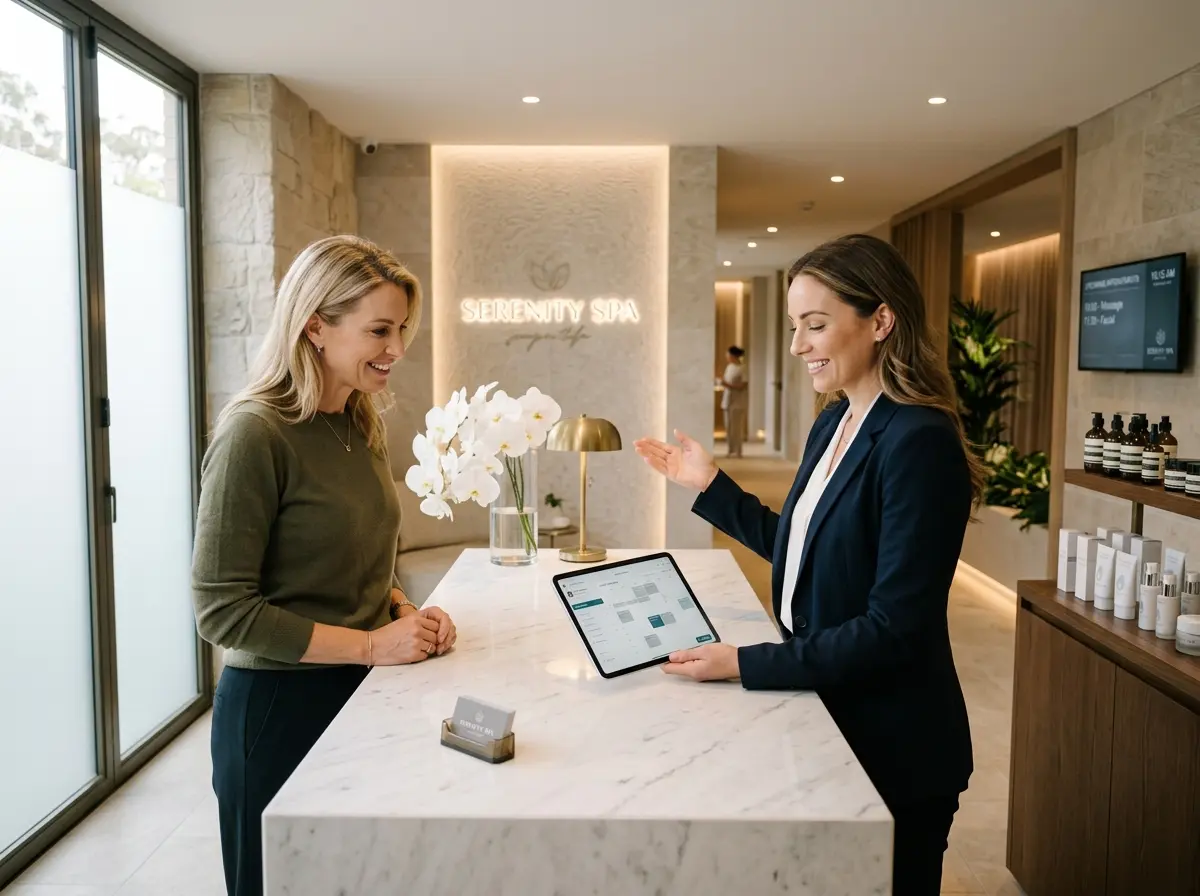
Let's give your front desk team some credit — they're doing the work of three people and smiling through most of it. But the reality is that splitting attention between in-person guests and phone calls creates a quality problem on both ends. The person standing at the counter feels ignored. The caller hears rushed, distracted answers. Neither feels particularly valued.
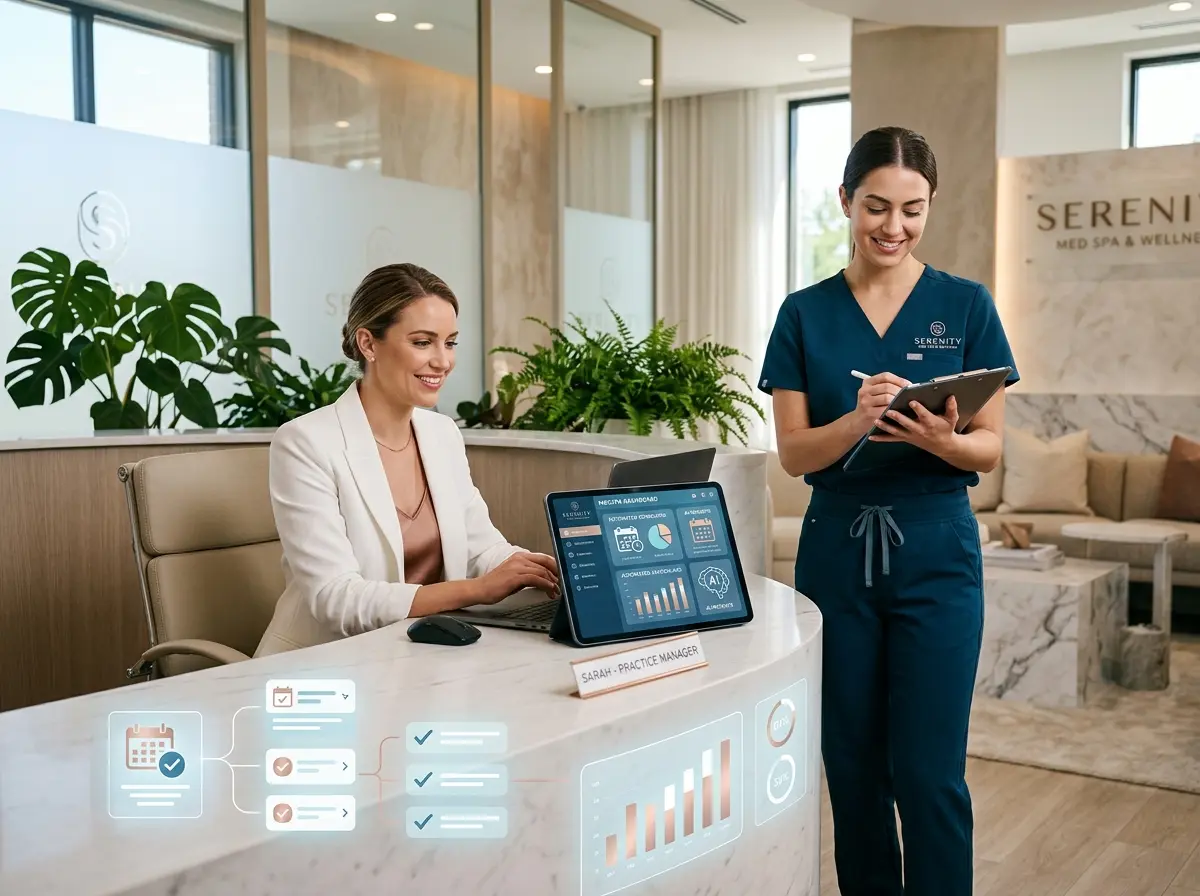
This isn't a staffing problem so much as a systems problem. When one person is responsible for everything that happens in the first five feet of your salon, something will always fall through the cracks. The goal isn't to pile more people into that front desk area — it's to reduce the volume of tasks that require human attention in the first place.
After-Hours Calls Are a Silent Revenue Leak
Here's something most salon owners don't track: how many calls come in after you've closed for the day. Clients think of making appointments at all sorts of inconvenient times — 9 PM on a Tuesday, during their lunch break, on a Sunday morning. If your salon's answer to those moments is a voicemail box that gets checked sporadically, you're bleeding potential bookings quietly and consistently. A client who can't get an answer after hours is a client who books with someone who offers online scheduling or — increasingly — answers the phone with something smarter than a voicemail prompt.
Smarter Tools for a Smoother Front Desk
Let Technology Handle the Repetitive Stuff
A significant portion of your incoming calls are asking the same questions: What are your hours? Do you offer highlights? How much is a haircut? Can I book an appointment for Saturday? These are not complex questions. They do not require your most experienced team member to stop what they're doing and recite your service menu for the fourteenth time today. This is exactly the kind of workload that technology handles beautifully — and where Stella, an AI robot employee and phone receptionist, genuinely earns her keep.
Stella answers phone calls 24/7 with the same knowledge she'd use if she were standing inside your salon. She knows your services, your pricing, your hours, your current promotions, and your policies. She can collect client information through conversational intake forms right on the call, manage that data through a built-in CRM with custom fields, tags, and AI-generated client profiles, and send managers a push notification with an AI-generated voicemail summary when a call needs follow-up. For salons with a physical location, she also stands at the kiosk and greets walk-in clients proactively — promoting specials and answering questions so your staff can stay focused on the client in the chair.
At $99 a month with no upfront hardware costs, it's a fraction of what a part-time receptionist costs — and she doesn't call in sick on your busiest Saturday of the year.
Building a Phone Strategy That Actually Works
Set Up a Call Flow That Matches Your Business
Not every call needs to be handled the same way. A client calling to ask about your keratin treatment pricing is a very different situation from a client with a complaint or a vendor trying to upsell you on supplies. A smart call flow routes different types of calls appropriately — some get answered automatically, some get forwarded to a specific team member, and some get escalated based on urgency. Think through the categories of calls your salon actually receives and design a response for each one. When calls are handled consistently and efficiently regardless of who picks up (or what picks up), the entire client experience improves.
If you're using an AI receptionist or phone automation tool, configure it thoughtfully. Set clear conditions for when calls should be forwarded to a human versus handled independently. A good rule of thumb: anything that requires judgment, emotional nuance, or decision-making authority should route to a person. Everything else? Automate it.
Train Your Team to Handle What the Phone Can't
Technology should reduce the burden on your team, not replace their judgment. When a call does get forwarded to a staff member, that person should be equipped to handle it smoothly. This means having clear scripts for common scenarios — booking, rescheduling, complaints, and pricing discussions — and making sure every team member knows how to close a booking conversation confidently. Role-play these scenarios in team meetings. It feels silly, but it works.
Also worth investing in: making sure your team knows your full service menu and current promotions cold. Nothing erodes client confidence faster than "uh, let me check on that" when someone asks a basic question about a service you've offered for years.
Use Client Data to Get Ahead of the Calls
A lot of incoming calls can be prevented entirely with proactive communication. Appointment reminders reduce no-shows and the flurry of "what time was my appointment again?" calls. Post-visit follow-up messages reduce the "can I rebook?" calls. Promotional messages sent at the right time reduce the "do you have any deals going on?" calls. When you have a solid system for capturing client contact information and staying in touch consistently, you're not just reducing inbound call volume — you're building stronger client relationships at the same time. A well-maintained CRM isn't a luxury for salons; it's a competitive advantage.
A Quick Reminder About Stella
Stella is an AI robot employee and phone receptionist built for businesses exactly like yours. She greets customers at the kiosk inside your salon, answers phone calls around the clock, promotes your services and current deals, collects client information, and manages it all through a built-in CRM — all for $99 a month with no complicated setup. She's the front desk backup you've always needed, available every hour your salon isn't.
Stop Letting Your Phone Run Your Business
The goal here isn't to turn your salon into a tech showroom. It's to build a phone and front desk operation that's reliable, professional, and doesn't fall apart every time you have a full house. That means being honest about where your current system is leaking — missed calls, overwhelmed staff, after-hours silence — and filling those gaps with smart solutions rather than just more warm bodies.
Here's where to start: audit your call volume for one week. Track how many calls come in, how many get answered, how many go to voicemail, and what the most common questions are. That data will tell you exactly where your gaps are and what kind of solution fits your situation. From there, map out a simple call flow, explore tools that can handle your repetitive inquiries automatically, and invest a little time in training your team on the calls that do require a human touch.
Your salon's growth shouldn't come with a side of chaos. With the right systems in place, a ringing phone stops being a source of stress and starts being exactly what it's supposed to be — a sign that business is good.