Introduction: Because "Just Call Us" Isn't a Scheduling Strategy
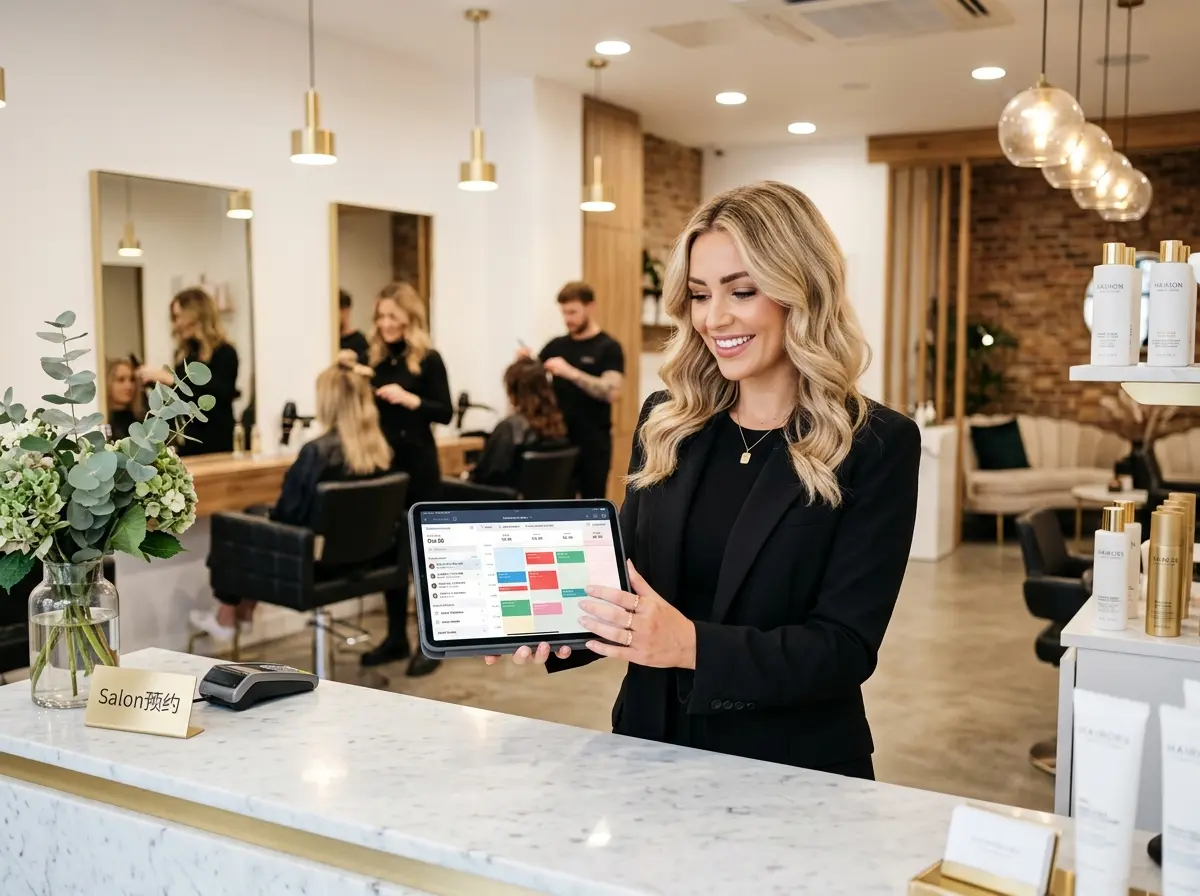
Let's be honest — running a hair salon is an art form. Between managing stylists, tracking color formulas, keeping up with the latest trends, and somehow remembering that Karen likes her highlights a certain way, you've got enough on your plate. The last thing you need is a chaotic booking process that has clients double-booked, stylists standing idle, and your front desk staff on the verge of a breakdown every Saturday morning.
Here's a stat worth sitting with: according to Vagaro, over 40% of salon appointments are booked outside of business hours — meaning if you're relying solely on a phone call during the workday, you're leaving a significant chunk of bookings on the table. Clients today expect to book an appointment at 11 PM on a Tuesday while watching Netflix, and if your salon can't accommodate that, your competitor down the street (who figured this out six months ago) absolutely will.
Appointment scheduling software has gone from a "nice to have" to a genuine business necessity. But with dozens of platforms on the market, each promising to revolutionize your business with a suspiciously cheerful product demo, how do you actually choose the right one? This guide walks you through exactly that — what to look for, what to avoid, and how to make the most of the tool you choose.
Choosing the Right Scheduling Software for Your Salon
The Features That Actually Matter (Not Just the Fancy Ones)
Every scheduling platform will dazzle you with features during the sales pitch. The real question is which features will still feel useful three months in, when the novelty has worn off and you're trying to fill a last-minute cancellation on a Friday afternoon.
At minimum, your scheduling software should offer online self-booking with real-time availability, automated appointment reminders via SMS and email (no-shows are the bane of every salon owner's existence), and service and stylist-specific booking so clients can request their preferred provider. You'll also want calendar syncing so nothing falls through the cracks between your software, your phone, and your stylists' personal schedules.
Beyond the basics, look for client profiles that store notes like color history and preferences, deposit collection to reduce no-shows for longer services, and reporting tools that show you which services are most popular, which time slots are always empty, and where your revenue is actually coming from. That last part tends to be eye-opening for a lot of salon owners.
Comparing the Top Platforms: What's Worth Your Money
The most widely used scheduling platforms for salons include Vagaro, Fresha, Booksy, Square Appointments, and Mindbody. Each has its strengths and quirks.
Vagaro is a strong all-rounder with solid marketing tools built in. Fresha operates on a no-subscription model (they make money on payment processing instead), which is attractive for smaller salons watching overhead. Booksy has a strong marketplace presence, meaning new clients can discover your salon through its platform. Square Appointments integrates seamlessly if you're already using Square for payments. Mindbody skews toward wellness businesses and can feel like overkill for a single-location salon, but it shines for multi-location operations.
The honest advice? Take advantage of free trials before committing. A platform that looks intuitive in a demo can feel clunky when your busiest stylist is trying to reschedule five appointments mid-morning rush. Involve your team in the evaluation — they're the ones who will use it every single day.
Integration: Making Sure Everything Talks to Everything Else
Your scheduling software shouldn't live in isolation. It needs to connect with your point-of-sale system, your email marketing tools, and ideally your customer relationship management setup. If your booking platform, payment processor, and client database are three separate systems that don't communicate, you're creating manual work for yourself that defeats the whole purpose of automation.
Check whether your chosen platform integrates natively with tools you already use — Google Calendar, Mailchimp, QuickBooks, or whatever your current stack looks like. Most of the major platforms offer API access or Zapier compatibility as a fallback, but native integrations are always smoother. Think of it like hiring staff who already know each other versus introducing strangers on their first day and hoping for the best.
Handling the Gaps Your Scheduling Software Leaves Behind
When Software Alone Isn't Enough
Scheduling software handles booking beautifully — but it doesn't answer the phone when a nervous client wants to know exactly how long a balayage takes, or greet the walk-in customer who's standing at your front desk looking slightly lost while your receptionist is on a call. These are the gaps where Stella, the AI robot employee and phone receptionist, earns her keep.
For salon owners with a physical location, Stella's in-store kiosk presence means every walk-in is greeted immediately and can get answers about services, pricing, availability, and current promotions — without pulling a stylist away from a client mid-foil. For phone calls, she handles inquiries 24/7 with the same depth of knowledge she uses in person, collects customer information through conversational intake forms, and forwards calls to human staff only when truly necessary. Her built-in CRM even stores client details and AI-generated profiles, so nothing gets lost between a phone conversation and an actual appointment. At $99/month with no hardware costs, she's considerably less expensive than the no-show you had last Tuesday.
Getting the Most Out of Your Scheduling Software Once You've Chosen It
Onboarding Your Team Without the Drama
The most sophisticated scheduling software in the world is useless if your team reverts to scribbling appointments in a paper book because the app "feels complicated." Proper onboarding is non-negotiable, and it's worth investing a couple of hours doing it right.
Start with a short training session that covers only the core workflows: booking an appointment, rescheduling, canceling, and pulling up a client profile. Resist the urge to demo every feature at once — that's how eyes glaze over. Create a simple one-page reference guide your staff can keep at the front desk for the first few weeks. Most major platforms also have YouTube tutorial libraries that are genuinely helpful. Once the basics feel natural, introduce more advanced features gradually, like service add-ons, waitlist management, or automated follow-up messages.
Using Your Data to Fill Slow Days and Grow Revenue
Your scheduling software is quietly generating a goldmine of data, and most salon owners barely glance at it. Your reports can tell you which days consistently have open slots, which services have the highest cancellation rate, which stylists are booked out weeks in advance, and which clients haven't visited in over 90 days.
That last group is particularly valuable. Most platforms allow you to filter by last visit date and send a targeted reactivation message — something simple like a "We miss you" email with a small incentive can bring lapsed clients back without any advertising spend. Similarly, if your Tuesday afternoons are chronically slow, use that data to justify running a targeted promotion specifically for that slot rather than guessing. Let the numbers tell you where to focus your energy, because in a busy salon, energy is your most finite resource.
Reducing No-Shows Without Being Annoying About It
No-shows cost the average salon hundreds of dollars per month. The good news is that modern scheduling software gives you several layers of protection. Automated reminders sent 48 hours and again 24 hours before an appointment have been shown to reduce no-shows by up to 30%. Adding a cancellation policy with deposit requirements for high-ticket services like color corrections or extensions creates a financial incentive for clients to show up — or at least give you enough notice to fill the slot.
Enable your waitlist feature if your platform supports it. When a cancellation comes in, the software can automatically notify waitlisted clients, often filling the spot within minutes. It won't solve every gap, but it transforms a lost hour of revenue into a recovered one with almost no effort on your end.
Quick Reminder About Stella
Stella is an AI robot employee and phone receptionist designed to support businesses exactly like yours — greeting customers in-store, answering calls around the clock, and handling the routine questions that interrupt your team's day. She's available for $99/month, requires no upfront hardware investment, and is ready to start working basically as soon as you set her up. For a salon juggling appointments, walk-ins, and a phone that never stops ringing, she's worth a serious look.
Conclusion: Stop Managing Chaos and Start Managing a Calendar
Choosing and implementing appointment scheduling software isn't a one-afternoon project, but it's one of the highest-return investments you can make in your salon's operations. The right platform reduces no-shows, frees your staff from administrative busywork, keeps your clients informed and happy, and gives you data to make smarter business decisions.
Here's your actionable roadmap to get started:
- Audit your current booking process — identify exactly where appointments are being lost, duplicated, or mismanaged.
- List your non-negotiables — online booking, reminders, client profiles, deposits, and integrations you already rely on.
- Trial two or three platforms — Vagaro, Fresha, or Booksy are solid starting points for most salons.
- Involve your team in the final decision — adoption is everything.
- Onboard properly, start with core features, and expand from there.
- Review your reports monthly — let the data guide your promotions, staffing, and service offerings.
Your clients want a seamless, professional experience from the moment they book to the moment they walk out with a fresh blowout. Your scheduling software — paired with the right support tools — is how you deliver that consistently, even on your most chaotic Saturday. And trust us, there will always be a chaotic Saturday.