The Phone Tag Epidemic (And How One Pharmacy Escaped It)
If you've ever worked in or around a specialty pharmacy, you already know the drill. A patient calls to ask whether their insurance covers a specific medication. They're put on hold. A technician finally picks up, doesn't have the answer, and says they'll call back. The patient calls again four hours later. Repeat indefinitely until someone either gets an answer or gives up entirely — and in healthcare, "giving up" isn't exactly a great outcome.
Phone tag isn't just annoying. It's expensive. According to the American Medical Association, administrative inefficiencies — including redundant phone calls and manual intake processes — cost the healthcare system billions annually. And specialty pharmacies, which deal with complex medications, prior authorizations, and insurance coordination far more than your average corner drugstore, feel that burden acutely.
So when a specialty pharmacy decided they'd had enough of the chaos, they turned to an unlikely fix: an AI phone receptionist that never sleeps, never puts anyone on hold out of laziness, and never forgets what insurance plans the pharmacy works with. Here's what happened — and what it means for your business.
The Problem Was Bigger Than It Looked
The Hidden Cost of "Just a Quick Call"
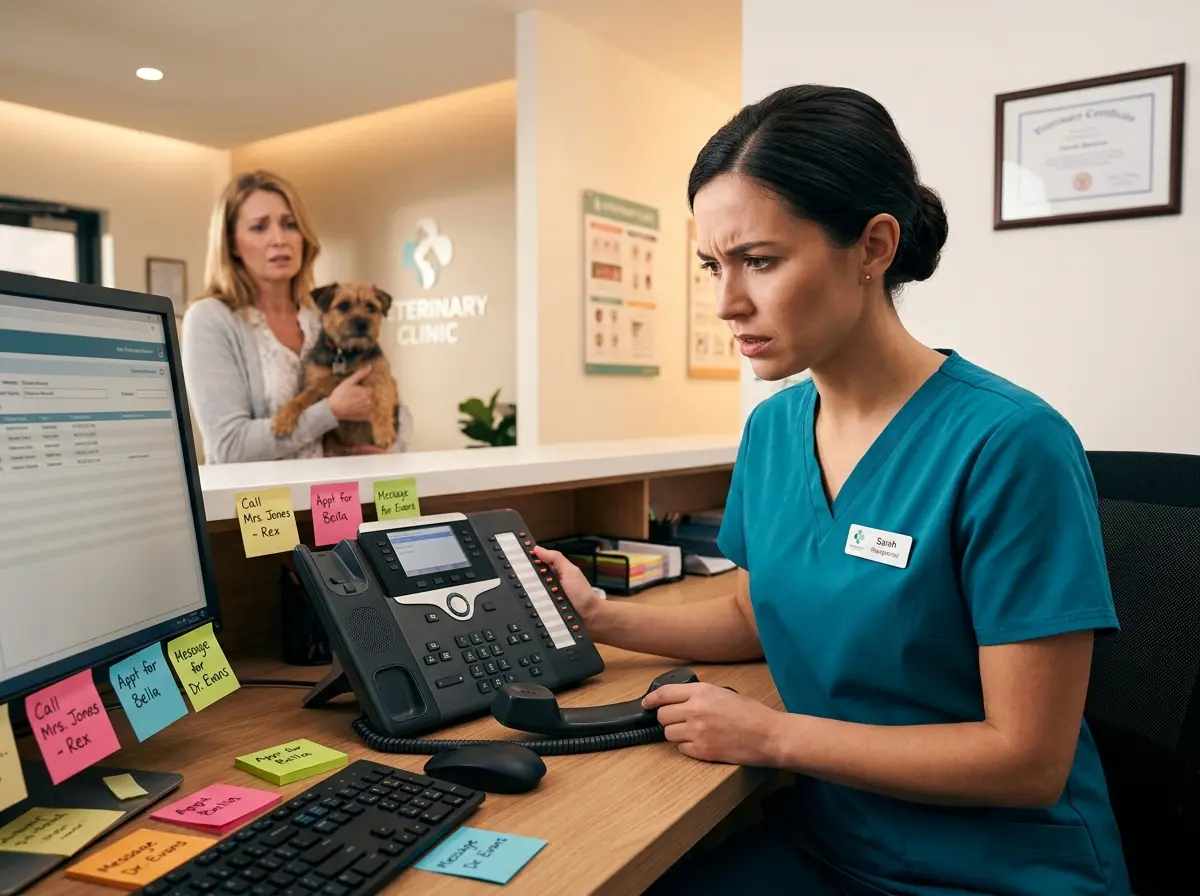
Nobody walks into work thinking, "Today I will personally destroy staff productivity one phone call at a time." And yet, here we are. In a specialty pharmacy setting, staff fielded dozens of calls per day asking remarkably similar questions: Which insurance plans do you accept? Can I refill my specialty medication early? What do I need to do for a prior authorization? Is my prescription ready?
These are legitimate questions that deserve real answers. But when a trained pharmacy technician has to stop what they're doing — you know, actually filling complex medications — to explain for the 47th time that yes, they accept most major insurance plans, something is structurally broken. Staff morale suffers, errors increase when people are constantly interrupted, and patients still don't feel like they're getting great service because wait times are long and callbacks get delayed.
Insurance Questions: The Bermuda Triangle of Pharmacy Customer Service
Insurance-related questions are a special kind of complicated. Patients want to know if their plan is accepted, whether a specific drug is covered, what their copay might be, and what happens if their prior authorization gets denied. The answers vary by plan, by medication, and sometimes by the phase of the moon — or at least that's how it feels.
Traditionally, answering these questions required a knowledgeable staff member who had time to actually talk. In a busy pharmacy, that's a unicorn. The result? Patients left frustrated, staff left frazzled, and the pharmacy left wondering why their Google reviews kept mentioning "long wait times" and "hard to reach."
Refill Requests: Simple in Theory, Chaotic in Practice
Refill calls seem straightforward until you realize that every patient has a slightly different situation — different medications, different refill windows, different insurance requirements for specialty drugs. Some need a new prescription from their provider first. Others are calling two weeks too early. A few are genuinely due for a refill and just need someone to confirm it and initiate the process.
Managing this volume manually during business hours — let alone after hours — was leaving real revenue and real patient satisfaction on the table. Something had to change.
How AI Changed the Equation
Meet the New Front Desk (She Doesn't Need Coffee Breaks)
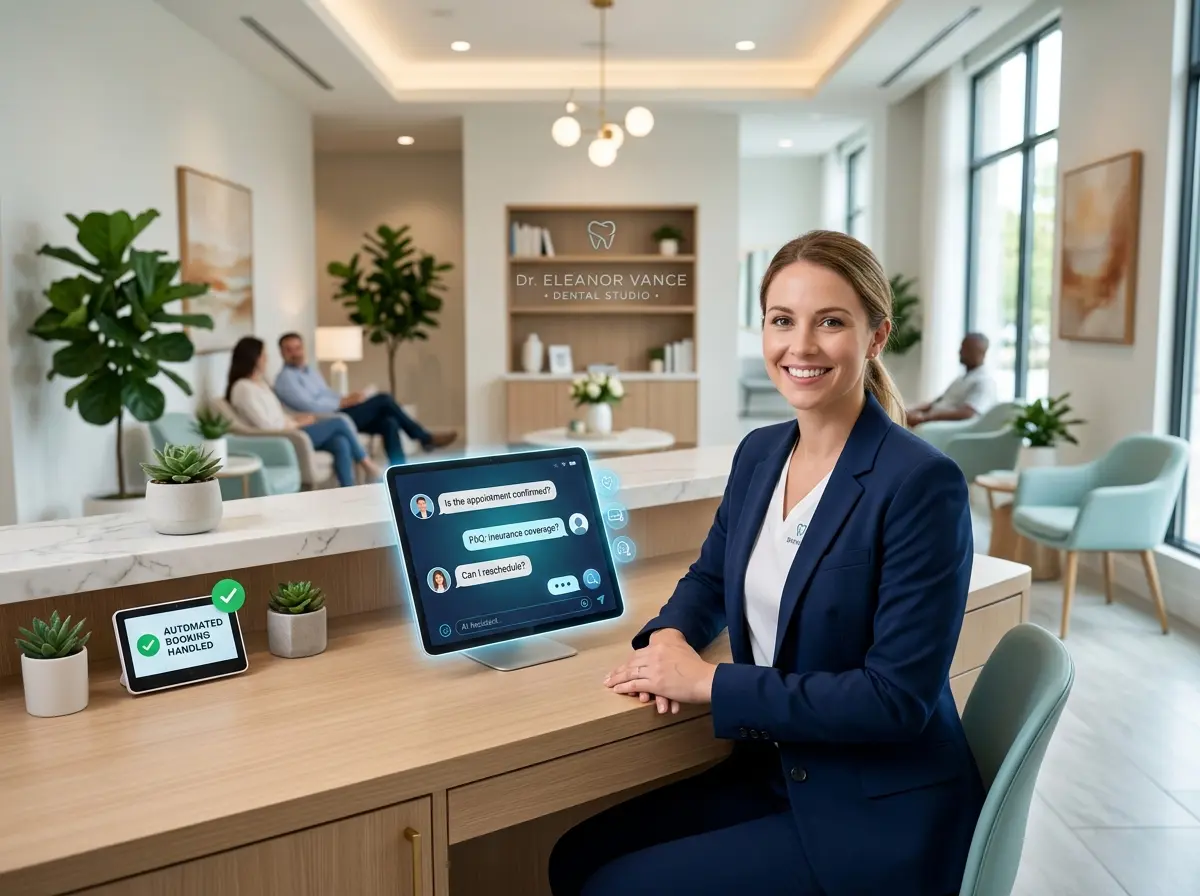
Stella, the AI robot employee and phone receptionist, became the pharmacy's first point of contact for incoming calls. Trained on the pharmacy's specific information — accepted insurance plans, refill policies, hours, prior authorization workflows, and more — she could answer the most common patient questions accurately, immediately, and at any hour of the day or night.
Patients calling after hours to ask about their insurance coverage? Stella handles it. Someone calling at 7 AM to request a refill before the staff even arrives? Stella collects the relevant information through a conversational intake process and logs it in the built-in CRM so staff can act on it the moment they walk in. Her CRM features custom fields and AI-generated patient profiles, which means the pharmacy team arrives each morning with a tidy summary of what came in overnight — not a voicemail inbox that nobody wants to face before their first cup of coffee.
For calls that genuinely require human judgment — say, a complex insurance dispute or a clinical question — Stella routes the call to the appropriate staff member based on configurable conditions. Nothing falls through the cracks, and no technician is interrupted for a question an AI can handle in thirty seconds.
The Results: Less Chaos, Happier Patients, Fewer Interruptions
Staff Got Their Time Back
The most immediate change the pharmacy noticed wasn't a dramatic metric — it was a vibe shift. Staff reported fewer interruptions during critical workflow periods. Technicians could actually focus on verifying prescriptions and coordinating with insurance companies without their concentration shattered every few minutes by the phone. Pharmacists had more time for patient consultations that actually required their expertise.
When you stop asking skilled professionals to do the work of an automated system, they tend to do their actual jobs better. Revolutionary concept, really.
After-Hours Coverage Became a Competitive Advantage
Here's something specialty pharmacies don't always think about: patients don't have insurance questions only between 9 AM and 5 PM. They think of them at 10 PM while reviewing their medical bills, or at 6 AM before they head to work. Previously, those calls went to voicemail and got answered — eventually — the next day.
With AI handling the phones around the clock, the pharmacy was suddenly available in a way competitors weren't. Patients who called after hours and actually got answers — even from an AI — reported higher satisfaction and were more likely to return. In a competitive specialty pharmacy market where patient loyalty matters enormously, that's a meaningful edge.
Data Made Smarter Decisions Possible
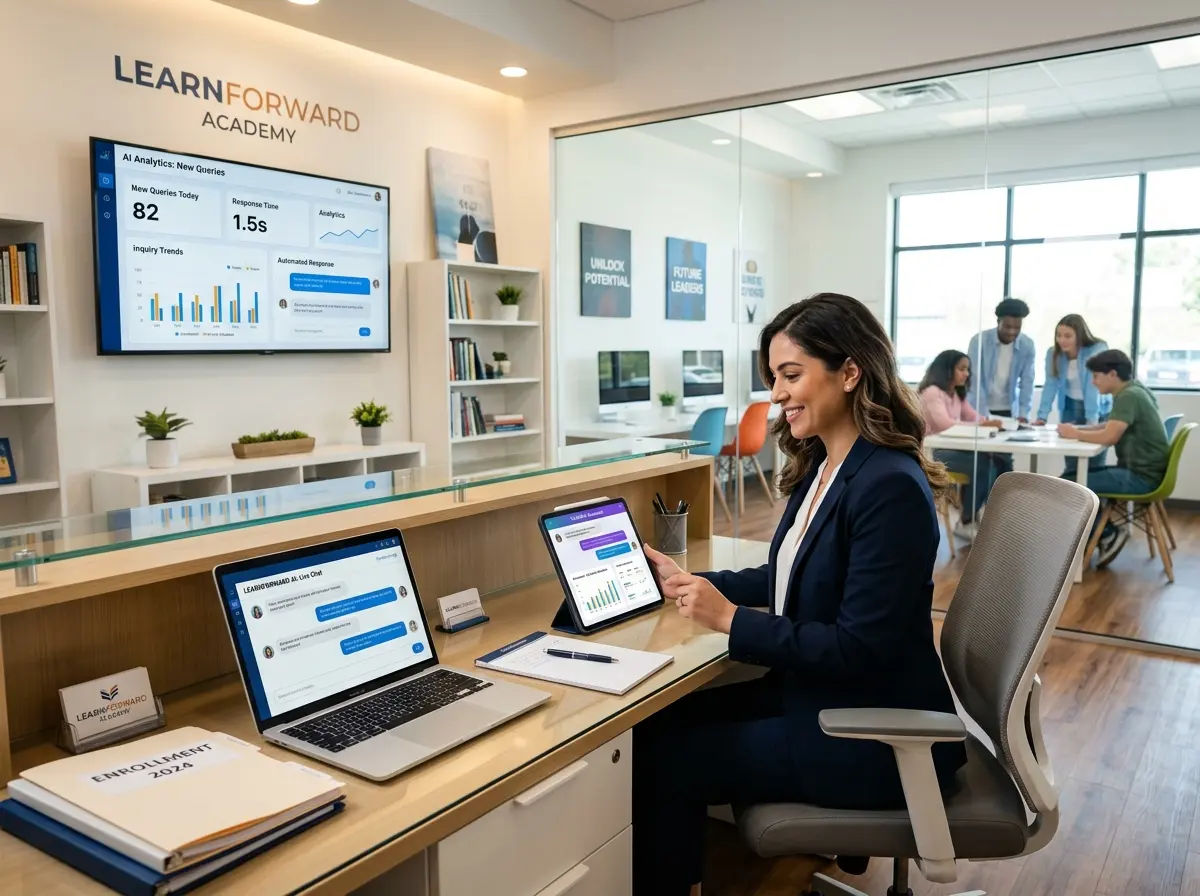
One unexpected benefit was the insight data. Every interaction Stella handled generated useful information: what questions were most common, which insurance plans patients were asking about most frequently, what time of day call volume peaked. The pharmacy used this to update their FAQ materials, adjust staffing schedules, and even identify a gap in their insurance network that was coming up repeatedly in patient calls.
When your front desk is a human, that institutional knowledge often lives in someone's head and walks out the door the day they quit. When it's an AI, it's documented, searchable, and always available.
Quick Reminder About Stella
Stella is an AI robot employee and phone receptionist that works for businesses of all types — including medical and healthcare settings — at just $99/month with no upfront hardware costs. She answers calls 24/7, manages customer and patient information through a built-in CRM, and can stand inside your physical location as a human-sized kiosk to greet and assist visitors in person. Setup is straightforward, and she's always ready to work — no sick days, no turnover, no drama.
What This Means for Your Business
You don't have to run a specialty pharmacy to recognize yourself in this story. If your business gets repetitive phone calls, struggles with after-hours coverage, or watches skilled employees spend time answering the same questions over and over, the underlying problem is identical — and so is the solution.
Here are a few actionable steps to take right now:
- Audit your incoming call types. For one week, track what questions your staff actually fields by phone. You'll almost certainly find that 60–70% of calls are asking for the same handful of things. Those are your automation targets.
- Identify your after-hours gap. How many calls are you missing outside business hours? Even a rough estimate will help you understand the revenue and satisfaction implications of being unreachable.
- Map your intake process. If collecting patient or customer information still relies on manual data entry or paper forms, identify where an AI-driven intake conversation could replace that friction.
- Consider the staff experience, not just the customer experience. Reducing interruptions for your team has compounding benefits: fewer errors, higher morale, better retention, and — ultimately — better service for everyone.
The specialty pharmacy in this story didn't overhaul their entire operation. They just put the right tool at the front door — figuratively speaking — and let their people focus on what people actually do best. The phone stopped being a liability and started being an asset. Their patients noticed. Their staff noticed. And their business grew as a result.
Sometimes the most powerful operational upgrade isn't the flashiest one. It's the one that quietly handles the chaos so you don't have to.