So, You've Decided to Rent Out Tools
Congratulations — you've added a tool rental program to your hardware store. It's a brilliant revenue stream, a customer loyalty builder, and a fantastic way to watch a $400 tile saw disappear into the weekend never to be seen again. Welcome to the club.
Managing a tool rental inventory sounds straightforward on paper: customer rents tool, customer returns tool, you make money. Simple. But anyone who has actually run a rental program knows the reality involves missing drill bits, mystery dents, equipment that "worked fine when I returned it" somehow not working fine at all, and a spreadsheet that started optimistic and slowly descended into chaos.
The good news is that a well-managed tool rental operation can be genuinely profitable and operationally smooth — with the right systems, the right policies, and a slightly healthier relationship with your inventory tracking software. This guide breaks down the essentials so you can stop firefighting and start running a rental program that actually works.
Building a Solid Inventory Foundation
Before you can manage your rental inventory, you need to actually know your rental inventory. That means going beyond a sticky note on the back room door that says "chainsaw — out with Dave."
Catalog Everything — Seriously, Everything
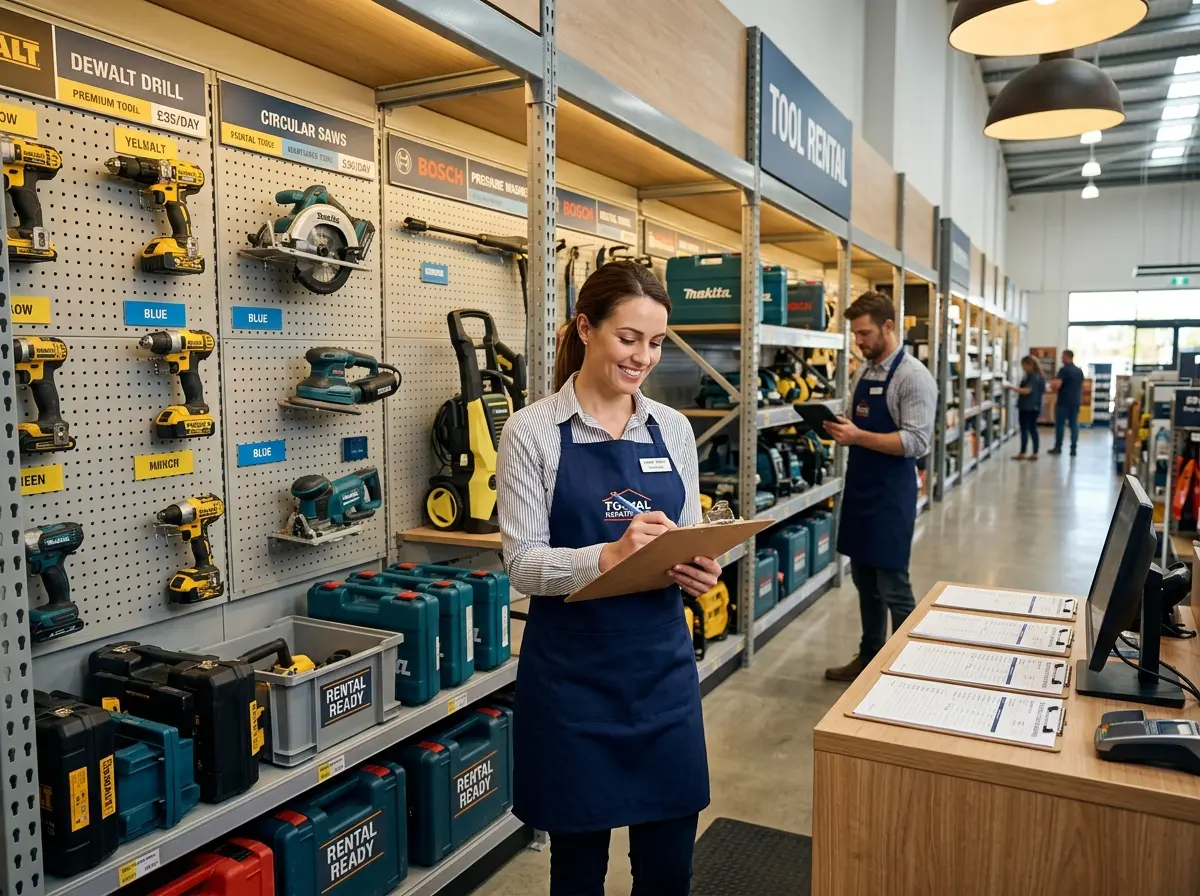
Every tool in your rental fleet should have a dedicated record. That means make, model, serial number, purchase date, replacement cost, and rental rate. Assign each item a unique asset ID and tag it physically — whether with a barcode, QR code, or even a simple numbered label. The goal is that any employee should be able to look at a tool and immediately pull up its full history in your system within seconds.
Don't forget accessories and attachments. That circular saw is only half the story — the blades, cases, guards, and power cords that go with it need to be tracked too. Missing accessories are one of the most common and quietly expensive problems in tool rental, because individually they seem minor but collectively they add up fast. A missing carrying case here, a lost blade guard there — suddenly you're looking at hundreds of dollars in replacement costs you never anticipated.
Condition Grading and Check-In/Check-Out Protocols
Establish a clear condition grading system — something like Excellent, Good, Fair, and Needs Service — and document the condition of every tool at check-out and check-in. Photograph items before they leave and when they return. Yes, every time. Yes, it takes an extra two minutes. Yes, it will absolutely save you from an uncomfortable conversation with a customer who insists the belt sander "looked like that when they got it."
A digital check-in/check-out form with photo upload capability is worth every penny. Many rental management software platforms offer this natively, and some point-of-sale systems have rental modules built in. The documentation not only protects you from disputes — it also builds a reliable maintenance history for each item.
Setting Rental Rates That Actually Make Sense
Pricing your rentals correctly is part art, part math. A commonly used formula is to target recovering the tool's full replacement cost within 10–15 rentals for high-wear items and 20–30 rentals for durable equipment. Factor in maintenance costs, storage, and staff time — and then check what competitors in your area are charging, because a rate that's wildly out of market will hurt you either way.
Consider tiered rental periods: half-day, full day, weekend, and weekly rates. Weekend rates in particular are a sweet spot for hardware store rentals, since most DIYers tackle projects on Saturdays and Sundays. A slight weekend premium is generally accepted by customers as completely reasonable and helps offset the higher-wear nature of weekend use.
Keeping the Front Desk from Becoming a Bottleneck
Here's a dirty secret of tool rental operations: the inventory management problems often start at the front desk. When staff are juggling walk-in customers, ringing up purchases, answering the phone, and processing rentals simultaneously, things get missed. Paperwork gets skipped. Condition checks get rushed. The "quick" rental transaction turns into a 20-minute ordeal for everyone involved.
Let Technology Handle the Routine Stuff
This is where Stella — the AI robot employee and phone receptionist — can take real pressure off your front-line staff. As an in-store kiosk, Stella greets customers proactively, answers questions about rental availability, pricing, and policies, and can walk customers through the rental process before they ever reach the counter. That means by the time your staff engage, the customer already knows what they're renting, what it costs, and what your damage policy says. No more explaining the same liability terms forty times a day.
Stella also handles incoming phone calls 24/7, which matters enormously for a tool rental business — customers frequently call ahead to check availability or ask about rates, and those calls don't respect your store hours. Missed calls mean missed rentals. With Stella managing the phones and answering common questions automatically, your staff can stay focused on the physical work of processing rentals correctly rather than bouncing between the counter and the phone.
Maintenance, Retirement, and the Lifecycle of a Rental Tool
Even the toughest tools have a lifespan, and rental tools live harder lives than anything in your own workshop. A proactive maintenance and retirement strategy is the difference between a rental fleet that runs smoothly and one that generates angry customers and liability headaches.
Build a Preventive Maintenance Schedule
Every tool in your fleet should have a maintenance schedule based on usage hours or rental cycles — whichever comes first. Power tools should be inspected, cleaned, and lubricated regularly. Blades and bits should be sharpened or replaced on a set schedule rather than waiting until they're visibly degraded. Keep a maintenance log for each asset, and flag any tool automatically for service after a set number of rentals.
The practical benefit here goes beyond keeping tools in good working order. Well-maintained equipment fails less often on job sites, which means fewer customer complaints, fewer mid-project emergency calls to your store, and a reputation in your community as the hardware store that actually takes care of its rental fleet. That reputation is worth real money in repeat business and word-of-mouth referrals.
Knowing When to Retire a Tool
This one is harder emotionally than it should be. That old rotary hammer has been with you since 2017, it's paid for itself six times over, and it still kind of works. Retire it anyway. Tools that are past their reliable service life create customer service problems, potential safety issues, and frankly reflect poorly on your store's standards.
Set clear retirement criteria in advance: a specific number of rentals, a repair cost that exceeds a percentage of replacement value, or a condition grade that has dropped below your minimum threshold. When a tool hits those criteria, it comes off the rental floor — full stop. Some retired tools can be sold as used equipment at a discount, recovering some residual value. Others get parted out for accessories or simply disposed of responsibly. Either way, don't let sentimentality keep unsafe or unreliable tools in rotation.
Handling Damage Claims and Disputes
Despite your best efforts, disputes will happen. A customer will return a damaged tool and genuinely believe — or at least claim — that they didn't damage it. Your documentation protocol (photos, condition grades, signed check-out forms) is your first line of defense. Make sure your rental agreement clearly spells out customer liability for damage beyond normal wear, and have staff walk customers through it at check-out rather than just sliding a paper across the counter.
For repeat customers, consider a damage waiver program as an optional add-on fee — typically 10–15% of the rental rate — that limits their liability in exchange for a small upfront charge. Many customers appreciate the peace of mind, and it creates a consistent revenue stream that offsets your actual repair and replacement costs over time.
Quick Reminder About Stella
Stella is an AI robot employee and phone receptionist that works both as an in-store kiosk and a 24/7 phone answering system — available for just $99/month with no upfront hardware costs. She greets customers, answers questions, promotes your rental offerings, and handles calls so your staff can focus on the work that actually requires human hands. For a tool rental operation that depends on clear communication and efficient customer intake, she's a genuinely practical addition.
Running a Rental Program You're Actually Proud Of
A well-run tool rental program is one of the most community-facing things a hardware store can do. You're helping homeowners tackle projects they couldn't otherwise afford to tackle, and building relationships that turn one-time customers into regulars. That's worth protecting with solid systems.
Here's where to focus your energy as you move forward:
- Audit your current inventory and build a proper asset catalog if you don't have one. Every tool, every accessory, every serial number.
- Implement a documented check-in/check-out process with photos and condition grading — and train every staff member to follow it without shortcuts.
- Set a maintenance schedule for every item in your fleet and stick to it with the same discipline you'd apply to your own equipment.
- Establish clear retirement criteria before you need them, so the decision is policy-driven rather than emotional.
- Reduce front-desk bottlenecks by using technology to handle routine customer questions, freeing your staff to process rentals carefully and correctly.
The hardware stores that do tool rental well aren't doing anything magical — they're just doing the fundamentals consistently. Catalog it, document it, maintain it, and communicate clearly with customers. Do those four things with discipline and your rental program will quietly become one of the most reliable parts of your business. And the tile saw will still go missing sometimes. That's just the nature of the beast.