When the Storm Hits, Are You Ready — Or Are You Losing Leads to a Voicemail?
Here's a scenario every roofing contractor knows all too well: A massive hailstorm rolls through town on a Tuesday afternoon. By Wednesday morning, your phone is ringing off the hook, your crew is already slammed, and somewhere between job site visit number three and an argument with a supplier, you missed fourteen calls. Fourteen. And you can bet at least half of those homeowners already booked someone else by lunchtime.
Storm season is the Super Bowl for roofing companies. It's the moment you've been preparing for — except most roofing businesses treat their lead capture strategy like they treat their gutters: they don't think about it until something goes terribly wrong. The truth is, a dedicated storm response lead capture system isn't a luxury for large roofing operations. It's the difference between a record-breaking quarter and watching your competitors cash in on your market.
So let's talk about why you need one, what it should look like, and how to stop leaving storm-season money on the table.
The Storm Rush Is Real — And It's Merciless
The Window of Opportunity Slams Shut Fast
After a significant storm event, industry data suggests that most homeowners contact a roofing company within 24 to 72 hours of the damage occurring. That window is brutally short. Homeowners are stressed, they want answers now, and they will call the first company that picks up the phone, sounds competent, and can get someone out to look at their roof. If that company isn't you, it's your competitor — full stop.
The post-storm environment is chaotic for everyone, including your team. Your estimators are booked, your office staff is overwhelmed, and calls are coming in at 7 AM, during lunch, and at 9 PM from that one neighbor who "just had a quick question." Without a system designed to handle this surge, you're essentially trying to fill a swimming pool with a garden hose.
Generic Lead Capture Won't Cut It During a Storm Surge
A standard contact form buried on your website is fine for slow seasons. During a storm surge, it's essentially decorative. Homeowners in crisis mode want immediate acknowledgment — they want to know someone heard them, someone is coming, and they're not going to be left with a tarp on their roof for three weeks. A generic "We'll get back to you within 1-2 business days" auto-reply is the fastest way to send that lead straight to your competitor's calendar.
A dedicated storm response system, by contrast, captures urgency. It asks the right questions upfront — location, type of damage, insurance carrier, preferred contact time — and it does so in a way that feels responsive and professional, not like filling out a DMV form. The goal is to collect what your estimators need before the first callback, so that when a human does reach out, the conversation starts at step three instead of step one.
Your Brand Reputation Is Built (or Burned) in the First 48 Hours
Storm response is one of the few situations where homeowners are making fast, emotionally charged decisions and then telling everyone they know about the experience — good or bad. A neighbor who got a same-day call back and a next-morning inspection becomes a word-of-mouth marketing machine. A neighbor who left a voicemail and heard nothing for two days leaves a Google review you'd rather not read. Your lead capture system is the first impression your brand makes during the most high-stakes moment in your sales cycle. Make it count.
How the Right Tools — Including Smart Automation — Fill the Gap
Automating the First Response Without Losing the Human Touch
This is where smart systems earn their keep. Stella, an AI receptionist and robot employee, can answer every incoming call 24 hours a day — including the ones that come in at 6 AM the morning after a storm, when your office doesn't open for another three hours. She collects lead information conversationally through built-in intake forms, so instead of a homeowner hanging up in frustration, they get a real interaction, get their information logged, and feel like someone is already on it.
Stella's built-in CRM automatically organizes incoming storm leads with custom fields, tags, and AI-generated contact profiles — so when your team arrives at the office, they're not sifting through a pile of sticky notes. They have a prioritized, organized list of contacts ready to work. For roofing companies with a physical showroom or office, her in-store kiosk presence means walk-in customers during a storm response event are also greeted, engaged, and captured — not standing around waiting for someone to notice them. At $99/month, it's less than a single wasted lead.
Building a Storm Response Lead Capture System That Actually Works
Design Your Intake Process Around the Homeowner's Urgency
The foundation of any good storm response system is an intake process that meets homeowners where they are — emotionally and practically. This means your web form, phone intake, and any in-person intake should all ask the same core questions: What type of damage did you experience? What is your address and roof type? Do you have homeowner's insurance, and if so, who is your carrier? What is the best way and time to reach you?
These questions serve a dual purpose. They gather the information your estimators need to prioritize and prepare, and they signal to the homeowner that you know what you're doing. A company that asks smart questions immediately builds more trust than one that just says "we'll have someone call you."
Consider also adding a storm-specific landing page to your website that goes live during active response periods. This page should have a simple, fast-loading form, a clear headline ("Hail Damage in [City]? We're On It."), and a phone number prominently displayed. Every dollar you spend driving traffic to this page during a storm is worth five times what it would be on a normal day.
Prioritize and Triage Leads Based on Damage Severity and Location
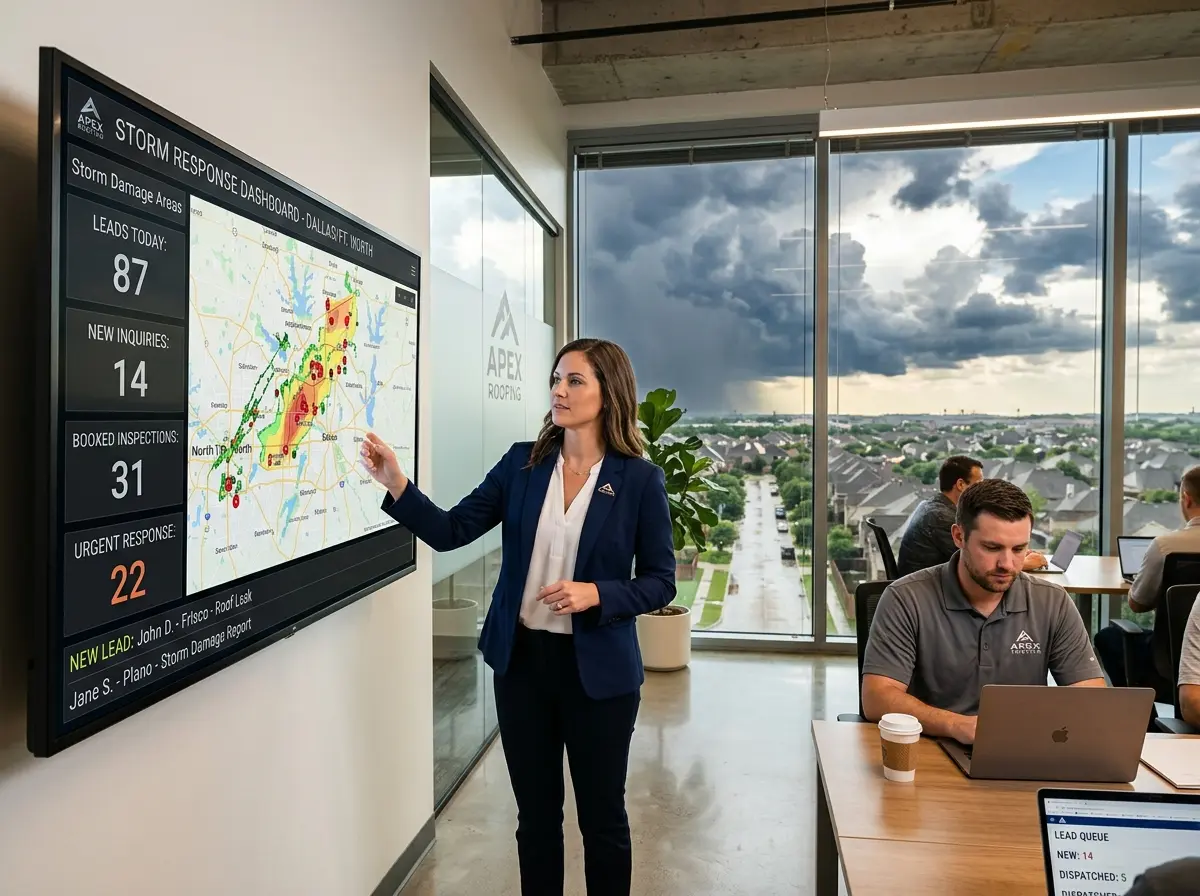
Not all storm leads are created equal. A homeowner with active water intrusion through a damaged roof is a different priority than someone with a few missing shingles and no immediate leak. Your system should allow your team to tag and sort leads by urgency so that estimators are dispatched efficiently rather than geographically scattered across the service area chasing low-priority calls while high-value emergencies wait.
Use your CRM — whether it's a standalone tool or built into a system like Stella — to apply custom tags like "Active Leak," "Insurance Claim In Progress," or "Inspection Scheduled." This turns your lead list into a dynamic, actionable workflow rather than a static spreadsheet that nobody updates correctly.
Follow-Up Is Where the Money Lives
Here's the part most roofing companies get wrong: they capture the lead, make the first call, and then drop the ball on follow-up. Studies consistently show that it takes an average of five to eight touchpoints to convert a prospect, yet most salespeople give up after one or two attempts. During storm season, when homeowners are juggling insurance adjusters, confused neighbors, and conflicting advice from everyone they know, persistence and professionalism win jobs.
Build a follow-up cadence into your system: a confirmation immediately after the lead is captured, a reminder the day before the scheduled inspection, a summary after the estimate is delivered, and a check-in if you haven't heard back in 48 hours. Automate what you can, personalize what you can't, and make sure every touchpoint reinforces that you are the reliable, professional choice in a chaotic situation.
Quick Reminder About Stella
Stella is an AI robot employee and phone receptionist that works around the clock — answering calls, collecting lead information, managing contacts in a built-in CRM, and keeping your business running professionally even when your team is stretched thin. She's available for just $99/month with no upfront hardware costs, easy setup, and zero sick days. For roofing companies navigating storm season chaos, that kind of reliability isn't just convenient — it's competitive advantage.
Stop Leaving Storm Season Revenue on the Roof
Storm season is the most lucrative and most punishing time of year for roofing companies. The businesses that win aren't always the ones with the biggest crews or the flashiest trucks — they're the ones that capture leads faster, follow up more consistently, and deliver a professional experience from the very first phone call. The ones who built a system before the clouds rolled in.
Here's what you can do right now to get ahead of it:
- Audit your current intake process. Call your own business after hours and see what happens. If it goes to a generic voicemail, you have a problem.
- Create a storm-specific landing page and keep it ready to publish when the next weather event hits your market.
- Standardize your intake questions so every lead — phone, web, or walk-in — provides the same core information your estimators need.
- Set up a follow-up cadence with at least five touchpoints and make sure someone owns that process.
- Explore tools that handle the surge for you — so your team can focus on inspections and closings, not answering the same introductory questions forty times a day.
The storm is coming. The question is whether your lead capture system is ready for it — or whether you're about to spend another season watching your competitors get rich off your missed calls.