Introduction: Because Your Hands Are Too Busy for Phone Tag
Let's paint a picture. You're mid-session, knuckles deep in a client's stubborn shoulder knot, when your phone starts ringing. Again. You can't answer it — obviously — but somewhere between that call and the next three, you've lost a potential booking, a returning client, and possibly your sanity. Welcome to the glamorous life of a massage therapist who hasn't yet automated their booking experience.
The good news? You don't have to keep running your practice like it's 2009. A fully automated booking system isn't just a luxury reserved for big spas with dedicated front desk staff — it's an entirely achievable reality for solo practitioners and small studios alike. And when you get it right, it means fewer interruptions, more bookings, and the ability to actually focus on what you do best: helping people feel human again.
This guide walks you through exactly how to build that seamless, automated experience from the ground up — from your online booking setup to client intake, follow-ups, and beyond. Your future self (and your shoulder knots) will thank you.
Building Your Booking Foundation
Choosing the Right Online Booking Platform
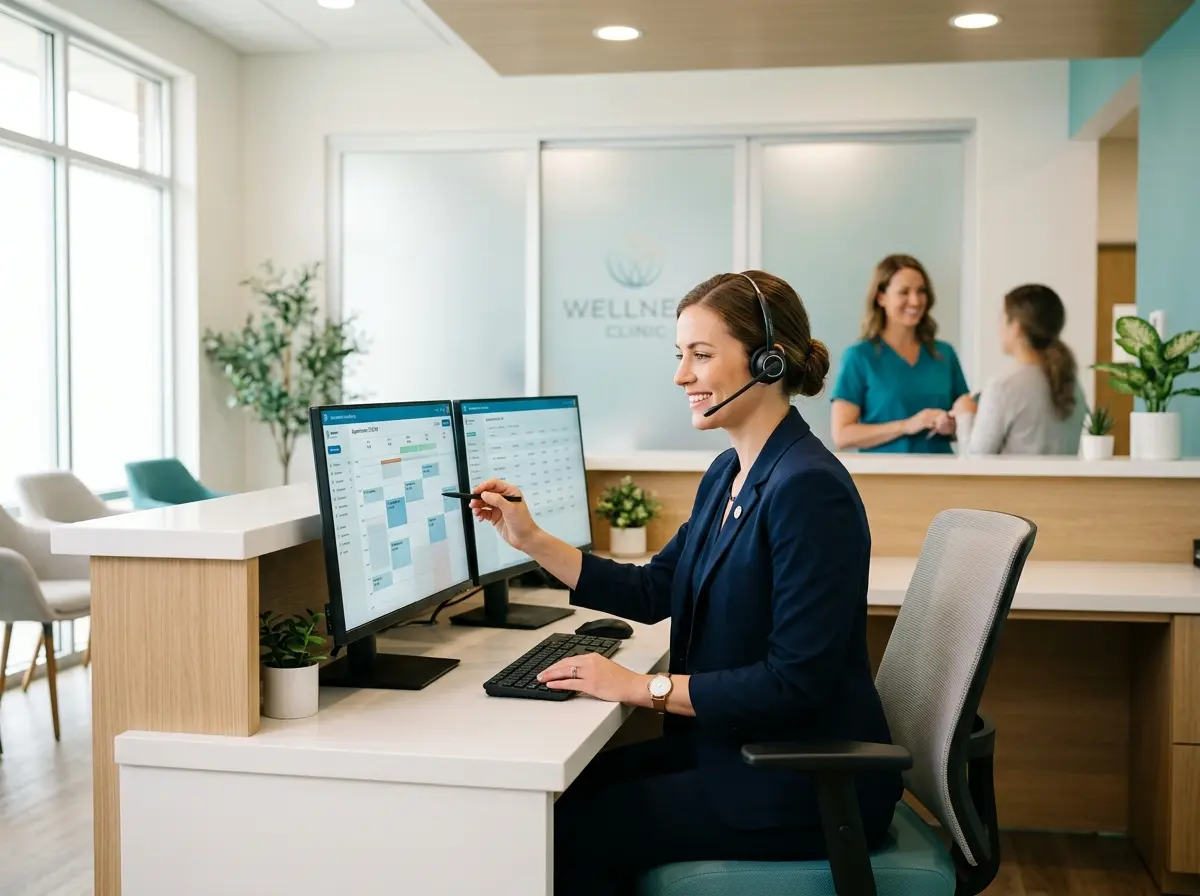
Your booking software is the engine of your entire automated experience, so choose wisely. For massage therapists, the best platforms combine appointment scheduling with payment processing, client history, and calendar sync. Popular options include Mindbody, Jane App, Acuity Scheduling, and Square Appointments — each with different strengths depending on your practice size and service complexity.
When evaluating platforms, prioritize these features: real-time availability display, automated confirmation and reminder emails or texts, deposit or prepayment capability, and the ability to customize service duration and buffer times. That last one matters more than people realize. Booking a 90-minute deep tissue session with zero recovery time between clients is how you end up behind schedule for the entire day — and slightly resentful by 3 PM.
Setting Up Your Services Like a Pro
A common mistake is listing services too generically. "Swedish Massage – 60 min" tells a prospective client very little about what to expect or who it's for. Take the time to write descriptive service listings that answer the unspoken questions: Who is this for? What will I feel afterward? Is this the right choice for my specific concern?
Consider organizing your menu by outcome rather than just technique — relaxation, pain relief, athletic recovery, prenatal care. This makes it easier for clients to self-select the right service without calling you to ask. Which means fewer calls. Which means more peace. You see where this is going.
Also, don't forget to build in proper prep and cleanup time as non-bookable buffers. Automation only works if your calendar reflects reality.
Automating Confirmations and Reminders
No-shows are the silent profit killers of every massage practice. According to industry estimates, appointment-based businesses lose between 5% and 20% of revenue to no-shows annually. Automated reminders are your first and most effective line of defense.
Set up a sequence: an immediate booking confirmation, a reminder 48 hours before the appointment, and a final nudge the morning of. Most booking platforms let you customize these messages — use that flexibility. A warm, personalized reminder ("We're looking forward to seeing you tomorrow, Sarah — remember to arrive 5 minutes early to fill out your intake form!") converts better than a cold automated timestamp. And yes, that intake form part matters, which we'll cover shortly.
Handling the Front Door (Digital and Physical)
Automating Your Client Intake Process
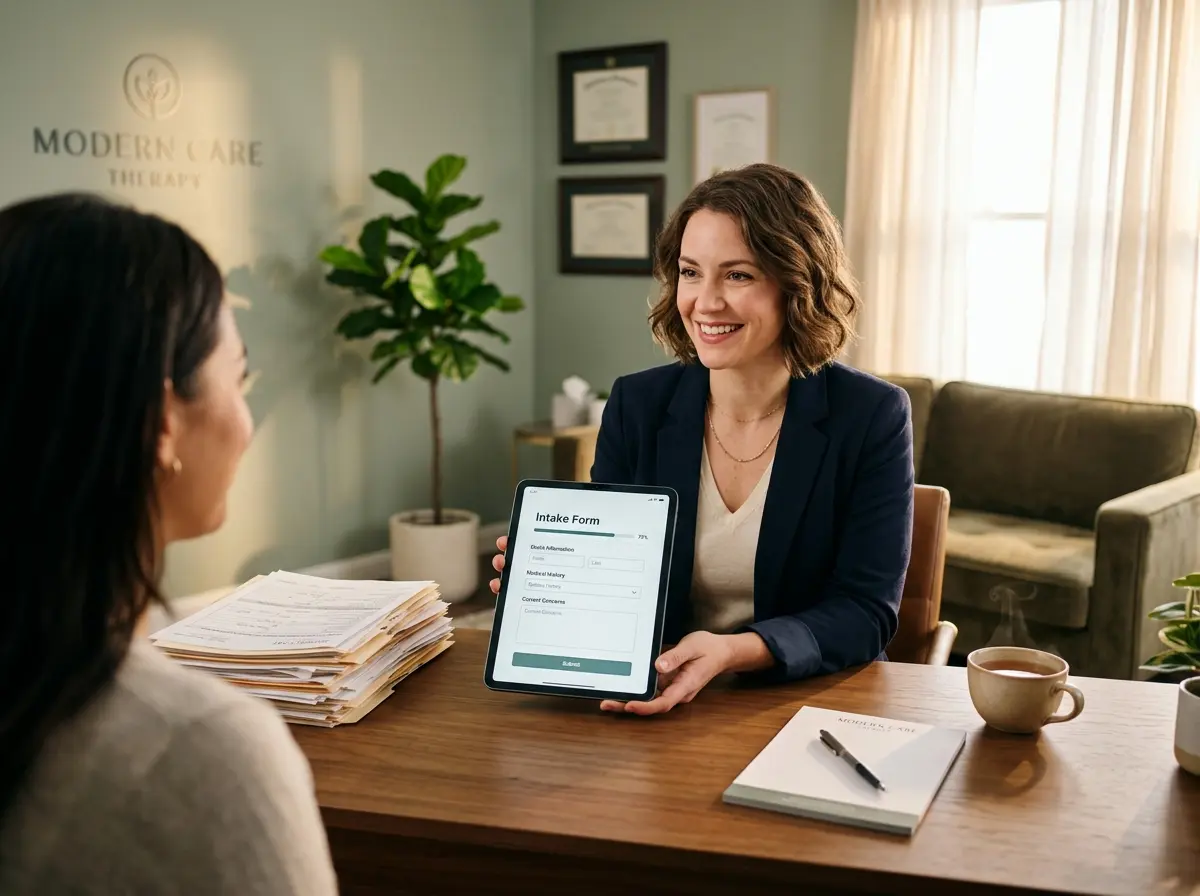
Intake forms are one of those unglamorous but absolutely critical pieces of the client experience. Collecting health history, contraindications, pressure preferences, and consent before the appointment starts saves valuable table time and protects you professionally. The problem is, handing someone a clipboard the moment they walk in is both inefficient and mildly stressful for everyone involved.
The solution is to collect intake information digitally and before the appointment. Most booking platforms have built-in intake form functionality, or you can integrate tools like JotForm or Practice Better. Link the form directly in your confirmation email so clients complete it at home — unhurried, thorough, and before they've even walked through your door.
Let Technology Handle the Front Desk Conversations
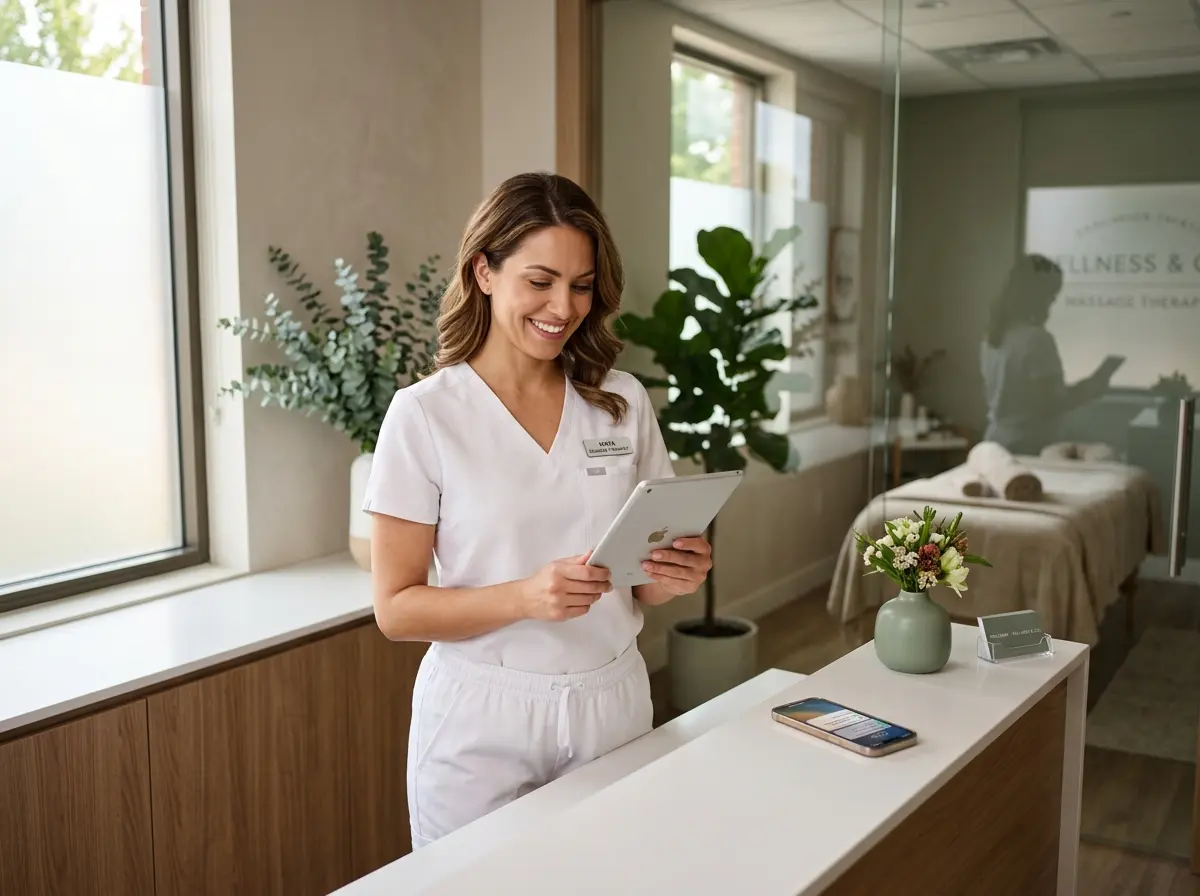
Here's where things get interesting for massage therapists who either run a solo practice or manage a small team without dedicated front desk coverage. Stella — an AI robot employee and phone receptionist — was built precisely for situations like yours. She answers incoming calls 24/7, handles common questions about services, pricing, hours, and availability, and can collect client information through conversational intake during the call itself. For studios with a physical location, she also functions as an in-store kiosk, greeting walk-in clients and engaging them with information about your services and current promotions before you've said a word.
Stella's built-in CRM stores client profiles with custom fields, tags, and AI-generated notes — so the information gathered during a phone call doesn't disappear into a void. It becomes part of a searchable, manageable contact record. At $99/month with no hardware costs, she's significantly cheaper than a part-time receptionist and considerably more reliable about showing up. Just saying.
Closing the Loop: Follow-Ups, Retention, and Rebooking
Automating Post-Appointment Follow-Ups
The appointment ending is not the end of the client relationship — it's actually the best possible moment to deepen it. An automated post-appointment message sent a few hours after the session is a simple, high-impact touch. Thank them for coming in, share any post-massage care tips relevant to their session type, and — crucially — include a direct link to rebook.
You can build this into your booking platform's automation workflow or use an email marketing tool like Mailchimp or Klaviyo for more customization. Keep the tone warm and personal, not corporate. Your clients chose a massage therapist, not a call center — your follow-up communication should feel like it.
Building a Rebooking Sequence That Actually Works
Here's an uncomfortable truth: most clients want to come back, but life gets in the way and they forget. If you're not proactively reaching out to lapsed clients, you're leaving retention — and revenue — on the table. Set up a simple win-back automation: if a client hasn't booked within 45 to 60 days of their last appointment, trigger a gentle check-in message.
Something like: "Hey [Name], it's been a while since your last visit — your muscles are probably giving you a look. We'd love to see you again. Here's a link to grab your next appointment." Add a small incentive for returning clients if your margins allow — a discount on an add-on service, a complimentary aromatherapy upgrade, or early access to a new service. These small gestures have outsized effects on loyalty.
Using Promotions and Packages to Drive Predictable Revenue
Automated bookings become significantly more powerful when paired with service packages and memberships. A client who purchases a five-session package is not only pre-committed to returning — they've also reduced your revenue uncertainty and the chance they'll comparison shop elsewhere between visits. Most booking platforms support package and membership management natively.
Promote these offers through your automated confirmation and follow-up sequences, on your booking page, and through periodic email campaigns to your client list. Seasonal promotions ("Holiday Stress Relief Package"), milestone-based offers ("Your 10th Visit Gift"), and referral incentives all lend themselves well to automation. The goal is to turn a single booking into a long-term client relationship — automatically, without you having to personally pitch every single person who walks through the door.
Quick Reminder About Stella
Stella is an AI robot employee and phone receptionist designed to handle the front-of-house work that keeps slipping through the cracks — answering calls around the clock, greeting clients at your kiosk, collecting intake information, and keeping your CRM organized without additional staff overhead. She's available for $99/month, requires no upfront hardware costs, and is genuinely easy to set up. For massage therapists who can't afford to miss a call or a walk-in, she's worth a very serious look.
Conclusion: Your Next Steps Toward Full Automation
Building a fully automated booking experience doesn't happen overnight, but it also doesn't have to be overwhelming. Start with the foundation — choose a solid booking platform, set up your services clearly, and activate automated confirmations and reminders. From there, layer in digital intake forms, post-appointment follow-ups, and a rebooking sequence. Then address your front desk coverage, whether that's a dedicated staff member, an AI receptionist, or a combination of both.
Here's your practical action checklist to get started this week:
- Audit your current booking process — identify every manual step that could be automated.
- Select or upgrade your booking software — ensure it supports confirmations, reminders, and intake forms.
- Rewrite your service descriptions — outcome-focused, informative, and client-friendly.
- Build your follow-up and rebooking automation — even a two-email sequence is better than none.
- Address your phone and walk-in coverage — consider whether an AI receptionist could fill the gaps.
The goal is a practice that runs smoothly whether you're in session, between clients, or enjoying a rare moment of actually being off the clock. Your expertise is in healing people — automation's job is to handle everything else. Let it.