The Clock Is Always Ticking — Are You Picking Up?
Picture this: It's 9:47 PM on a Tuesday. A homeowner just discovered their basement is slowly becoming an indoor swimming pool. Panic sets in. They grab their phone and start calling plumbers. The first company? Rings forever, no answer. The second? A voicemail that sounds like it was recorded in 2009. The third? Someone picks up, gets the details, and promises to be there first thing in the morning.
Guess which company gets the job.
For home services businesses — plumbers, HVAC technicians, electricians, roofers, landscapers, pest control specialists, you name it — response time isn't just a customer service metric. It's a revenue metric. Studies show that 78% of customers buy from the first business that responds to their inquiry, and in the home services world, where urgency is practically baked into every call, that number might as well be 100%.
A 24-hour response guarantee isn't about making a flashy promise on your website. It's about building a system that actually keeps that promise — every single time, without burning out your team or missing calls at midnight because, well, humans sleep. Let's talk about why it matters, what it takes, and how to make it work for your business.
Why Response Time Makes or Breaks Home Services Businesses
Customers Are Not Patient — And They Have Options
The days of a customer calling one company and loyally waiting three days for a callback are long gone. Today's homeowner is on Google, has four browser tabs open, and is ready to book the first business that makes them feel taken care of. According to a report by Hatch, home services businesses that respond to a lead within five minutes are 21 times more likely to qualify that lead than those who respond after 30 minutes. Twenty-one times. That's not a small edge — that's a completely different ballgame.
When someone's HVAC goes out in July or their toilet decides to become a fountain at 2 AM, they're not going to politely leave a voicemail and wait until business hours. They're going to keep calling until someone answers. If that someone isn't you, it's your competitor.
Your Reputation Is Built One Response at a Time
Online reviews have become the modern word-of-mouth, and slow responses — or worse, no responses — show up in them constantly. Scroll through Google reviews for any home services company and you'll find a pattern: the negative ones almost always mention communication failures. "Never called me back." "Took three days to respond." "Left me waiting with no update."
A 24-hour response guarantee doesn't just protect you from lost leads — it actively builds a reputation for reliability and professionalism. When customers know they'll hear from you quickly, they trust you before you even knock on their door. That trust translates into better reviews, more referrals, and a business that practically markets itself.
The Financial Case Is Impossible to Ignore
Let's be blunt about the math. If your average job is worth $500 and you're missing even five calls a week due to slow or nonexistent response, that's $2,500 in potential revenue walking out the door every single week. Over a year, that's $130,000 — gone. Not because your work isn't good. Not because your prices aren't fair. Simply because nobody picked up the phone.
A 24-hour response guarantee, backed by real systems, turns missed opportunities into booked jobs. The investment required to implement it is a fraction of the revenue it protects.
How Technology Can Carry the Load
You Can't Be Available 24/7 — But Your Business Can Be
Here's the honest truth: you and your team are human. You need sleep, weekends, and the occasional meal that doesn't involve reading text messages between bites. Building a 24-hour response system doesn't mean chaining yourself to a phone — it means setting up the right tools to handle inquiries when you can't.
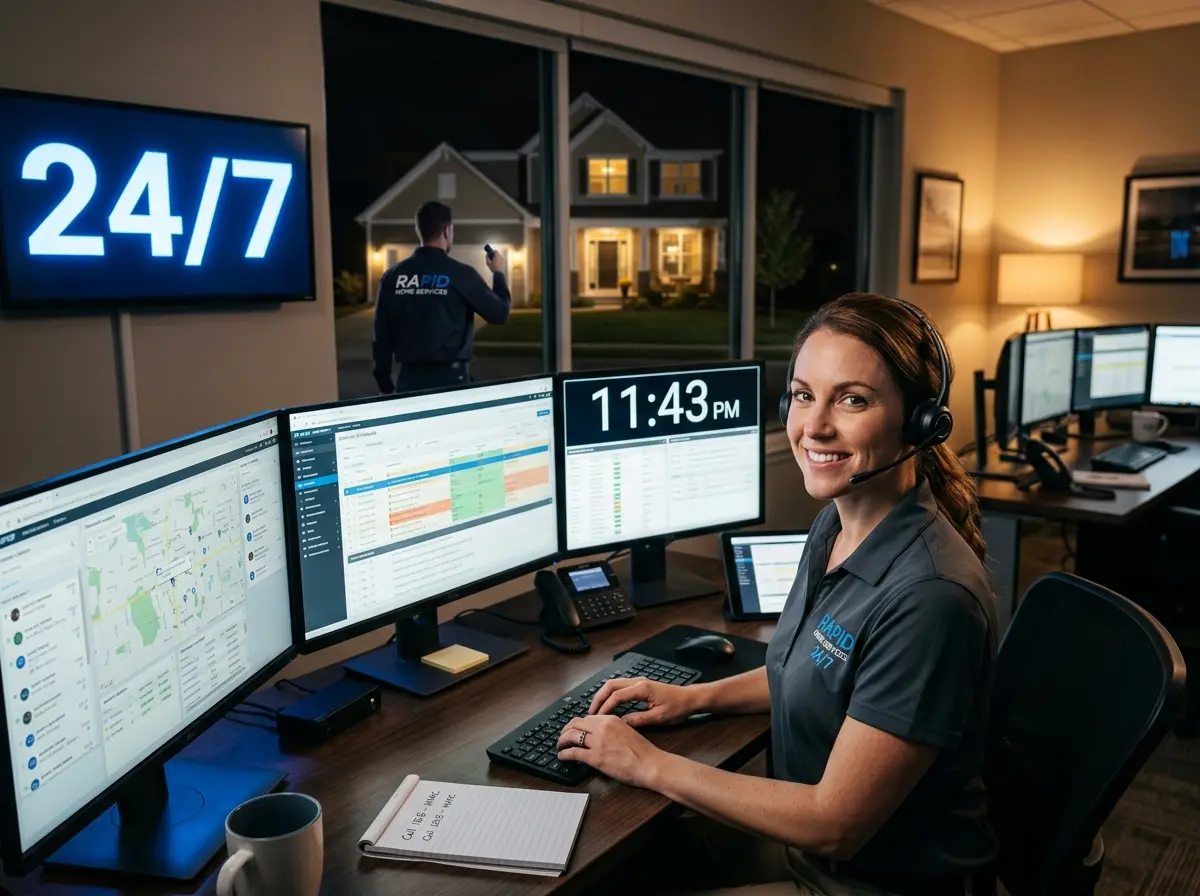
This is exactly where Stella becomes a game-changer for home services businesses. Stella is an AI phone receptionist that answers calls around the clock, armed with your business's specific knowledge — your services, pricing, availability, policies, and current promotions. She handles after-hours calls naturally and professionally, collects customer information through conversational intake forms, and sends AI-generated summaries straight to your phone so you wake up to organized, actionable leads instead of a pile of missed calls with no context. Her built-in CRM even logs each interaction automatically, so your team starts the next day already knowing who called, what they need, and how urgent the situation is — no sticky notes required.
Stella can handle everything herself or forward calls to your on-call staff based on conditions you configure — perfect for businesses that want to keep a human in the loop for true emergencies while automating routine inquiries.
Building a 24-Hour Response System That Actually Works
Define What "Response" Means for Your Business
Before you slap a guarantee on your website, get clear on what you're actually promising. A response guarantee doesn't necessarily mean a technician at someone's door within 24 hours — though for emergency services, that may well be your differentiator. More often, it means a real, personalized acknowledgment of the customer's request within 24 hours, with a clear next step.
Set internal standards: Who responds? How quickly must the first contact happen? What information needs to be gathered before that call is considered "handled"? Document these standards, train your team on them, and make them non-negotiable. A guarantee without a process behind it is just a marketing statement waiting to embarrass you.
Triage Your Inquiries by Urgency
Not every call is a flooding basement. Some customers want a quote for a project that's three months away. Others genuinely cannot wait until morning. Building a smart triage system — whether through your AI tools, your on-call staff, or a combination — ensures that real emergencies get real-time responses while routine inquiries are handled efficiently the next business day.
Consider creating clear categories for your team:
- Emergency/Same-Day: Active leaks, no heat in winter, electrical hazards, pest infestations
- Priority/Next-Day: Equipment malfunctions, service outages, time-sensitive repairs
- Standard: Estimates, maintenance scheduling, general inquiries
When your intake process — whether handled by a human or an AI receptionist — captures the right information upfront, triage becomes fast and almost automatic.
Follow Through and Follow Up — Every Time
Responding within 24 hours gets you in the door. Following up consistently is what keeps customers coming back and referring their neighbors. Build follow-up sequences into your process: a confirmation message when an appointment is booked, a reminder the day before, and a check-in after the job is complete. These touchpoints feel like extra care to the customer and cost you almost nothing in time when they're systematized.
Businesses that implement structured follow-up see measurable improvements in customer satisfaction scores and repeat business rates. In an industry where a homeowner might need five different services over the course of a year — landscaping in spring, HVAC maintenance in summer, gutter cleaning in fall, plumbing in winter — that relationship has serious long-term value.
Quick Reminder About Stella
Stella is an AI robot employee and phone receptionist built for businesses of all sizes, starting at just $99/month with no upfront hardware costs. She answers calls 24/7, greets customers with genuine warmth and business-specific knowledge, collects lead information through smart intake forms, and keeps your CRM updated automatically. For home services companies serious about never missing another call, she's the teammate who never sleeps, never calls in sick, and never puts a customer on hold to go find the answer.
Start Making the Promise — Then Build the System to Keep It
A 24-hour response guarantee is one of the most powerful competitive advantages a home services business can offer — and also one of the easiest to fumble if the infrastructure isn't there to back it up. The good news is that the infrastructure has never been more accessible or more affordable than it is right now.
Here's your action plan to get started:
- Audit your current response times. Honestly assess how quickly your business responds to calls, texts, and form submissions. You might be surprised — and not in a good way.
- Define your guarantee. Set a specific, realistic commitment you can actually keep, and document the internal process that will support it.
- Implement 24/7 coverage for after-hours calls. Whether through an AI receptionist, an on-call rotation, or a combination, make sure no call hits a dead end after 5 PM.
- Build your triage system. Categorize inquiry types and assign response protocols for each, so your team knows exactly what to do and when.
- Add follow-up sequences. Automate confirmation messages, reminders, and post-service check-ins to reinforce your reputation for reliability.
- Promote your guarantee. Once your system is solid, put it front and center on your website, your Google Business Profile, and your marketing materials. Make it a selling point — because it is one.
The home services market is competitive, crowded, and increasingly driven by speed and trust. Businesses that respond fast, communicate clearly, and follow through consistently don't just survive — they dominate. Your 24-hour response guarantee is more than a policy. It's a statement about who you are and how seriously you take the people who invite you into their homes.
The clock is always ticking. Make sure your business is always ready.