Introduction: Because "Hope They Call Back" Is Not a Strategy
So, you've got leads. Maybe they came from an open house, a referral, a contact form on your website, or that one Facebook ad you ran six months ago and forgot about. The prospects are there — somewhere in your pipeline — but they're not magically turning into closings. Shocking, right?
Here's the uncomfortable truth: 80% of sales require at least five follow-ups, yet nearly half of all salespeople give up after just one. In real estate, where the buying cycle can stretch from weeks to years, that statistic is basically a haunted house. You're losing business not because your leads aren't interested — but because you vanished before they were ready.
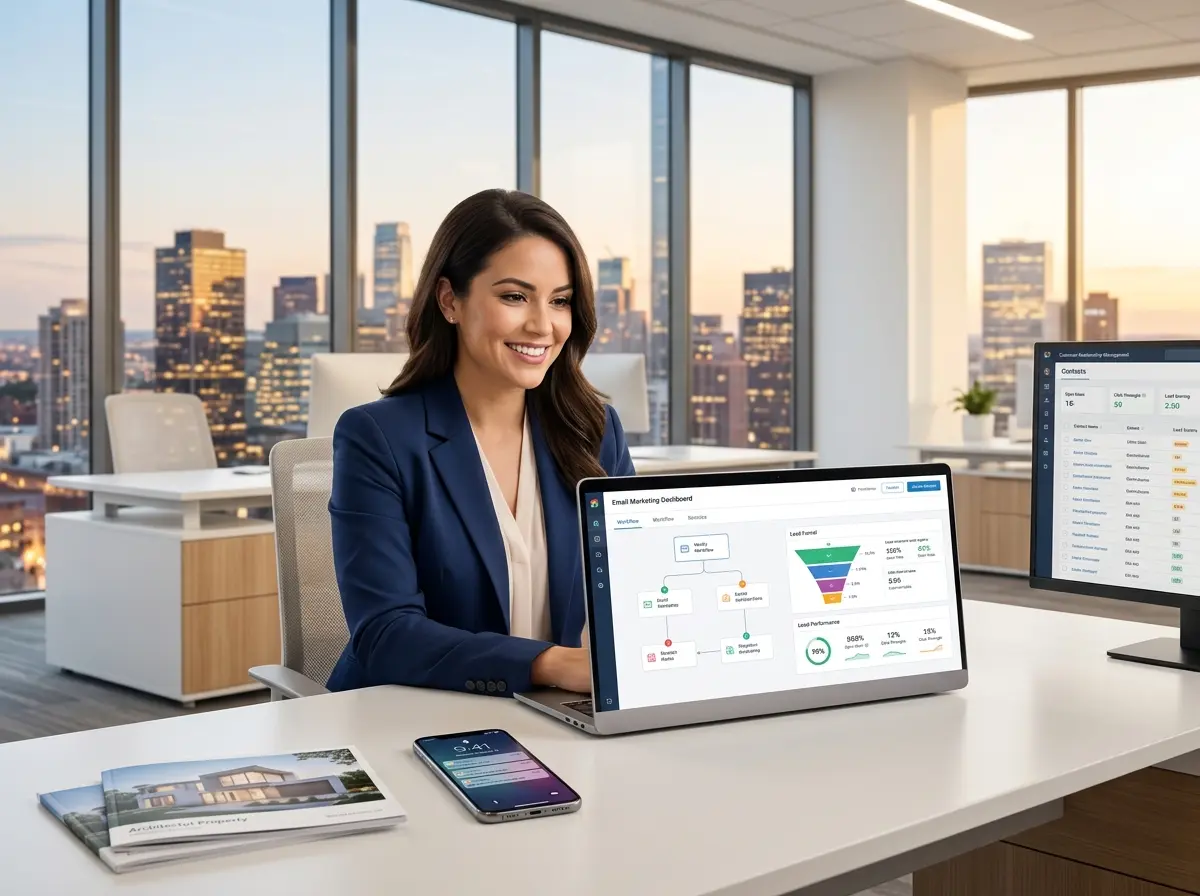
Email automation is the antidote. Done right, it keeps you present, professional, and relevant in a prospect's inbox long after they've forgotten how they found you. It nurtures cold leads back to life, keeps warm leads engaged, and even helps you stay top-of-mind with past clients who might refer you to their entire book club. This guide breaks down how to build an email nurturing system that actually works — so you can spend less time chasing and more time closing.
Building the Foundation of Your Email Nurture System
Segment Your Leads Before You Send a Single Email
Blasting the same email to every contact in your database is the digital equivalent of handing the same flyer to a first-time homebuyer, a seasoned investor, and someone who just clicked your ad by accident. It's not personal, it's not effective, and honestly, it's a little lazy.
Segmentation is the backbone of any successful nurture campaign. At a minimum, divide your leads into categories like: active buyers, active sellers, passive browsers, past clients, and investor prospects. From there, you can get more granular — price range, neighborhood interest, timeline to purchase, and whether they prefer condos or single-family homes. The more relevant your emails feel, the higher your open rates, click-through rates, and — most importantly — your conversion rates.
Most email platforms like Mailchimp, ActiveCampaign, or HubSpot allow you to tag and segment contacts automatically based on how they interact with your content. Someone who clicked a link about "luxury waterfront listings" should not be getting emails about "starter homes under $250K." Match the message to the audience, and your nurture sequences will do the heavy lifting for you.
Map Your Sequences to the Buyer's Journey
Different leads need different things at different times. A brand-new lead who just downloaded your home buying guide needs education. A lead who's been on your list for eight months and has opened every email needs a nudge. A past client celebrating a one-year homeversary needs appreciation — and maybe a gentle reminder that you also help with referrals.
Think of your email sequences in three stages: awareness, consideration, and decision. In the awareness stage, focus on delivering value — market updates, home-buying tips, neighborhood spotlights. In the consideration stage, get more specific — case studies, testimonials, process walkthroughs. In the decision stage, make it easy to take action — schedule a call, book a showing, or request a free home valuation. Mapping your content to these stages transforms your email list from a contact database into an actual sales machine.
Write Subject Lines That Get Opened (Not Deleted)
Your subject line has about two seconds to make an impression before someone swipes left on it forever. Avoid the generic ("Check Out These New Listings!") and the desperate ("Are You Still Interested?"). Instead, lead with curiosity, specificity, or relevance. "The 3 neighborhoods your budget can actually afford in 2024" will outperform "Monthly Newsletter" every single time. Test different subject lines using A/B testing features built into most email platforms, and pay attention to what your audience actually responds to. Your open rate data is basically free market research — use it.
Tools and Tech That Make Your Life Easier
Let Automation Do the Heavy Lifting — and Let Stella Handle the Front Door
Email automation platforms are great for the inbox, but what about everything that happens before a lead even gets into your nurture sequence? That's where the real gaps tend to appear. A prospect calls your office after hours, nobody answers, and they move on to the next agent. A website visitor has a quick question and gets a contact form instead of a conversation. These are leaky moments that no email sequence can fix — because the lead never made it into your pipeline in the first place.
Stella, the AI robot employee and phone receptionist, helps real estate businesses capture more of those moments. She answers phone calls 24/7, collects lead information through conversational intake forms, and stores everything in a built-in CRM with custom fields, tags, and AI-generated contact profiles. When a prospect calls at 9pm asking about a listing, Stella doesn't let that call go to voicemail oblivion — she engages them, gathers their information, and ensures you wake up to a qualified lead summary rather than a missed opportunity. For offices with a physical location, she also greets walk-in visitors proactively and can promote current listings or services on the spot. The point is: email automation works beautifully once someone is in your system — Stella helps make sure they get there.
Writing Emails That Actually Convert
Lead with Value, Not With Yourself
Nobody opens an email to read about how passionate you are about real estate. They open it because they want something — information, insight, reassurance, or opportunity. Every email you send should answer the unspoken question your prospect is asking: "What's in it for me?"
This doesn't mean you never mention yourself. It means you lead with the value and let your expertise show through the content itself. Share a market trend and explain what it means for buyers in their price range. Walk through a common mistake first-time sellers make and how to avoid it. Offer a free resource — a moving checklist, a neighborhood comparison guide, a mortgage calculator explainer. When you consistently deliver value, your emails stop feeling like marketing and start feeling like advice from someone worth trusting. That's when leads become clients.
Use Personalization Beyond Just "Hi [First Name]"
Modern email tools allow for dynamic content that changes based on lead attributes — and you should absolutely be using this. Reference the neighborhood a lead expressed interest in. Mention their approximate timeline. Acknowledge that they attended a recent open house. These small touches signal that you're paying attention, which is increasingly rare and increasingly valuable.
Behavioral triggers are your best friend here. Set up automations that send a specific email when a lead clicks on a listing, visits your pricing page, or hasn't engaged in 60 days. A re-engagement sequence might be as simple as: "Hey, haven't heard from you in a while — the market has shifted since we last connected. Here's what's changed." Leads go quiet for all kinds of reasons, and a well-timed, personalized email can reignite a conversation that was never really over.
Include Clear, Low-Pressure Calls to Action
Every email should have one primary call to action — and it should feel like an invitation, not a demand. "Schedule a free 15-minute strategy call," "Download the neighborhood guide," or "See what your home is worth" are all low-commitment, high-value actions that move the relationship forward without scaring anyone off. Avoid cramming multiple competing CTAs into a single email; it creates decision paralysis and results in nobody clicking anything. Keep it clean, keep it simple, and keep it relevant to where that particular lead is in their journey.
Quick Reminder About Stella
Stella is an AI robot employee and phone receptionist designed to help businesses — including real estate agencies — capture leads, answer calls around the clock, and manage customer information without adding headcount. At just $99/month with no upfront hardware costs, she's an affordable way to make sure your business never misses a conversation. While your email sequences nurture leads in the inbox, Stella makes sure leads get into your pipeline in the first place.
Conclusion: Stop Hoping and Start Automating
Email nurturing isn't glamorous. It doesn't have the instant gratification of a signed contract or the buzz of a bidding war. But it is relentless, and in real estate, relentless wins. The agents who consistently close are the ones who stay present through the entire buyer or seller journey — not just the exciting beginning and the triumphant end.
Here's your action plan to get started:
- Audit your current lead database and segment contacts by buyer type, stage, and interest area.
- Choose an email automation platform that fits your budget and technical comfort level — ActiveCampaign, Mailchimp, and Follow Up Boss are all popular options in real estate.
- Build three core sequences: a new lead welcome sequence, a long-term nurture sequence, and a past client re-engagement sequence.
- Write with value first and personality always — your emails should sound like you, not like a press release.
- Review your analytics monthly and adjust based on what your open and click data is telling you.
- Plug the gaps in your lead capture — make sure that when someone calls or walks in, their information doesn't fall through the cracks before your email automation ever gets the chance to work.
The pipeline you build today through consistent, thoughtful email nurturing is the income you'll see six months from now. Start small, stay consistent, and let automation handle the parts of follow-up that used to keep you up at night. Your future clients are already in your database — they're just waiting for the right message at the right time.