From Basic Washes to Premium Packages: How One Detailer Changed the Game
Let's be honest — if you own a car detailing business, you've probably had this experience: a customer pulls in, asks for a basic wash, pays $30, and drives away while you mentally calculate how many of those you need to do just to cover rent. Meanwhile, their vehicle was clearly begging for a full interior detail, ceramic coating, and possibly an exorcism. The opportunity was right there. You just didn't have a system to capture it.
That's exactly the problem one savvy detailing shop owner decided to solve — not by working harder or hiring more staff, but by rethinking the entire customer experience from the moment someone walked through the door. The result? Their average ticket size went from around $65 to over $200. Same customers. Same services. Completely different approach.
The secret wasn't some elaborate marketing campaign or a pushy sales script. It was a concierge model — a system designed to consult, educate, and guide customers toward the services that actually fit their needs. Here's how it worked, and how you can apply the same thinking to your detailing operation.
Building the Concierge Model: What It Actually Means
The word "concierge" gets thrown around a lot, but in the context of a car detailing business, it means one specific thing: treating every customer interaction as a consultation, not a transaction. Instead of asking "what do you want?", you ask "what does your car need?" — and then you help them understand the answer.
Creating Tiered Service Packages That Tell a Story
The first thing this shop owner did was restructure their service menu. They ditched the confusing à la carte pricing sheet and replaced it with three clearly defined tiers: The Refresh (exterior wash and basic interior vacuum), The Restore (full interior detail, paint decontamination, and tire dressing), and The Revival (everything in Restore plus paint correction, ceramic coating, and a full inspection report).
This matters more than it sounds. When customers see three clearly named packages, they naturally anchor to the middle option — a well-documented phenomenon in consumer psychology. More importantly, each package name told a story about the outcome, not just the process. Customers weren't buying "clay bar treatment." They were buying paint that felt like glass again. That shift in framing alone moved dozens of customers from the basic tier to the mid-tier package within the first month.
Training Staff to Consult, Not Just Quote
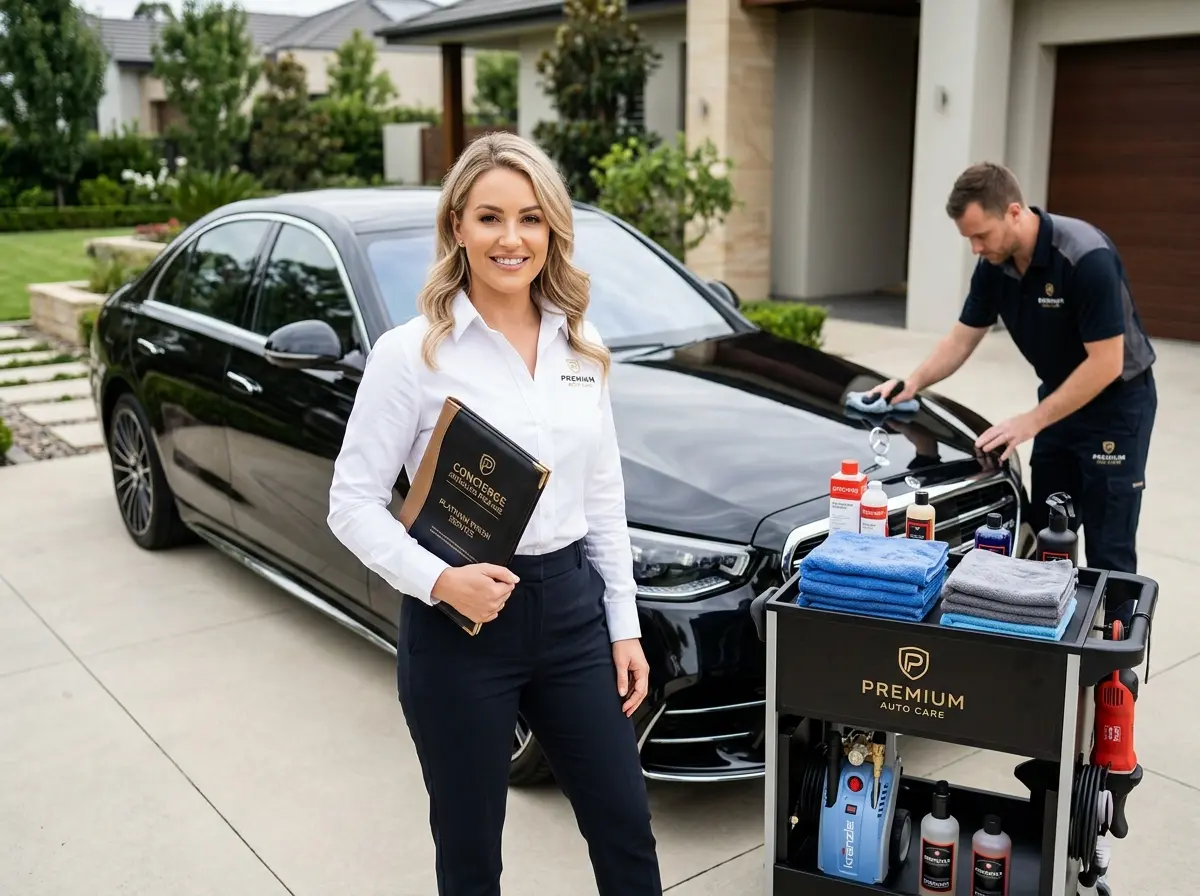
The second pillar of their concierge model was staff training. Every team member learned a simple intake routine: walk the vehicle with the customer, point out specific issues (water spots, swirl marks, pet hair embedded in the seats — you know the ones), and explain what each issue would look like after treatment. This wasn't upselling in the sleazy sense. It was genuine consultation.
Customers who feel educated about their options — rather than pressured — are dramatically more likely to upgrade. Studies in service industries consistently show that customers who receive a personalized recommendation spend 20–30% more on average than those who simply choose from a menu. When the recommendation comes from walking around their actual car and pointing at actual problems, the conversion rate is even higher. People trust what they can see.
Standardizing the Drop-Off Experience
The third piece was consistency. Not every customer got the same attentive team member on every visit, so the shop created a standardized drop-off checklist and script. Every vehicle got a quick walkaround. Every customer got asked about their goals for the car — daily driver, weekend car, upcoming sale? That single question opened doors to services customers hadn't even considered, like odor elimination for a car they were preparing to sell, or paint protection film for a vehicle they planned to keep for a decade.
Technology That Works the Front Door (So Your Team Can Focus on the Garage)
Here's where things get interesting for a detailing business — or really any service business dealing with walk-ins and phone inquiries simultaneously. One of the biggest bottlenecks this shop faced was the front desk situation. Staff were constantly pulled between answering phones, greeting walk-ins, and trying to upsell during drop-offs. Something always suffered.
Letting Smart Tools Handle the First Touch
This is where Stella, an AI robot employee and phone receptionist, becomes genuinely useful for a business like this. In a physical detailing shop, Stella can stand near the entrance and proactively greet customers, explain service packages, highlight current promotions, and answer common questions — all without pulling a technician away from a vehicle mid-detail. On the phone side, she handles incoming calls 24/7, answers questions about services and pricing, and can collect customer intake information before they even arrive.
For a concierge model specifically, Stella's ability to upsell and cross-sell through natural conversation is a direct fit. She can mention that customers booking a basic wash often add an interior detail when they learn about the current bundle pricing — and she'll say it to every single walk-in and every caller, every time, without fail. No off days. No forgetting the script. That kind of consistency is hard to put a dollar value on, but it shows up in your average ticket.
Making the Concierge Model Stick Long-Term
The concierge model isn't a one-time menu redesign. It's an ongoing system, and like any system, it needs maintenance, measurement, and refinement to keep producing results.
Tracking What's Actually Working
This shop started tracking average ticket size by service advisor, time of day, and customer type (new vs. returning). What they found was illuminating: new customers actually upgraded more often than returning customers — likely because the walkaround consultation was most impactful on a first visit. That insight led them to create a more aggressive "first visit" consultation protocol and a follow-up outreach campaign for customers who had only ever booked the basic tier.
If you're not tracking your average ticket, start now. It's one of the most powerful metrics a service business can watch, and it tells you far more than total revenue does. Revenue can grow while your margins shrink. Average ticket size, when it goes up, almost always signals that your customer education and trust-building is working.
Building a Follow-Up Loop That Drives Return Visits
One of the most overlooked parts of a concierge model is what happens after the appointment. This detailing shop implemented a simple follow-up system: every customer received a summary of what was done to their vehicle, what was noted during the walkaround, and a recommended timeline for their next service. Customers with ceramic coatings got reminders about maintenance washes. Customers who declined paint correction the first time got a follow-up three months later with before-and-after photos from similar vehicles.
The result was a measurable uptick in return visit rate — and when those customers came back, they were more informed and more willing to invest in higher-tier services. The concierge model had essentially pre-sold them over time. That's the compounding power of treating customers like clients rather than transactions.
Training New Staff Without Losing Momentum
Any good system needs to survive staff turnover — which, let's face it, is a reality in the detailing industry. This shop solved it by documenting their concierge protocol into a simple onboarding guide with role-play exercises. New hires practiced the walkaround consultation before they ever spoke to a real customer. The goal was to make the consultative approach feel natural rather than scripted, which required repetition rather than memorization. Within two weeks, most new team members were performing close to the established average ticket benchmarks.
Quick Reminder About Stella
Stella is an AI robot employee and phone receptionist designed for businesses exactly like yours — she greets customers in-store, answers calls around the clock, promotes your services, and handles intake so your team can focus on delivering great work. At $99/month with no upfront hardware costs, she's built to be accessible for small and mid-sized businesses without enterprise-level budgets. If your front desk is a bottleneck, she's worth a serious look.
Your Next Move: Start With the Walkaround
If you take one thing from this post, let it be this: the walkaround is everything. It's the moment where trust is built, problems are made visible, and upgrades become obvious rather than awkward. You don't need to redesign your entire business overnight. Start by making the walkaround a non-negotiable part of every drop-off. Script it, practice it, and track what happens to your average ticket over the next 30 days.
From there, consider restructuring your service menu into outcome-based tiers, training your team on consultative language, and building a follow-up system that keeps customers engaged between visits. The detailing shop in this story didn't triple their average ticket by getting lucky — they built a repeatable system and committed to it. The math is simple: if your average ticket doubles and your customer volume stays the same, your revenue doubles. No new advertising required.
The cars are already pulling into your lot with problems worth solving. You just need a system that helps customers say yes to the solutions you already provide.