The Appointment That Never Happened (And the Revenue That Walked Out With It)
Picture this: Your esthetician is prepped, your treatment room is immaculate, your hot stones are warming, and your 2:00 PM client is... not here. It's 2:15. Then 2:30. Then you get a text that says "oh sorry, totally forgot!" — followed by a sad-face emoji that does absolutely nothing to compensate you for the lost revenue, the wasted product prep, or the sheer existential frustration of running a spa in the modern world.
No-shows are one of the most persistent and painful problems facing spa owners. Industry estimates suggest that no-show rates in the spa and salon industry hover between 10% and 20% — meaning up to one in five appointments simply evaporates into thin air. Multiply that by your average service price and do your best not to cry.
The good news? There's a remarkably simple, low-effort fix that dramatically reduces no-shows: the pre-appointment confirmation. It sounds almost too obvious to work. And yet, when executed consistently and strategically, it can cut your no-show rate significantly — giving you more predictable revenue, happier staff, and a lot fewer empty massage tables staring back at you.
Why Clients Don't Show Up (And Why It's Partly on Us)
Before we talk solutions, let's be honest about the problem. Most no-shows aren't malicious. Clients aren't sitting at home, cackling as they ruin your day. They forgot. Life happened. The appointment they booked three weeks ago slipped off their mental radar somewhere between school pickups and a Netflix binge. That's human. What's not acceptable is a spa business that does nothing to combat it.
The Booking-to-Appointment Gap Problem
When a client books a spa service two or three weeks in advance, there's a lot of time between enthusiasm and execution. They were excited when they booked that 90-minute deep tissue massage. By appointment day, they've had seventeen other priorities emerge, and without a nudge, that booking exists only in your system — not in their head. The longer the gap between booking and appointment, the higher the likelihood of a no-show. This is why relying solely on an initial booking confirmation email is simply not enough. One email, sent weeks ago, buried under promotional newsletters and Amazon shipping notifications, is not a reminder strategy. It's wishful thinking.
The Psychology Behind Confirmation Messages
Here's where it gets interesting. Research in behavioral psychology shows that when people actively confirm an appointment — rather than just receiving a passive notification — they feel more committed to showing up. It's the difference between telling someone "your appointment is Tuesday" and asking them "can you confirm you'll be here Tuesday?" One creates a record. The other creates a social contract. When a client replies "yes, confirmed" or presses a button to confirm, they've made a micro-commitment that makes canceling feel like a bigger deal. Use this to your advantage.
What Clients Actually Want from a Reminder
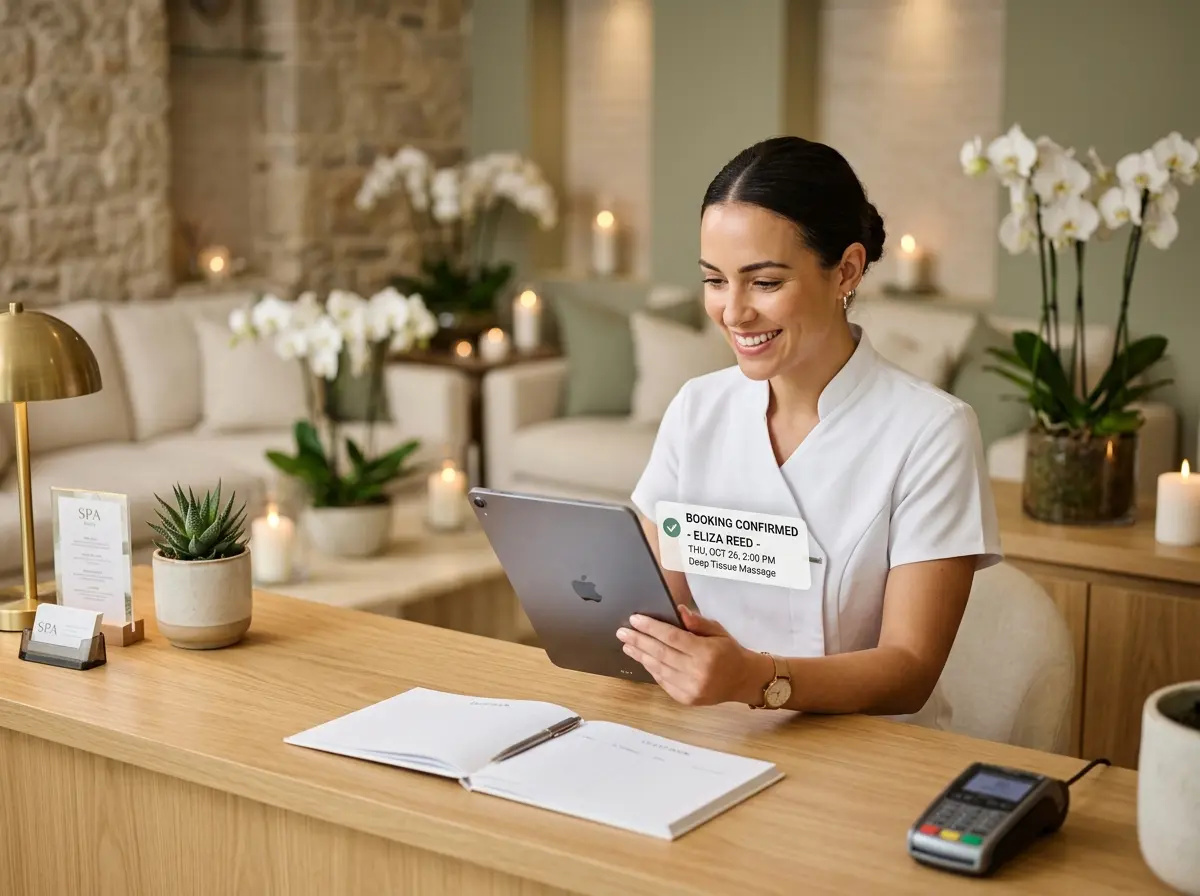
A good pre-appointment confirmation isn't just a robotic "don't forget your appointment" blast. Clients respond better when the message feels personal, includes useful details, and gives them an easy way to confirm, reschedule, or cancel without awkwardness. Include the service name, the date and time, the provider's name if applicable, any pre-appointment instructions (arrive 10 minutes early, avoid caffeine before a facial, etc.), and a clear, frictionless way to respond. When clients feel like the message was crafted for them — not mass-blasted to a list — they engage with it and they show up.
Building a Confirmation Sequence That Actually Works
A single reminder is better than nothing. A sequence is better than a single reminder. Here's how smart spa owners build a confirmation strategy that creates accountability at every stage of the journey — without becoming so annoying that clients start dreading hearing from you.
The Three-Touch Confirmation Timeline
The most effective approach uses three touchpoints: a confirmation at booking, a reminder several days before the appointment, and a final reminder 24 hours out. The booking confirmation establishes the appointment and sets expectations. The mid-week reminder (sent 3–5 days before) gives clients ample time to reschedule if something has come up — which is actually good news for you, since an early cancellation gives you time to fill the slot. The 24-hour reminder is your last line of defense and your highest-impact message. Studies show that appointment reminders sent 24 hours in advance reduce no-show rates by up to 29%. That final nudge, arriving when the appointment is imminent and unavoidable, is what moves the needle most.
Choosing the Right Channel
Text messaging wins. It's not even close. SMS open rates consistently exceed 90%, compared to email's average of around 20%. If you're only sending email confirmations, you are essentially whispering your reminders into the void and hoping for the best. SMS should be your primary channel, with email as a secondary backup. Some spas also use automated phone calls for high-value or long-duration bookings — a 3-hour bridal package warrants more than a text, frankly. Combining channels for your highest-value appointments is a smart investment in revenue protection.
How Technology (Like Stella) Can Handle This For You
Here's the part where we acknowledge that spa owners are busy. You're managing staff schedules, inventory, client relationships, marketing, and approximately forty-seven other things at any given moment. Building and executing a multi-touch confirmation sequence manually is not realistic. This is where automation earns its keep — and where Stella, the AI robot employee and phone receptionist, enters the picture.
Never Miss a Follow-Up With AI-Powered Client Management
Stella handles phone calls to your spa 24/7, meaning when a client calls to book, reschedule, or confirm an appointment outside of business hours, she's there — professional, friendly, and completely tireless. Her built-in CRM and conversational intake forms allow her to collect client details naturally during calls, so your contact records stay current and complete without your front desk team manually entering data. That means your confirmation sequences have accurate information to work with — the right phone number, the right service, the right time. No more reminders going out to outdated contacts or the wrong appointment details. Stella also greets walk-in clients at the kiosk, answers questions about services and pricing, and keeps your front-of-house running smoothly even when your human staff are fully occupied with clients.
Turning Cancellations Into Opportunities
Let's flip the script for a moment. A no-show is a disaster. An early cancellation, prompted by your confirmation sequence, is actually a gift — if you know what to do with it. The best spa businesses have a system for filling last-minute openings, and it starts with building a waitlist.
Build and Use a Cancellation Waitlist
When clients book a service that is currently unavailable at their preferred time, offer to add them to a waitlist. When a cancellation comes in — especially those early ones your confirmation sequence prompted — you have a ready list of people who want that slot. A quick text to your waitlist can fill the opening within minutes. This transforms an inevitable problem into a recoverable situation. A slot that might have gone empty generates revenue and builds goodwill with a client who scored a coveted appointment.
Make Rescheduling Effortless
One underrated reason clients ghost instead of canceling is that canceling feels awkward or inconvenient. They don't want to call and explain themselves. They don't want to feel judged. Make it dead simple: include a direct rescheduling link in every confirmation message, and let clients reschedule or cancel without having to talk to anyone. Removing friction from the cancellation process actually reduces no-shows, because clients who might have avoided calling will instead click a button and reschedule for a time that actually works. You'd rather have a rescheduled appointment than an empty room any day of the week.
Implement a Thoughtful No-Show Policy
Confirmation sequences work best when paired with a clear, communicated no-show policy. Charging a partial fee for no-shows or same-day cancellations is industry standard and entirely defensible — as long as clients know about it upfront and are reminded of it in their confirmation messages. Transparency is key. Include your policy language in your booking flow, your confirmation messages, and your reminder texts. Most clients will respect a policy they were clearly informed about. And those who don't? You've at least protected your revenue.
A Quick Reminder About Stella
Stella is an AI robot employee and phone receptionist built for businesses like yours. She answers calls around the clock, manages client intake through natural conversation, and maintains a built-in CRM to keep your contact records sharp and ready. Whether she's greeting guests at your front kiosk or handling phone inquiries after hours, she keeps your spa running professionally without breaks, burnout, or turnover — all for $99 a month.
Stop Leaving Revenue on the Treatment Table
No-shows are never going to drop to zero. People are unpredictable, calendars are chaotic, and hot stone massages will occasionally be forgotten. But that doesn't mean you have to accept a 15% evaporation rate on your booked revenue as the cost of doing business.
Start with the fundamentals: build a three-touch confirmation sequence using SMS as your primary channel, send that critical 24-hour reminder without fail, and make it easy for clients to confirm or reschedule with minimal friction. Layer in a waitlist system to capture early cancellations as revenue opportunities, communicate your no-show policy clearly, and let technology handle the repetitive follow-up work so your team can focus on delivering exceptional service.
The pre-appointment confirmation isn't glamorous. It doesn't have the excitement of a new treatment launch or a rebranded social media aesthetic. But it is quietly and consistently one of the highest-ROI actions you can take in your spa business. Implement it properly, automate it intelligently, and watch your no-show rate — and your frustration level — drop considerably.
Your 2:00 PM client will actually show up. The hot stones will be used. And you will not have to stare at an empty treatment room wondering why you got into this business. That's a win worth building a system for.