The Call You've Been Dreading (And What to Do About It)
Insurance inquiries are the silent appointment killers in physical therapy practices. Patients call with a genuine need, but the friction of navigating insurance questions — combined with a hesitant or rushed front desk experience — sends them straight to your competitor's website. The frustrating part? These callers want to get better. They just need a little help getting from "do you take my insurance?" to "see you Tuesday at 10."
Understanding Why Insurance Inquiries Stall Out
The Information Gap Problem
Most callers asking about insurance coverage aren't actually asking about insurance. What they're really asking is: "Is this going to be affordable for me, and is it worth my time to come in?" They've already done some Googling. They already have a referral, a nagging shoulder injury, or a post-surgical recovery they've been putting off. The insurance question is just the last hurdle — and if your front desk fumbles it, the momentum dies.
The problem is that insurance verification is genuinely complicated, and your staff can't always provide a definitive answer on the spot. But there's a big difference between "I'm not sure, let me put you on hold" and "Great question — here's exactly what we'll do to find out and get you taken care of." The first response creates anxiety. The second builds trust. Train your team to bridge the information gap with confidence and warmth, even when the answer isn't immediately available.
The Commitment Cliff
The fix is simple but often overlooked: always follow up an insurance answer with a direct invitation to schedule. Something like, "Based on what you've described, it sounds like you're likely covered — and even if there's a small copay, our team will walk you through everything before your first visit. Would you like to go ahead and get you on the schedule?" That's not pushy. That's helpful. There's a difference.
When the Answer Is "We're Not In-Network"
How Technology Can Handle the Front Lines
Automating the First Response (Without Losing the Human Touch)
Here's where a lot of practices are quietly falling behind: calls coming in after hours, during lunch, or when staff is simply tied up are going to voicemail — and most callers don't leave messages. According to some industry estimates, up to 80% of callers who reach voicemail won't call back. That's not a staffing problem. That's a revenue problem.
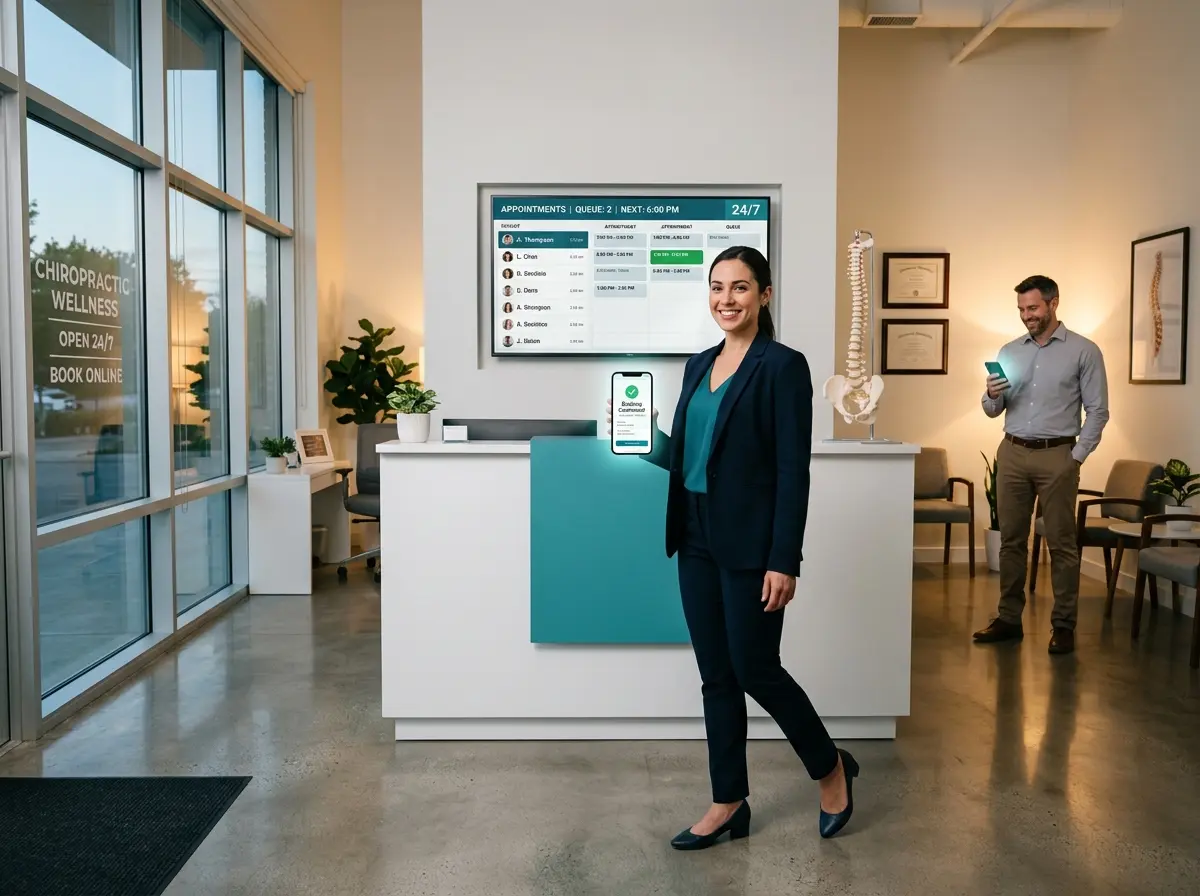
Stella, an AI phone receptionist and in-office kiosk, is built for exactly this gap. She can answer calls 24/7, walk callers through intake questions, collect insurance information conversationally, and either forward the call to a human staff member based on your configured conditions or schedule a callback at a time that works for the patient. Her built-in CRM captures everything — insurance provider, reason for visit, contact info — and generates an AI summary so your team walks into every follow-up already informed. If your practice also has a physical waiting room, Stella's in-office kiosk presence means new patients walking in can be greeted, informed about services, and guided through intake — all without pulling your front desk away from the phone. It's the kind of consistent, professional first impression that turns curious walk-ins into returning patients.
Converting the Call: A Practical Framework
The Four-Step Insurance Inquiry Response
Whether you're training human staff or setting up an automated intake flow, every insurance inquiry call should follow roughly the same arc. First, acknowledge the question warmly — don't make the patient feel like they've asked something inconvenient. Second, gather the necessary information (insurance provider, member ID, type of injury or concern) before promising any answers. Third, give a realistic timeline for verification — same day if possible, next business day at most. And fourth — this is the critical one — offer to hold their spot while verification is in progress.
Training Your Team to Close (Without Feeling Like a Sales Pitch)
Following Up Without Being Annoying
If a caller didn't book during the initial call, the follow-up window is short. Research on healthcare consumer behavior consistently shows that patients make decisions within 24 to 48 hours of their initial inquiry — after that, life gets in the way and the pain they called about either gets ignored or gets handled by whoever followed up first. Your follow-up should happen within that window, should reference something specific from the conversation, and should include a direct scheduling option: a link, a callback, or a text.
Quick Reminder About Stella
Stella is an AI robot employee and phone receptionist that works 24/7 — answering calls, collecting patient intake information, managing contacts through a built-in CRM, and greeting patients in your office through her physical kiosk presence. At $99/month with no upfront hardware costs, she's the front desk support that never calls in sick, never puts someone on hold for four minutes, and never forgets to follow up.
Turning "Just Checking on Insurance" Into "See You Thursday"
The practices that grow their patient base consistently aren't necessarily the ones with the best clinicians or the fanciest equipment (though those help). They're the ones that make it easy to become a patient. Reduce friction, follow up fast, and treat every inquiry like the opportunity it is — because it is.