The Receptionist Dilemma: A Tale as Old as the Phone System
The Real Cost of a Human Receptionist
Salary, Benefits, and the Hidden Extras
According to the U.S. Bureau of Labor Statistics, the median annual wage for receptionists is around $33,000–$38,000, depending on your industry and location. But that's just the base. Add employer payroll taxes (roughly 7.65%), health insurance contributions, paid time off, sick days, and any training costs, and you're realistically looking at $42,000–$55,000+ per year for a single full-time receptionist. For a small business, that's a significant line item — and that's before you account for overtime, holiday coverage, or the inevitable "I'm putting in my two weeks" email.
Turnover: The Silent Budget Killer
Receptionist roles have some of the highest turnover rates in the workforce. The Society for Human Resource Management (SHRM) estimates that replacing an employee can cost anywhere from 50% to 200% of their annual salary when you factor in recruiting, onboarding, lost productivity, and training time. For a $35,000/year receptionist, that's potentially $17,500 to $70,000 per replacement cycle — and some businesses are cycling through this every 12 to 18 months.
Coverage Gaps and Customer Experience
Even the most dedicated human receptionist can only be in one place at one time, working roughly 40 hours a week, across maybe 48–50 weeks a year. That leaves a substantial chunk of time — evenings, weekends, lunch hours, holidays — where your phones go unanswered and walk-ins go ungreeted. Research from Clutch found that 80% of callers who reach voicemail don't leave a message, and a significant portion will simply call a competitor instead. Every unanswered phone call is a potential lost customer, and the math adds up fast.
Enter the AI Option: What Modern Tools Actually Offer
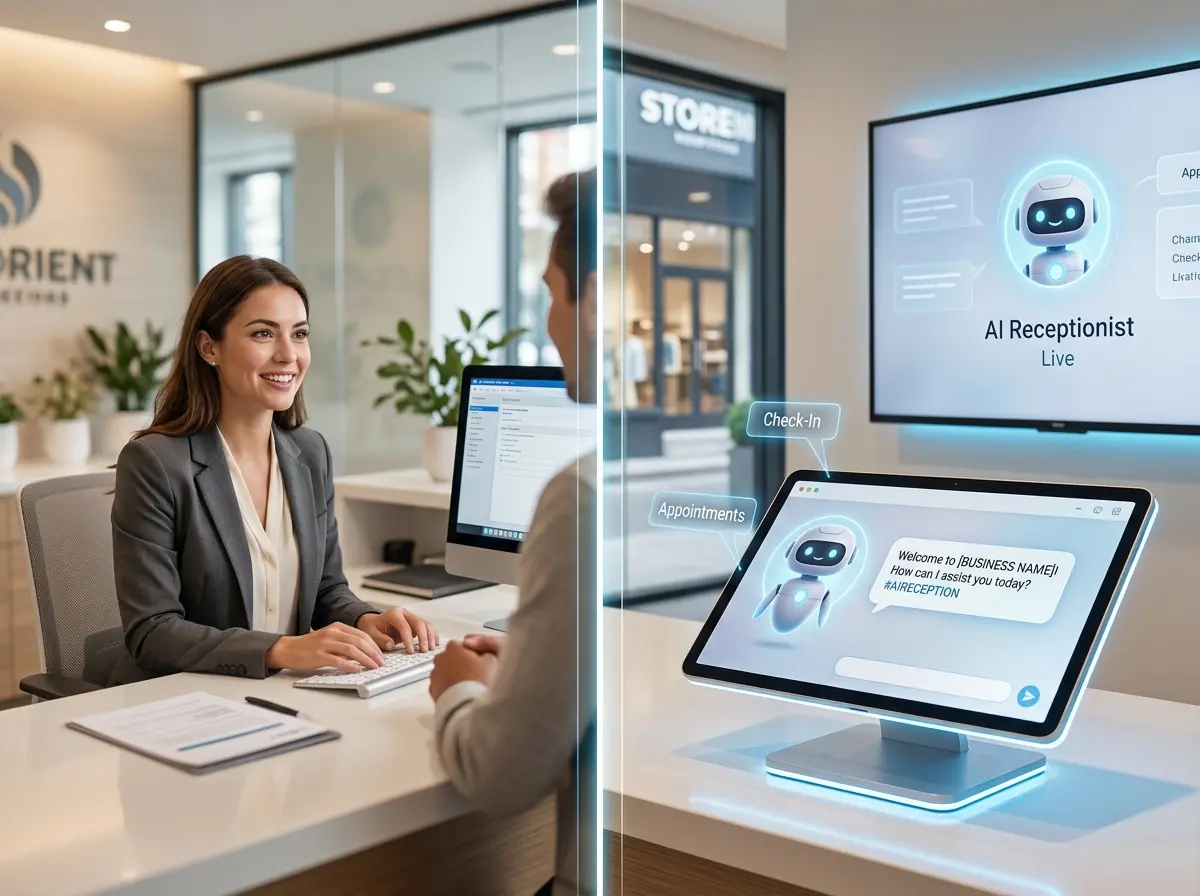
AI reception tools aren't the robotic, frustrating phone trees of the early 2000s. Modern AI receptionists can hold natural conversations, answer nuanced questions, route calls intelligently, and maintain a consistent, professional tone — at 2 AM on Christmas Eve, if necessary. If you want a concrete example of what this looks like in practice, Stella is an AI robot employee and phone receptionist that works both as a physical in-store kiosk and as a 24/7 phone answering system. She can greet walk-in customers, answer product and service questions, promote specials, handle calls, collect customer information, and even forward calls to staff based on conditions you configure — all on a flat $99/month subscription with no upfront hardware costs.
Cost Comparison at a Glance
When you line up the numbers side by side, the contrast is stark. A human receptionist at full cost might run your business $45,000–$55,000 annually. A part-time option might land around $20,000–$25,000 but with significantly reduced coverage. An AI solution like Stella — which operates 24/7 with no sick days, no turnover, no training periods, and no awkward salary negotiations — runs at a fraction of that cost. Her built-in CRM, intake forms, call summaries, and push notifications to managers mean you're also replacing several standalone tools you might otherwise be paying for separately.
Where Humans Still Win (And Why That Matters)
Emotional Intelligence and Complex Situations
Multitasking and Physical Tasks
The Hybrid Model: The Smart Middle Ground
Quick Reminder About Stella
Stella is a friendly, human-sized AI robot kiosk and phone receptionist built for businesses of all types — retail shops, restaurants, salons, gyms, medical offices, law firms, auto shops, and more. She greets walk-in customers proactively, answers phone calls 24/7, promotes your specials, collects customer information, and manages contacts through a built-in CRM — all for $99/month with no upfront hardware costs. She's the receptionist who never calls in sick, never asks for a raise, and never leaves a passive-aggressive note in the break room.
Making the Decision: A Practical Framework for Small Business Owners
Start with your coverage gaps. Write down every hour of the week when your business receives customer inquiries — calls, walk-ins, online messages — and compare that to when a human receptionist would actually be on the clock. That gap is costing you money right now, and it's the clearest argument for AI supplementation.
Calculate your true cost. Don't just look at salary. Factor in taxes, benefits, PTO, training time, and a realistic estimate of turnover costs over a three-year period. Then compare that to a flat monthly AI subscription. The numbers tend to be pretty persuasive on their own.
Assess your customer interaction complexity. If 80% of your incoming calls are questions about hours, pricing, availability, and basic services, that 80% can almost certainly be handled beautifully by an AI receptionist. Free your human staff for the 20% that genuinely benefits from their expertise and empathy.
Think about consistency. Every business owner has experienced the uncomfortable reality of a receptionist who's having a bad day — and who lets customers feel it. AI doesn't have bad days. Your brand experience stays consistent whether it's the first customer of Monday morning or the last call on a Friday night.