From "Just Browsing" to "Where Do I Sign?" — The Inquiry-to-Contract Journey
Congratulations — a couple found your venue, loved your photos, and actually filled out an inquiry form. That's practically a miracle in today's attention economy. Now all you have to do is convert that fragile spark of interest into a signed contract before they get distracted by the seventeen other venues they messaged at the same time. No pressure.
Here's the uncomfortable truth: most venues lose bookings not because their space isn't beautiful, but because their follow-up process is a mess. Slow responses, generic emails, and zero urgency are the unholy trinity of missed revenue. According to a study by Lead Response Management, the odds of qualifying a lead drop by over 80% if you wait longer than five minutes to respond. Five minutes. That's less time than it takes to finish your coffee.
Whether you're a boutique barn venue, a luxury ballroom, or a scenic outdoor space, the principles of converting inquiries into contracts are the same. Let's walk through a smarter, more systematic approach — one that respects your couples' emotions while also respecting your business's bottom line.
The Art of the First Impression (and the Second, and the Third)
Respond Fast or Go Home
Speed is not just a nice-to-have — it's a competitive weapon. Couples planning their weddings are emotionally charged, excited, and slightly overwhelmed. When they reach out to your venue, they're in a decision-making window. The venue that responds first doesn't always win, but the venue that responds last almost always loses.
Your first response should go out within the hour during business hours — ideally within minutes. That first message doesn't need to be a novel. It needs to accomplish three things: acknowledge their inquiry, express genuine excitement about their date, and set up the next step (usually a tour or a phone call). Keep it warm, keep it human, and for the love of all things bridal, use their names.
Personalization Is Not Optional
Nothing says "you're just a number to us" like a copy-paste inquiry response with the wrong venue name still in it (yes, it happens). Couples are making one of the most significant purchases of their lives. They can smell a template from a mile away.
Take sixty seconds to glance at their inquiry before responding. Did they mention a garden ceremony? Reference it. Did they note they're planning an intimate gathering of forty guests? Mention how your space works beautifully for smaller, more personal celebrations. These small touches signal that you're paying attention — and that you'll continue to pay attention on their wedding day, which is ultimately what they're buying.
The Follow-Up Sequence That Actually Works
Most venues send one email and consider their job done. Most venues also leave a staggering amount of money on the table. Build a structured follow-up sequence that spans at least five to seven days for non-responsive inquiries:
- Day 1: Warm, personalized email response within the hour.
- Day 1 (same day): A brief, friendly phone call attempt.
- Day 2: A second email with something of value — a lookbook, a real wedding feature, or a FAQ guide.
- Day 4: A casual check-in referencing their date availability (creates soft urgency).
- Day 7: A final "closing the loop" message that's professional but gently signals you're moving on.
This sequence keeps your venue top-of-mind without being aggressive. It also communicates professionalism — and couples absolutely notice.
Letting Technology Handle the Heavy Lifting
Never Miss an Inquiry Again
Here's where things get interesting for venue owners who are also, somehow, expected to give tours, manage vendors, answer emails, and occasionally eat lunch. The administrative side of inquiry management is time-consuming, and the stakes are high every single time. Missing a phone call from a hot lead at 7 PM on a Tuesday is just as costly as missing one at 10 AM on a Monday.
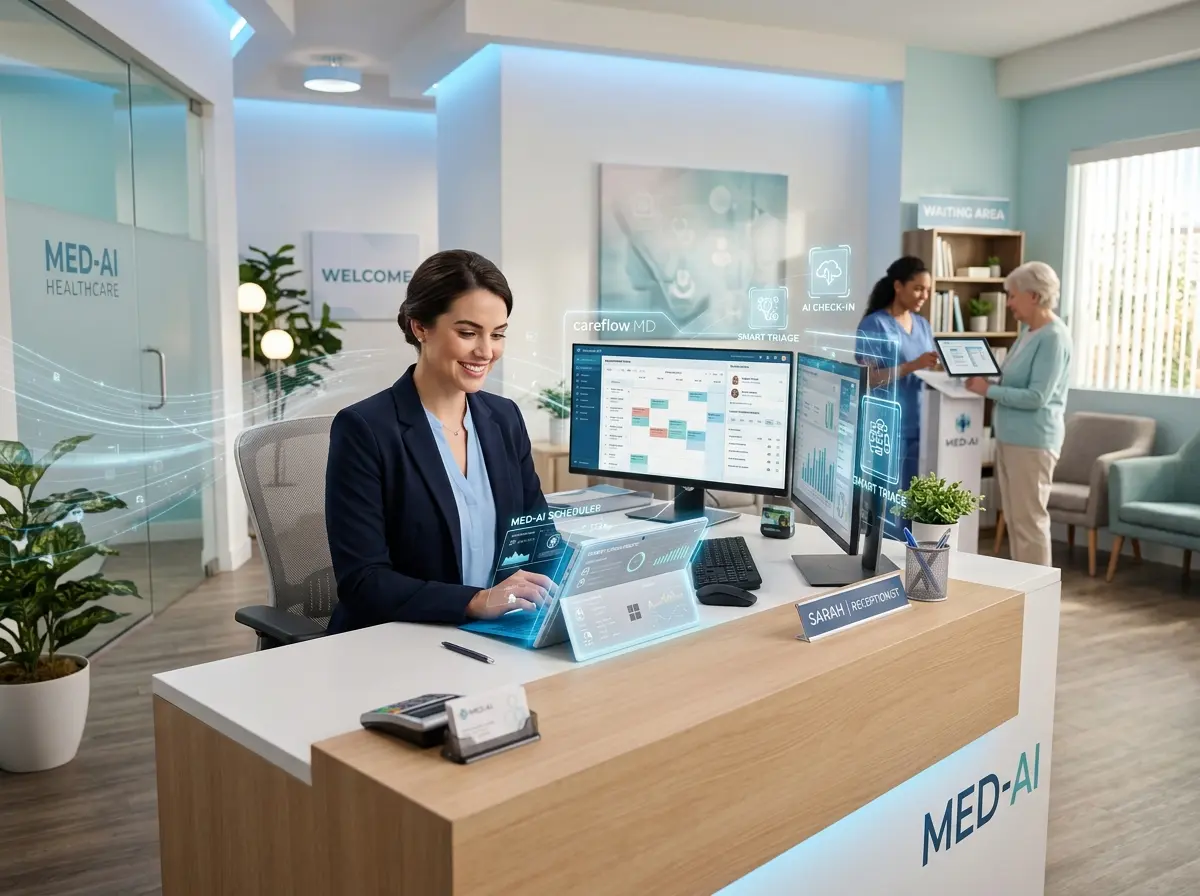
Stella, the AI robot employee and phone receptionist, is built for exactly this kind of scenario. She answers every incoming call — day or night, weekends included — with the same warm, informed energy your best human staff member would bring on their best day. For venue owners, that means a prospective couple who calls after hours gets a real, conversational response about your packages, availability, and next steps rather than a voicemail that may or may not get returned before they've already booked elsewhere.
Beyond phone calls, Stella's built-in CRM and conversational intake forms mean that every lead who calls or visits gets properly captured, tagged, and organized — no sticky notes, no dropped balls, no "I thought you were following up with them" moments. For venues managing a high volume of inquiries across peak booking season, this kind of systematic contact management isn't a luxury. It's survival.
The Tour, The Proposal, and The Close
Turn Every Tour Into a Sales Experience
The in-person (or virtual) tour is your highest-leverage moment in the entire sales process. This is where emotion meets information, and your job is to guide that combination toward a "yes." Don't just walk couples through the space — walk them through their day. Stand at the altar spot and say, "This is where you'll see each other for the first time." Describe the golden-hour light that hits the reception hall in October. Make it specific, make it cinematic, and make it about them.
Come prepared with information about their vision. Review their inquiry form before they arrive. Ask open-ended questions that get them talking and dreaming. The more they verbally commit to a vision within your space, the more psychologically invested they become — and investment converts.
Send Proposals That Close, Not Just Inform
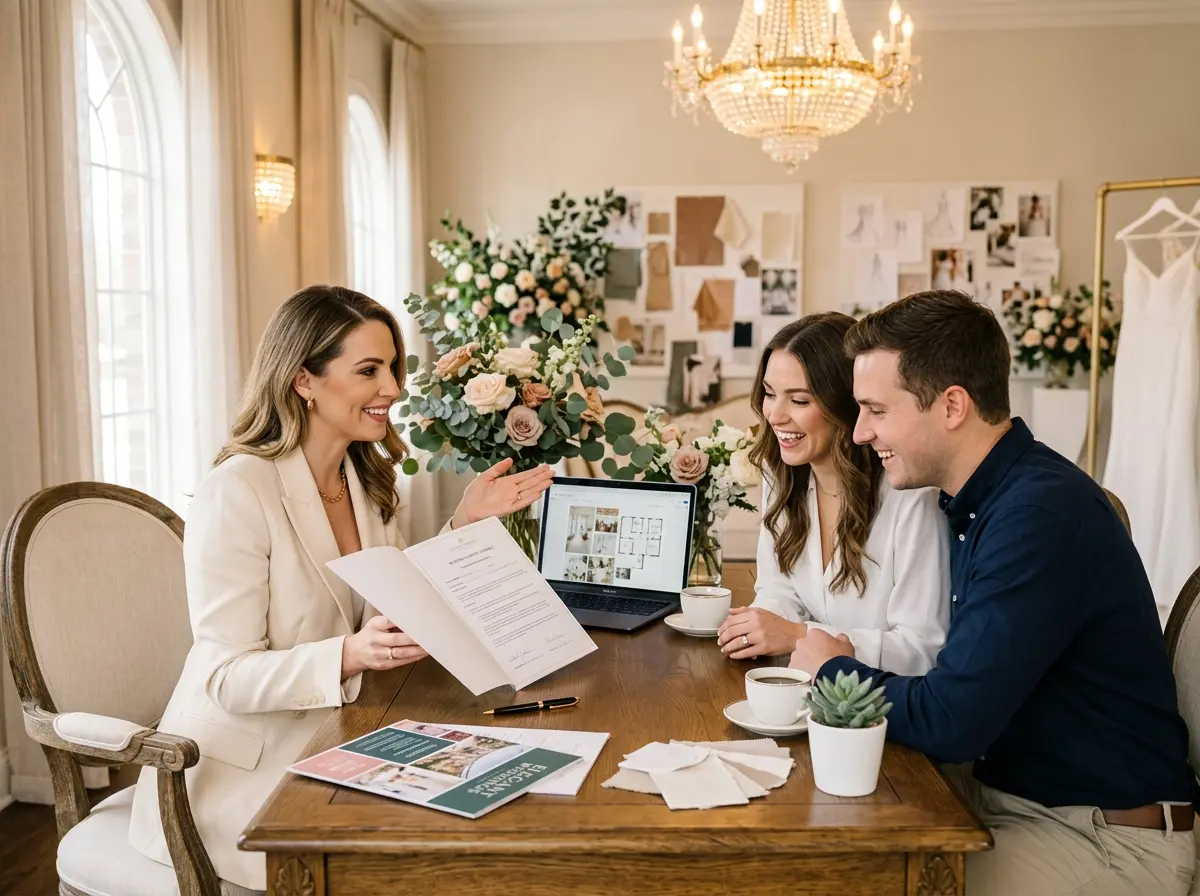
Your proposal is not a price list. It is a persuasion document dressed in professional clothing. A strong venue proposal includes a personalized opening that references their specific vision, clear and well-organized package options, social proof (testimonials, awards, real wedding photos), transparent pricing with value-framing, and a clear, low-friction call to action.
Critically, your proposal should also create appropriate urgency. If their date is genuinely popular, say so honestly. Phrases like "We currently have one additional inquiry for your date" are effective when true, and manipulative when fabricated — couples can often tell the difference, and the trust damage isn't worth it. Authentic urgency, however, is a perfectly reasonable and professional nudge.
Handle Objections Like a Pro, Not a Pushover
Price objections are the most common barrier between your proposal and a signature. The worst response is to immediately discount. The best response is to reframe the value. Break the investment down per guest. Compare it to what they're spending on flowers. Remind them that your all-inclusive package eliminates five other vendor contracts they'd otherwise need to manage. If you genuinely have flexibility, offer it thoughtfully — not desperately. Couples who feel they've squeezed every discount out of you before signing aren't starting the relationship from a position of mutual respect, and that dynamic tends to continue through the planning process.
Quick Reminder About Stella
Stella is an AI robot employee and phone receptionist that works 24/7 to greet customers, answer calls, capture lead information, and keep your business running smoothly — even when you're in the middle of a six-hour venue tour day. At just $99/month with no upfront hardware costs, she's the team member who never calls in sick, never misses a lead, and never puts a prospective bride on hold while she finds someone who "actually knows the packages."
Putting It All Together: Your Conversion Action Plan
Converting venue inquiries into signed contracts is part art, part science, and a surprisingly large part logistics. The couples who book with you aren't always the ones you wowed the most in person — they're often the ones you responded to fastest, followed up with most consistently, and made feel most seen throughout the process. That's the unsexy truth behind a lot of high-converting venue businesses.
Here's where to start if your conversion rate needs work:
- Audit your current response time. Be honest. If it's over two hours during business hours, that's a fixable problem and a priority.
- Build a real follow-up sequence and automate the parts that can be automated without sacrificing personalization.
- Retrain your tour approach to be experiential and vision-led, not transactional and logistical.
- Revamp your proposal template to function as a persuasion document, not a glorified invoice.
- Plug the after-hours leak. If calls and inquiries are coming in when no one's available to respond, you're losing business you'll never even know you lost.
The good news? Every one of these improvements is within your control, and none of them require a massive budget or a complete operational overhaul. Small, consistent upgrades to your inquiry process compound quickly. A 10% improvement in conversion rate across your annual inquiry volume isn't a minor win — it's potentially dozens of thousands of dollars in additional revenue. Signed contracts don't just happen. They're built, one intentional touchpoint at a time.