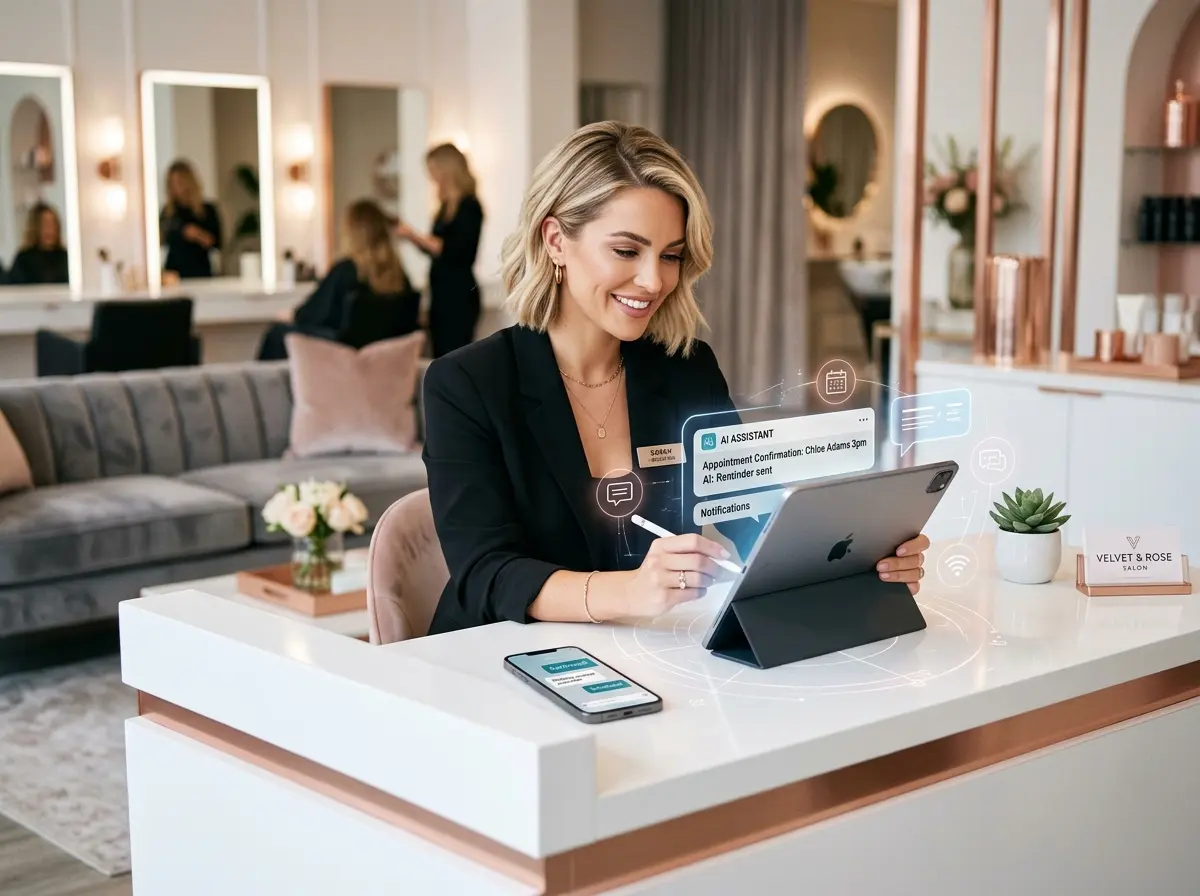
Let's Be Honest: Your Salon's Phone Is Kind of a Disaster
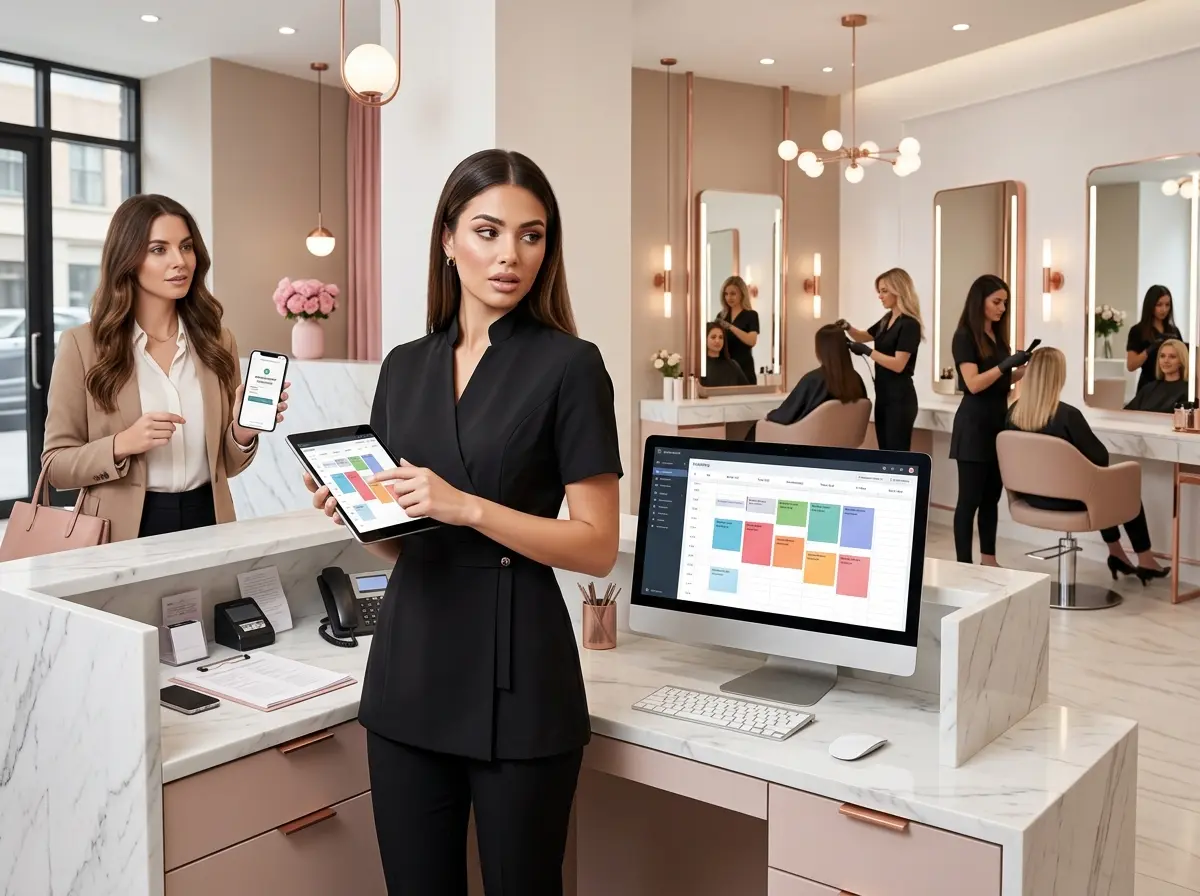
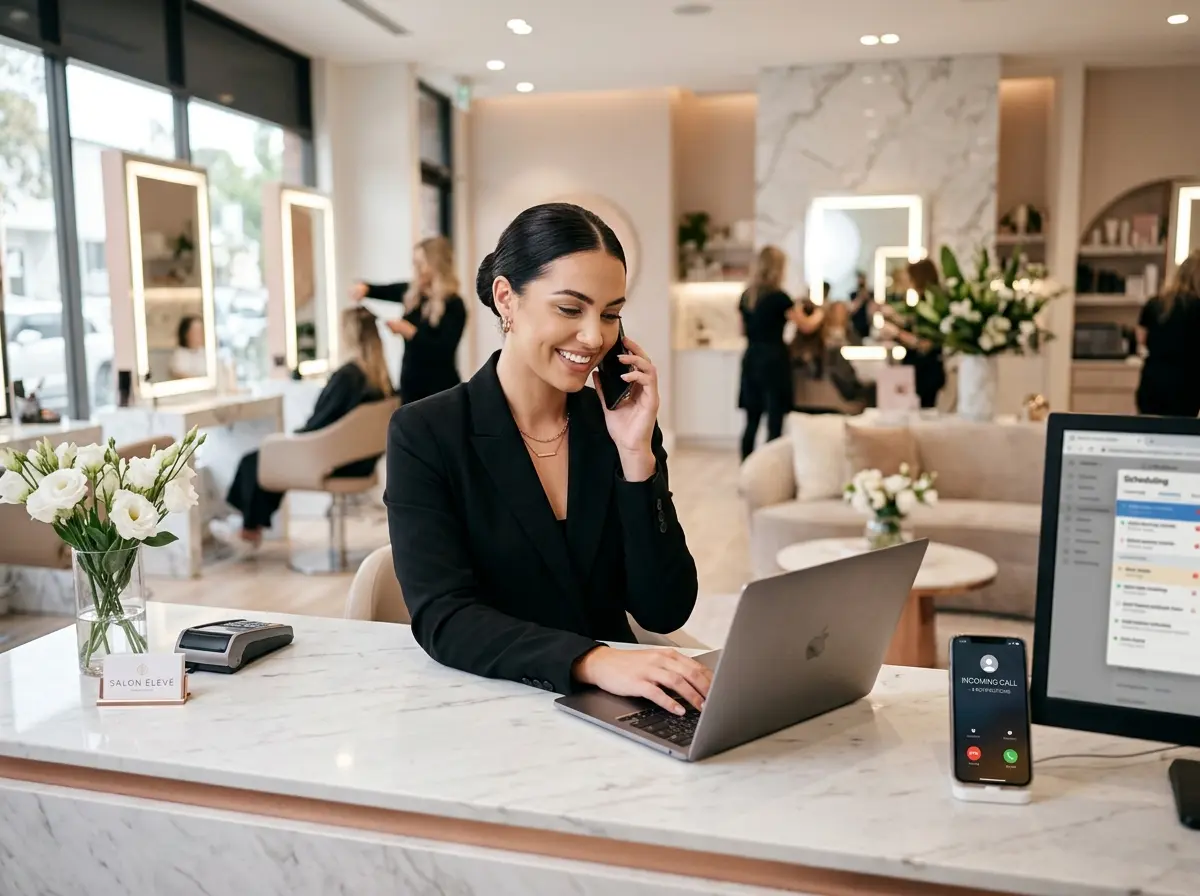
Picture this: it's a busy Saturday morning. Your stylists are elbow-deep in highlights, the blow dryer is going full blast, and somewhere under a pile of towels, your salon's phone is ringing. Again. For the fourth time in twenty minutes. Someone will get to it eventually — probably — but by then, that potential client has already booked with the salon down the street who did answer.
Client communication is the lifeblood of any salon. It's how you fill your books, retain loyal customers, and grow your business. And yet, for most salon owners, it's also one of the most chaotic, inconsistent, and frankly exhausting parts of the job. Between missed calls, forgotten follow-ups, and front desk staff who are juggling seventeen things at once, something always slips through the cracks.
Here's the good news: AI has quietly become very good at handling exactly this kind of thing — and no, it won't call in sick on your busiest day of the year.
The Real Cost of Poor Client Communication in Salons
Missed Calls Are Missed Revenue
It sounds obvious, but the numbers are worth sitting with. Studies suggest that 62% of calls to small businesses go unanswered, and the majority of those callers won't leave a voicemail — they'll just move on. For a salon, each missed call could represent a new client worth hundreds of dollars annually in repeat bookings, retail purchases, and referrals. Multiply that across a week, a month, a year, and you're looking at a very expensive silence.
The frustrating part is that most of these calls aren't complicated. Clients want to know your hours, book an appointment, ask about a service, or inquire about pricing. These aren't questions that require a seasoned professional — they just require someone (or something) to pick up the phone and provide accurate information consistently.
Inconsistency Is a Trust Killer
Every time a client calls your salon and gets a different answer about your policies, pricing, or availability depending on who picks up, a small amount of trust erodes. Staff members have different levels of product knowledge, different communication styles, and different levels of enthusiasm on a Monday morning versus a Friday afternoon. That inconsistency, while completely human, creates a perception problem for your brand.
Clients — especially new ones — are forming impressions with every interaction. If the person who answers the phone sounds distracted, gives incorrect information about your color services, or puts them on hold for four minutes, they're already mentally reconsidering their decision to book with you. First impressions in the salon industry are everything, and that impression often starts before the client ever walks through your door.
Your Staff Has Better Things to Do
Let's give credit where it's due — your front desk team is working hard. But answering repetitive phone calls about your hours and parking situation is probably not the highest-value use of their time. Every minute spent explaining your cancellation policy over the phone is a minute not spent checking in a client, processing a retail sale, or keeping the floor running smoothly. The administrative drag is real, and it quietly adds up across every single workday.
How AI Can Actually Step In (Without the Awkwardness)
Smarter Communication Tools Are Built for This
This is where AI-powered solutions genuinely shine — not because they replace the human warmth that makes salons special, but because they handle the logistical heavy lifting so your team doesn't have to. Stella, an AI robot employee and phone receptionist, is one example worth knowing about. She answers calls 24/7, greets walk-in clients at an in-store kiosk, and handles common questions about services, pricing, hours, and promotions — all with consistent, accurate information every single time.
For salons with a physical location, Stella's in-store kiosk presence means she can proactively engage walk-ins, promote current specials, and answer questions while your staff focuses on delivering great services. On the phone side, she collects client information through conversational intake forms, takes AI-summarized voicemails with push notifications to managers, and can forward calls to a human when the situation genuinely calls for it. Her built-in CRM also lets you manage client contacts with custom fields, tags, and AI-generated profiles — keeping your client data organized without adding another task to someone's to-do list. All of this runs on a $99/month subscription with no upfront hardware costs, which, compared to the revenue lost from missed calls, is a fairly easy math problem.
Building a Client Communication Strategy That Actually Works
Start With Your Weakest Link
Before you overhaul everything, take an honest look at where your communication actually breaks down. Is it after hours? During peak service hours when no one can get to the phone? Is it in the follow-up — clients who expressed interest but never got a callback? Identifying your specific friction points lets you solve the right problems instead of just the most visible ones.
Audit one week of missed calls, unanswered messages, and dropped follow-ups. The results might be uncomfortable, but they'll also tell you exactly where to focus your energy. Most salon owners are surprised to discover just how many potential bookings slipped away not because of price or competition, but simply because no one responded in time.
Make Consistency Non-Negotiable
Once you know what information clients most frequently need — your hours, your cancellation policy, your service menu, your pricing tiers — document it clearly and make sure every channel delivers it the same way. Whether a client calls, visits in person, or sends a message online, they should receive the same accurate answer. This sounds simple in theory and is genuinely challenging in practice, especially as your team grows and changes.
This is exactly why automation and AI tools are becoming standard practice for forward-thinking salon owners. When your communication infrastructure doesn't depend entirely on individual staff members remembering the right information on the right day, your client experience becomes dramatically more reliable.
Don't Underestimate After-Hours Communication
Clients don't only think about booking appointments during business hours. They're scrolling through Instagram at 10pm, suddenly deciding they need a trim, and reaching out then and there. If your salon has no way to capture that intent — no chatbot, no AI phone answering, no automated response — that interest evaporates by morning. Building even a basic after-hours communication strategy can meaningfully increase your booking volume without requiring anyone on your team to work late.
Consider what happens when a potential client calls at 9pm on a Sunday and actually gets a helpful, friendly response. That's not just a booking — it's a powerful first impression that sets the tone for the entire client relationship.
Quick Reminder About Stella
Stella is an AI robot employee and phone receptionist designed to handle client communication so business owners don't have to choose between great service and a manageable workload. She works inside your salon as a kiosk and answers your phones around the clock — with the same business knowledge, the same friendly tone, and zero bad days. At $99/month with no hardware costs, she's built to be accessible for businesses of any size.
Your Next Steps Toward Communication That Actually Works
The salons that will thrive in the next few years aren't necessarily the ones with the best stylists or the trendiest interiors — though those things certainly help. They're the ones that communicate reliably, follow up consistently, and make every client feel like a priority from the very first interaction. That level of attentiveness used to require significant staff investment. Now, it increasingly requires smart systems.
Here's a practical roadmap to get started:
- Audit your current communication gaps. Track missed calls, unanswered messages, and slow follow-ups for one week. Let the data tell the story.
- Document your core client FAQs. Compile the questions your team answers on repeat and make sure every channel — human or AI — delivers accurate, consistent responses.
- Invest in after-hours coverage. Even a basic AI phone answering solution can capture bookings and client information outside of business hours when your competition is silent.
- Reduce the communication burden on your service staff. The more your front-of-house systems handle, the more your stylists can focus on the work that actually fills your chairs.
Great client communication isn't a luxury — it's infrastructure. And just like you wouldn't expect your stylists to also handle your accounting, there's no reason they need to be answering the same questions about your hours for the hundredth time this month. Let the right tools do the work, and put your team's energy where it actually makes a difference.
Your clients — and your sanity — will thank you.